


Paragraph 1: Setting the Stage — A Father’s Son and a Country’s Cry
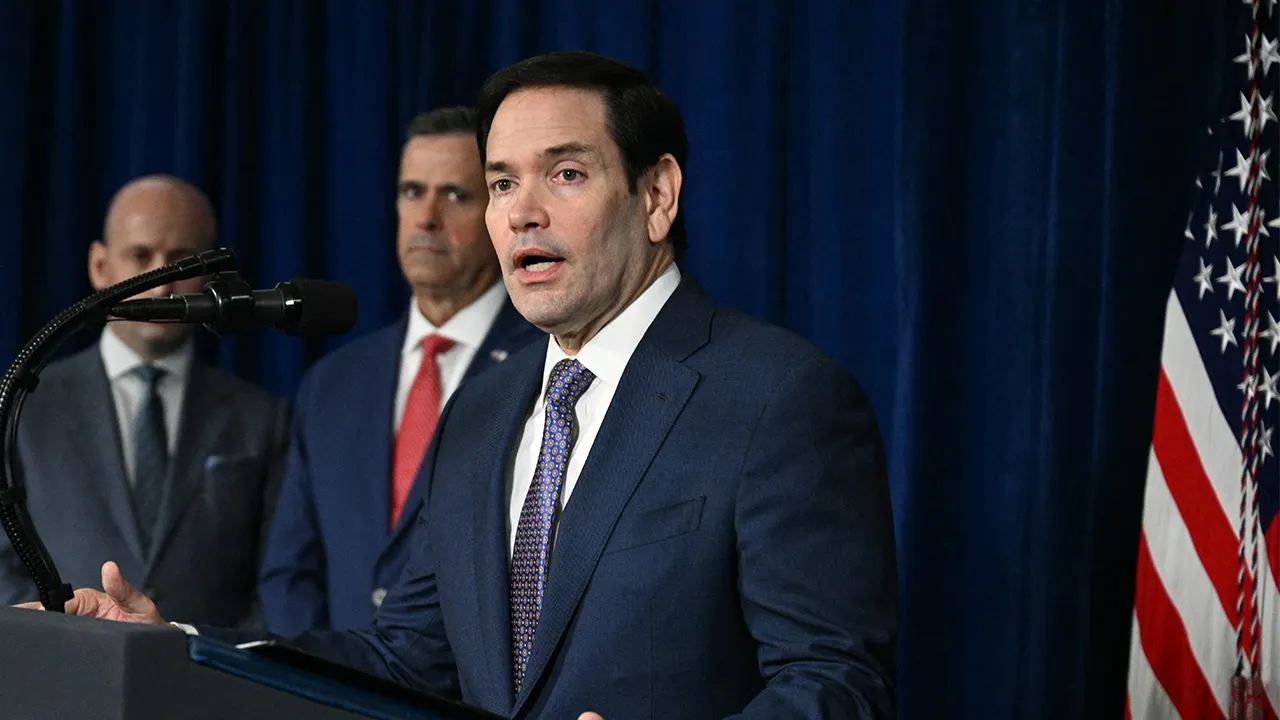
In the swirl of Washington politics and the perpetual drumbeat of international tension, there are moments that resonate not merely for their policy implications but for the deeply personal currents that run beneath the surface. Such was the case this Friday, when Secretary of State Marco Rubio, the son of Cuban immigrants, issued a remarkable and impassioned appeal directly to the people of Cuba. Standing at the intersection of his heritage and his powerful government position, Rubio did not speak of abstractions or diplomatic hedging. Instead, he took to the social media platform X to tell the Cuban people that now, finally, is the moment for change—and that they should not wait for it to arrive from outside, but rather to seize it themselves through a “discrete partnership with the CIA.” The words were carefully chosen, yet tantalizingly vague. They carried an implicit promise of American support, but also a recognition that the first spark must come from within the island. For a man who grew up hearing stories of a lost homeland and who has spent decades watching the communist regime in Havana cling to power, this was more than just another policy statement. It was a personal, almost emotional call to action, wrapped in the cold machinery of intelligence agency cooperation. Rubio’s plea landed with the weight of history, echoing the long exile of the Cuban-American community and their hopes for a free Cuba. Yet it also arrived against a backdrop of swirling rumors and saber rattling, because his boss, President Donald Trump, was simultaneously floating a fantastical vision of just how that change might be negotiated—a vision that involved US Navy ships idling near Cuban shores and Marco Rubio being parachuted in to “finish up the deal.” Together, these two threads painted a portrait of a foreign policy that was personal, bold, and deeply theatrical.
Paragraph 2: Rubio’s Call — An Overt Invitation, or Something More?
The heart of Rubio’s message was direct: “To those who seek to create positive change in Cuba—now is the time.” He wrote of “the disappointment of failed promises, corruption, and the privileged lives of only a few,” and urged Cubans to “seize this opportunity” through a “discrete partnership with the CIA.” Yet for all its urgency, the statement was conspicuously short on specifics. There was no mention of an operation, no outline of what such cooperation would entail, no indication of whether this was a general appeal for intelligence gathering, a call for dissidents to mobilize, or something more ambitious. The vagueness was likely intentional, leaving room for interpretation both by potential Cuban partners and by American officials who might be wary of wading into yet another covert entanglement. But what is undeniable is that Rubio, who has long been one of the most vocal hawks on Cuba policy in Washington, put his name and his office behind a very public encouragement for Cubans to work with the US intelligence community. This is a significant departure from the usual consular language of support for democrats or human rights groups—it actually names the CIA as the channel through which change can be channeled. Rubio, who served as a senator for Florida and was a prominent critic of Obama-era attempts to normalize relations with Havana, has consistently argued that the communist government is fragile and that a combination of pressure, sanctions, and internal dissent can force reform. His message to Cubans is essentially a call to become agents of their own liberation, but with the implicit assurance that the United States is watching, listening, and willing to help. Whether the CIA is prepared to act on such a broad and public invitation, or whether this is primarily a psychological and rhetorical maneuver, remains to be seen. But for the Cuban people, many of whom have long felt abandoned by the international community, Rubio’s words may spark a flicker of hope—or a dangerous illusion.
Paragraph 3: Trump’s Theatrical Vision — Stopover in Cuba on the Way Back from Iran
While Rubio’s appeal was directed at the Cuban people, President Trump’s comments at a midterm rally in Fort Myers, Florida, were aimed at a different audience: a crowd of anti-communist Floridians who loved every word of it. Speaking rapidly and with his trademark showmanship, Trump turned to the subject of Cuba after discussing Iran, and offered a fantastical detour for the US Navy’s “beautiful ships.” “Don’t worry. We’ll take care of Cuba on our way back from Iran with it. We’ll do a little stopover now. We’ll do a little stopover,” he proclaimed. Then, with a grin, he described ships stopping “about 50 yards off the coast” and the crew “rais[ing] up their hands.” The image was unmistakably menacing—a show of force just off the island’s shore—but he immediately pivoted to the idea of sending Marco Rubio in to “finish up the deal.” “We could just put him in there and he’ll figure it out. He’s a great guy,” Trump added, as if dispatching a troubleshooter to fix a leaky faucet. The remarks were classic Trump: exaggerated, ambiguous, and delightfully vague about any actual plan. He offered no specifics about what the “deal” would entail, no indication of whether he was seriously contemplating military intimidation or diplomatic negotiation, and no timeline other than a hypothetical return from a confrontation with Iran. The audience ate it up, and the media dutifully reported the moment, but the strategic implications were muddled. Could there be a real military operation brewing? Unlikely. Was Trump simply riffing on his tough-guy image? Probably. But the fact that he name-dropped Rubio as the negotiator suggests that Cuba policy may be increasingly driven by personalities and impulses rather than by a careful interagency process. The marriage of Reagan-esque missile diplomacy and “let’s send a guy to handle it” analogy made for good theater, but it also highlighted the disconnect between the boldness of the rhetoric and the complexity of actually changing the situation in Cuba.
Paragraph 4: The Broader Context — Sanctions, Stalemates, and Decades of Strife
Rubio’s call and Trump’s quips did not occur in a vacuum. They came against the backdrop of a renewed American pressure campaign against the Cuban regime, which had been building for years. Just earlier this year, Fox News had reported on President Trump expanding Cuba sanctions beyond US companies, in what was described as a major crackdown on foreign enablers of the communist government. That policy marked a sharp escalation from previous administrations, which had sought to loosen restrictions as a way of encouraging change. But for Rubio and Trump, the formula was different—more pressure, more isolation, and more direct appeals to the Cuban people to rise up. In that context, Rubio’s CIA call appears not as an off-the-cuff remark but as part of a deliberate strategy of psychological warfare, using every tool available to weaken the regime of the Castros and their successors. The Cuban government, however, has long proven more resilient than many predicted, surviving the collapse of Soviet support, waves of mass emigration, and decades of US sanctions. Moreover, as Rubio himself acknowledged in other statements, Cuba has infiltrated the United States with spies and has been called an “espionage superpower” by some officials—a reminder that the intelligence war flows both ways. The question of whether “partnership with the CIA” could translate into actual change on the island is fraught with history. Overt and covert US efforts to topple the Castro regime, from the Bay of Pigs to Operation Mongoose, have failed spectacularly, and the current regime remains resolute in the face of economic hardship and periodic protests. Yet the Cuban people have shown remarkable courage in times of crisis, such as the massive protests in July 2021 that briefly shook the regime. Rubio’s call might be an attempt to fan those embers into flame, but the deep skepticism about real American commitment, after years of broken promises, remains a formidable obstacle.
Paragraph 5: Humanizing the Chessboard — Cubans Caught in the Great Power Game
For the Cuban people, living through this moment is both terrifying and full of possible hope. Rubio’s appeal is not merely a diplomatic note; it is a direct message to individuals who may already be risking arrest and persecution to express their dissent. By naming the CIA, he is inviting ordinary citizens to become intelligence assets—a dangerous proposition in a state-security state where informants are plentiful and the consequences of being caught collaborating with a foreign power are severe. Imagine the internal dilemma of a Cuban teacher or a nurse or an engineer who reads Rubio’s words online. The excitement of American support is real, but so is the fear of the regime’s surveillance. Yet there are also many Cubans who have grown weary of the perpetual wait for rescue from outside. They have seen generations of family flee on rafts, endure economic hardship, and watch their country remain stagnant while the world modernizes. The call for “positive change” may resonate with them, but they may also question whether “discrete partnership” means they are expected to become pawns in a larger geopolitical game between Washington and Havana—a game that might be abandoned as quickly as it was taken up, especially if Trump’s focus shifts to Iran, North Korea, or the next election cycle. Rubio’s personal stake is real; he carries the memory of his parents’ exile and their love for a lost Cuba. But that emotional connection doesn’t always translate into a coherent plan for the people on the ground. Still, the fact that America’s top diplomat is openly telling Cubans to work with intelligence agencies suggests that the administration is willing to risk confrontation with Cuba’s allies, including Russia and China, who have propped up the regime in recent years. The human cost of that gamble could be severe, but for many Cubans, any change is preferable to the current stagnation.
Paragraph 6: The Gap Between Rhetoric and Reality — What Happens Next?
In the end, we are left with more questions than answers. Neither Rubio’s statement nor Trump’s rally performance provided any concrete explanation of what a “discrete partnership with the CIA” would look like or what a “deal” with Cuba would consist of. The State Department, the CIA, the White House, and the Cuban Embassy in Washington all declined to comment when contacted by Fox News Digital, leaving the remarks to hang in the air as political theater or or possibility of genuine strategy. The lack of official details is not unusual—diplomacy, especially covert diplomacy, rarely operates in public—but it does mean that the statements might be nothing more than noise designed to appease the Cuban-American base in Florida, a crucial voter bloc for Republicans. At the same time, there is a risk in such loose talk. When the President of the United States muses about stopping warships 50 yards off a sovereign nation’s coast, it raises tensions and creates expectations that cannot easily be retracted. When the Secretary of State tells a foreign population to partner with US intelligence, it can either embolden the courageous or expose them to extraordinary danger. The history of US-Cuba relations is a long and painful saga of hope and betrayal, and these latest words will be examined through that lens. Perhaps Rubio believes that the current regime, wracked by economic crisis, military mobilization characterized by desperation, and international isolation (even China and Russia are not absolute allies), is finally on the ropes. Or perhaps this is simply another chapter in the endless, exhausting narrative of American foreign policy driven by exuberant rhetoric and personalized presidential impulses. What we know is that the Cuban people deserve more than ambiguous promises and naval thumbing; they deserve a clear, coherent, human-centered policy that treats their aspirations not as chips in a geopolitical game, but as the legitimate wishes of a proud, resilient nation. As the world waits to see whether these words become actions, the ordinary people of Cuba—the farmers, the widowed grandmothers, the young artists—are left looking to the horizon, wondering if anyone on that distant ship is really coming for them, or if they must simply save themselves, as they have always had to do.