


Friday’s Shooting at the Junction: A Day of Reckoning in the West Bank
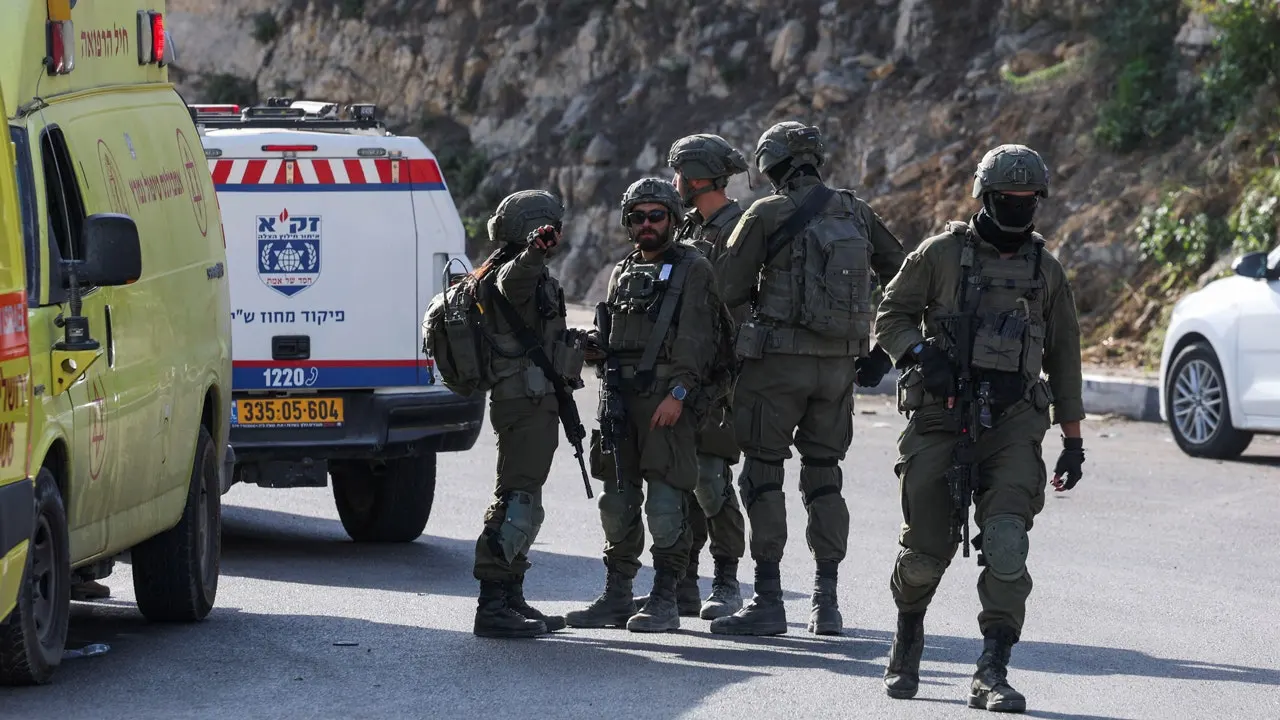
Friday arrived like any other at the Judea Junction, a sprawling, sun-baked crossroads in the southern West Bank where the dust of the hills settles on windshields and the afternoon light stretches long across the asphalt. The junction, a permanent fixture on Route 60, is the kind of place where daily life performs its dependable rhythms: soldiers with rifles slung over their shoulders wait at the hitchhiking post, commuters cluster at bus stops, traders unload goods from battered vans, and families pass through on their way to Jerusalem or the settlements of Gush Etzion, their cars filled with groceries and the muffled music of the radio. This particular Friday, with the week winding down toward the quiet of Shabbat, seemed entirely ordinary — until it did not. At the moment of attack, the air shattered into the sharp, deafening crack of gunfire, and the junction became a scene of panic and terror in every unguarded glance; people fled in all directions, seeking cover behind concrete barriers and vendor stalls, while the wounded slumped to the ground, their cries swallowed by the noise and confusion. Five Israeli civilians were struck by the bullets, and the gravity of the wounding was instant and total: two of them lay in critical condition, their lives hanging by the smallest of threads, while three others suffered light-to-moderate injuries, their bodies shaken, their eyes wide with the disbelief that their ordinary errand had become a brush with death. Magen David Adom, Israel’s emergency medical service, reached the scene within minutes, their paramedics moving through the chaos with practiced urgency, their hands finding torn flesh and broken silence, treating the two most gravely hurt as their colleagues barked into radios for air evacuation. In the layered shock of those first minutes, the junction — a place that thousands of people cross every day without a second thought, a place embedded in the memory of an entire region — had been transformed into a monument of sudden, senseless violence, and the fear that followed would not dissolve quickly.
Amid the panic, the Israel Defense Forces responded with the same disciplined speed that has defined their posture in this volatile arena for months, converging on the junction from multiple directions, weapons raised, senses tuned to the smoke and echo of the ambush. Israeli soldiers engaged the two gunmen, who had opened fire from a strategic position, and in the exchange that followed, both perpetrators were killed — their bodies claimed by the terrain they had chosen for their attack, a short, violent stanza of a story that had begun much earlier in the day, perhaps weeks earlier. As the soldiers secured the area, they discovered the tools of the assault: an M16 rifle and a handgun, now silenced and still, along with something far more troubling — a substantial cache of ammunition, far more than any single attacker would need for a hit-and-run. The IDF chief of staff, Eyal Zamir, later confirmed the finding with grim clarity, explaining that a “large quantity of ammunition was found” inside the perpetrators’ vehicle, ammunition he said was unmistakably “intended to be used in a larger-scale attack.” In those words, the soldiers and the public heard the ominous undertone: this was not an improvised act of rage, but the thwarted prelude to something bigger, a plot that had been caught at the threshold of its execution. The two Palestinians, later identified by Israeli forces as residents of nearby Hebron, did not survive to be questioned, and the full contours of their plan died with them, leaving behind only the ballistics, the spent cartridges, and the gnawing question of what might have been had the soldiers not acted with such ferocious decisiveness. For the families of the wounded, the knowledge that quick action had prevented an even greater catastrophe offered only the coldest of comforts, as hospital corridors filled with anxious kin and the doctors’ measured promises of care.
Hours after the bullets had ceased to fly, the political and security leadership of Israel gathered in emergency session — the kind of meeting that has become a familiar, almost ritualized response in this age of unrelenting tension — and Prime Minister Benjamin Netanyahu convened his Security Cabinet to weigh the implications of what had almost occurred. From that room, Netanyahu delivered a statement that carried the weight of a nation’s collective memory, declaring that Hamas was “planning a major attack aimed at murdering innocent civilians,” a claim that added an institutional seal to the raw alarm of the day. His words, “our brave soldiers thwarted this attack with courage and determination,” were not merely a commendation but an invocation of the country’s abiding fear, the shadow of October 7 that hangs over every strategic deliberation, every surveillance feed, every Garden of remembrance. In quick succession, the Israeli government ordered the army to prepare for a full closure of the West Bank — a dramatic measure that carries profound consequences for millions of Palestinians, sealing off villages and towns, halting the movement of workers and families, and turning an already militarized landscape into a more rigid architecture of checkpoints and gates. For the government, the closure is a security reflex, a tightening of the perimeter in response to a tangible threat; for the Palestinians who live there, it will mean inaccessible jobs, missed medical appointments, the silent claustrophobia of being locked in place, their daily lives held hostage by the actions of a few. The decision, announced within the same breath as the casualties, underscored the brittle reality of the region, where a single attack can shut entire communities away from the world, and where the security of one people is so often purchased with the freedom of another — a tragic reciprocity that neither side can fully escape.
While the cabinet met and the closure orders moved through military bureaucracy, the sprawling machinery of Israeli counterterrorism swung into motion across the West Bank, a networked response of intelligence agencies, border police, and armed forces conducting dozens of raids throughout the night and following day. Israeli forces swept through towns, villages, and refugee camps, knocking on doors, detaining dozens of suspects, and targeting individuals the military identified as members of Hamas and Palestinian Islamic Jihad, the two militant factions that operate with deep roots in the territory’s networks. The arrests were swift and sweeping, a signal that the attack at the junction would not be answered with deterrence alone but with the aggressive, systematic dismantling of any infrastructural threads that might lead to the next plot. The chief of staff’s assessment added a sobering dimension to these operations, his declaration that the ammunition found represented an intent “to be used in a larger-scale attack” suggesting that Israeli intelligence had, in effect, intercepted a conspiracy that could have unfolded across multiple fronts, with the junction merely the opening volley. In the hours that followed, a stream of military updates detailed the raids, the confiscated documents, the seized technology, the quiet series of closed-door interrogations occurring in shuttered interview rooms — a meticulous, exhausting process that would determine what remnants of the plot remained in motion. Yet for all the tactical successes, the raids also reopened old wounds: dawn raids that send children screaming, the sound of fists on doors in the dark, the humiliation of detainees led away in front of their families, the bitterness that compounds with every passing generation. The security establishment’s work is neither a clean nor an easy enterprise; it is a grinding, repetitive occupation of intelligence, patience, and force, carried out in the knowledge that every arrest is also a new grievance, that every cache of ammunition discovered feeds the narrative of occupation, and that the cycle of violence persists not because of a lack of resolve but because the underlying conflict refuses to yield.
To understand the true weight of what occurred at the Judea Junction, one must understand the land itself — a narrow ribbon of asphalt that has, for decades, been both a lifeline and a fault line, threading its way through hills named for biblical kingdoms, Judea and Samaria, past terraces of olive trees and clusters of cinderblock houses whose residents travel different realities along the same strip of road. The junction sits at the confluence of these worlds: Israeli drivers passing to and from Jerusalem or the settlements, Palestinian families from Hebron and Bethlehem moving through checkpoints to reach their fields, their schools, their work, all of them sharing the same heartbreaking geography but separated by barriers of steel, of security, of mutual fear. Friday’s attack was not a historical anomaly but another jagged stitch in a long and violent tapestry; the junction has been targeted before, its concrete barriers and guard towers testifying to earlier ambushes, earlier funerals, earlier vows of retaliation from both sides. The human beings who live here know intimately the cost of this conflict — the women who have buried husbands, the children who have learned the sound of gunfire before they learn to read, the young soldiers who glance nervously at every passing car, and the Palestinian workers who must cross through military checkpoints each morning, their papers in hand, their dignity compromised, their patience stretched to the breaking point. The closure that the prime minister ordered would fall hardest on those workers, the ones who rise before dawn to reach construction sites in Israeli settlements, their livelihoods suspended, their families left waiting, a collective punishment that they did not choose but must endure. And yet, the same land also bears witness to the other side of the story: the Israeli families who settled these hills decades ago, who see the roads as their home, who will now drive more cautiously, their windows rolled up, their children taught to duck at the sound of strange thunder. Neither side is a monolith of hatred; both are filled with people who want only to live, to raise their children, to plant gardens and celebrate holidays — and both are trapped in a spiral that pulls them ever further from that simple, universal dream.
As the sun set over a region tensed with the aftermath, the situation remained anything but resolved; the government’s statement echoed with the familiar phrase “developing story,” a reminder that the violence of Friday had opened a wound that might take months, even years, to heal, and that the immediate weeks ahead would bring more uncertainty, more security alerts, more closures, and likely more bloodshed. The full closure of the West Bank, once implemented, would ripple outward in slow-motion waves: checkpoints jammed with families trying to return to their homes, hospitals struggling to maintain operations as staff are prevented from arriving, shops shuttered, schools emptied, the entire economic ecosystem of millions of people grinding to an uncertain halt. The world, too, would watch — allied governments issuing carefully worded condemnations, international organizations calling for restraint, journalists filing dispatches from dusty streets, while the families of the wounded sat vigil in hospital rooms, praying through long nights for a heart to beat steadily, for a brain to awaken, for a tearful reunion to replace the memory of smoke and sirens. But within this bleakness, there remains the stubborn persistence of human resilience, the same quality that has carried people through generations of sorrow: communities that will hold vigils, neighbors who will bring food to the bereaved, medics who will return to work the next morning despite their trauma, and ordinary people on both sides of the divide who will refuse to surrender their hope — however fragile — that their children might one day know a different life. The junction will remain, as it must, a place of transit and connection, but its memory will now carry the invisible weight of Friday, woven into the fabric of every passerby who glance at the roadside, every driver who slows instinctively, every soldier who stands a little more alert. The road itself, scarred and sacred, will continue to connect the ancient cities and the modern towns, the olive groves and the security walls, the grief and the beauty — and it is there, amidst all that contradiction, that the question of what comes next will be answered by the choices of the living, in the fragile, unending hope that courage, too, can be as contagious as fear.