


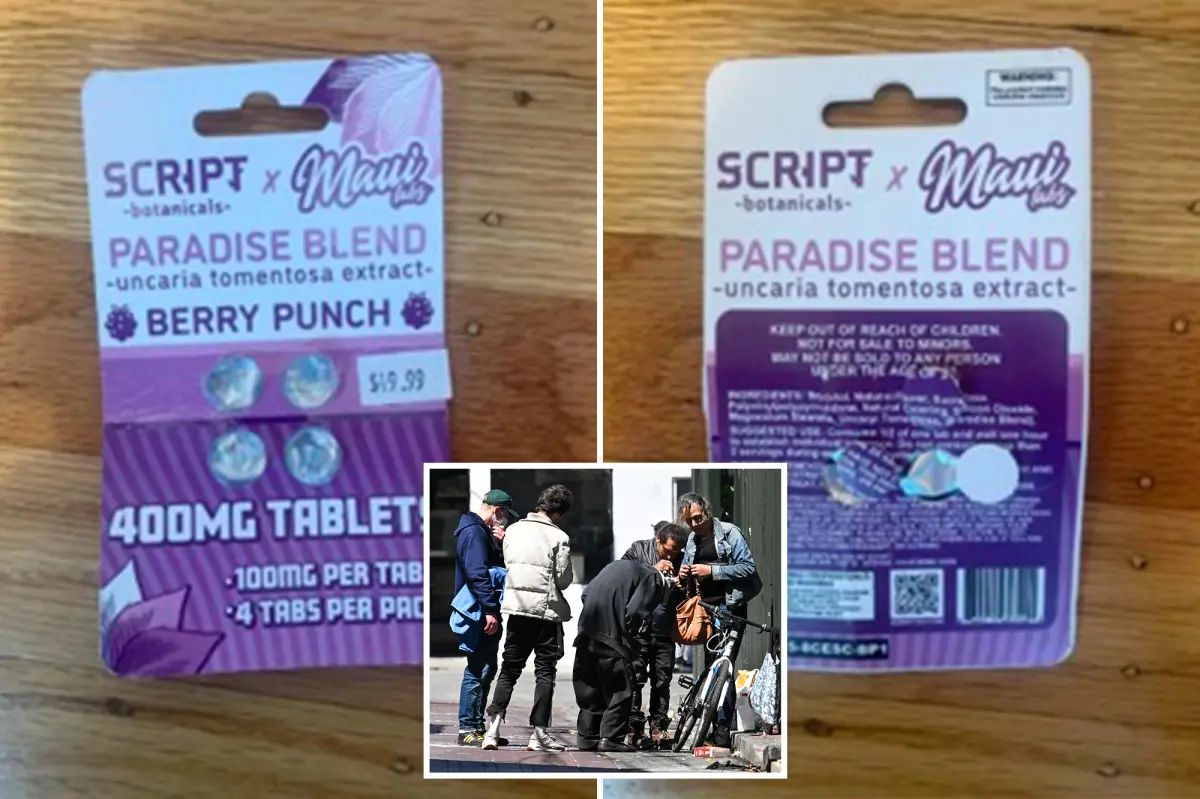
There is a quiet danger sitting on gas station shelves across California, and state officials are desperately trying to get the word out before more lives are lost. Imagine stopping at a convenience store on a long drive, feeling tired and a little achy, and scanning the shelves near the register for something to help you get through the rest of the day. You see a purple package with a soothing name like “Paradise Blend.” It says it contains cat’s claw, an herbal extract from a woody vine that grows deep in the Amazon rain forest. The design is clean, the language is natural, and the price is easy to justify. Nothing about the packaging makes you think you are buying a drug. But that is exactly what one man did, and it cost him his life. In late September, a 37-year-old man overdosed and died after taking a supplement marketed as cat’s claw. Investigators later found that the product contained MGM-15, also known as dihydro-7-hydroxymirtragynine, a kratom-derived opioid with a chemical name that would mean nothing to most consumers. The medical examiner ruled his death an accident, caused by the “toxic effects of kratom alkaloids.” That clinical language hides a heartbreaking reality: a person walked into an everyday store, bought what looked like a harmless herbal remedy, swallowed it, and never made it home. The death is the first of its kind in San Francisco, but it follows similar overdose cases in Utah and Washington, and officials are clearly worried that this is just the beginning. What makes the situation so terrifying is not that the product is hidden or illegal. It is that the product is visible, labeled, and sold in plain sight, right next to snacks and energy drinks, and that it lures people into a false sense of security.
To understand why this supplement is so lethal, you have to understand what MGM-15 actually is. It is a chemically modified form of 7-hydroxymitragynine, an alkaloid that occurs naturally in kratom, a plant from Southeast Asia that has been marketed for years as a supplement to boost energy and improve mood. Kratom itself is controversial. Some people use it to manage chronic pain, to ease anxiety, or to step away from more dangerous opioids, and they often speak of it as a lifesaving plant. But medical experts warn that kratom carries its own risks of addiction, withdrawal, and harmful side effects. MGM-15, however, is not natural. It is a synthetic compound, engineered in a laboratory, and it is astonishingly potent. Officials say it is 15 to 50 times stronger than morphine. That means a tiny amount can slow a person’s breathing to the point where they stop breathing altogether. It has not been approved for medical use in humans, and it has absolutely no place in any dietary supplement. The 37-year-old man who died did not knowingly take an opioid. He took a product that was labeled as cat’s claw, a common herbal remedy with a long history of traditional use. The difference between what he thought he was consuming and what he actually consumed is vast. Cat’s claw comes from a woody vine in the Amazon forest and is promoted by herbalists for a variety of benefits, including relief from osteoarthritis, rheumatoid arthritis, viral infections, and other conditions. On its own, cat’s claw does not contain MGM-15. But in this product, the familiar botanical name served as a mask for a synthetic opioid, turning a natural health remedy into a potential death sentence.
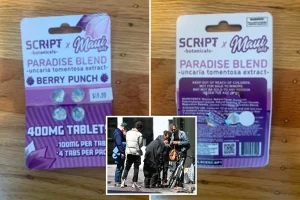
The specific product that caught officials’ attention is as deceptive as it is deadly. The purple package contains 100 milligrams of alleged uncaria tomentosa, which is the scientific name for cat’s claw, and it is labeled “Paradise Blend.” The brand behind it is Script Botanicals x Maui Labs, a collaboration that sounds more like a wellness startup than a source of potent opioids. Dr. Monica Gandhi, a professor of medicine at the University of California, San Francisco, told CBS News that the packaging lures consumers into a false sense of security. “It looks really not dangerous,” she said. “People buy it, they’ll take it as a supplement and they think it’ll give them energy…but if you take too much of them it can depress your ability to breathe and you can die from it.” That warning is chilling because it gets at the heart of the deception. The product is designed to look and feel legitimate. It uses a real plant name, a real category of herbal medicine, and a friendly brand aesthetic. The person who buys it is not looking to get high. They are looking for energy, pain relief, or perhaps just something to help them feel a little better. Instead, they are consuming a substance more powerful than morphine, with no warning, no dosing instructions, and no understanding of the risk. The fact that the actual cat’s claw plant has a long history of use in traditional medicine makes the contamination even more insidious. It gives the product a patina of authenticity. It makes the consumer think they are doing something good for their body, when in reality they are putting a dangerous opioid into it. The gap between the label and the contents is a gap where trust is exploited, and where a life can be lost.
This case also pulls back the curtain on the strange and largely unregulated world of kratom and its chemical relatives. Kratom is a plant native to Southeast Asia, where its leaves have been used for centuries by workers who chewed them to fight fatigue, boost energy, and improve mood. In the United States, kratom is sold in many forms, including powders, capsules, extracts, and teas, and it is often marketed as a natural supplement that can provide energy and emotional balance. Some people swear by it, saying it has helped them overcome addiction or manage chronic pain. Others have died after taking it, and the U.S. Food and Drug Administration has not approved it for any medical use. The compound found in the deadly gas station supplement, MGM-15, is not kratom itself. It is a chemically altered, synthetic version of one of kratom’s alkaloids, and that modification makes it vastly more dangerous than the plant. This is part of a broader pattern that law enforcement officials are increasingly worried about. U.S. Attorney General Todd Blanche previously warned about synthetic opioids being hidden in consumer products. “These are potent opioids being manufactured and sold in consumer products, often under labels that obscure their true risks,” he said. Those words apply directly to this case. A consumer looking at a package of cat’s claw would have no reason to suspect that it contains a substance 15 to 50 times stronger than morphine. The label says “Paradise Blend,” not “Opioid.” The brand name sounds friendly, not clinical. And the setting, a gas station shelf next to candy and energy drinks, makes the product feel as ordinary as a pack of gum. That is precisely why it is so dangerous. People are not making an informed choice to use an opioid. They are being tricked into it, and they are paying for it with their lives.
The death in San Francisco is not happening in a vacuum. California has been battered by the opioid crisis for years, and the numbers are staggering. San Francisco endured 625 accidental overdose deaths in 2025 alone, and Los Angeles County recorded 2,298 deaths. Behind every one of those statistics is a person with a name, a family, a story. A parent who will never walk their child down the aisle. A friend who will never answer the phone again. A neighbor who will never wave from the porch. The addition of a synthetic opioid disguised as an herbal supplement adds a new and terrifying dimension to this already devastating crisis. People can no longer assume that a product bought at a gas station is safe just because it is legal, visible, and labeled. The first case of its kind in San Francisco, following similar deaths in Utah and Washington, suggests that these contaminated supplements may be spreading across state lines. Officials are concerned because this is not a product sold in a dark alley or through an anonymous website. It is sitting on shelves in everyday stores, waiting for someone who might be trying to manage pain without prescription drugs, or someone who simply wants a natural energy boost. That person could be a mother, a college student, a grandfather with arthritis, or a veteran dealing with chronic pain. The profile of an overdose victim is no longer limited to people who seek out illicit opioids. It now includes people who thought they were taking a harmless herbal supplement. The word “accident” in the medical examiner’s ruling captures the tragic irony of this case: the man did not intend to die. He intended to feel better, to get more energy, or to address some ailment with what he believed was a natural product. Instead, he consumed an opioid with no warning, no understanding, and no chance to make a different choice. The California Post has reached out to Script Botanicals for comment, but so far there has been no answer.
So what should a concerned person do with this information? The first step is to recognize that “natural” and “safe” are not the same thing, especially when it comes to supplements sold in unconventional places. Gas stations and convenience stores are not the right places to buy health products. If a product makes bold claims about energy, pain relief, or mood, and if the label is vague about its ingredients or uses a proprietary “blend,” that is a red flag. Consumers should be especially wary of any product that contains kratom or its derivatives, and they should understand that synthetic versions of kratom alkaloids can be far more powerful than the plant itself. The larger issue is a regulatory system that has not kept up with the rapid emergence of new synthetic compounds. Lawmakers and health officials need to close the loopholes that allow potent opioids to be packaged and sold as dietary supplements. In the meantime, the burden falls on consumers to be skeptical, to ask questions, and to talk to their doctors before taking anything that promises a quick fix. But the burden also falls on all of us, as a community, to look out for each other. If someone you know buys supplements from a gas station, share this story with them. Tell them that a purple package called “Paradise Blend” can be a death sentence. Tell them that the man who died was not an addict, not a reckless risk-taker, but a human being who trusted a label. The warning from California officials is a reminder that the opioid crisis is not just about street drugs anymore. It is about the ordinary places we shop, the products we buy, and the trust we place in the world around us. That trust is precious, and it should never be exploited by anyone, least of all by a company hiding a potent opioid behind the name of a gentle Amazonian vine. The next time you see a supplement that looks too good to be true, remember that it might be exactly that. And the next time you reach for something at a gas station, take a moment to read the label, question the claims, and think about the life behind every warning. Because this story is not just about one man in San Francisco. It is about all of us, and the choices we make without knowing the truth.