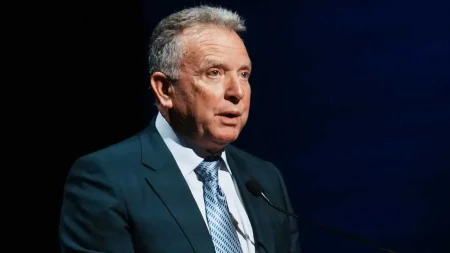


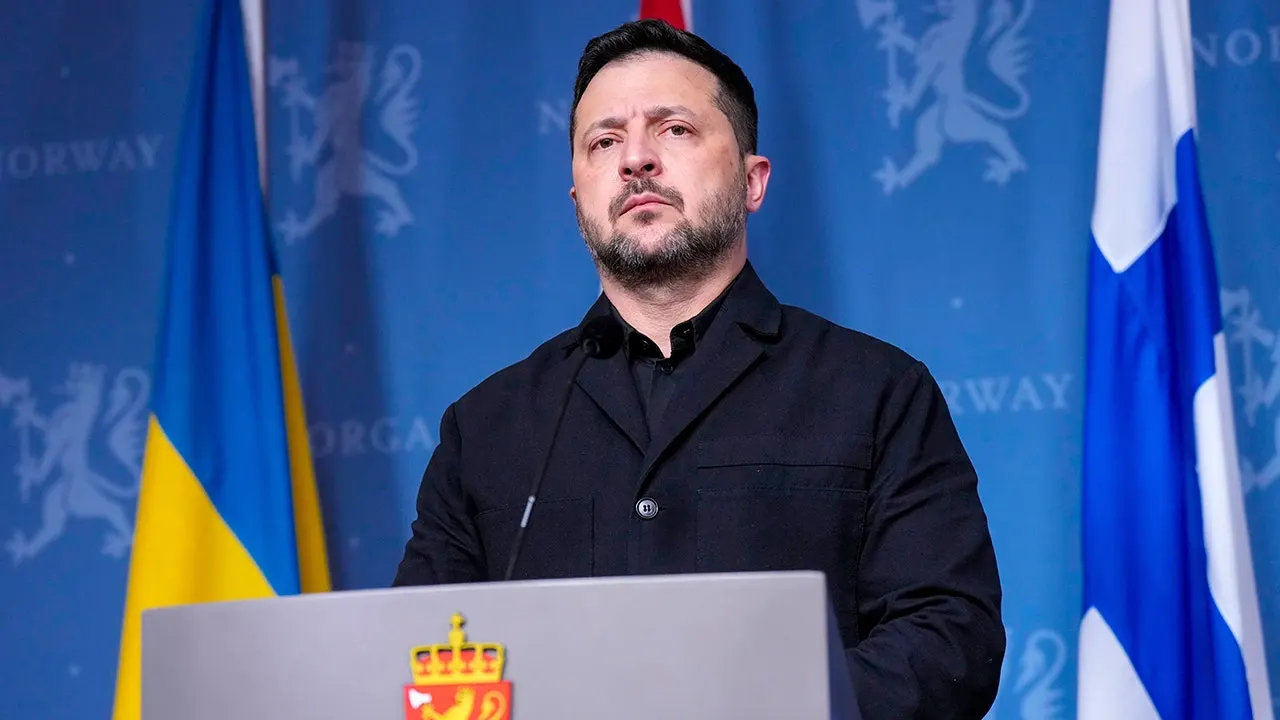
When Ukrainian President Volodymyr Zelenskyy sat down with “Fox & Friends” on Wednesday morning, there was a weariness in his voice that no amount of military bravado could conceal. Asked by host Brian Kilmeade whether he would accept a peace deal that freezes the front lines as they are today, with Ukraine still holding roughly three-quarters of its territory, Zelenskyy didn’t dodge the question or offer a grand vision of total victory. Instead, he gave a quiet, startlingly honest answer: “Yes, right now, we have to freeze.” For a leader who has spent nearly three years rallying his nation with Churchillian speeches and unwavering resolve, those words felt like a watershed moment. He went on to explain that freezing the conflict is the only realistic path to ending the war, echoing President Trump’s own blunt framing by calling it a “ceasefire” or, more simply, a “stop killing” agreement. But Zelenskyy was careful to define this as the absolute minimum of what Ukraine needs from Russia — not a permanent surrender, but a pause that could stop the daily bleeding and give his exhausted people a chance to breathe. “We need 9.5 million people [who have] lost their houses, which are abroad, everywhere,” he said, his voice cracking with urgency. “We need them to come back to Ukraine just to live and to build their country.” It was an appeal not born of weakness, but of profound exhaustion — the exhaustion of a nation that has watched its children grow up under air raid sirens and its cities reduced to rubble while the world debates the next move.
What makes Zelenskyy’s frozen-front-lines proposal so striking is not just the political calculation behind it, but the human tragedy it exposes. For him, the war is not an abstraction of troop movements and diplomatic cables; it is a daily ledger of lives lost, homes shattered, and childhoods stolen. When he says that Russia strikes his country “virtually every hour,” he is not exaggerating for effect. He is describing a reality in which ordinary Ukrainians have learned to live with the constant hum of drones, the scream of incoming missiles, and the terrible uncertainty of whether today will be their last. “Of course, we are not losing this war,” he wrote on X later that day. “But we are losing people. Because of the Russian attacks, we’re losing people and time. It’s such a pity, because our children don’t have a real life and childhood. Not only children, but all people.” That sentence — “our children don’t have a real life and childhood” — cuts through the geopolitical jargon like a knife. Zelenskyy is not asking the world to admire Ukraine’s resilience anymore; he is asking the world to understand the cost of that resilience. Every frozen front line would mean that some mothers and fathers could return home, that some classrooms could reopen without the fear of shelling, that some grandmothers could sit in their gardens without scanning the sky. A ceasefire, even an imperfect one, would not be a victory in the traditional sense, but it would be a victory for the simple, sacred right to live without terror.
Still, the path to even that minimal peace remains obstructed by a familiar and deeply troubling obstacle: Russia’s apparent refusal to accept any ceasefire that might give Ukraine time to regroup and rearm. Russian Foreign Minister Sergey Lavrov made that brutally clear last week, dismissing the very idea of a pause as nothing more than a ploy for Kyiv to “pump himself full of weapons.” Lavrov’s words were cold and dismissive, treating war itself as a chess game in which every ceasefire is a trick to be countered rather than a chance to stop the dying. For Moscow, the calculus seems to be that a frozen conflict is fine as long as Ukraine remains weak, divided, and permanently bleeding. But Zelenskyy has heard these objections before, and his response is rooted in a simple moral clarity: the alternative to a freeze is not victory — it is more mass graves, more orphaned children, more cities like Bakhmut and Mariupol reduced to ash. He is not naive about the dangers of a frozen conflict; he knows that Russia could use the pause to rebuild its forces and strike again. Yet he also understands that Ukraine cannot continue to burn through its young men and women forever, hoping that the battlefield tide will turn. By placing his hope in American and European security guarantees — real guarantees, with teeth — Zelenskyy is trying to buy his nation not just a temporary rest, but a durable architecture of protection that could hold Russia at bay long enough for Ukraine to rebuild what has been destroyed.
In a strange twist of timing, Zelenskyy’s plea for peace came on the same day that President Donald Trump secured the release of Stephen Hubbard, a retired American teacher who had been imprisoned in Russia on charges of fighting as a mercenary in Ukraine. Hubbard’s release, negotiated directly with Russian President Vladimir Putin, was a rare flash of light in a very dark tunnel — proof that high-stakes human diplomacy can still work even when the guns are firing. For Zelenskyy, the moment was laden with meaning. Here was a man who had been caught up in the grinding machinery of war, finally going home because two presidents decided that one human life mattered more than the continuation of a bitter standoff. It was a reminder that behind every strategic calculation are individual faces, families, and futures. And it seemed to open a crack in the door of possibility. Putin’s foreign affairs adviser, Yuri Ushakov, confirmed that the Russian leader had agreed “in principle” to resume trilateral negotiations with the United States and Ukraine after Nov. 10, according to The Associated Press. There was no promise of a breakthrough, no rosy outline of a deal — just a willingness to talk, to sit at the table, to acknowledge that the world’s patience for endless war has worn terribly thin.
Against that backdrop, Zelenskyy’s willingness to accept a frozen front line should not be read as a sign that he has given up on Ukraine’s territorial integrity or its future. Rather, it is the calculated move of a leader who understands that this war cannot be won through attrition alone, and that sometimes the most patriotic thing a president can do is admit that his people need a horizon of peace, not just a horizon of steel. “This is the most important … not to be afraid,” he said, and the phrase can be interpreted in two ways. First, it is a warning to his own people not to be afraid of an imperfect peace — not to see a ceasefire as a betrayal of their fallen heroes, but as a necessary step toward preserving the nation itself. Second, it is a message to the international community, especially to the United States and Europe, not to be afraid of Vladimir Putin’s rhetoric. The fear of “rewarding” Russia, of appearing weak, of setting a precedent for future aggressors — all of these fears have paralyzed Western decision-making for too long. Zelenskyy is essentially saying: Don’t let fear prevent you from helping us stop the dying. If we wait for a perfect peace, there may be nothing left of Ukraine to save. The millions of displaced Ukrainians scattered across Europe and beyond are not refugees in spirit; they are a nation in exile, waiting for a signal that it is safe to come home and rebuild. Zelenskyy’s plea is directed at them as much as at any political leader.
In the end, none of this is easy. A frozen conflict is not a just peace; it is a tragedy with a pause button. It leaves Crimea occupied, leaves the Donbas in ruins, leaves thousands of families without justice or closure. But Zelenskyy’s shift in tone reflects a painful truth that all wartime leaders eventually face: the difference between what is desired and what is possible. He is not surrendering — he is choosing to preserve the largest possible version of Ukraine for the next generation, rather than spending that next generation on impossible dreams. “That’s why we need to end this war as quickly as possible,” he wrote, with the simple honesty of a father and a president. “I hope that our partners, Americans and Europeans, will help us. God bless, our strong soldiers stay strong on the battlefield. It helps me stay strong during any kind of negotiations.” There is something heartbreakingly human in that admission — that even the most determined president needs his soldiers to hold the line so that he can carry the weight at the negotiating table. The world has grown used to Zelenskyy in uniform, asking for tanks and missiles. But Wednesday’s interview revealed a different Zelenskyy: a man who, after years of war, is daring to speak the language of compromise, of children’s laughter, of homes rebuilt, of peace, however fragile. Whether Russia truly wants peace remains an open question. But for the first time in a long while, Ukraine’s leader has made it unmistakably clear that he is ready to choose life over victory, and that he is not afraid to say so.