


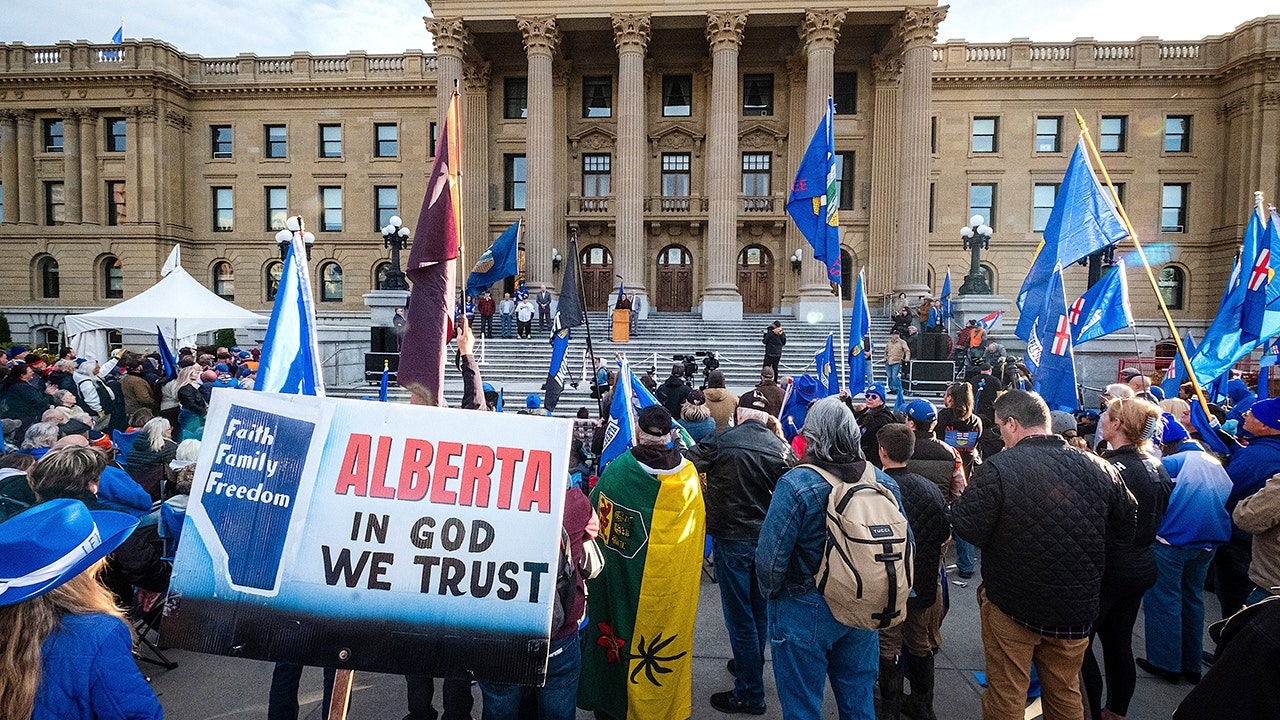
Residents of Alberta headed to the polls on Monday to cast ballots in a non-binding referendum that asks a deeply personal and provocative question: should this western Canadian province begin the process of trying to separate from the country it has belonged to for more than a century? The vote arrives at a painful moment for the province, still reeling from the loss of four soldiers and the injury of dozens others after a fast-moving fire swept through a military base near Edmonton. In the midst of that grief, Albertans filed into community centers, hockey rinks and school gymnasiums, some carrying coffee cups and quiet doubts, others wearing pins and expressions of defiance. For many, the referendum is less about an immediate break from Canada and more about a raw, decades-old frustration with Ottawa—taxation, energy policy, and a feeling that the central government neither understands nor respects the engine of the nation’s economy. The referendum is symbolic, not legally binding, but symbols can carry enormous weight in a place where identity is tied to independence and self-reliance. With roughly three million eligible voters, and more than 1.2 million ballots already cast by Saturday, the result will almost certainly show that a majority of Albertans want to stay in Canada. But that will not make the question disappear, especially for the nearly one in three residents who appear ready to test the idea of a future binding vote on secession.
Polling released in the days before the referendum painted a revealing portrait of a divided province. Abacus Data found that 74 percent of decided voters favored remaining within the Canadian Confederation, yet that reassuring number hides a restless undercurrent. Nearly 30 percent of respondents said they want Alberta’s government to begin the process of holding a binding provincial referendum on separation. Cory Morgan, a veteran separatist organizer who leads a group called Pathway to Independence, said the result will send a clear message. “It will say that about one in three Albertans have had it,” he told Fox News Digital. “There is a big rift within Alberta and if things don’t change, it will be a growing faction in this province—so this vote is an important one.” Another Abacus poll suggested that 61 percent of eligible voters expect Albertans to vote on separation again someday, even if most choose to remain in Canada this time. The Angus Reid Institute similarly found that 62 percent of Albertans believe “there will never be an end to the separatist movement” in the province. These numbers reveal less a sudden surge of secessionist passion than a persistent, simmering grievance. Morgan, who led the short-lived Alberta Independence Party in 2000 and 2001, acknowledged that a vocal minority within the movement dreams of joining the United States as the 51st state. But he insisted that most pro-independence Albertans do not want to become “a small fish in an even bigger pond.” He added that Albertans are not especially fond of President Trump at the moment, and that makes them less inclined to leave Canada—a statement that captures the strange, layered relationship between provincial pride, national identity, and American influence.
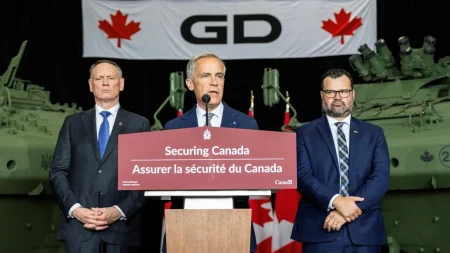
That complexity was on vivid display on Friday evening in Edmonton, where Prime Minister Mark Carney stood before a crowd of more than 5,000 at a “Forever Canadian” rally and made a direct appeal to the province where he was raised. He called the referendum “the worst possible time” for the country, warning that “the world is becoming more dangerous and divided” and that “some outside our borders are working to break us so they can own us.” The remark was an indirect but unmistakable reference to Trump’s trade war against Canada and his repeated talk about absorbing the country as an American state. Carney’s words were met with cheers, but they also underscored the deep ambivalence many Albertans feel. On one hand, they bristle at American economic pressure and threats to their sovereignty. On the other hand, many feel more culturally at home with the American West than with eastern Canada. Morgan, who is 55 and Alberta-born, explained that his province is “politically and culturally different” from the rest of Canada. “There’s a lot more focus on individual freedoms and property rights,” he noted, acknowledging that those values are traditionally seen as American. He said most Albertans would feel more comfortable “sitting down for a beer with people from Great Falls, Montana” than with people in Ottawa. That sense of kinship is not accidental. When Alberta became a province in 1905, its population grew largely from a migration of Montanans and other northern plains settlers. When oil was discovered in the 1940s, American companies like Chevron and Mobil helped develop what became Alberta’s biggest industry. The province’s history is interwoven with American capital, American workers and American attitudes in ways that make the Canadian flag feel like a political arrangement rather than an emotional birthright for some.
The American connection is also visible in the quiet maneuvering of separatist leaders, who have been courting U.S. interest in ways that alarm Ottawa. Earlier this month, The Globe and Mail reported that Alberta separatist leaders met with Republican strategists in Calgary in January to look at software designed to identify and mobilize supporters. In previous meetings with State Department officials in Washington, separatist leaders reportedly suggested exchanging water and oil for American support. Treasury Secretary Scott Bessent provided a glimpse of that temptation in January, describing Alberta as “a natural partner for the U.S.” and characterizing Albertans as “very independent people.” The comment was a gift to separatists and a red flag to Canadian federalists. Carney responded by saying he expects the U.S. administration to respect Canadian sovereignty, but the very need for that statement shows how much the political landscape has shifted. For ordinary Albertans, these stories stir conflicting emotions. Some feel flattered by American attention, viewing it as recognition of their province’s resource wealth and no-nonsense culture. Others feel uneasy, as if they are being courted by a powerful neighbor who wants their oil and water more than their partnership. This is not the first time foreign powers have shown interest in Canadian resources, but in an era of social media and strategic political consulting, the techniques are more sophisticated than ever. The idea that separatists are using American software to build a political movement makes the referendum feel less like a local grudge match and more like a chess move in a larger geopolitical game. Yet for the families lining up to vote, the decision is rarely about grand strategy. It is about jobs, taxes, health care, and the feeling of being heard—or ignored—by a government more than 2,000 miles away.
The political stakes for Alberta Premier Danielle Smith are enormous. Smith, who leads the United Conservative Party (UCP), has said she will vote to keep the province in Canada. She has also promised that if most Albertans support staying, she will not hold another referendum on the subject as long as she heads the provincial government. But that promise has a shelf life. The next provincial general election is set for October 18, 2027, and Smith may not be in power by then. Morgan, a founding member of the former Wildrose Party, which Smith once led before it merged with the Progressive Conservative Party to form the UCP, warned that Smith’s position could cost her. More than half of the UCP’s nearly 55,000 members support Alberta’s independence, he said. Angus Reid, founder and chairman of the Angus Reid Institute, explained that the UCP is a coalition of two very different instincts: conservative Canadians who want to fix the federation and separatists who want to leave it. In his firm’s recent polling, 67 percent of UCP voters who support a future binding referendum on separation said they would either “definitely support” or “consider” supporting the creation of a separatist provincial political party—not unlike the Parti Québécois, which has long used the threat of secession to extract concessions from Ottawa and recently won an election in Quebec. Such a party would “probably spell the death of the UCP since it is so badly divided between separatists and non-separatists, and it would likely end the career of Danielle Smith,” Reid told Fox News Digital. He estimated that 60 percent of respondents supporting a future binding referendum are “more likely sending a message to Ottawa” than expressing a firm desire to leave. In other words, the separatist movement in Alberta is as much a bargaining tactic as a genuine independence campaign. Albertans have watched Quebec wield the threat of separation for decades and have seen how much leverage it created. Many now wonder why they cannot use the same tool to demand a fairer deal for their province.
The referendum ballot does not contain only the independence question. There are nine other questions, five of them focused on immigration, including one asking voters whether Alberta should take more control “for the purposes of decreasing immigration to more sustainable levels, prioritizing economic migration and giving Albertans first priority on new employment opportunities.” This is not a fringe concern. In a province that has seen rapid population growth, housing shortages, and pressure on public services, many residents feel that Ottawa’s immigration targets do not reflect local capacity or values. The inclusion of these questions alongside the separation question shows that the referendum is not really about leaving Canada tomorrow. It is about asserting a local voice, demanding recognition, and testing the limits of provincial autonomy. Humanizing this moment means understanding the people behind the statistics. They are nurses and truck drivers, oil sands workers and teachers, young families who cannot afford homes and retirees who remember when Alberta felt like a land of unlimited opportunity. They are proud Canadians who wear red on Canada Day and equally proud Albertans who fly the provincial flag on their porches. They are tired of being caricatured as rednecks in the eastern media and tired of having their energy industry demonized by governments that benefit from their tax dollars. They are also, many of them, genuinely torn. They love their country, but they feel unwelcome in it. They want to be part of Canada, but they want the relationship to be one of equals, not masters and servants. That is why the referendum result will not end the debate. Even if 75 percent vote to stay, the 25 percent who want out represent a quarter of a province of more than four million people. That is not a fringe; it is a political force with a future. The fire that swept through the military base, killing soldiers and injuring dozens, only deepened the sense of fragility. In the face of loss, Albertans are asking themselves what they owe to each other, to their province, and to the country. The answers will not arrive with the vote count. They will arrive in the years to come, in every conversation over kitchen tables and in every decision at the ballot box. For now, Alberta waits, divided but determined, western but international, Canadian but not always feeling it. The referendum is a moment, but the movement is a story—and it will continue to unfold long after the last ballot is counted.