


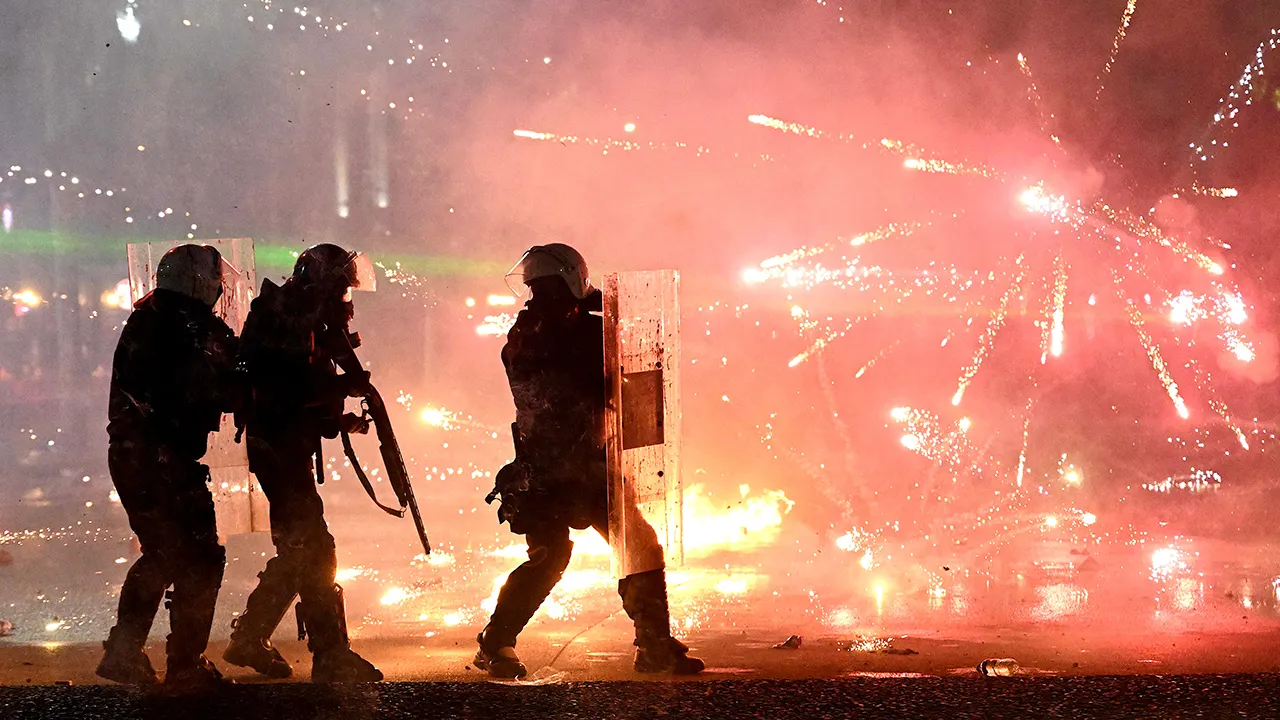
The streets of Tirana, Albania’s capital, have become the stage for a raw and escalating confrontation between the country’s security forces and a swelling tide of citizens who say they have simply had enough. For six straight days, clashes have erupted, with police and protesters locked in a tense and often violent standoff. Rocks have flown, water cannons have blasted, tear gas has clouded the air, and government buildings have been set ablaze. The scene is chaotic, urgent, and deeply worrying to people far beyond Albania’s borders, including in Washington. U.S. lawmakers have begun to speak out, visibly concerned that a small NATO member is sliding into a state of internal crisis. Republican Representative Joe Wilson of South Carolina posted a direct warning to Albanian authorities, saying, “The Albanian people deserve freedom, rule of law, and institutional accountability. The government must refrain from all violence against protestors. Young people deserve a voice in the future of their country.” It is a powerful message, especially because it names the real heart of this uprising: the young people. These are students, recent graduates, and young workers who have watched their country struggle with corruption, inequality, and a political class that seems indifferent to their future. They are not just demanding change; they are demanding that Albania become a place where they can actually see themselves thriving. And the fact that U.S. lawmakers are paying attention signals that this is not a small local disturbance but a moment with real international stakes.
What is driving this explosive movement? At its core is a deep frustration with a government that many Albanians believe has failed them. Protests have been fueled by allegations of corruption at the highest levels, an education system that leaves students feeling unprepared and undervalued, an unemployment problem that hits young people especially hard, and a general lack of opportunity that has driven many of Albania’s brightest minds to seek their futures abroad. The demonstrations began as student-led gatherings in Tirana, but they have quickly spread to other cities and towns across the country, turning into a nationwide movement. People are not just complaining about individual issues; they are calling for systemic change. They want an end to corruption, accountability for officials, and a restoration of the democratic institutions and the rule of law that they feel have been hollowed out. The anger is visceral because it feels deeply personal. For the young protesters, this is about whether they can hope to find a decent job, afford a home, trust their government, and believe in their own future. Republican Representative Robert Aderholt of Alabama echoed this sentiment, posting on X: “All parties must reject violence, and the government must respect the rights of peaceful protesters. Albania’s young people deserve a voice in shaping their nation’s future.” Fellow Republican Keith Self of Texas went further, linking the protests directly to a loss of faith in the political system: “The protests in Albania are a culmination of the people’s distrust of corrupt politicians and fatigue over the total disregard for the rule of law.” That phrase, “the rule of law,” is more than a legal concept here; it is a promise that Albanians feel has been repeatedly broken.
As the demonstrations have intensified, so too has the danger. Police report that 388 people have already been charged with criminal offenses related to the protests, and an unspecified number of both protesters and police officers have been injured. The images coming out of Tirana are not of a peaceful assembly but of a battlefield. Protesters have hurled rocks at police lines, burned government buildings, smashed shop windows, and destroyed private property. The police response has been heavy-handed, involving rubber bullets, water cannons, and tear gas. It is a stark reminder of just how fragile the relationship has become between the state and its citizens. The U.S. Embassy in Albania has weighed in with a cautious but clear call for calm, urging all demonstrators to exercise their right to protest peacefully and warning against violent rioting. The message from the embassy was restrained, but the very fact that it was issued at all shows how much concern there is over the direction events are taking. The international community is watching closely, and the pressure is mounting on Albanian authorities to respond to the legitimate grievances behind the protests without using violence. But there is also a real danger that the situation will spiral even further out of control. When a government resorts to force against its own people, and when protesters resort to destruction in response, the space for dialogue shrinks rapidly. The voices calling for reason and restraint are still present, but they are being drowned out by the sounds of sirens, shouting, and crashes.
Prime Minister Edi Rama, who has led Albania for years, is trying to frame the protests in a very different way. From his perspective, the demonstrations are not a legitimate outpouring of public frustration but a threat to Albania’s European future. He has accused outside forces of fueling the violence and has even invoked the specter of far-left extremism, claiming that the protesters have been “ideologized and radicalized under the pressure or inspiration of that dark and new force that has emerged in Europe and the United States, which the President of the United States has designated a terrorist organization: ANTIFA.” He has also spoken vaguely of “foreign hands” that do not want Albania to be at peace, to move forward, or to become part of the united European family. It is a framing designed to shift blame away from his own government’s actions and onto shadowy external enemies. But it is also a risky argument. Many Albanians do not recognize this description of their fellow citizens. They see their own children, neighbors, and friends in the streets, not puppets of foreign agitators. They see a prime minister who is desperate to hold onto power and willing to criminalize dissent to do so. Rama’s characterization of the protests as an existential threat to Albania’s EU ambitions may resonate with some, but it also ignores the very real political grievances that have brought so many people into the streets. It is easier to blame outside forces than to confront the deep cracks in your own leadership. But the people of Albania know their own reality, and they know why they are standing there in the cold, facing down police lines.
Former Albanian diplomat Agim Nesho, who once served as Albania’s ambassador to the United States and the United Nations, has directly challenged Rama’s narrative. Speaking to Fox News Digital, Nesho argued that Rama’s attempt to equate the unrest in Albania with protests in France, Italy, and elsewhere in Europe is misleading. “This overlooks the specific political grievances driving Albania’s demonstrations,” he said. Nesho also stressed something important: Albania’s European future should never be confused with the political survival of Edi Rama or any other government. He called on Brussels to take the situation seriously, to independently examine reports of police abuses, to uphold the rights of peaceful demonstrators, and to acknowledge the legitimate grievances behind the national movement. The European Commission, for its part, has issued a strong condemnation of the violence, specifically calling out arson, attacks on state institutions, and the destruction of public and private property. “Violence has no place in a democratic society,” the Commission stated, “and the response to it must remain within the law and proportionate.” It also reminded Albanians that grievances should be handled through constructive dialogue and in a peaceful manner. But the message from Brussels is double-edged. The Commission is clearly worried about the violence, but it also appears to recognize the depth of the discontent. Albania has made real progress toward EU membership, and European leaders do not want to see that progress undone. Yet they cannot simply look away when a government clashes with its own citizens. The situation is a delicate balancing act for Brussels, which must support reforms while also standing up for fundamental democratic principles.
Albania has been officially a candidate for European Union membership since 2014, and the road to accession has been long and unsteady. The most recent annual report from the European Commission acknowledged that Albania has made significant strides in judicial reforms and in combating organized crime. But those gains are now being threatened by the continued allegations of corruption swirling around the Rama government and by the violent unrest spreading across the country. The future of Albania’s EU membership is deeply uncertain, and the stakes could not be higher for the nation. For the young people in the streets, membership in the European Union represents something more than a political milestone; it is a promise of a freer, fairer, and more prosperous life. It means being part of a community where the rule of law actually matters, where governments can be held accountable, and where opportunities are not reserved for a connected few. But that dream is in danger, not necessarily because of the protests themselves, but because of how those in power choose to respond to them. The violence must end, and it must end on all sides. The grievances must be heard, and they must be taken seriously. The United States, the European Union, and Albania’s own citizens are all watching, and they are all waiting to see whether the country can find a way forward. It will require courage, humility, and a genuine commitment to justice. But as the protesters themselves have shown, the people of Albania are not afraid to demand more. They are young, they are organized, and they are determined to have a voice in their nation’s future. Whether that voice is met with tear gas or with listening ears will determine far more than the fate of a single government; it will determine whether Albania’s European dream becomes a reality or fades away into disillusionment.