

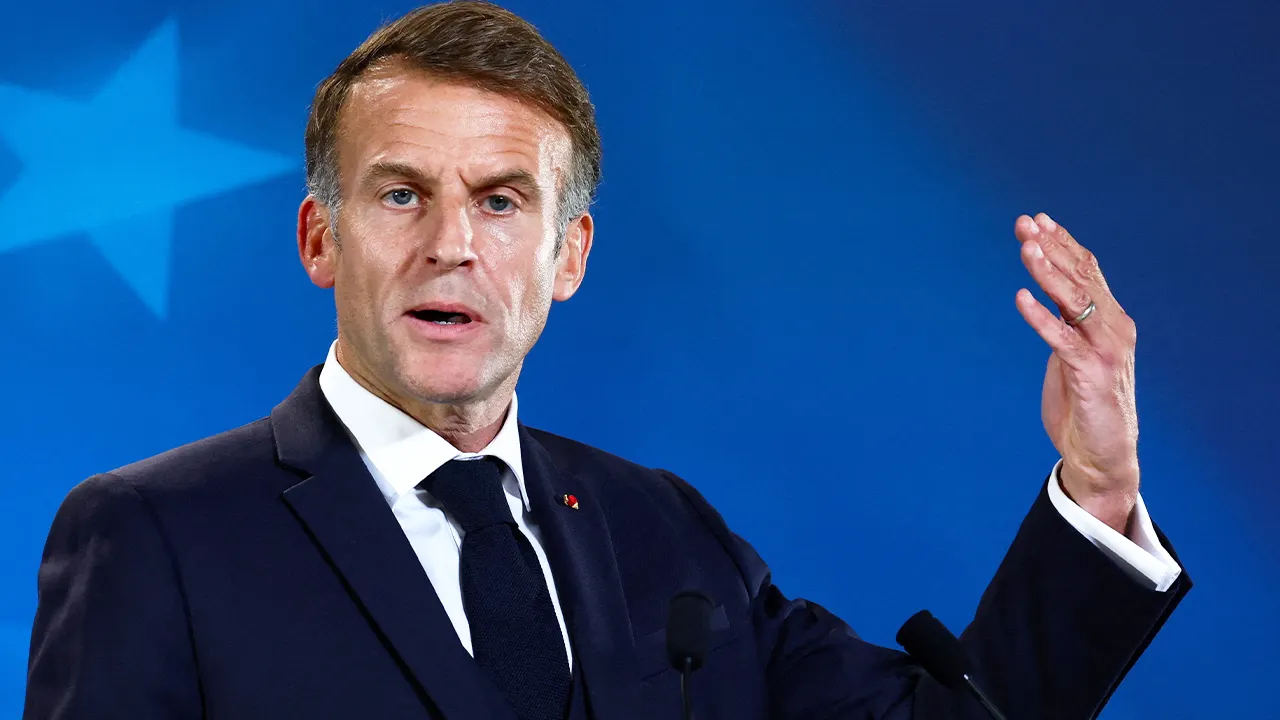
On a cool Friday evening, while much of France braced for what would become one of the most explosive weekends in years, President Emmanuel Macron chose to spend a few hours inside the warm, glittering world of a Celine Dion concert. He and his wife, Brigitte, slipped into the Plenitude Arena in Nanterre, just west of Paris, joining roughly 35,000 spectators for a performance by the beloved Canadian singer. According to French media reports, the couple arrived quietly and left the same way, avoiding the kind of public attention that might have seemed unseemly. But the news quickly leaked, and for many French citizens the image was deeply unsettling. Macron had just returned from two days of European Council meetings in Brussels, where he had used a news conference to call for “calm and respect” ahead of Saturday’s planned demonstrations. He reminded the nation that the right to protest was sacred, but that it had to be exercised with respect for people and property. Then, instead of remaining visible and attentive to the simmering anger at home, he appeared at a stadium concert, applauding a global pop icon as the country held its breath. The criticism was not about the music itself, or even about taking an evening off. It was about the timing, the symbolism, and the feeling that the man charged with holding the country together seemed oddly removed from the storm gathering at the gates. Within hours, the storm would break with terrifying force, and the image of the president at a Dion concert would come to represent, for his critics, a leader dangerously out of touch with the suffering of his people.
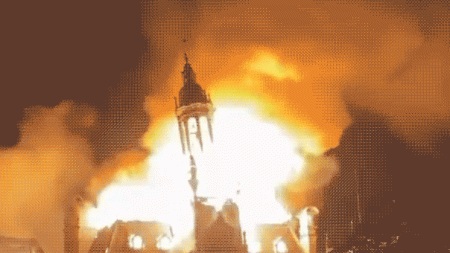
By Saturday, what had been planned as a day of protest had transformed into something far darker, a nationwide eruption of anger, chaos, and violence. French authorities reported that nearly 1,800 people had been arrested across the country, including 855 in the Paris region alone. More than 500 police officers, gendarmes, and firefighters were injured, according to Interior Minister Laurent Nuñez, and one protester died after suffering cardiac arrest during demonstrations in Paris. The scenes were alarming: in Limoges, a deliberately set fire tore through the historic city hall, causing significant damage to a building that had stood for generations. In Paris, Bordeaux, Marseille, Lyon, and other cities, shops were looted, windows smashed, public buildings vandalized, and vehicles set ablaze. The violence was not confined to a single angry neighborhood; it spread through the heart of major urban centers, where families shop, students study, and ordinary people go about their lives. Authorities estimated that more than 550,000 people participated in demonstrations across the country, while organizers claimed the number was closer to 800,000. Behind those staggering figures are human beings with complex stories: a teenage student who has spent months in overcrowded classrooms, a mother who cannot keep up with the rising cost of food and rent, a public hospital nurse exhausted by years of underfunding, a retiree watching the value of his pension shrink. The protests began as a month-long student movement over school conditions and teacher shortages in working-class suburbs, but they quickly broadened into something much larger: a national cry of frustration against inequality, public spending cuts, and the relentless rise in the cost of living. The violence, horrifying as it was, did not emerge from nowhere. It was the explosive expression of accumulated pain, and it left emergency workers, families, and entire neighborhoods to pick up the pieces.
To understand the rage that filled the streets, one has to look beyond the broken windows and burning cars, into the daily reality of communities that have felt abandoned for decades. For weeks, students in poor and working-class suburbs had been walking out of class, demanding smaller class sizes, more teachers, and schools that did not feel like warehouses for the forgotten. They were joined by parents who watched their children’s futures slip away, and then by public workers who spoke of services that had been cut to the bone. The movement grew because it touched a nerve that runs through the whole country. People spoke of hospitals closing beds, of trains being cancelled, of schools losing teachers, of local post offices shutting down. They asked a simple, painful question: where is the state? Why does it have time and money for so many other things, but not for us? In the working-class suburbs, especially, there is a deep sense of being invisible to the political establishment in Paris. Macron’s government has pursued ambitious economic reforms, but for many ordinary citizens, those reforms have not translated into a better life. They see the gap between the rich and the poor widening, and they feel the weight of inflation on every purchase they make. The demonstrations were supposed to be a peaceful answer to all of this, a chance to be heard. But when the marchers reached the police lines, when the speeches ended and the tension mounted, frustration turned into confrontation. Not everyone who took to the streets was a rioter; many were there simply to say, “We matter.” The looters and arsonists, officials say, were often organized groups or criminals who took advantage of the chaos. But the anger that filled the streets was real, and it did not vanish when the fires were extinguished. It remains, simmering beneath the surface, waiting to see whether anyone in power is truly listening.
The political reaction to the violence was as fractured and volatile as France itself. Macron, in a statement on X, condemned the destruction in the strongest possible terms, vowing that those responsible for damaging property, attacking public buildings, and looting businesses would be prosecuted and punished. He expressed his support for the police and warned against efforts to undermine French institutions. Prime Minister Sébastien Lecornu went further, attributing the unrest to the “ultra-left” and to criminals, a framing that many on the left saw as a deliberate attempt to discredit the protest movement and avoid addressing its root causes. The opposition, of course, seized the moment. Marine Le Pen, the leader of the far-right, condemned the looting and destruction, but she also used the chaos to criticize Macron’s government for failing to keep the country safe, a message that resonates with her voters who feel that order has broken down. Jean-Luc Mélenchon, the left-wing leader, took a very different approach. He defended the protesters’ broader grievances and accused the government of mishandling the demonstrations, saying that Lecornu was “playing with fire” by blaming the violence entirely on outsiders while ignoring the legitimate anger that had driven hundreds of thousands of people into the streets. The clash of narratives is not just political theater; it is a sign of how deep the divisions have become. With a presidential election just over a year away, the violence has already become a weapon in a larger battle for the soul of France. The government wants to present itself as the defender of order against extremists. The opposition wants to present the government as out of touch and repressive. Meanwhile, ordinary citizens are caught in the middle, trying to make sense of a crisis that has no easy political solution, and wondering whether the leaders who claim to speak for them understand anything about their lives at all.
The economic toll of the weekend was immediate, severe, and deeply personal. Alexandre Bompard, the CEO of Carrefour, one of France’s largest retailers, told French television that 50 of the company’s stores had been damaged, including 20 that were looted, with losses estimated in the tens of millions of euros. But the damage extended far beyond the balance sheets of large corporations. In cities across France, small business owners woke up on Sunday to find their shops vandalized, their windows shattered, their shelves emptied. A bookstore in Lyon, a bakery in Bordeaux, a pharmacy in Marseille—these are not faceless symbols of capitalism; they are the livelihoods of real people, many of whom live in the very neighborhoods where the protests took place. The mayors of Paris, Marseille, and Lyon have requested a meeting with the prime minister to discuss the damage and what can be done to help. Local officials in Marseille and Bordeaux have already announced or proposed emergency assistance for affected businesses. But for many shopkeepers, the immediate need is not a loan or a grant; it is the simple ability to open their doors again, to sweep up the glass, to restock the shelves, to face their customers and tell them that everything will be all right. The violence has also left a psychological scar that will take much longer to heal. Neighbors who once greeted each other now walk past charred buildings and police barriers. Parents wonder whether it is safe to send their children to school in the morning. The cleanup will take days, the financial recovery months, and the emotional healing perhaps much longer. What happened this weekend did not only hurt the economy; it wounded the sense of community that holds cities together, and that wound will not close easily.
On Sunday evening, Macron was scheduled to address the nation at 8 p.m. local time, after meeting with senior government officials. The speech was always going to be a critical moment, but the events of the past 48 hours have made it perhaps the defining test of his presidency. France is beginning a nationwide cleanup effort, and prosecutors are preparing charges against the nearly 1,800 people arrested. But the deeper challenge is political and emotional. Macron must acknowledge the anger that drove so many people into the streets, even as he defends the institutions that keep the country functioning. He must show empathy without appearing weak, firmness without seeming tone-deaf. The country is listening, but not everyone wants to hear the same thing. Some want reassurance that order will be restored and that the streets will be safe again. Others want a genuine commitment to addressing inequality, the cost-of-living crisis, and the collapse of public services. Still others want simply to be seen and heard, to know that their suffering has not gone unnoticed. No single speech can heal a nation divided by so much pain and mistrust. But the way Macron speaks, the words he chooses, and the promises he makes will set the tone for what comes next. If he can strike the right balance between compassion and resolve, there is a chance to begin the long, difficult work of repair. If not, the fires may have only been the beginning. France stands at a crossroads, exhausted, angry, and uncertain, and the world is watching to see whether its leaders can rise to the moment or let the country slip further into chaos.