

The Hidden Architecture of Protest: Inside France’s 287-Group Ecosystem
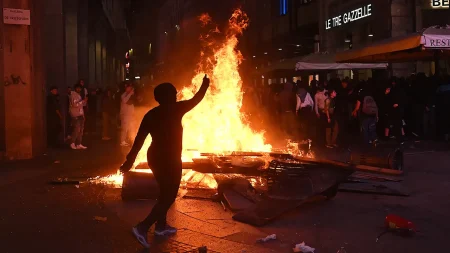
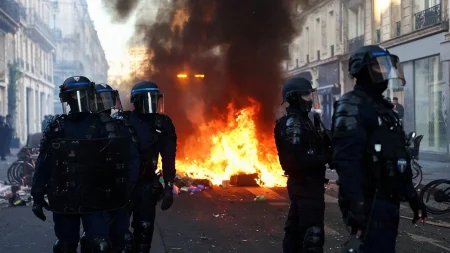
Beneath the placards, chants, and street blockades that have swept across France lies a vast, intricate human web—one that Fox News Digital’s “Who’s Who in Chaos Inc.” seeks to map in real time. This living database is more than a catalog; it is a window into the beating heart of a protest ecosystem that connects local neighborhood collectives to sprawling transnational networks. As it grows and evolves, it captures something essential about how ordinary people—students skipping class, workers walking off the job, grandmothers marching for climate action, and activists who have dedicated their lives to a cause—find one another, coordinate their anger, and transform simmering frustration into the collective roar of a nationwide mobilization. The database’s latest focus is France, where an astonishing 287 distinct organizations have been identified within the current protest wave. Each organization carries its own mission, ideology, and story, yet together they form a living organism animated by overlapping grievances: the rising cost of living, government austerity, police violence, educational budget cuts, systemic racism, gender inequality, the climate crisis, and solidarity with the Palestinian people. Understanding this ecosystem means understanding the people within it—not just abstract categories, but the real networks of friendship, shared history, and common cause that turn isolated voices into a single, powerful demand for change.
The Antifa Frontline: Local Defenders and Their Networks
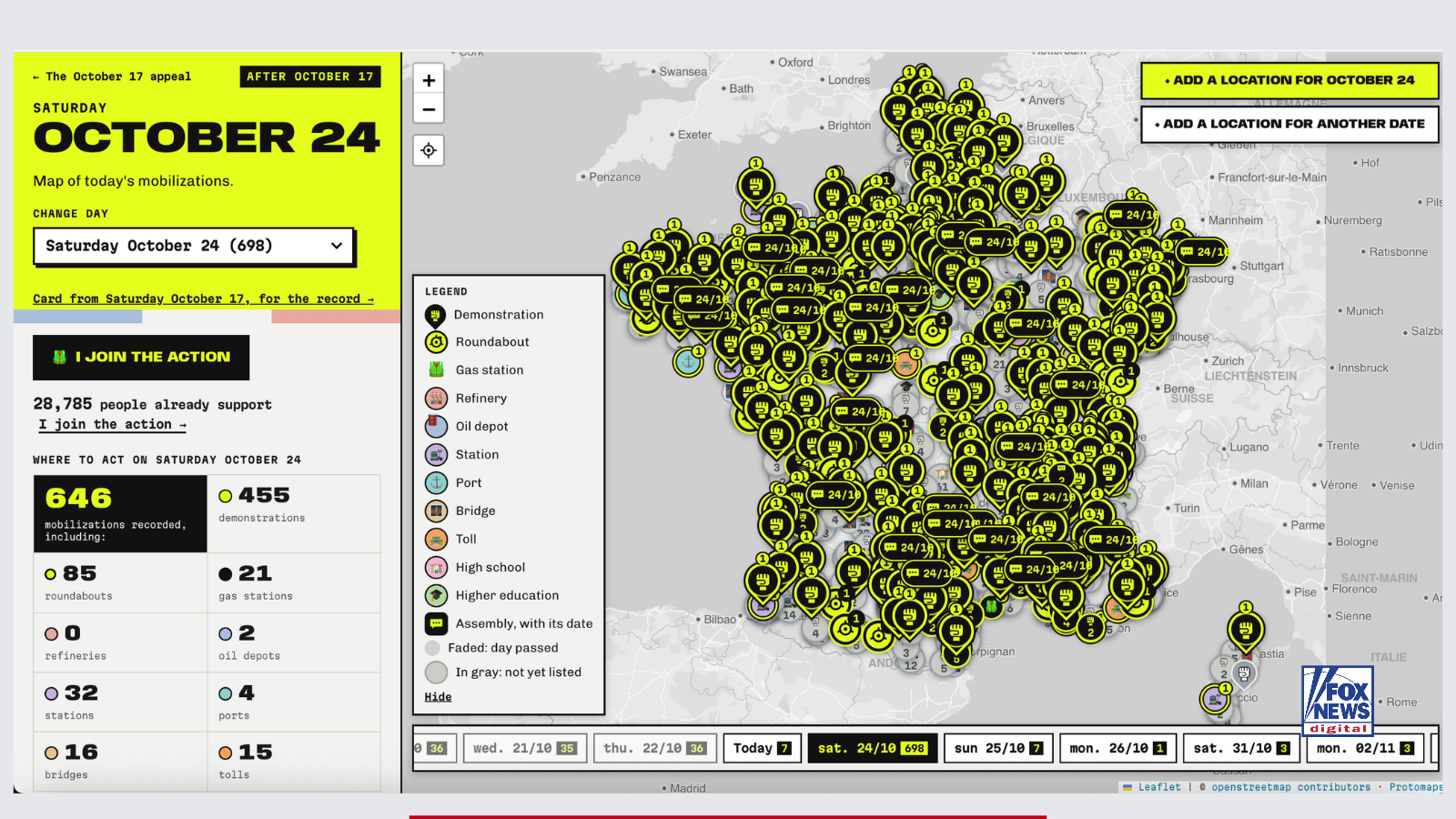
The most striking feature of the French protest landscape is the sheer density of antifascist organizing: 50 distinct groups operate under the Antifa/Antifascist umbrella, many of them small, hyper-local collectives with deeply rooted community ties. Groups such as Action Antifasciste Amiens & Alentours, Caen Antifa Squad, Millevaches Antifa, Nissa Antifa, and Tours AntiFasciste represent ordinary citizens—teachers, nurses, artists, retirees—who see themselves as a bulwark against the far-right’s growing influence. In October, these local organizations coalesced around the Ciao Fachos call for a national antifascist mobilization in Orléans on October 24–25, transforming scattered neighborhood vigilance committees into a coordinated national outcry. Some groups, like Orléans Riposte Antifasciste and Riposte Antifasciste Marseille, served as primary organizers; others, including the Collectif Antifasciste du 11ème and Rouen Antifasciste, lent their names and reputations as signatories and supporters. What makes these networks so human is their diversity: they include feminist antifascist collectives like Collectif féministe antifa 71, queer-inclusive spaces like Collectif Nîmois Antifasciste et Queer, and rural antifascist coalitions like Kreiz Breizh Antifasciste and AMAARS in Morbihan. Even Geneva’s La Piraterie Antifasciste crossed borders to join. Each group carries its own local history, its own set of friendships and rivalries, yet they converge on a shared conviction that fascism must be confronted at the neighborhood level before extremism consumes the country.
The Youthful Vanguard: Students and Revolutionary Ideals
No protest movement in France gains traction without its young people, and the database identifies 27 student and youth organizations fueling this uprising. At the grassroots are high-school collectives like La Relève Lycéenne, the Coordination nationale lycéenne, and Renouveau lycéen—teenagers who organized early school blockades, occupied their campuses, and chanted slogans about the “extremely violent repression” of their generation. Alongside them stand established national unions like the Union nationale des étudiants de France (UNEF) and the Union Étudiante, institutions that have channeled student frustration since generations past. These young activists were joined by 27 revolutionary-left organizations—communist, socialist, and Trotskyist groups—that supplied ideological heft, organizational muscle, and iconic red flags. The Communist Youth of Greece sent messages of solidarity; La Jeunesse Communists marched under hammer-and-sickle banners calling for “Class War!”; and Révolution Permanente, a Trotskyist publication, connected the high-school struggles to broader demands for systemic change. The human story here is one of awakening: teenagers who, for the first time, see their future under threat from budget cuts and austerity, discovering that their anger resonates with groups far beyond their classrooms. They are not abstract chess pieces in a political game; they are young people—some barely sixteen—who found purpose and belonging in a movement that takes their fears seriously. For them, the revolution is not a slogan but a promise of a different life, and the student unions, communist parties, and anticapitalist publications provide the scaffolding upon which that dream can be raised.
Workers and the Voiceless: Labor Unions and Migrant Rights
French protests have always drawn their soul from the working class, and the database’s 24 labor union organizations demonstrate how deeply the movement reaches into workplaces and professions. The CGT, Solidaires, Force Ouvrière, and SUD education unions all appear as active organizers, along with the Confédération paysanne, which called on farmers to join the October 17 protests, linking rural economic despair to the national mobilization. These unions represent people with faces: train conductors, hospital cleaners, cinema technicians, postal workers, and public school teachers who see their institutions being dismantled. Their message is emblazoned in the thousands of workers who walked off the job to defend their pensions and living standards. But the protest wave also embraces those who often lack the protection of unions—the undocumented, the marginalized, the displaced. The 19 migrant-rights, human-rights, and antiracist organizations identified in the ecosystem include Amnesty International France, SOS Racisme, the Mouvement contre le racisme et pour l’amitié entre les peuples (MRAP), the Coordination Sans-Papiers 75 fighting for undocumented migrants, the Fédération Droit Au Logement defending the right to housing, and the Moroccan Association of Human Rights in Paris. These groups bring into the streets a different humanity: refugees carrying stories of war and flight, immigrants demanding dignity, and civil-society organizations bearing witness to police brutality and systemic racism. Their presence transforms the protest from a simple labor dispute into a moral reckoning—a vision of a France that takes care of its most vulnerable, where workers’ rights and human rights are inseparable, and where the factory floor and the migrant reception center are part of the same story of resistance.
Intersectional Compassion: Feminists, Queer Activists, Climate Warriors, and Palestine
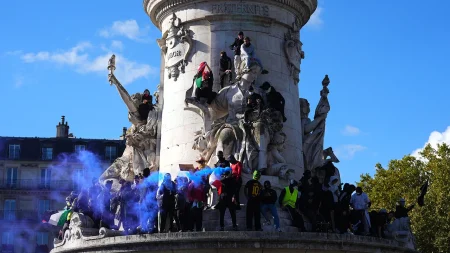
The 287-group ecosystem is strikingly intersectional, with 16 feminist and LGBTQ organizations weaving their own threads into the movement. Groups like #NousToutes France, the grassroots feminist collective that launched waves of protests against gender-based violence, march alongside LGBTQ sports clubs like Football Club Paris Arc en Ciel, queer collectives like Lille Radiqueer, family-planning providers like Mouvement Français pour le Planning Familial, and radical feminist intersectional groups such as GRIF in Orléans. For these activists, the protest wave is an opportunity to demand a society where women are safe and queer people can live openly and freely. Joined by 13 environmental and climate organizations—including the radical Earth Uprisings movement, Soulèvements de la Terre, Extinction Rebellion chapters, Greenpeace Le Mans, and Alternatiba collectives—the movement gains a future-oriented urgency, with activists insisting that no social justice is possible on a dying planet. Palm trees of another kind sway in the wind of the 11 Palestine-solidarity organizations, which bridge French domestic concerns with international crisis. Groups like the French Jewish Union for Peace (UJFP), Urgence Palestine, and the Collectif Orléanais pour une paix juste et durable marched with Palestinian flags, connecting the assault on Gaza, the killing of children in Palestine, and the universal desire for self-determination. These groups—mothers holding photographs of Gaza, farmers defending water sources, activists spray-painting feminist messages on city walls—reveal a movement whose compassion defies any single category. They are the human conscience of the protest, insisting that the fight for bread, wages, and housing is inseparable from the fight for gender liberation, ecological survival, and international justice.
The Wide Circle of Civic Passion: 100 Organizations and a Living Movement
Finally, the database identifies 100 additional civic and activist organizations that round out this vast protest ecosystem—an eclectic array that includes the Fondation Copernic, a left-wing think tank; the Mouvement de la Paix, dedicated to disarmament; France-Cuba Association, promoting international solidarity; the radical environmental network information gauchO; the anti-fascist support group Association des Ami.e.s de Maurice Rajsfus; and local civic collectives like La Marche des Solidarités and Collectif Santé Est Loiret. This sprawling category captures the reality that protest in France is not the exclusive domain of professional agitators but rather a civic tradition steeped in everyday life. These are the people who run community kitchens, organize neighborhood assemblies, publish alternative newspapers, and remember the lessons of the Paris Commune. They bring expertise in media, logistics, legal support, and care. What “Who’s Who in Chaos Inc.” ultimately reveals is a portrait of human resilience and interconnection—a world of neighbor helping neighbor, of students teaching workers about antiviolence tactics, of grandmothers cooking for the blockade, of undocumented migrants finding their voices alongside union stewards and climate activists. The database is designed to be continuously updated as new organizations emerge in response to shifting events, tracing the evolution of local chapters into national coalitions and global movements. It shows that behind every colorful banner, every viral slogan, and every burst of tear gas lies a fabric of human relationships built over years of shared struggle. This is not chaos merely for chaos’s sake; it is an ecology of hope, anger, and solidarity—a living testament to people’s refusal to accept their fate passively, and their determination to build, one blockaded street at a time, a different world.