



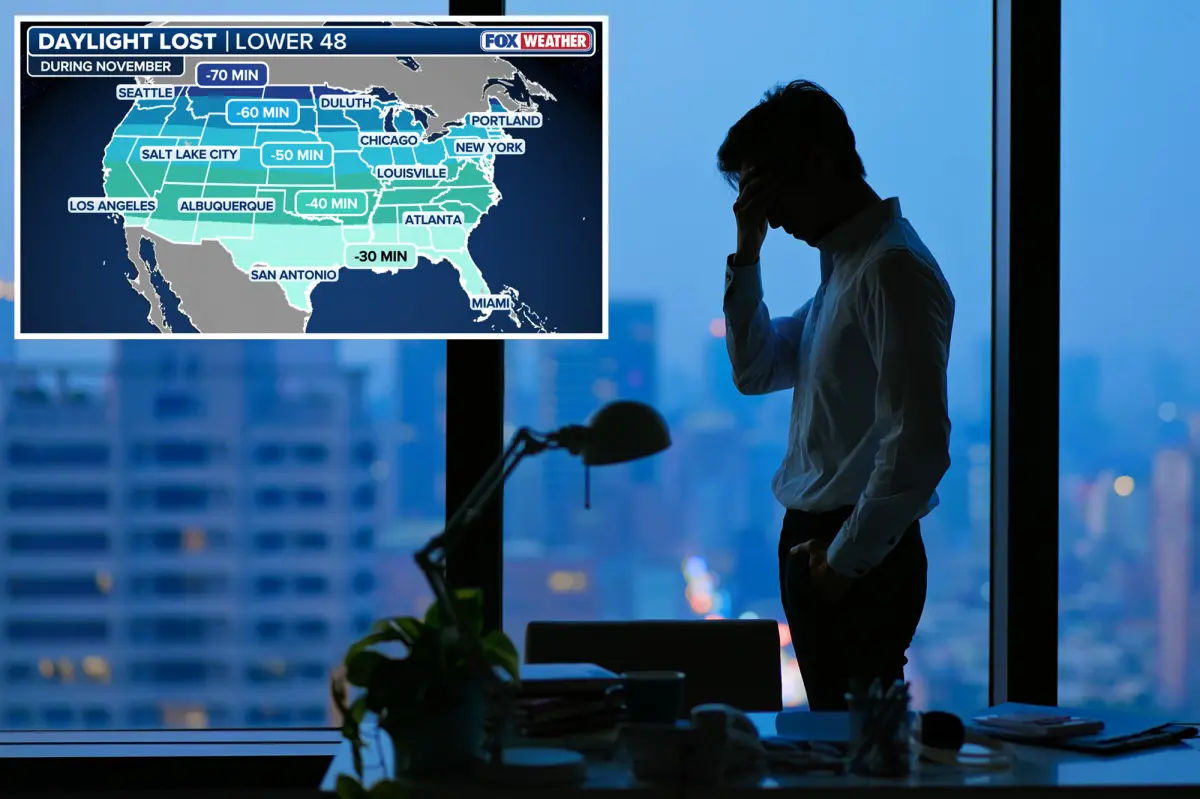
There is something almost generous about the way Daylight Saving Time ends on Sunday, Nov. 1. At precisely 2 a.m., the clocks will fall back to 1 a.m., and Americans everywhere will gain an hour they didn’t have a few moments earlier. In a world that often feels rushed and sleep-deprived, that extra 60 minutes can feel like a small act of mercy. For one night, at least, the calendar gives rather than takes. You can stay up a little later, sleep a little longer, or simply lie there in the dark enjoying the strange sensation of time bending backward. But that bonus hour comes with a trade. As the clock shifts, the sun will also shift its schedule, and the change is not purely for comfort. People heading home from work during the colder months will find themselves walking out into darkness that arrives earlier and stays longer. The evening commute becomes a journey through blackness, streetlights and headlights doing the work the sun used to do. Yet there is an upside to this seasonal shuffle, one that early risers will notice quickly. Mornings will become noticeably brighter, and for anyone who drags themselves out of bed before sunrise, that extra light can make the start of the day feel a little less punishing. It is a swap, really: evening light for morning light. And depending on who you are, you either dread it or welcome it.
In many ways, the mechanics of the switch are easier than they used to be, though they still require a certain amount of attention. Smartphones, computers, tablets and other internet-connected gadgets will handle the change on their own, silently updating while you sleep. There is no need to stand in the kitchen at 1:59 a.m. waiting to reset anything. The digital world will simply sort itself out, and you will wake up to a phone that already knows the correct time. But the same cannot be said for every device in your life. The microwave, with its persistently blinking clock, will need to be changed manually. The oven, which probably never got set correctly after the last move, will need attention too. The clock on your car dashboard, the one that flashes 12:00 if you ever disconnect the battery, will demand a moment of patience. And that old wristwatch, the one you still wear on special occasions, will need a gentle twist of the crown. For a few days after the time change, there will be a familiar chaos of wrong times scattered across kitchens, garages and bedroom nightstands. Some people will fix them immediately; others will leave them wrong for weeks, telling themselves they will get around to it eventually. It has become a small ritual of the season, a way of noticing just how many little machines we have taught to measure our days.
Daylight Saving Time itself is a strange and often misunderstood institution. It runs from the second Sunday in March to the first Sunday in November in nearly every state, a six-month stretch of shifted daylight that most people have simply come to accept. But not everyone takes part. Hawaii and most of Arizona sit out entirely, choosing not to participate in the twice-yearly clock dance. For those in Arizona, the logic is rooted in the brutal desert heat; nobody there wants an extra hour of evening sun in the summer. For Hawaii, the tropical sun is so consistent that there seems little reason to bother. That means the United States is not even uniform in its timekeeping. Travel across the country and you will find yourself in places where the time change is a non-event and other places where it still dominates the weekend conversation. It is a reminder that time, despite our best efforts, is not an absolute thing. It is a social agreement, a custom we maintain collectively. And like many customs, it has become so ingrained that changing it would require a surprising amount of political energy. The debate over whether to keep the system or abandon it has been simmering for years, and occasionally it boils over into the halls of Congress.
Lawmakers in Washington have indeed tried to kill the clock change for good. This summer, the House overwhelmingly passed the Sunshine Protection Act, a bill that would make Daylight Saving Time permanent year-round. The vote was 308 to 117, a margin large enough to suggest that the idea enjoys serious support across the political spectrum. The appeal is easy to understand. Who really wants to keep changing their clocks twice a year? The disruption to sleep, the confusion of schedules, the annoyance of microwave buttons, the simple absurdity of losing an hour in March and gaining one in November, it all adds up. Making Daylight Saving Time permanent would end that cycle, allowing the sun to stay out later in the evening all year long. But passing the House was only half the battle. The bill remains locked in the Senate, where it has stalled for reasons that are not entirely clear to the public. The Senate can be a slow and unpredictable place, and despite the overwhelming vote in the House, the measure has not moved forward. To the disappointment of many Americans, the grand promise of a permanent spring-forward will not arrive this year. The conversation continues, but for now, the old system remains firmly in place.
This all but guarantees that the upcoming weekend switch will go ahead as planned. The clocks will fall back, the morning light will arrive earlier, and the evening darkness will settle in a little sooner. For those who have grown tired of the ritual, it is another reminder of how hard it is to change something that has been embedded in daily life for generations. The Sunshine Protection Act may be trapped in the Senate, but the calendar is not waiting for a vote. The change happens regardless of what politicians decide. And as this year’s shift unfolds, another date is already on the horizon. The country will keep operating under the current system until at least March 2027, when clocks spring forward again and Americans will once again lose an hour of sleep. That may feel like a long way off, but it will arrive quickly enough. The rhythm of the year is marked by these small temporal shifts, and they are not going anywhere soon. For every person who secretly enjoys the extra hour of sleep in November, there is someone else who dreads the darker afternoons. And for every person who loves the long bright evenings of summer, there is another who wishes the sun would come up earlier in winter.
So as the weekend approaches, the best response might be to embrace the change rather than fight it. Use the extra hour to sleep in, to reset the clocks you have been ignoring, or simply to enjoy a slower Sunday morning. Let the phone update itself and take a moment to adjust the microwave. Notice how the early light spills through the curtains just a little earlier than it did the week before. The debate over Daylight Saving Time is far from over, and there is no telling what the Senate might do in the months ahead. Perhaps one day the Sunshine Protection Act will finally make it through, and the clock changes will become a memory. But until then, the ritual remains. The change is a small disruption, yes, but also a shared experience, a collective pause in the flow of time that almost everyone in the country goes through together. It is simultaneously an inconvenience and a gift. The Senate might not act, but the clocks will, and that is the one thing you can count on this weekend. Set the crown, press the button, and fall back into the comforting embrace of an hour you didn’t have before.