


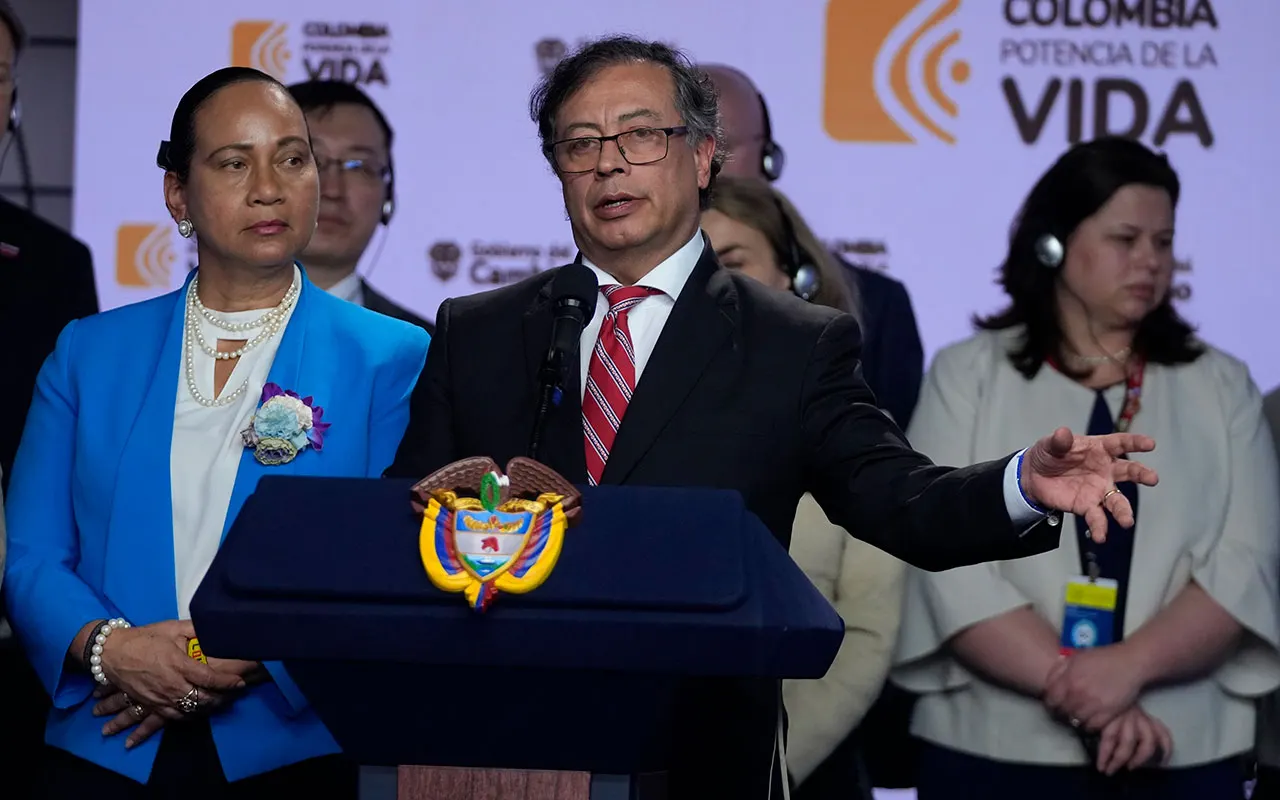
Behind the ornate gates of Colombia’s presidential palace, a story is unfolding that feels less like a policy debate and more like a dark, personal drama. Former President Gustavo Petro, a man who once promised to transform his country into a beacon of progressive change, now stands accused of something far more sinister than political mismanagement. According to Carlos Andrés Ríos, the director of Colombia’s Administrative Department of the Presidency, Petro oversaw a hidden system that allegedly trapped and exploited dozens of women, not as employees or public servants, but as ornaments for private presidential gatherings. Ríos told a congressional hearing last week that 48 women were effectively hired “just to be with President Petro”—a phrase that lands like a punch, stripping away any pretense of official duty. The accusation suggests that the Casa de Nariño, the stately home of Colombia’s executive branch, was not always a place of governance, but sometimes a stage for lavish parties, carefully curated to serve the personal desires of the man at the top. For many Colombians already weary of political scandal, the image is both devastating and painfully familiar: power weaponized, public money turned into private pleasure, and vulnerable women caught in a web they never asked to enter.
Ríos’s testimony painted a chilling portrait of how this alleged system operated. He described a deliberate, “systematic” effort to control and weaponize the women, using public service contracts as bait. In plain terms, the government was allegedly channeling salaries to these women through official channels, all while expecting something deeply personal and intimate in return. “We are going to prove to the Colombian people how the Casa de Nariño was unfortunately set up, organized, and tailored for something completely different—not to govern, but to party there every single day, bring in women,” Ríos declared to lawmakers. His words carry the weight of institutional betrayal. If true, this was not a random series of indiscretions, but an organized mechanism, built into the very administrative machinery of the presidency. The women, many of whom may have been struggling economically, were not just victims of one man’s behavior; they were casualties of a system that turned their vulnerability into leverage. The contracts gave the arrangement a veneer of legitimacy, yet the alleged purpose stripped it of any real dignity. For the public, the most disturbing part may be the cold calculation involved: the idea that official resources, paid for by taxpayers, were repurposed to create a private environment of pleasure and power, far removed from the needs of the nation.
Petro, however, has responded with fierce and unequivocal denial. In a public statement, he rejected the allegations with visceral language that seemed designed to show his disgust. “I have never given out a contract in exchange for sexual relations. I would vomit on myself if I ever did such a thing,” he wrote on X. It is a dramatic, almost theatrical assertion, one that invites both belief and skepticism. He tried to draw a sharp line between his administration’s social programs and the scandalous behavior alleged against him. According to Petro, his office did help vulnerable women—poor women, female heads of household, and those engaged in sex work—through concrete, state-funded aid programs meant to open new doors in their lives. He insisted that no one who participated in those programs could honestly say he had ever asked for anything improper in return. He framed the distinction as morally obvious: helping women escape difficult circumstances is an act of public service, while handing out contracts in exchange for sexual favors is an act of predatory abuse. In his telling, the two could not be more different. But the mere need to explain this distinction suggests how quickly the lines can blur in the public imagination, especially when accusations emerge from inside the corridors of power.
Then came an unexpected admission that added another layer of complexity to the story. Petro acknowledged that when he was very young, he occasionally visited places where sex work was practiced. He did not deny it or brush it aside; instead, he reflected on it with a strange mix of honesty and regret. “There, I experienced that paying for sex felt dirty to me, and I perceived the sadness of the men and women who attended those places. That is why I stopped visiting them decades ago,” he said. This is not the language of a man trying to erase his past, but rather someone attempting to reframe it as a lesson learned, a youthful misstep that ultimately left him with compassion rather than enjoyment. The statement humanizes him in a complicated way, because almost everyone can understand the awkward discomfort of a young person sorting through their own choices. It also, however, opens the door to another question: if he indeed understood the sadness and exploitation inherent in such places decades ago, how could he later build a political career that allegedly reproduced that dynamic inside the presidential palace? The admission is a double-edged sword, offering both vulnerability and vulnerability to attack. It reminds us that public figures are rarely simple heroes or villains, but that their own histories can become part of the evidence against them, even when they genuinely believed they had changed.
These accusations do not exist in a vacuum. Petro is already facing a chorus of criticism over his broader record: alleged misuse of public funds, depletion of national budgets, and unsettling ties to drug trafficking. For a man who rose to power as a former guerrilla fighter and a self-styled champion of the poor, such charges cut deeply. He has dismissed them all as politically motivated attacks, orchestrated by enemies who cannot produce a single piece of evidence to back their claims. In his statement, he specifically named President Donald Trump and Colombian political figure Abelardo de la Espriella, accusing them of trying to paint him as corrupt and as a drug trafficker. “I have never stolen a single peso from the public treasury and I have fought for over two decades against drug traffickers, exposing their political ties,” he insisted. His defiance is not without some factual support; throughout his career, Petro has indeed positioned himself as a vociferous opponent of the drug trade and political corruption. But in a country where many leaders have spoken noble words only to fall from grace, his declarations are met with both applause and doubt. The echo of past scandals, not just in Colombia but across Latin America, has made the public wary, and the line between accusations and proven wrongdoing can become painfully thin. What makes this moment so tense is that the allegations are not coming from distant political enemies alone; they are coming from inside his own presidential administration, from someone with direct access to the records and internal workings of the Casa de Nariño.
Ultimately, the truth may take months, even years, to fully emerge, and the women at the center of this story carry the heaviest burden. They are more than just symbols in a political battle; they are living people, with names, histories, and wounds that may never fully heal. If Ríos’s claims are substantiated, then a grave injustice was committed against them in the name of power, and the Colombian people must demand accountability not just for a former president, but for the system that allowed it to happen. If the accusations prove false or exaggerated, Petro will still have to contend with the lingering shadow they cast over his legacy and the uncomfortable details he himself has acknowledged about his past. In the meantime, the country watches with a mixture of exhaustion, anger, and hope—exhaustion from endless political turmoil, anger at the potential abuse of the most vulnerable, and hope that, somehow, the truth will be found and justice will be served. What happened behind those palace walls matters, not just because a powerful man is involved, but because it speaks to the fundamental question of whether public office exists to serve the people or to serve the appetites of those who hold it. For now, the answer remains unsettled, but the conversation has begun, and Colombia—along with the rest of the world—is listening closely.