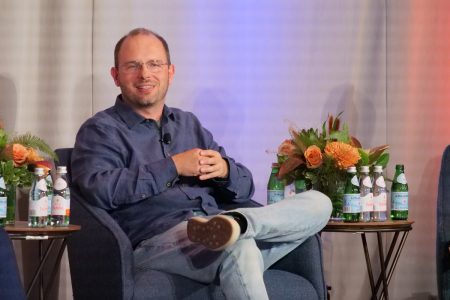



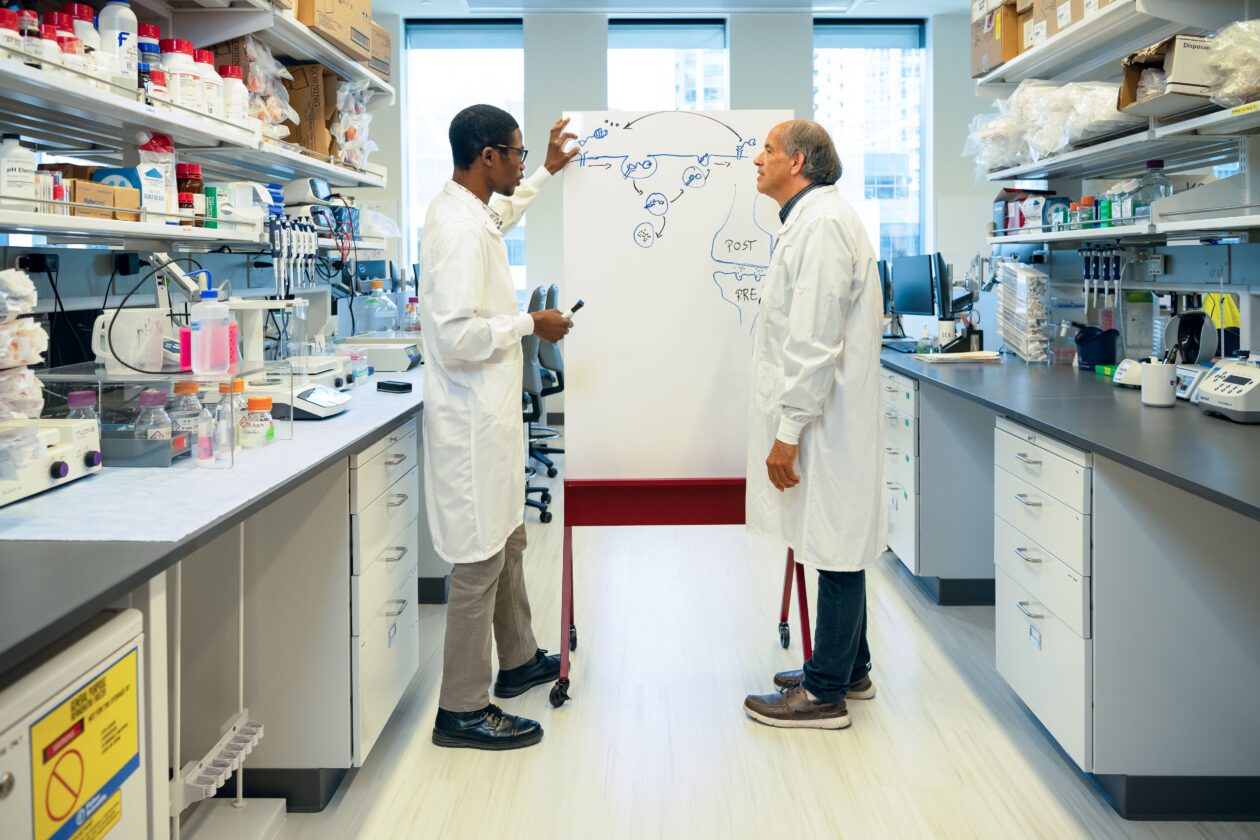
On a recent morning in Seattle, the city’s children’s hospital made a bold declaration about the future of pediatric medicine. Seattle Children’s announced the launch of its Institute for Pediatric Innovation, a $10 million initiative designed to tackle some of the toughest health challenges facing kids today. The hospital is positioning this new institute as the “core engine” of its strategic plan, a sweeping effort to rethink how care is delivered, how medical devices are designed, and how cutting-edge science gets translated from laboratories and research papers into the real world of exam rooms, operating theaters, and family kitchens. The announcement carries an air of urgency, because the stakes are uniquely high. Children are not just small adults; their bodies are growing, their brains are developing, and their medical needs are profoundly different from those of grown-ups. Yet for decades, much of the technology and many of the treatments used in pediatrics have been borrowed or adapted from adult medicine, often with less than perfect fit. Dr. Christopher Longhurst, who became CEO of Seattle Children’s in January, has been thinking hard about this problem. He sees the Institute as a way to move beyond the old pattern of adapting adult solutions, and instead build tools and treatments specifically for young patients from the ground up. The hospital is one of the largest pediatric systems in the country, with about 600,000 patient visits last year and roughly $2.6 billion in expenses, so the scale of the challenge is enormous. But Longhurst is not just thinking about scale in terms of budget or patient volume. He is thinking about scale in terms of impact: how to take promising ideas and make them work for every child who needs them, not just a fortunate few. The institute, he insists, is not another artificial intelligence center, and it is not about chasing what he calls “shiny objects.” It is about outcomes, about health, about the moments when a family hears a diagnosis earlier, a treatment works better, or a child gets to come home from the hospital sooner.
Longhurst brings a personal and professional history that helps explain the vision. Before coming to Seattle Children’s, he spent a decade at UC San Diego Health, where he founded and directed the Joan & Irwin Jacobs Center for Health Innovation. That experience taught him that the hardest part of innovation is not inventing something new in a lab, but embedding it into the daily rhythm of a hospital. When he talks about the Institute for Pediatric Innovation, he returns again and again to a simple question: With this new generation of tools — not just AI and large language models, but precision health tools, whole genome sequencing, and other advances — how can we solve problems in ways we haven’t been able to before? He is careful to stress that the institute itself is not a technology project. It is a framework for changing how the entire organization thinks and acts. That means asking hard questions about what families actually need. For example, Longhurst points out that there is a real need for a digital care platform built specifically for pediatric patients — a place where parents and providers can manage appointments, medications, test results, and communications without getting lost in a maze of unrelated adult-oriented systems. Seattle Children’s is already working with industry partners to build such a platform, and Longhurst is eager to include an AI chatbot that can help caregivers get quick answers, especially in the middle of the night when a worried parent is trying to figure out whether a fever is an emergency. But that is only one piece of a much larger puzzle. Other AI projects include a pilot tool that rapidly generates anonymous copies of medical images for research, and a listening tool that drafts clinical notes during appointments, freeing doctors to look at their patients rather than their screens. The through-line is not technology for its own sake; it is giving clinicians and families more time, more information, and more hope.
The institute is organized around eight focus areas, and together they paint a picture of how Seattle Children’s intends to ride the wave of biomedical innovation without being overwhelmed by it. The first area is AI tools, which includes the digital platform, the chatbot, the image generator, and the clinical documentation assistant. The second is industry partnerships, which Longhurst says cut across every other focus area. The hospital is already working with companies on the care platform, and it plans to partner on seeking Food and Drug Administration approval for pediatric uses of existing devices. This matters because many medical devices designed for adults are used off-label in children — sometimes for years, without pediatric-specific safety testing or FDA review. The third focus area is an innovation unit: a dedicated facility that offers advanced care and serves as a testing ground for new pediatric devices. Longhurst points to Ochsner Health’s innovation lab as a model, and he says he is not aware of any comparable facility focused specifically on children. The idea is to create a space where a device can be tried, refined, and evaluated in a clinical setting that has the staff and expertise to support true innovation. The fourth area, medical device innovation, overlaps heavily with the innovation unit. It aims to address unmet pediatric needs by taking data gathered from children who have been using adult devices off-label, analyzing that data to show safety and effectiveness, and then seeking FDA approval for those devices to be used formally in pediatrics. This is not glamorous work, but it is desperately needed. A child with a heart condition or a breathing problem may depend on a piece of machinery that was never actually designed for someone their size. By formalizing the pathway from off-label use to approved pediatric use, Seattle Children’s hopes to make those devices safer and more reliable for the kids who rely on them every day.
The remaining focus areas push even further into the future of medicine. Precision medicine is already being practiced at Seattle Children’s, where targeted therapies are offered to patients with certain genetic and molecular profiles. A recently published study from the hospital found that genome analysis, which is usually reserved for critically ill patients in intensive care, could also lead to faster diagnoses for non-ICU patients — especially children who are failing to thrive. For a parent, that can mean the difference between months of uncertainty and a clear answer about what is wrong, and what can be done. Longhurst says the question now is how to make a research project into something the hospital does every day, at scale, for every child who could benefit. The sixth area is biomedical data. Patient monitoring produces vast amounts of electronic data — heart rates, oxygen levels, breathing patterns — and that information can be combined with genetic data and protein-expression information to create a much richer picture of what is happening inside a sick child’s body. Seattle Children’s is pursuing technology that can recognize patterns across these sources in real time, guiding treatment for critically ill patients and potentially catching dangerous changes before a crash. The seventh area is therapeutics, with a focus on next-generation cell, gene, and protein therapies. These are treatments that sound like science fiction: engineering a child’s own immune cells to fight cancer, or rewriting a faulty gene to correct a disease at its source. The eighth and final area is training for young scientists and clinicians. Through the hospital’s Invent@SC program, early-career researchers and clinicians receive mentorship and education, with an emphasis on treatments that are discovered at Seattle Children’s and that can be widely adopted. This focus on training is intentional. Longhurst knows that the institute will not succeed on grants and announcements alone; it needs a pipeline of people who are curious, courageous, and committed to asking hard questions. By investing in young researchers and clinicians, the hospital is planting seeds that may not bloom for years, but that promise to bear fruit for generations of patients to come.
None of this will happen without guardrails. Seattle Children’s is establishing an AI Review Board that must approve any project coming out of the institute that involves artificial intelligence. The board will assess whether the proposed use of AI is ethical, equitable, and responsible — a crucial check in a field where the allure of new technology can sometimes outpace careful consideration of its risks. Projects that involve research will also go through the Institutional Review Board for regulatory compliance, ensuring that the rights and safety of patients, especially children, remain at the center of everything. Longhurst and his team have also recruited three external launch advisors to help find a chief innovation officer and develop the institute’s organizational structure. They are Dr. Matthew Lungren, a Stanford University adjunct professor and former chief scientific officer for health and life sciences at Microsoft; Dr. Kevin Koo, a radiologist whose career includes leadership roles at Seattle Children’s, UW Medicine, and McKinsey & Company; and Dr. Jessica Mega, a cardiologist and co-founder of Verily, the Alphabet company that works on life sciences and health technology. These advisors bring a mix of academic rigor, clinical experience, and industry savvy. Their involvement is a signal that the institute intends to be not just a hospital project, but a connector that brings together the best of what the world has to offer. Longhurst is also honest that the work will require a cultural shift. Hospitals, by necessity, are built around safety, consistency, and avoiding harm. That culture can sometimes become risk aversion, where the easiest answer is to keep doing what has always been done. Longhurst wants to encourage openness to change without sacrificing the discipline and rigor that keep patients safe. He is asking clinicians, researchers, and administrators to embrace a mindset that is both deeply cautious and genuinely adventurous.
The initial funding for the institute is a $5 million anonymous gift plus $5 million in existing hospital resources. In the context of a hospital with $2.6 billion in annual expenses, $10 million is not an enormous number. Longhurst acknowledges this plainly, but he sees it as the beginning, not the end. “That’s really just the beginning,” he says. “And what that should signify is a commitment from me as the leader to allocate actual investments in this space.” There is something fitting about a children’s hospital taking this approach. Pediatrics is a field where the future is always present, because children themselves are the future. A treatment developed today might not help a child who is already sick, but it might help the next child. A device approved for pediatric use might not change the world overnight, but it could change the world for one family. And a training program that gives a young researcher the courage to pursue a wild idea might lead to a breakthrough that nobody can imagine yet. The Institute for Pediatric Innovation will not solve every problem facing children’s health, and it will not avoid the inevitable setbacks and disappointments. But it represents something deeply important: an effort to build a system where children are not afterthoughts, where their unique needs are front and center, and where the next generation of tools, technologies, and treatments are designed for the smallest and most vulnerable among us. In a world where so much of medical technology is driven by adult markets, Seattle Children’s is placing a bet that caring for children is not just a moral good, but a source of innovation that can inspire the entire health care system. The institute is ambitious, a little untested, and still finding its feet. But it is rooted in a simple and powerful hope: that the children of today should not have to wait for the medicine of tomorrow.