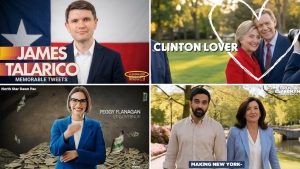


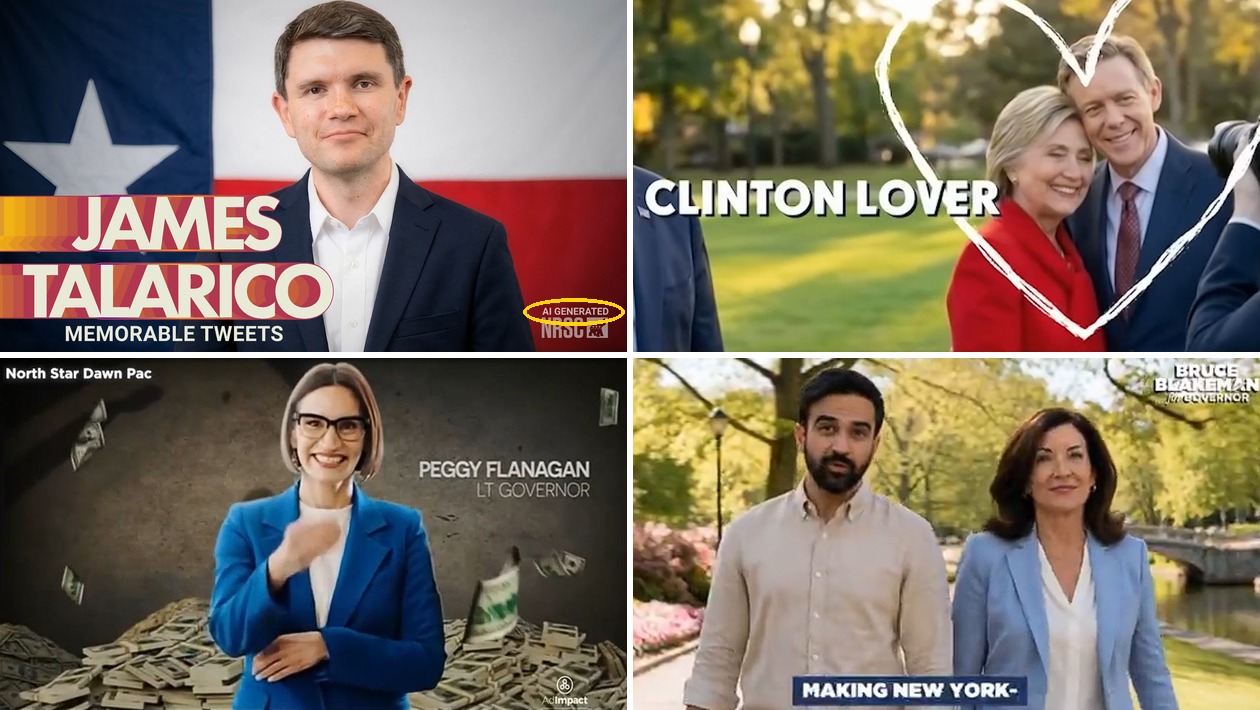
Imagine it’s a Tuesday night in late October 2026. You’re half-watching a show, or maybe scrolling through your phone, when a video stops you cold. There’s James Talarico, a Texas Democrat running for Senate, looking straight into the camera. He’s reading his own old tweets—the kind that could embarrass any politician—and then he adds commentary so spicy, so self-sabotaging, that you wonder how anyone could be this careless. His voice sounds right. His face moves right. His eyes blink at the right moments. There’s just one problem: none of it is real. The 85-second video was produced by the Senate Republicans’ campaign arm, and it was engineered to be believed. UC Berkeley deepfake expert Hany Farid reviewed it and said most people wouldn’t immediately know it was fake. Yes, there’s an “AI GENERATED” tag, but it’s small and faint, tucked into a corner where your eye would never land unless you were specifically searching for it. This is the world we live in now. The midterms are around the corner, and between now and Nov. 3, any clip of a candidate on your TV or in your feed may be fabricated. Most don’t carry any AI label at all. Campaigns and PACs have already spent more than $137 million to air AI-made ads this cycle, according to the Wesleyan Media Project. That’s not a trickle; it’s a flood. I’ve been predicting a deluge of political deepfakes for years, and I’m not saying “I told you so” with any satisfaction. I’m saying I’m scared. Because if a candidate can be made to say anything, then nothing anyone says can be trusted. And once that trust breaks, the whole democratic conversation breaks with it. I believe it will get worse if we don’t act.
Two years ago, I donated a year of my life to fighting this threat. I founded TrueMedia.org, a nonprofit built to detect deepfakes and give voters, journalists, and campaigns a free, powerful tool to sort the real from the fake. We had a brilliant, exhausted, driven team, and we moved fast. We built a state-of-the-art deepfake detector in record time and distributed it broadly, at no cost. Over elections around the world, it analyzed more than 60,000 images, videos, and audio clips. But it was early. The Wesleyan Media Project, which tracks political ad spending, found less than $50,000 in AI ad spending for the entire 2024 cycle. That was a relief, but I didn’t celebrate for long. I said in January 2025, “It did not materialize in 2024. That doesn’t mean that it’s not coming.” We open-sourced the technology and transferred it to Georgetown University, which resurrected TrueMedia.org in time for the peak of the current election cycle. I thought I knew what to expect. I thought the worst offenders would be foreign operatives—Russian troll farms, Iranian hackers, Chinese influence agents trying to sow chaos in American democracy. I was wrong. In 2026, the deepfakes flooding our politics are coming from American campaigns and American PACs. They’re being broadcast on local television and promoted in social media feeds by people running for office, or trying to defeat someone who is. That changes everything. Foreign influence is scary, but it’s easier to condemn. This is homegrown. This is our own political system eating itself, with AI as the fork and knife. It’s not some external enemy; it’s us. And that’s a harder problem to solve, because the people doing it are the same people we’d need to regulate.
Before we get to the truly dangerous stuff, we should be honest: many AI ads are harmless, even in a weird way helpful. Some are purely cosmetic. A still photo of Chip Keating, an Oklahoma candidate, animated into a smile. A synthetic family sitting at a kitchen table where a campaign once would have bought stock footage. Fred Davis, a Republican ad maker who has been in the business for 50 years, told The New York Times that a scene that would have cost $2 million to shoot a few years ago can now be generated for $200,000. Nobody is deceived. It’s just cheaper set design. Others are absurd on their face. In New York, Bruce Blakeman’s campaign ran an ad showing Governor Kathy Hochul and then-mayoral candidate Zohran Mamdani gardening together while pitching a “political delusion pill”—a surreal image designed to mock, not to deceive. In Los Angeles, Spencer Pratt, the reality TV star, appeared as Batman leading fed-up Angelenos armed with tomatoes in a mayoral ad. Pratt finished third in the primary. These aren’t deepfakes meant to fool you. They’re political cartoons with a pulse. NYU researcher Scott Babwah Brennen has a wonderful term for this genre: “AI-generated slopaganda.” It’s political slop made to stir feelings rather than make an argument. It might make you laugh or roll your eyes, but it doesn’t make you believe a lie about a candidate. The problem is that these silly ads train us to shrug. We see “AI” and think, “whatever, it’s just a joke.” Then a malicious ad comes along, and we’re less alert, not more. We become numb to the whole category, and that’s exactly what the serious deceivers are counting on. They’re hiding in plain sight behind all the noise.
The third kind of AI ad is built to be believed, and that’s the one that keeps me up at night. The Talarico video belongs in this category. So does the ad from Make Oklahoma Great Again PAC that showed gubernatorial candidate Mike Mazzei cheek to cheek with Hillary Clinton under the words “Clinton Lover. Trump Hater.” The PAC spent more than $200,000 putting that on Oklahoma television, and the ad carried no AI label. In Minnesota, a different PAC ran an ad showing Senate candidate Peggy Flanagan with her hand outstretched in front of a pile of cash, as if she were grabbing for it. Talarico’s real campaign is now so worried about this stuff that his actual ad ends with the words “Made by humans, not A.I.” Think about that: a candidate has to reassure voters that he is a real person saying real things, because fakes are so common. And here’s what the research shows: a deceptive fake doesn’t have to be high quality to work. In a 2021 experiment with 5,750 people, a deepfake of Elizabeth Warren convinced 47 percent of participants that a fabricated scandal was real. A plain fake headline convinced 43 percent. The deepfake barely outperformed a text headline. A Utah Valley University study this June found that voters correctly identified deepfakes about 16 percent of the time—worse than a coin toss. People who called themselves “extremely familiar” with deepfakes did no better than people who had never thought about them at all. That’s a devastating finding. Media literacy, the thing we always say will save us, doesn’t inoculate you against a well-made fake. Your own eyes and ears are not enough. In real life, seeing is believing. Our brains didn’t evolve for a world where video evidence can be manufactured. It feels true because it looks true. And once that feeling takes hold, it doesn’t let go easily.
The laws currently on the books are not solving this. At least 31 states have deepfake election statutes, but they’re a patchwork of different definitions, different penalties, different levels of teeth. Wesleyan’s researchers found that in states with laws, 29 percent of AI ads were labeled. In states without such laws, 32 percent were labeled. The laws made no difference—or, if anything, AI ads were slightly less likely to be labeled with a law on the books. That’s not a solution. Even when a label does appear, people miss it. NYU’s Center on Technology Policy showed 1,051 people labeled and unlabeled versions of political ads. Thirty-seven percent didn’t even remember seeing Michigan’s required disclaimer. And because the disclaimer says “manipulated by technical means” rather than “AI,” only 21 percent identified AI as the technology involved. The one thing labels reliably did was make viewers trust the candidate who ran the ad less. That’s a perverse incentive: the more honest you are, the more you’re punished for it. No wonder campaigns leave the labels off. So what do we do? My proposed solution is simple. The litmus test should be the person shown, not the technology used. Did a real person agree to be shown this way? If not, the ad has to carry a plain-language label, on screen and in the audio, or it doesn’t air. A station manager can apply that test in a minute. It doesn’t require a definition of “deceptive” that lawyers can argue about for years. It’s a simple question: Did the person in this ad actually sign off on being shown this way? If the answer is no, the audience should be told. This rule should cover paid political ads—the one place where a broadcaster already checks every spot before it airs. Memes, satire accounts, and your cousin’s group chat are a different problem. Let them be weird. But when someone pays to put a fake on the air, there has to be a standard. Sejin Paik, the Georgetown researcher who now leads TrueMedia, puts the television problem plainly: “On TV, where AI ad spending is rising, a viewer watching a deceptive ad has little room for a crowd reaction or a provenance mark to change their view.”
There is a better path. H.R. 9922 would set a federal disclaimer rule, replacing the state patchwork with one clear national standard. And here’s something remarkable: the consultants’ own trade group—the people who make campaign ads—are asking for a federal standard. They know the current mess is bad for everyone. When the regulated party asks for the regulation, you should pass it. Voters are ahead of Congress, as they so often are. A Scripps News poll this month found that 43 percent of registered voters said they had already been fooled by an AI-made ad during this campaign. Nearly half of us—including people who follow politics closely—have been tricked. And the desire for action is bipartisan: 77 percent of Democrats and 79 percent of Republicans want rules on AI in politics. That’s not a partisan issue. That’s a human issue. Looking ahead, 2028 is a presidential election. If we think this year is bad, imagine what a national presidential race could look like with no federal rules on AI in ads. Imagine a fake video of the president, or a candidate for president, saying something catastrophic in the final weeks. Imagine the echo chamber that follows. We have two years to get the rules and processes in place, if we start now. We don’t need to ban AI. We don’t need to stop satire. We just need to know who is actually speaking to us. We need a simple, honest label when someone is shown saying or doing something they never said or did. That’s not too much to ask. Actually, it’s the least we can ask. Democracy is built on the assumption that voters can tell what’s true. We’ve lost that. We can get it back—but only if we decide that the truth is worth defending. The midterms are the warm-up. The real game is coming. Let’s not wait until it’s too late.