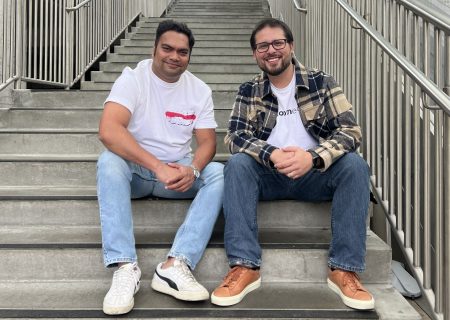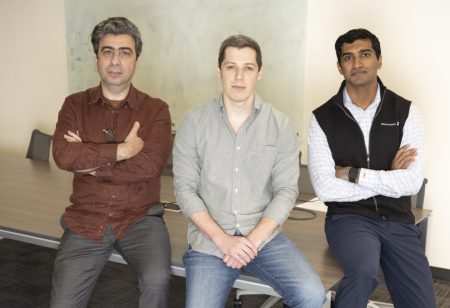




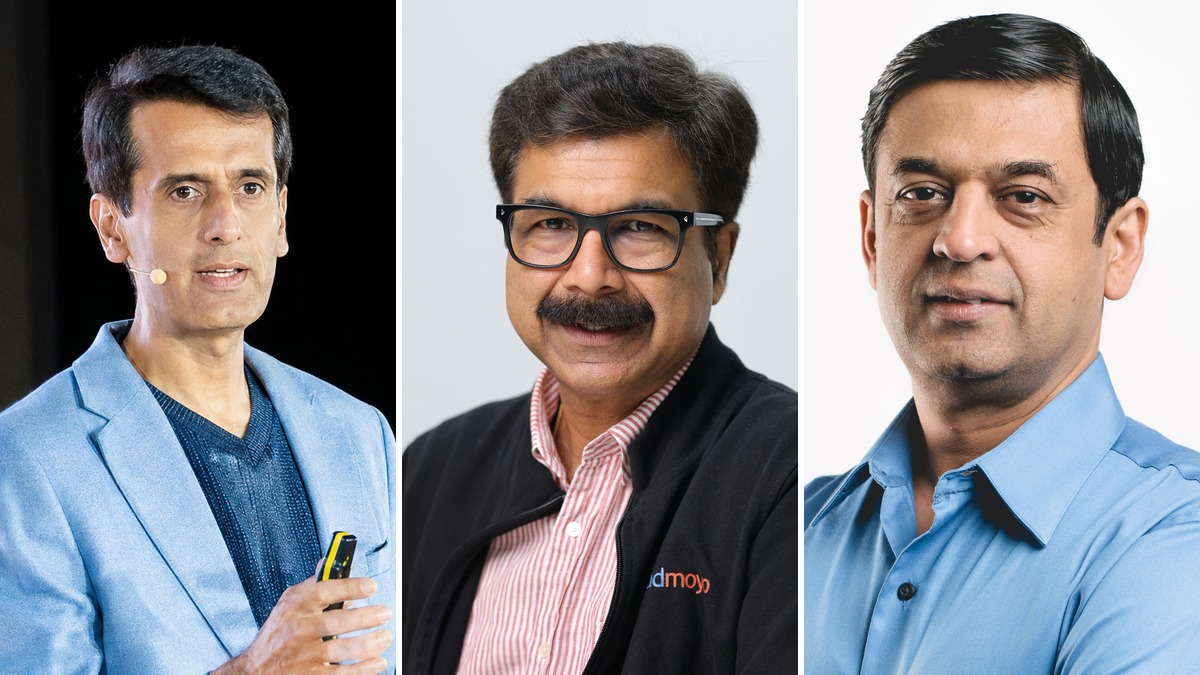
There are deals that feel less like transactions and more like homecomings, and the acquisition of CloudMoyo by HumanTronik belongs in that rare category. HumanTronik is a young artificial intelligence startup co-founded by Monish Darda, who also helped build Icertis into one of the most successful enterprise software companies in the Pacific Northwest. Now Darda is bringing CloudMoyo, the Bellevue-based technology services firm that he helped spin out of Icertis back in 2015, into the HumanTronik fold. The deal is significant not just for the two companies involved, but for the people who have been part of an extended professional family for more than a decade. CloudMoyo’s co-founders remain in leadership roles: Darda serves as CEO of the new parent company, while Manish Kedia continues to run CloudMoyo on a day-to-day basis. The family of the late Samir Bodas, who co-founded CloudMoyo and also served for years as the longtime CEO of Icertis, sold its stake in CloudMoyo as part of the transaction. That detail underscores how deeply personal this deal is. This is not an anonymous corporate merger between distant rivals; it is a coming together of people who have built businesses together, invested in one another, and shared difficult moments, including the loss of a leader and friend. Financial terms were not disclosed, but the structure is clear: CloudMoyo will keep its name and its customer contracts, and it will sell and implement HumanTronik’s technology alongside its existing lines of business. Kedia described the acquisition as a natural evolution rather than a sudden shift, a way to combine CloudMoyo’s deep consulting expertise with HumanTronik’s bold bet on a new kind of AI.
At the heart of HumanTronik is an idea that sounds almost philosophical at first, but is deeply practical in execution. The company is developing what it calls “human language models,” a phrase that is meant to capture AI systems that learn how specific executives make decisions, communicate with colleagues, and navigate the messy, human side of work. This is different from the generic large language models that power chatbots and content generators. HumanTronik wants to build AI that understands the reasoning style of a particular leader, the way they weigh trade-offs, the people they trust, and the rhythms of their daily workflow. Those models are designed to power AI agents that live inside familiar workplace tools like Microsoft Outlook and Teams, quietly assisting executives by drawing on the conversations, documents, and data that shape their decisions. The acquisition of CloudMoyo gives HumanTronik something that many AI startups lack: a large, experienced team of consultants who know how to work inside real businesses and implement technology in ways that actually stick. CloudMoyo brings more than 300 consultants to the table. Kedia calls the combined business model “Service as Software,” meaning customers pay for software with ongoing support built directly into the subscription, rather than treating implementation as an expensive afterthought. Pricing is also shifting, moving away from old-fashioned per-user fees and toward fees based on results. That reflects a broader wave sweeping through the technology industry. As Sequoia Capital’s Julien Bek argued in a widely discussed essay, the next trillion-dollar company may well be “a software company masquerading as a services firm,” and he noted that companies currently spend roughly six dollars on services for every one dollar on software. The big players are taking notice. Anthropic launched a $1.5 billion services venture with Blackstone, Hellman & Friedman, and Goldman Sachs in May, and OpenAI rolled out its Deployment Company the same month with more than $4 billion in initial investment, embedding its engineers directly inside customer organizations. HumanTronik and CloudMoyo are positioning themselves to ride that same wave, but with a more personal, executive-centric twist.
CloudMoyo itself has been quietly transforming over the past couple of years. Originally, the firm made its name largely by implementing Icertis’s contract lifecycle management software for enterprise customers. That work is still important, but it is no longer the whole story. Increasingly, CloudMoyo has been building AI tools on Microsoft’s Fabric data platform, helping companies make sense of their own data and automate complex decisions. Its customers include Seattle-based global logistics company Expeditors and Mexican railroad Ferromex, and Kedia says the AI business is growing at roughly 100 percent, far outpacing the company’s more traditional consulting work. That growth is not hard to understand when you hear how HumanTronik and CloudMoyo imagine the technology being used. Kedia gave the example of a procurement director who is trying to cut spending by two points over the course of a year. In the old way of doing things, that director might rely on spreadsheets, quarterly reports, and a lot of guesswork, along with an expensive consulting engagement that produces recommendations but little follow-through. With HumanTronik’s agents, the software would draw on actual conversations with suppliers, internal discussions among team members, and the company’s broader business data to help the director and their team reach that goal, not just understand it. The AI acts less like a tool and more like a chief of staff who has read every relevant email, remembers every key decision, and can gently nudge people toward action. That kind of assistance feels urgent and practical, and organizations seem willing to pay for outcomes rather than just software licenses. CloudMoyo’s consultants, many of whom have spent years embedded in client organizations, are exactly the kind of people who can make such a system work in the real world rather than in a demo video.
The deal came together with surprising speed, especially for an acquisition involving two companies with intertwined ownership and years of shared history. Kedia says he and Darda met in the Bay Area three or four months ago to talk about CloudMoyo’s growing AI work. Darda showed him what HumanTronik was building, and Kedia was impressed. Negotiations lasted only about two months, which is remarkably quick for a transaction of this complexity. One reason it moved so smoothly is that the founders have known each other for years. There was already deep trust between the people on both sides of the table. But there were also important legal guardrails, because Darda was a major shareholder in both companies and served on CloudMoyo’s board. That meant he could not be directly involved in the negotiations, a conflict of interest that was handled carefully by giving each side its own independent legal counsel. Kedia emphasized this during the announcement, noting that every detail was reviewed properly and fairly. The speed also reflects a sense of urgency that is common in the AI world right now, where capabilities are advancing rapidly and companies are scrambling to find talent, data, and distribution. By joining forces, HumanTronik and CloudMoyo avoid the slow, awkward process of one company trying to acquire customers and expertise piece by piece. Instead, they get a unified team that already has strong customer relationships and a track record of delivery. Kedia framed it in wonderfully human terms, saying, “We are staying within the families.” That phrase captures the spirit of the entire transaction: it is a family affair, but one that is being handled with professional rigor and clear-headed governance.
To understand what this means, it helps to rewind to 2009, when Darda co-founded Icertis with Samir Bodas and served as its chief technology officer for about seventeen years. He stepped back from the CTO role in April to start HumanTronik, but he still holds the title of chief mentor at Icertis, a fitting label for someone who has guided technology strategy for nearly two decades. Kedia’s path is similarly intertwined. He once led business development for Microsoft’s SQL Server database software, then served as president of Icertis for several months before leading the CloudMoyo spinout in 2015. Bodas was the longtime CEO of Icertis, and his death left a void that the company is still navigating. Icertis is currently led by interim co-CEOs Rajat Bahri and Jim Moffatt, after Anand Subbaraman departed in July, less than a year after succeeding Bodas. Bloomberg reported in February that Icertis was working with Goldman Sachs to explore a potential sale. But Kedia was quick to clarify that Icertis has no financial stake in HumanTronik or CloudMoyo, even though the companies continue to work together. Meanwhile, Kabir Narang, HumanTronik’s other co-founder, has his own deep connection to this ecosystem. He led Icertis’s Series A funding round in 2015 while at Fidelity’s venture arm, Eight Roads, and later became a founding partner at B Capital. Narang is based in Singapore, which explains why HumanTronik is setting up a subsidiary there. These are not strangers who stumbled into a deal; they are members of a tight-knit network of founders, investors, and operators who have been building trust for years. The acquisition is best understood not as a divergence from that history, but as a continuation of it, with the next chapter now being written around human language models rather than contract software.
Where does all this leave the people, the places, and the name? HumanTronik is headquartered in San Francisco, where it plans to open an engineering center. Darda is based in Pune, India, where CloudMoyo already has a substantial engineering center, so there is a natural bridge between the two locations. Nearly all of CloudMoyo’s employees are becoming HumanTronik employees, and they will be joined by a handful of HumanTronik engineering leaders in the Bay Area. In the Seattle area, the combined company has about twenty people, including CloudMoyo’s office in Bellevue, which has been there for the past decade. Kedia, who lives in the region, said the company plans to hire engineering, product, and sales staff locally, which is a hopeful sign for anyone who wants to see the Pacific Northwest remain a center of serious AI innovation. The numbers have changed dramatically since 2016, when GeekWire last checked in on CloudMoyo. Back then, the company had roughly 200 employees, most of them in Pune, and only about fifteen in the Seattle area. Now it is a much larger organization, with more than 300 consultants and a rapidly expanding AI practice. The name CloudMoyo has its own story, one that resonates on a human level. The founders picked it up while traveling, discovering that “moyo” means heart or spirit in Swahili. For years, that name has reflected the company’s belief that technology work should be done with care and soul. After the HumanTronik deal, Kedia said, the company’s new motto is “human with a heart.” That phrase could easily be dismissed as corporate branding, but in the context of this acquisition, it feels earned. The companies are betting that the future of AI is not just about algorithms and data, but about understanding how real people think, work, and lead. By bringing together HumanTronik’s ambitious vision with CloudMoyo’s deep expertise and its spirit-driven culture, Darda, Kedia, and Narang are trying to build something that is both technologically advanced and deeply human. In an industry that often seems obsessed with replacing people, their bet is that the most valuable AI will be the kind that helps people become more of who they already are. That is a story worth watching, and for the people involved, it is also a homecoming.