

Twelve hours after Loomerang’s website went live in June, someone in Houston bought a T-shirt designed by Joe, an independent artist in Japan. It was a small order—one shirt, one design, one transaction—but it carried the entire point of the company: talent shouldn’t have to wait for permission to reach the world. Four months later, Loomerang, a Seattle-based marketplace for artist-designed T-shirts, has grown to include 40 artists from 15 countries and has recently expanded into India. The company was founded in 2024 by Vijay Roy, Matt Koyama and Arka Majumdar, and it operates out of Seattle and Kolkata, India, with a lean, scattered team and an ambitious mission. Loomerang is not trying to be the next fast-fashion giant. It wants to be the opposite: a place where the person who draws the picture on your chest gets paid like they matter, because they do. The first sale felt like proof. Joe, an unknown artist across the Pacific, had made something that a stranger in Houston connected with enough to buy. That transaction set the tone for everything that followed: no slick corporate machinery, no invisible supply chain, just an artist, a customer, and a company building the bridge between them. In a culture where clothing is often mass-produced and divorced from its maker, Loomerang is betting that connection is the future. The fact that the response came so quickly suggests the bet may be right. Within months, the marketplace began to feel less like a project and more like a movement. The roster is intentionally small but global: artists from Japan, India, Seattle and beyond, each with a distinct visual voice. The company recently expanded into India, not as an afterthought but as an intentional part of its identity, since co-founder Arka Majumdar and part of the team are based in Kolkata. Yet the founders have resisted the temptation to scale too fast. They are building something that can last, not something that simply gets big. The name itself suggests what they are trying to do: a loom weaves threads into something whole, and a boomerang returns to the person who threw it. Loomerang wants the value to come back to the people who created it.
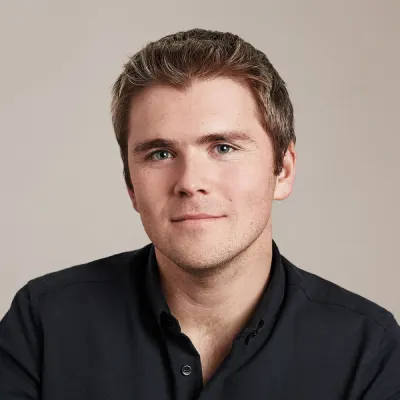
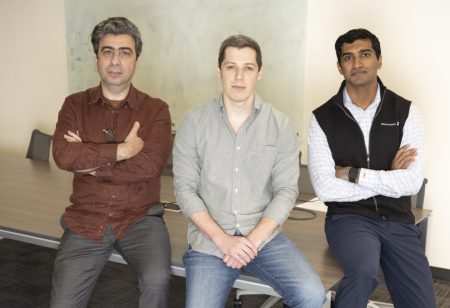
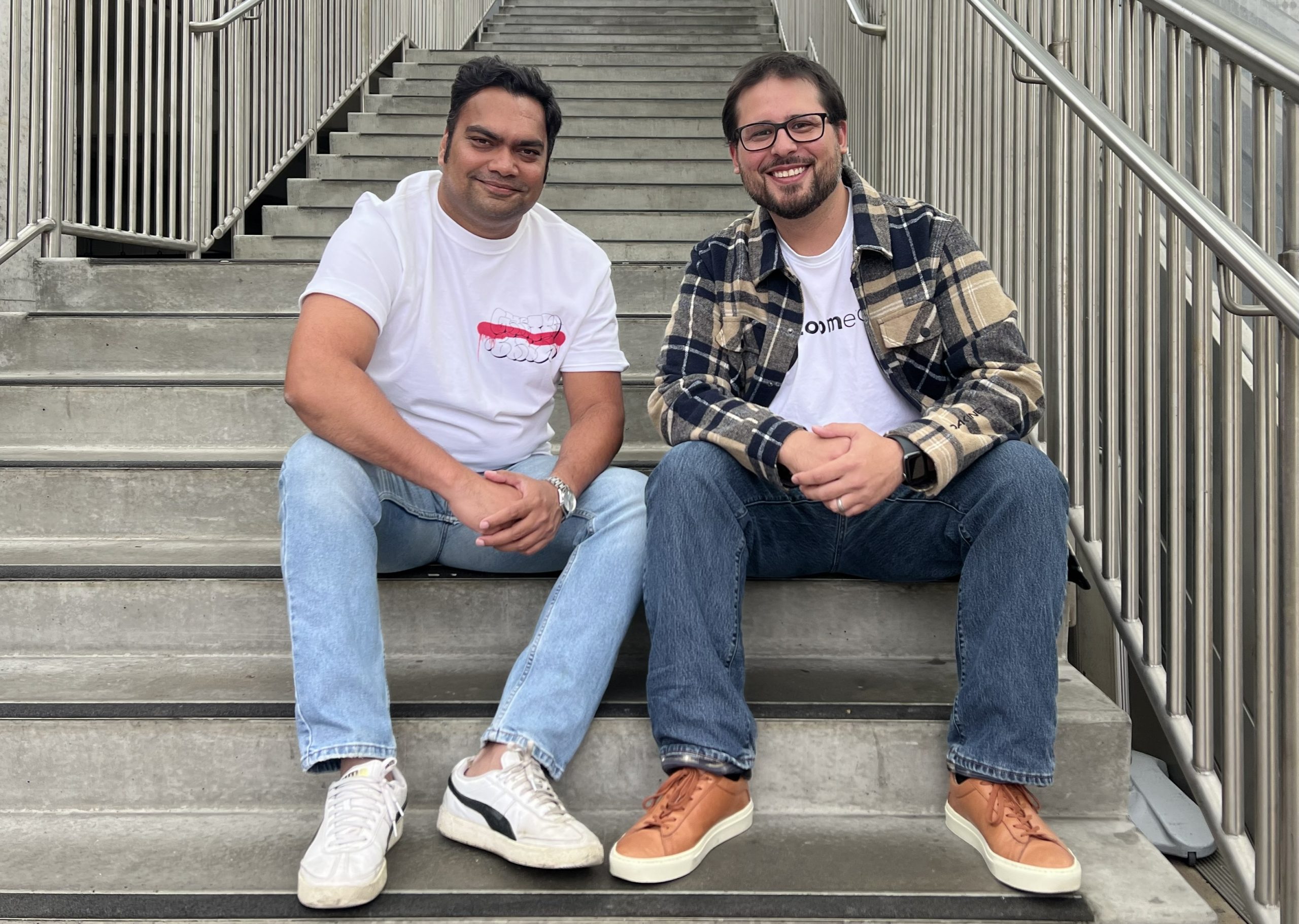
Before Loomerang, Vijay Roy spent nearly 11 years at Amazon, working on print-on-demand books. That is where he met Matt Koyama, now Loomerang’s president, who later went to Xbox. The experience taught them how to make production and logistics invisible, but also how platform economics can leave the people who actually make things behind. They shared a frustration with that pattern and a conviction that print-on-demand could work better if it were built around artists, not algorithms. Roy founded Loomerang in early 2024. Koyama joined as a co-founder a few months later and went full time this spring after leaving Xbox. Arka Majumdar, the chief design officer, completes the trio. The team numbers 14 people, spread across Seattle, Minnesota and Kolkata, India. The company is bootstrapped, which means no venture capital safety net, and the founders are not taking salaries. That kind of commitment tends to focus the mind. No salaries also means no illusion that this is a quick flip. It humanizes the operation in a way that no pitch deck can. When people pour everything into a project without a paycheck, you know they believe in it. It is easy to say you care about artists; it is harder to put your own income on the line. Loomerang does both. Their personal tastes reveal a similar mix of focus and wonder. Koyama drinks black coffee. Roy prefers a latte with whole milk. Majumdar will never turn down a good cappuccino. On their nightstands you will find The Inner Game of Tennis, Man-eaters of Kumaon, and The Creative Act: A Way of Being. Their playlists range from island music and Above & Beyond to the Weeknd, Coldplay, Arijit Singh and Tame Impala. These are not generic startup automatons. They are three people trying to build the kind of company they would want to work for, and perhaps the kind of economy they would want to live in. There is no external pressure to chase growth at all costs. The only pressure comes from the artists who trust them and the customers who buy their shirts.
The mechanics are deceptively simple. On the surface, Loomerang works like any print-on-demand shop: artists open storefronts for free, set their own prices, and receive 60 percent of what remains after manufacturing costs. The company handles everything but the art—printing, inspecting and shipping every order, for now out of Matt Koyama’s garage. That may sound modest, but it means every shirt is touched by someone who cares. Under that simple formula lies a radical idea. Starting an apparel brand is expensive. You need inventory, a manufacturer, a storefront, and a way to reach customers. Most talented artists cannot take that risk. The ones who license their work to big brands usually get a small cut. Loomerang flips the model by removing the upfront cost, handling production with real care, and making sure the artist keeps most of the profit. This is not a charitable side project. It is a better deal, and it is sustainable because the model rewards the people who make the product valuable. The elevator pitch is almost poetic: “Talent is everywhere. Opportunity isn’t. Loomerang connects people with the artists and stories behind their clothes: a tattoo artist in Seattle, a painter in Pune, India, an illustrator in Ibaraki, Japan. Artists launch apparel brands for free and keep most of the profit. We print, inspect and ship every shirt.” The early conversations with customers confirmed a void. Almost nobody knew who designed their clothes. The exceptions were luxury pieces by famous designers, or shirts bought directly from an artist at a market or art fair. In those cases, people could tell you the artist’s name and exactly why the piece mattered to them. That is the feeling Loomerang is trying to recreate, one T-shirt at a time. They are not trying to compete with fast fashion on price. They are competing on meaning.
AI is a delicate subject for Loomerang. Many of the artists on the platform are rightly worried about what generative AI means for their livelihoods, so the founders are deliberate about where and how they use it. They do not use AI to make art. They use it in their code and operations, and in practical tools that help artists upscale files. Their favorite AI tools are Claude and ChatGPT, and they use them for coding; as they put it, “The art is always human.” That line matters. It is not anti-AI; it is pro-artist. It means the founders see technology as a tool, not a replacement for the humans who give clothes their soul. Keeping overhead low means more of every sale goes to the artist, but it also creates a perception problem. People often think Loomerang is too good to be true. Artists pay nothing to join and keep 60 percent of net profit, and the first question is always, “What’s the catch?” The honest answer is: there isn’t one. The fashion industry has trained artists to expect a small cut of what their work earns, and Loomerang thinks that’s backwards. The entire company is designed to reverse that training. That belief is tested by real decisions. The hardest one this past year was choosing not to add hoodies and crewnecks before the holidays. It would have been easy to chase more revenue by expanding the product line, but the team was not fully ramped up to do it well. They decided to prioritize their artist roster and their quality promise, shipping fewer things they can stand behind rather than a wide range they can’t. That restraint is rare in startup culture, and it says a lot about what Loomerang is trying to become. That decision may not show up in this quarter’s numbers, but it will show up in the artists who stay because they feel cared for. In a world that constantly shouts “faster, bigger, now,” they are willing to say “not yet.”
Koyama describes Loomerang as an attempt to run a more responsible business inside a capitalist system, one built around people who spend their lives working on a craft. “How can we reward them for that rather than making them feel like they’re being pushed to the margins constantly?” he asks. That question is central to everything. It is also a practical one. If an artist cannot make a living, they eventually stop making art, and then everyone loses. Koyama, who also spent time in gaming, sees the same pattern across creative industries. The best work comes from independent spaces, because independent creators are willing to take risks, invent and revolutionize. Gaming taught him that the most memorable experiences often come from people who were allowed to experiment, not from committees. Loomerang’s heroes reflect that belief. Matt looks up to Phil Knight for tenacity combined with philanthropy; Vijay cites Henry Ford; Arka admires Steve Jobs for his ability to connect design, technology and human experience. These are people who built things by believing in something before it was obvious. The team’s advice to other entrepreneurs follows the same line: build something that creates value for people instead of taking it from them. It is slower and harder, but those are the kinds of companies the world needs. Technology keeps making it easier to cut people out. The best businesses will find ways to bring more people in and lift them up. There is no contradiction between doing right and doing well. That is not just a slogan. It is a business model. The 60 percent split, the free storefronts, the refusal to let AI touch the art, and the decision to grow slowly rather than dilute quality are all expressions of the same philosophy. The company is trying to prove that fairness can be a competitive advantage, not a weakness. It is also trying to prove that the indie spirit—the willingness to take chances and make things for the love of it—deserves a better home than the margins where it has always been forced to live.
For Loomerang, success is not an exit or a billion-dollar valuation. It’s a quieter, more human metric. They will know they’ve made it when an independent artist’s first thought for launching a brand is Loomerang, not a big platform that pays them a fraction of what their work is worth. When artists in Seattle, Pune and everywhere else make a real living through the company. And when “who made this?” becomes a normal thing to ask about your clothes. That last line is the heart of it. A T-shirt is one of the most ordinary objects in the world, but it can carry a story, a person, a craft. Loomerang wants to make sure that story isn’t lost. The customer in Houston didn’t just buy a shirt made by Joe; they bought something that connected them to a stranger in Japan, and that connection is the whole business. It is not a fantasy; the first sale proved that. A stranger in Houston is already wearing a story from Japan, and that is the whole idea. It’s a reminder that commerce can be human, that artists can be paid fairly, and that a marketplace can be a place of possibility rather than extraction. The name itself captures that idea: a loom weaves threads into something whole, and a boomerang returns to the person who threw it. Loomerang wants the value to come back to the people who created it. For now, the company will keep printing, inspecting and shipping from a garage in Seattle, with 14 people across three time zones, no salaries, and no outside investors. It may not be the easiest path, but it is the path that lets them sleep at night. They are not trying to be the biggest. They are trying to be the most human, and they believe that is the most valuable thing a company can be. In a world of increasingly faceless products, the question “who made this?” might be the most revolutionary question of all.