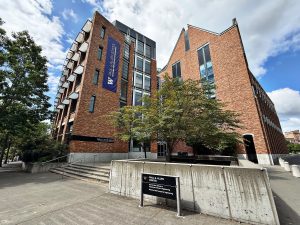



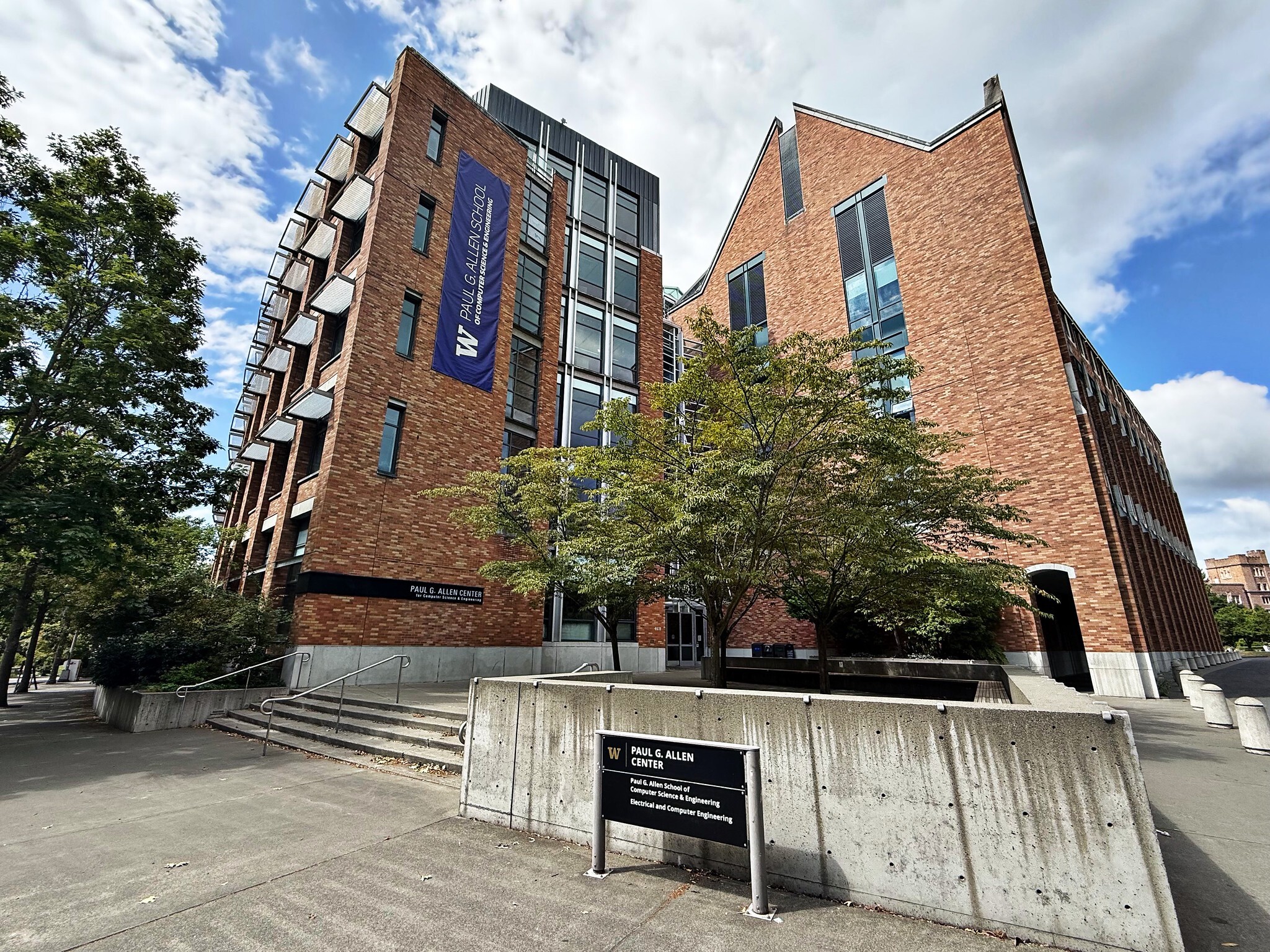
On a drizzly Seattle afternoon, the Paul G. Allen Center on the University of Washington campus looks less like an administrative battleground and more like a monument to ambition. The brick-and-glass building, home to the Allen School of Computer Science & Engineering, has produced thousands of graduates who have gone on to shape the technology industry in the Pacific Northwest and far beyond. But behind its doors, a quiet but consequential struggle has been unfolding. University leaders are now weighing whether to separate the Allen School from the larger College of Engineering, following a task force recommendation that would give this world-renowned computer science program a new kind of independence. The proposed split would transform the Allen School into a college-level unit, granting it greater control over its own finances and a direct seat at the table with UW’s other deans. The task force’s report, released this week, was blunt: the university’s extraordinary success in computing, data science, and artificial intelligence has happened “not because of the organizational structures we have in place but in spite of them.” It also acknowledged a “difficult relationship” between the Allen School and the College of Engineering, and described “significant distrust” across campus over resources, priorities, and the future direction of one of the most influential academic programs in the country.
The word “difficult” did not sit well with everyone. Nancy Allbritton, the dean of the UW College of Engineering, pushed back gently in a statement, saying the relationship is “complex rather than difficult.” She acknowledged that the Allen School is an extraordinary unit that has experienced remarkable growth and now operates at a scale unlike any other department in the college. As both organizations have evolved, she said, there have naturally been questions about structure, governance, and how best to support future growth. Allbritton emphasized that the College of Engineering and the Allen School have a long history of working together, and that her college is committed to helping shape an outcome that strengthens engineering, strengthens computer science as an independent discipline, and advances the university’s broader mission of innovation, discovery, and public impact. For now, no final decision has been made. In a letter to the UW community, President Robert J. Jones and Provost Tricia Serio said they are not ready to act on the task force’s recommendations just yet. Instead, they announced two implementation committees. The first will plan for the possibility of an independent Allen School, including its finances, while keeping the continued strength and growth of the College of Engineering as a central consideration. The second will develop plans for a campus-wide “Federation of Information, Computing and Society,” an umbrella structure meant to coordinate computing, data science, and AI work across the entire university, including fundraising and hiring. Both committees are expected to report by the end of winter quarter 2027, with next steps announced in the spring. Any changes would still need to go through the university’s usual approval processes, including the Faculty Senate and the Board of Regents, with a goal of putting them in place by the end of the 2027-28 academic year.
The task force that produced this sweeping proposal was a varied group, co-chaired by Andy Connolly of UW’s eScience Institute and Kathy Yelick of Lawrence Berkeley National Laboratory. It included faculty leaders from across campus, two outside academics, and an Amazon executive. The Allen School’s own faculty have already made their views clear, voting 83-0 in late September to support moving forward with a process to determine how the school would become independent, with 13 members absent or on leave. Behind this vote lies a simple but powerful issue: money and influence. UW’s budget model sends tuition revenue and a share of research grant funding to the college where courses are taught and research is based. For the Allen School, that has meant sending its money to the College of Engineering. Independence would change this flow, allowing the Allen School to control those funds directly and use them to address one of its most pressing problems: student demand for computing courses that far outstrips capacity. It would also give the school’s leader a voice in university-wide strategy, sitting with other deans when decisions are made about AI and other priorities. The task force argued that computing has largely lacked that voice within UW’s existing hierarchy. Interestingly, UW’s Information School already operates as an independent, college-level unit, but the task force noted a key difference: the Information School focuses on the human, societal, and organizational aspects of computing, while the Allen School is focused on computing as a technical discipline. The demand for Allen School graduates remains extraordinary. In a recent survey, nearly 100 graduates from the latest class went to work full time at Amazon, more than 70 went to Google, Microsoft, or Meta, and over 150 companies hired its graduates.
In the meantime, the university has taken a small but symbolic step toward recognizing the Allen School’s stature. President Jones and Provost Serio invited Dan Grossman, the school’s interim director, to participate in UW’s Board of Deans and Chancellors, a move they said was independent of any future decision about administrative structure. For a school that has long felt like an outsider in its own college, the invitation meant something. Grossman called it a reflection of the Allen School’s scale and reach, and said he was pleased to have the opportunity to contribute to discussions among UW’s leaders. He described the task force’s proposals as exciting recommendations that will be great for the whole of UW and its impact on Washington state and beyond, while reassuring faculty and staff that there are no planned changes to the Allen School’s structure, staffing, budget, policies, or degree programs while the committees do their work. Grossman is a longtime professor and former vice director of the school, and he stepped into the interim role this summer after Magdalena Balazinska’s nearly seven-year term as director ended. At the time, UW said it was opting for an interim leader for about a year while it weighed the task force’s recommendations. The invitation to the board was just one of several early steps the task force recommended. Others, such as having the Allen School’s director report jointly to the provost and making meaningful moves toward budgetary autonomy, were not included in Monday’s announcement, though the committee examining the school’s finances and administration may address them. The push for independence is rooted in the school’s very origin. When Microsoft co-founder Paul Allen gave $40 million in 2017 to elevate UW’s computer science department into the Allen School, the gift agreement stated that the school would remain a unit of the College of Engineering, at least for the time being. But it also called for the school to receive, to the greatest extent possible, the visibility, support, and privileges of UW’s other schools and colleges, and it explicitly anticipated that the school could someday become a free-standing School or College. The agreement even spelled out a name change for that future: if the Allen School were ever elevated to a college, it would always prominently include Allen’s name.
For the College of Engineering, the loss of its largest unit would be deeply felt. The Allen School awarded more than 800 undergraduate and graduate degrees in the most recent academic year, making it roughly half the size of the rest of the college combined. The task force report acknowledged that a separation would have significant short- and long-term financial implications for the College of Engineering, and suggested options such as permanent financial support to offset the loss. Allbritton noted that the College of Engineering has nearly doubled in size over the past decade amid increasingly constrained public resources, and said her focus is on ensuring that students, faculty, staff, research partnerships, and industry relationships continue to thrive. Yet the report did not detail the friction between the Allen School and Engineering. It suggested that independence might not directly address concerns about collegiality, but it could remove a structural asymmetry that has complicated those relationships. Opinion across campus, the report said, was genuinely divided. Some people worried that the Allen School would win independence while the proposed federation never received real resources, and the report recommended that the split not be finalized until the federation was up and running. Much of the distrust centered on sequencing: if the Allen School’s separation happened first, other stakeholders were unlikely to trust that the federation would ever achieve the size and stature it needed. But if the federation moved ahead without a clear commitment to independence, the Allen School and its supporters were unlikely to trust that their contributions to the federation’s success would lead to meaningful change. This delicate balancing act explains why UW leaders are taking their time, creating parallel tracks and insisting that both must succeed together. The Allen School is already helping lead cross-campus efforts, including a new AI minor open to students in all majors, developed with 18 academic units and set to launch in spring 2027.
The path UW is considering is not unprecedented. Other top universities have made similar moves, and the task force looked to them for guidance. Carnegie Mellon and Georgia Tech run computer science as standalone, college-level schools, while MIT, UC Berkeley, and Cornell have created broader colleges of computing. The task force noted that these peer institutions were frequently propelled by a transformational naming gift, just as MIT’s Schwarzman College of Computing and Cornell’s Bowers College of Computing and Information Science were. The report described the proposed federation as a possible transitional phase toward a full College of Computing at UW, one that would house the Allen School alongside other units, and recommended revisiting that idea in about five years. For now, the university is in a holding pattern, caught between the momentum of a world-class program and the need to preserve the broader ecosystem that helped it grow. But the stakes go far beyond administrative charts and budget models. At the heart of this debate is a question about how a great public university should organize itself in an age when computing and artificial intelligence have become central to nearly every field. The Allen School has outgrown the department structure that once made sense, and its leaders believe independence is the only way to keep pace with student demand, industry expectations, and the rapid evolution of AI. Yet as the College of Engineering is quick to remind everyone, no unit succeeds in isolation. The coming months will determine not just where the money flows and who sits at the table, but how the University of Washington balances the ambitions of its most celebrated school with the collaborative spirit that has made it a powerhouse in the first place. For the students, faculty, and staff who walk through the Allen Center’s doors every day, the outcome will shape the future of computing education in the Pacific Northwest for decades to come.