

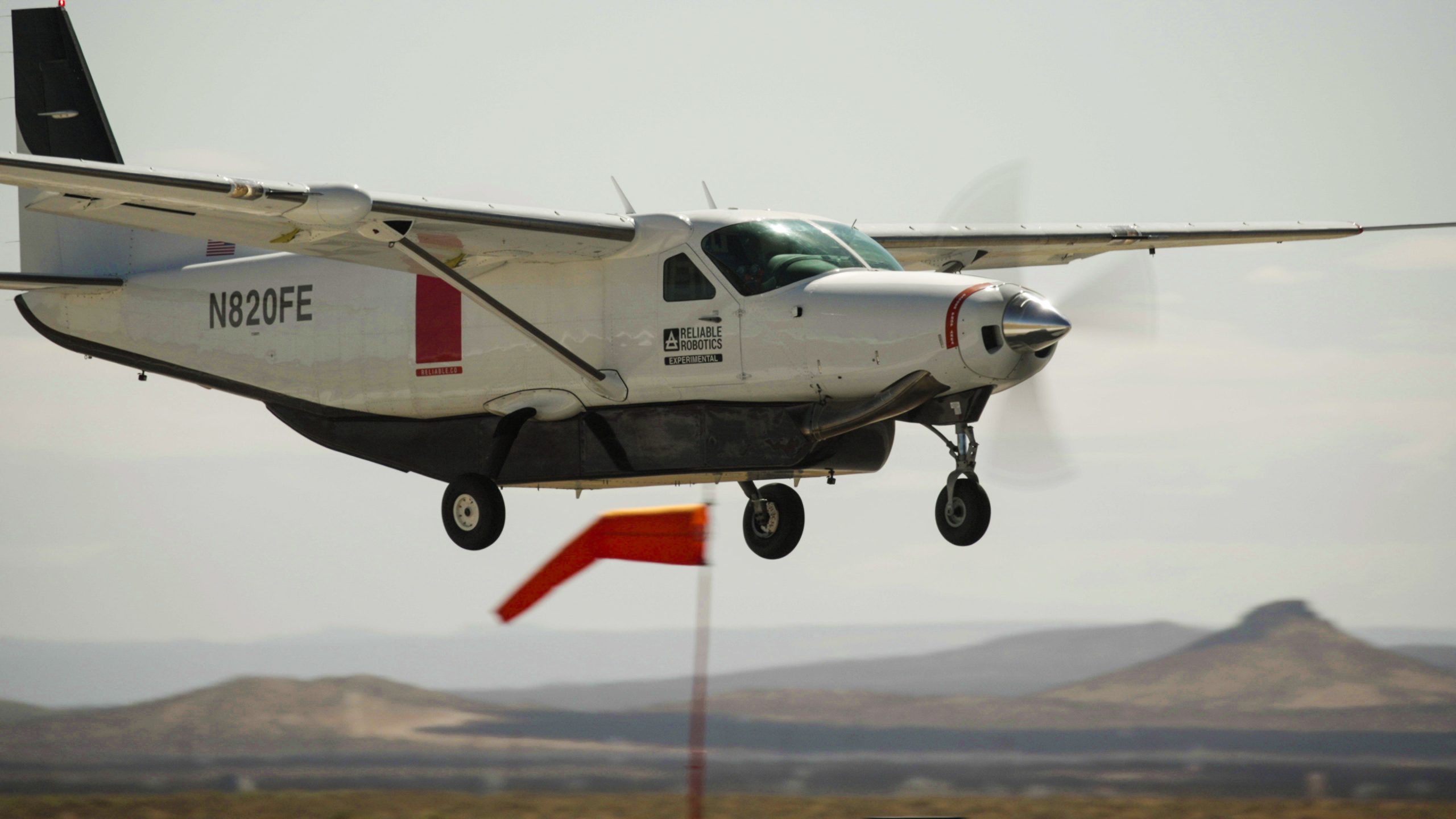
In the high desert of Mojave, California, a Cessna 208B Grand Caravan moves through its flight checklist with no one jostling for elbow room in the cockpit. It is not a ghost plane, nor is it a stunt. It is a working demonstration of what Reliable Robotics believes the future of flight will look like: automated aircraft that can start their engines, navigate taxiways, take off, fly, and land without a pilot physically on board, with trained operators watching over everything from the ground. The company, founded in 2017 by former SpaceX engineers, has spent nearly a decade turning that vision into something more than a sci-fi trailer. On an October morning in 2026, Reliable made two announcements that show just how far it has traveled. First, it is opening a new engineering hub in the Seattle area, specifically in Bothell, Washington, a place it will use as a radar research and development center. Second, it has raised $115 million in new capital, pushing its valuation past $1 billion. That money is not meant for flashy marketing. It will expand the company’s aircraft fleet, scale its production facilities, and grow the engineering team as Reliable works toward federal certification of its autonomous flight technology from the FAA.
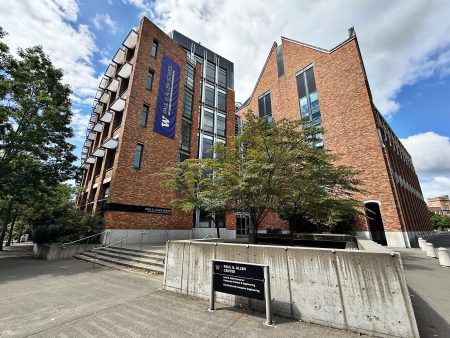
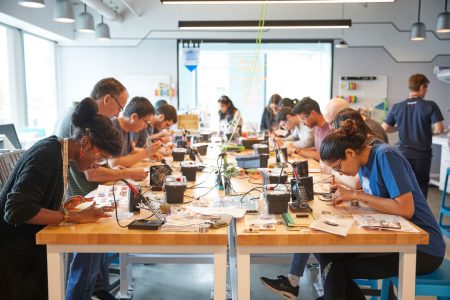
The new operation is not planned as a shiny downtown headquarters. It sits in Bothell Highlands, north of Seattle, at 21222 30th Drive SE, and will open with around 25 employees. But from that modest starting point, Reliable intends to build something essential: its Radar Center of Excellence. This is where the company will design, build, and test an active electronically scanned array air-to-air radar, the kind of sensor technology that helps an autonomous aircraft see the sky and avoid other planes before they become a problem. The team assembled there will include radar engineers, embedded software developers, flight controls specialists, guidance and navigation experts, simulation modelers, and systems engineers. It is a heavily technical crew, and Reliable is recruiting across the region with obvious intensity. The facility is being led by Chris Schulenberg, the company’s vice president of programs, and Marc Pos, a senior technical fellow focused on radar who spent more than two decades at Honeywell before joining Reliable. Pos made the point well in the company’s announcement: “Radar development is a hands-on process. By bringing a team together in a centralized lab and engineering environment, with all of the resources we need at our fingertips, we can move from design through development and testing with the rigor, speed and precision unique to Reliable.” That is not just corporate language. For a company pursuing certification in one of the most safety-critical industries on Earth, having a room where engineers can argue over test data and hardware together makes a real difference.
Seattle has always been a city of aviation storytellers. Boeing built its legend here, and the region still hums with people who think in terms of wingspans, thrust, and weather minimums. But in recent years, a different kind of aviation economy has taken root, one that blends metal with software and old-fashioned hangars with machine learning. The arrival of Reliable Robotics in Bothell is a strong signal that the Northwest is becoming a center of gravity for autonomous flight, not just conventional aerospace. It is also not happening in isolation. Last month, San Diego-based Shield AI announced it had selected Des Moines, Washington, as the production and engineering hub for its X-BAT, an AI-piloted aircraft designed to take off and land vertically. Shield AI plans a 420,000-square-foot manufacturing and engineering facility and expects to bring roughly 4,000 jobs to the region by the early 2030s. Together, these moves suggest that the Pacific Northwest is quietly building an ecosystem of next-generation aviation companies. Chris Schulenberg, Reliable’s vice president of programs, captured the appeal when he said: “Seattle represents the past, present and future of aviation. For decades, engineers here have developed aircraft and systems that change how the world connects. By expanding into the Pacific Northwest, Reliable is uniting the tech talent in Silicon Valley with the aviation expertise of Seattle.” It is a compelling pitch, especially in an industry where the right talent can be harder to find than the right investor.
Reliable Robotics has taken a deliberately careful approach to autonomy. Rather than designing a brand-new aircraft from a blank sheet of paper, the company builds automation systems that can work with aircraft that already exist. That is a crucial difference in both cost and credibility. Its first system is designed to keep a pilot in the cockpit while automating key phases of flight—engine start, taxiing, takeoff, and landing—which reduces workload and helps demonstrate that automation can be trusted in the real world. Over time, the company plans to move to more advanced levels of autonomy, including aircraft that fly with no pilot aboard and are supervised remotely by operators on the ground. This staged strategy is both practical and strategic. It allows Reliable to gather operational data, refine its software, and earn the confidence of regulators long before it attempts the harder task of removing humans from the cockpit entirely. It also reflects the instincts of the company’s founders, who came from SpaceX and brought with them a culture of iterative testing, reuse, and relentless attention to engineering detail. The company now has about 250 employees, and nearly a decade of hard lessons under its belt. It has learned that flying is not about delivering a dramatic demo for an audience of investors. It is about proving to a skeptical FAA that a computer can make the right choice in fog, crosswinds, and unexpected traffic, again and again, without missing a beat.
The new funding round has the shape of a mature aerospace company rather than an early-stage experiment. The $115 million is made up of $90 million led by Nimble Partners and a $25 million term loan from Silicon Valley Bank, bringing Reliable’s total funding to $380 million. That is real money, but in the world of certification and production, it is also a carefully measured sum. Reliable plans to use it to expand its aircraft fleet, scale its production facilities, and hire more engineers across radar, autonomy, guidance, navigation, and systems integration. Crossing the $1 billion valuation mark is a headline that will grab attention, but the more meaningful number may be the continued confidence of investors who understand that autonomous aviation is a long game. The FAA does not hand out certificates because a company has a compelling origin story. It does so because an applicant has demonstrated that its technology can be safe, reliable, and redundant in the face of real-world uncertainty. Every dollar raised by Reliable needs to answer hard questions about failure modes, backup systems, pilot oversight, and what happens when a remote operator loses connection at the worst possible moment. In a sector where hype often outruns hardware, Reliable stands out for doing much of its talking in airplane hangars and on remote runways, not just in pitch decks.
Reliable Robotics is also looking beyond civilian aviation. In San Diego, the company plans to expand its engineering operations with a focus on autonomy for military applications, and together with the new Bothell office, the company’s footprint now stretches to five locations. Its headquarters and aircraft hangars remain in California, and its subsidiary airline, Reliable Airlines, operates out of Albuquerque, New Mexico. The Bothell office will be led by Schulenberg and Pos, a pairing of program leadership and deep technical expertise that fits the company’s dual personality: aerospace manufacturer and software startup. None of this guarantees success. Certification timelines slip. Markets change. And the idea of flying without a pilot will require not only technical mastery but public acceptance, especially from passengers who may one day look out the window and see no one in the cockpit. But Reliable Robotics, with its Cessna flying autonomously in the Mojave, its new radar lab taking shape in Washington, and a valuation that now clears $1 billion, is doing something harder than making a promise. It is building the proof. For the engineers in Bothell who will spend their days testing radars and debating failure scenarios, the work is not glamorous. It is precise, painstaking, and grounded. And that may be exactly what it takes to make the autonomous sky feel as normal, eventually, as the morning commute.