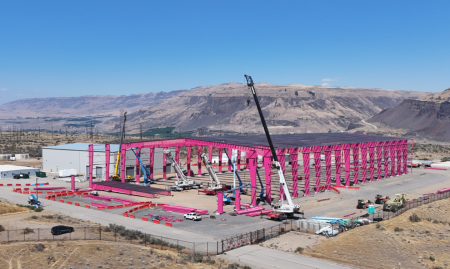




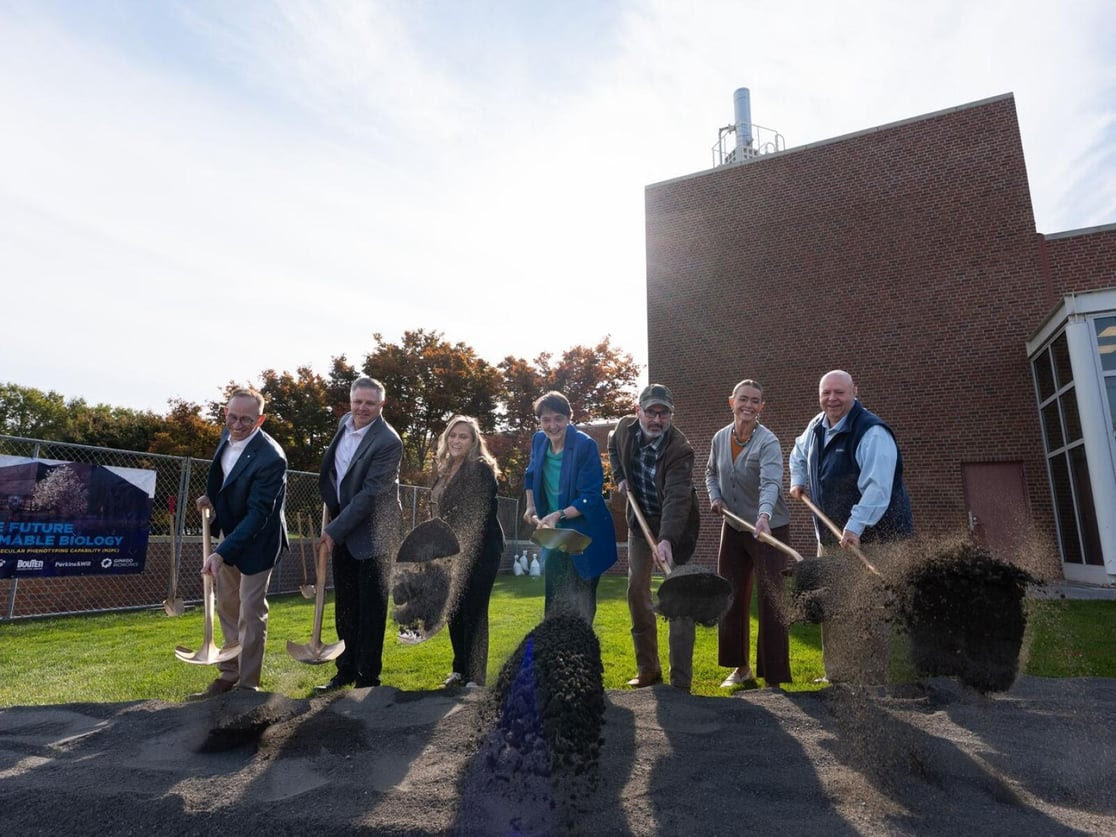
On a crisp October morning in Richland, Washington, a group of scientists, engineers, and government leaders gathered not for a ribbon-cutting but for a groundbreaking—a moment that felt less like the start of a construction project and more like the beginning of a new era in biology. The Pacific Northwest National Laboratory, or PNNL, is building something the world has never quite seen before: a first-of-its-kind autonomous research facility dedicated to the study of bacteria, yeast, and other microorganisms. It will be a place where robots and artificial intelligence handle the slow, repetitive, and painstaking work of science, while human researchers focus on the big questions. The facility, expected to open in 2029, will be one of the largest and most fully autonomous biosciences laboratories in the world. But perhaps the most remarkable part is this: it will be free to use. Through a competitive application process, scientists from U.S. universities, companies, and other national laboratories will be able to access the lab and its extraordinary tools at no cost. In an era when advanced scientific equipment is often locked behind corporate walls or limited to a handful of elite institutions, this is a radical and hopeful idea—that the most powerful tools for understanding life should be shared.
The new facility is called the Microbial Molecular Phenotyping Capability, or M2PC, a name that sounds technical but represents something deeply human: the desire to understand how living things actually work. It will be a 30,800-square-foot expansion of the existing Environmental Molecular Sciences Laboratory on PNNL’s Richland campus, adding a vast new wing of automated instruments and intelligent systems. At the heart of M2PC will be more than 100 automated devices, supplied by the synthetic biology company Ginkgo Bioworks, all integrated into a single, seamless workflow. These instruments can be programmed to perform the laborious tasks that have traditionally consumed countless hours in laboratories: growing microbes under carefully controlled conditions, measuring their growth and behavior over time, and linking their genetic instructions to the observable traits they display. In scientific terms, this is called phenotyping—connecting the blueprint of life to the reality of life. If a microbe’s genome is a recipe, its phenotype is the finished dish: how it looks, how it behaves, how it responds to its environment. M2PC will allow scientists to run thousands of these experiments simultaneously, with robotic arms moving samples, liquid handlers dispensing precise droplets, and sensors recording every subtle change. It is, in essence, a self-driving laboratory for the invisible world.
Why does this matter? Because microbes are everywhere, and they do almost everything. They live in the soil beneath our feet, in the oceans that cover our planet, and inside our own bodies. They are the original chemists, breaking down organic matter, producing oxygen, fixing nitrogen, and recycling nutrients. For centuries, humans have used microbes to make bread, beer, cheese, and medicine, often without fully understanding how. Today, scientists believe that microbes hold the key to solving some of our most pressing challenges. They can be engineered to produce new drugs, break down plastic pollution, detect dangerous pathogens, create sustainable fuels, and improve crop yields. The research conducted at M2PC could address challenges in human health, manufacturing, threat detection, food production, and energy. A microbe that can eat carbon dioxide and turn it into useful chemicals could help fight climate change. A microbe that can sense a toxin in drinking water could save lives. A microbe that can produce a rare medicine more efficiently than a factory could transform healthcare. But to unlock these possibilities, scientists need to understand how microbes work at a fundamental level—how their genes, proteins, and cellular machinery interact to produce specific behaviors. That is exactly what M2PC is designed to reveal. And because the facility will be open to researchers from across the country, it means that a small startup in Ohio or a university lab in Texas could have the same access to cutting-edge automation as a giant pharmaceutical company. This is not just a scientific investment; it is a democratic one.
The word “autonomous” is central to the vision. In a traditional laboratory, much of the work is done by hand. Graduate students and technicians spend years at benches, pipetting liquids into tiny wells, waiting for cultures to grow, recording observations, and repeating the same experiments over and over. It is slow, tedious, and prone to human error. M2PC will change that. The more than 100 instruments supplied by Ginkgo Bioworks will be integrated into a single automated system that can be programmed to run experiments around the clock, without breaks, without fatigue, and with a level of precision that humans cannot match. Researchers will be able to design an experiment on a computer, send it to the facility, and let the machines do the rest. Artificial intelligence will help interpret the enormous amount of data generated, identifying patterns that might escape the human eye. This is not about replacing scientists; it is about freeing them to do what they do best: asking creative questions, forming hypotheses, and imagining new possibilities. As PNNL Director Deb Gracio put it, “M2PC will bring together PNNL’s strengths in microbial science, automation and computing to dramatically accelerate our understanding of what microbes can do and how we put those capabilities to work.” The project is part of the Department of Energy’s Genesis Mission, a broader effort to modernize American science through artificial intelligence and automation, and it is funded through the DOE Office of Science’s Biological and Environmental Research program. In other words, this is not a side project or an experiment in novelty. It is a strategic investment in the future of scientific discovery.
The broader vision behind M2PC is even more ambitious than the building itself. PNNL is not just building a lab; it is building a new way of doing science. The facility will contribute to PNNL’s effort to create computer models that can predict and program the behavior of living systems. Imagine being able to create a digital twin of a microbe—a virtual version that behaves exactly like the real thing. Scientists could test thousands of genetic modifications in a computer, simulating how a microbe might respond to different conditions, before ever stepping into a laboratory. This would dramatically accelerate the pace of discovery, allowing researchers to explore vast landscapes of possibility in days rather than years. It could lead to the development of new antibiotics, biofuels, biodegradable materials, and environmental sensors. It could help us understand how microbial communities interact, how diseases spread, and how ecosystems respond to change. The Genesis Mission is about modernizing U.S. science, and M2PC is one of its flagship projects. But it is also a statement about the role of national laboratories in the 21st century. By making the facility available through a competitive application process, the Department of Energy is treating advanced research infrastructure as a public good, something to be shared for the benefit of all. This is a powerful counterpoint to the growing privatization of science, where data and tools are often locked away. M2PC says that the greatest discoveries come not from hoarding knowledge, but from opening doors.
The groundbreaking is just the beginning. Construction will take years, and the facility is expected to open its doors in 2029. But the vision is already clear, and it is inspiring. In the high desert of central Washington, where the Columbia River bends through sagebrush and basalt, a new kind of laboratory is rising. It will be a place where the invisible world of microbes is studied at a scale and speed never before possible. It will be a place where robots and humans work side by side, where artificial intelligence helps us see patterns in data that would otherwise remain hidden, and where scientists from across the country can come to pursue bold ideas without worrying about the cost of equipment. It will be a place that could help us heal our bodies, feed our growing population, protect our environment, and power our future. The microbes have been here for billions of years, quietly doing the chemistry of life. They have shaped the atmosphere, the soil, and the very conditions that made human existence possible. With M2PC, we are finally going to understand them—not just as tiny specks in a petri dish, but as partners in the ongoing story of life on Earth. And that is not just a scientific achievement. It is a human one.