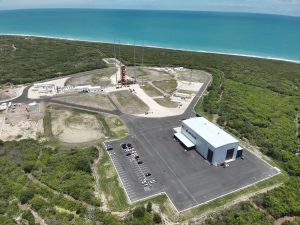



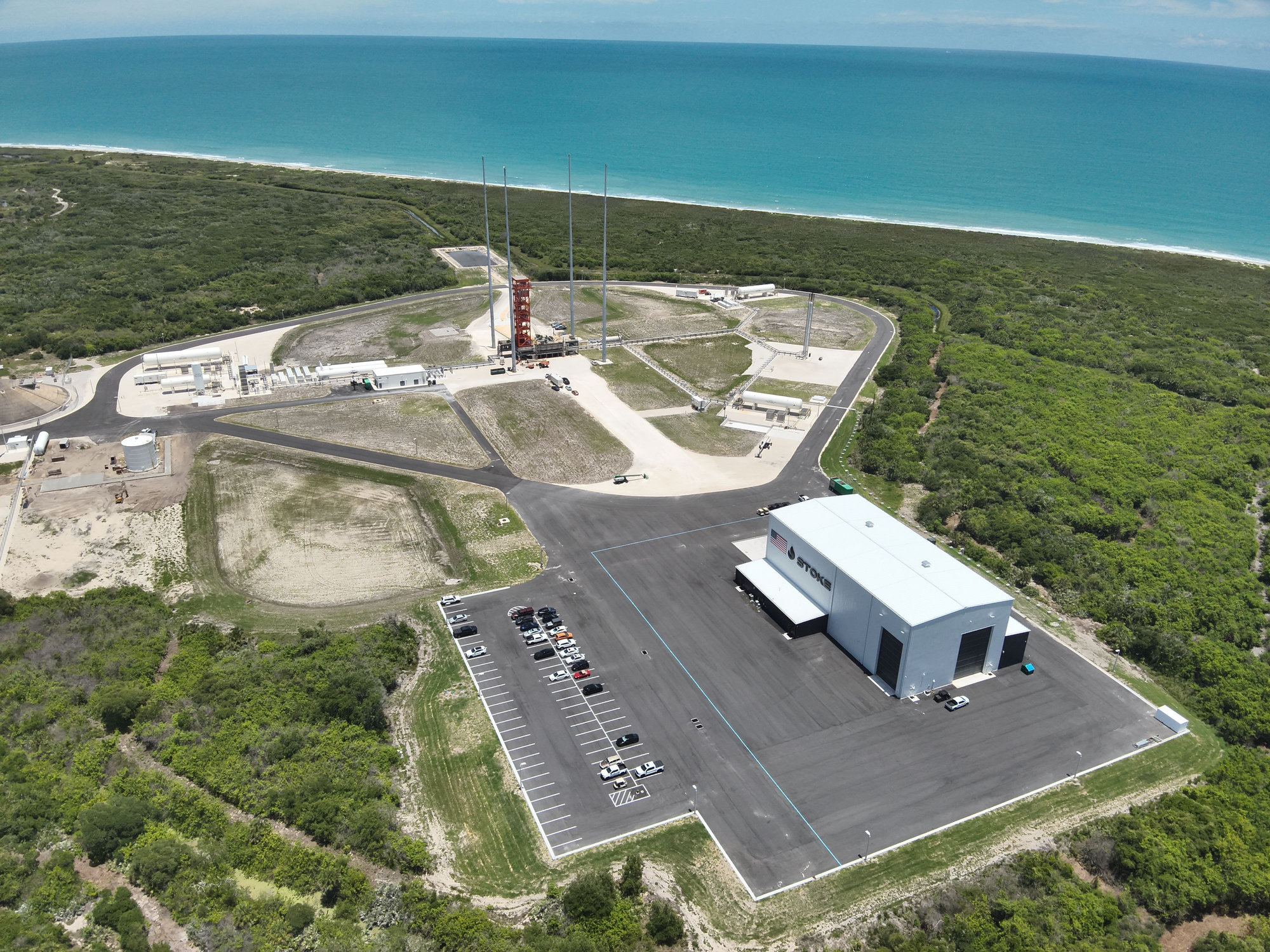
Stoke Space, a relatively young rocket company rooted in the Pacific Northwest, has big dreams and an even bigger piece of news this week. The Kent, Washington-based startup, which was only founded in 2019, is already making moves that could reshape how we access orbit. On Monday, the company announced that it has secured a conditional commitment for a $150 million loan from the Department of War’s Office of Strategic Capital. The money is earmarked for a very specific and ambitious goal: building a second launch pad at Cape Canaveral, Florida, to support a much larger and more powerful version of its fully reusable rocket. This isn’t just a simple check being handed over; it’s a vote of confidence from the federal government in Stoke’s technology and its potential to serve national security needs. For a company that hasn’t even reached orbit yet, this is a remarkable vote of confidence, a signal that the folks in Washington believe Stoke is on the right track. The loan, while not final, represents a major step forward in turning an audacious engineering vision into a tangible, working reality.
Of course, there are strings attached. The loan is only a “conditional commitment,” meaning Stoke has to clear a whole host of financial, legal, technical, and due-diligence hurdles before the money actually flows. It’s a process that can take months, and it’s not guaranteed. But the very fact that the announcement was made less than two months after Stoke raised a massive $1 billion in a Series E funding round shows the company is on a roll. That latest raise brought Stoke’s total funding to roughly $2.3 billion, a staggering sum for a company that has yet to launch a single orbital mission. The new pad is intended for the Nova Block 2 rocket, a vehicle designed to carry up to 15 metric tons to low Earth orbit. That’s five times the capacity of the Nova Pathfinder, the smaller, first-generation rocket that Stoke plans to launch from its existing pad in early 2027. The larger Block 2 is slated to make its debut in 2029. So this isn’t a short-term project; it’s a long-term investment in infrastructure that will support the company’s next generation of launch vehicles, a clear sign that Stoke is thinking well beyond its first test flights.
The source of this loan is as interesting as the loan itself. The Office of Strategic Capital (OSC) was set up in 2022 with a clear mission: to draw private investment into technologies that are seen as critical to national security. The following year, Congress gave the OSC the power to make loans and loan guarantees to companies working in those fields. Space launch is specifically one of the target categories. The idea is to use government backing to de-risk investments in areas that private capital might shy away from, thereby strengthening the industrial base. The officials at the OSC have been clear about why this project matters. Jordan Sebold, senior managing director for investments, said that adding launch infrastructure would “enhance the overall capacity and resilience of the commercial space industrial base.” David Lorch, the office’s director, elaborated further: “By expanding domestic launch facility capacity, this investment enables launch service providers to ensure our commercial and defense partners have reliable, high-cadence access to space.” In plain English, the government needs more launch pads, and it’s willing to help pay for them to ensure that the military and commercial satellites can get to space without bottlenecks.
Stoke is already positioning itself as a serious player in the military launch market, which makes this loan even more logical. In 2025, the Space Force added Stoke to its pool of providers for national security missions under Lane 1 of the program’s third phase. That’s the tier set aside for newer launch companies and less demanding payloads, a perfect fit for a company like Stoke that is still proving itself. However, Stoke can’t actually bid on those missions until it completes a successful orbital flight—a key gatekeeper to that lucrative market. The company also has other federal connections. The Defense Innovation Unit awarded Stoke a $4.5 million contract in 2024 to study rapid delivery of cargo to orbit, and possibly back to Earth. In June, Stoke was named one of 37 companies selected by NASA for unfunded partnerships, with a specific project focused on returning Nova’s upper stage safely through the atmosphere. These are not just token gestures; they are real relationships with the agencies that might one day be Stoke’s biggest customers. The company is clearly building a network of trust and capability that extends far beyond its own factory floor.
The technology that Stoke is developing is what really sets it apart. The Nova rocket is designed so that both stages are fully reusable. The booster flies itself back to the landing site after separation, much like a SpaceX Falcon 9. But the upper stage is the real innovation. It uses a metal heat shield that is actively cooled by liquid hydrogen circulating through channels inside it, allowing it to survive the intense heat of reentry. This is a highly ambitious approach, and only SpaceX, with its much larger Starship, is pursuing a similar goal of full reusability for both stages. And even SpaceX hasn’t fully achieved it yet. Stoke, meanwhile, has yet to launch a rocket to orbit, so there’s a lot of proving left to do. But the company’s founders have deep roots in the industry. Andy Lapsa, the CEO, and Tom Feldman, the chief technology officer, both came from Blue Origin, so they know the challenges of building rockets from the ground up. The company now employs about 400 people. Most of them work at its 168,000-square-foot factory and headquarters in Kent, Washington, while about 50 work at a test site in Moses Lake, which is expanding from 75 to 550 acres. Another 50 or so are based at Cape Canaveral, getting ready for the launches ahead.
So, what happens next? The loan is not finalized, and Stoke has to satisfy all the conditions laid out by the Office of Strategic Capital. That’s a significant process, and there’s no guarantee of success. But the announcement itself is a powerful indicator that the federal government sees Stoke as a critical piece of the American space infrastructure puzzle. The company is already planning to build its new pad, and with the backing of $2.3 billion in private funding, it has the resources to make it happen. If the Nova Block 2 performs as designed, it will be a game-changer, offering a mid-size launch vehicle that can carry about 15 metric tons to orbit—a capacity that many believe is a sweet spot for the growing demand for satellite constellations and other space-based services. For the Seattle region, this is also a point of pride: a homegrown company that is taking on the giants of the industry and winning the support of the federal government. GeekWire has reached out to Stoke Space for further comment, and this story will be updated when more details emerge. For now, the future looks bright for this ambitious startup, and the eyes of the space world are watching to see if it can deliver.