

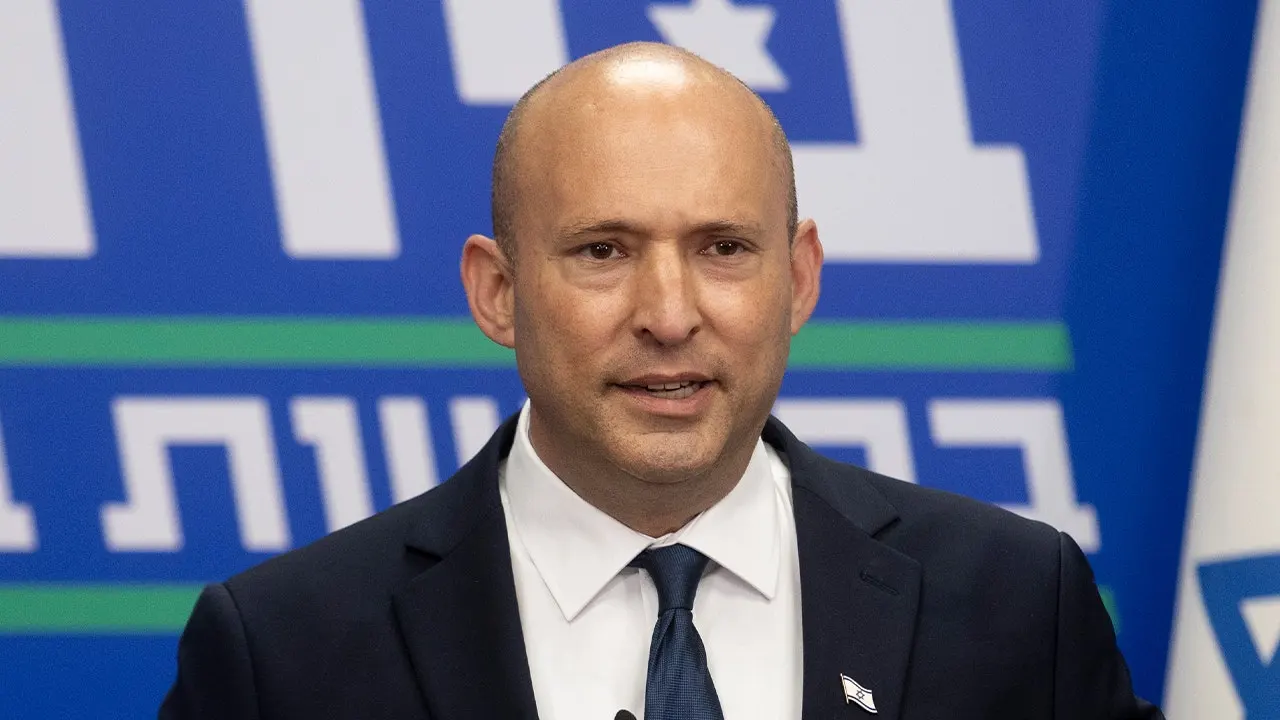
Naftali Bennett has spent the past two years doing something he never really mastered while in office: waiting. The former Israeli prime minister, a fast-talking, tech-millionaire-turned-politician with a gift for blunt phrasing and an instinct for the dramatic, has been watching from the sidelines as Israel lurched through war, diplomatic isolation, and one of the most painful national reckonings in its history. Now he wants back in. His pitch is not just another campaign promise; it is a sweeping vision for a Middle East transformed by economic partnerships, a reset with Washington, and a government that actually knows how to govern. For Bennett, the American connection is both personal and political. Born in Haifa to parents who emigrated from San Francisco, he grew up with one foot in each world, and he speaks the language of American business as naturally as he speaks the language of Israeli security. He has appeared on American television with a calm, almost evangelical certainty, arguing that Israel’s future lies not in endless conflict but in building a new regional order. And he sees in President Donald Trump a kindred spirit—a businessman-statesman who cares less about process and more about results. “He was a businessman, not a career politician, same as me,” Bennett told The Times of Israel in June. “His worldview is, let’s get stuff done. Let’s look at results, not process. And that’s precisely my view.” That shared worldview, Bennett believes, could be the foundation for a renewed U.S.-Israel partnership and a dramatic expansion of the Abraham Accords, the U.S.-brokered normalization deals that reshaped the region in 2020.
The road back, however, is anything but simple. Israel’s political system is a fragmented, coalition-driven maze, and Bennett knows better than most that leading the largest party is not the only route to the prime minister’s office. In 2021, he achieved the unthinkable: he became prime minister even though his Yamina party had won just seven seats in the 120-seat Knesset. That astonishing feat was the product of late-night negotiations, broken alliances, and a rare moment when right-wing, centrist, left-wing, and Arab parties agreed on one thing—ending Benjamin Netanyahu’s twelve consecutive years in power. But the coalition was fragile from the start, and it collapsed in 2022, leaving behind a bitter taste of betrayal for many of Bennett’s former supporters. Today, his new joint party with former Prime Minister Yair Lapid, called Beyachad, or “Together,” is polling behind both Netanyahu’s Likud and the new centrist party led by former military chief Gadi Eisenkot. An October 23 Channel 12 poll projected 23 Knesset seats for Eisenkot, 21 for Netanyahu, and just 15 for Bennett and Lapid. The numbers are humbling, but Bennett has learned not to trust polls. He laughs at the conventional wisdom that says a politician must lead the largest party to lead the country. He did it with seven seats, and he believes he can do it again, this time with more preparation, more discipline, and a clearer understanding of what it takes to sustain a government.
Those who know Bennett say he has changed since his first, brief, turbulent term as prime minister. Einat Halevy Levin, a strategic advisor who has known him for years, told Fox News Digital that Bennett was not ready for power in 2021. “In 2021, he wasn’t prepared. He hadn’t built a governing party; he had built another election campaign,” she said. After the Oct. 7 Hamas attack, Bennett decided to return to politics, and this time, according to Halevy Levin, he spent years building a serious political organization—carefully screening candidates, developing relationships, and constructing the infrastructure needed to govern. “I’ve known him since he was economy minister. He was always daring and full of creative ideas, but was more inclined to stick to his own views,” she said. “He has undergone a transformation.” That transformation is visible in his approach to diplomacy, which he frames not as a series of security challenges but as a set of economic opportunities. Halevy Levin recalled attending a meeting with a senior official from a neighboring country who was astonished by Bennett’s detailed knowledge of that country’s economy and priorities. “He wasn’t looking at the country through a military lens,” she said. In an interview with Israel’s Channel 13 just two days before the election, Bennett pointed to his meetings as prime minister with Egyptian President Abdel Fattah el-Sisi, Jordan’s King Abdullah II, and UAE President Mohammed bin Zayed as examples of the diplomacy he hopes to revive. He argued that Israel must present a new vision of a Middle Eastern renaissance, and he identified extremist settler violence in the West Bank as one of the greatest threats to Israel’s international standing. “We need to eliminate Jewish terrorism in Judea and Samaria, and I say this precisely as a supporter of the settlement movement,” Bennett said. “They do not represent the overwhelming majority of settlers, but right now this is the problem causing us the greatest damage internationally.” He promised that, if elected, he would direct Israel’s senior police, military, and intelligence officials to produce a plan within three days to crack down on such violence.
Yet Bennett’s foreign policy remains firmly on the Israeli right, and that raises questions about how much of a departure his government would truly offer. On Iran, he has promoted what he calls the “Octopus Doctrine,” a strategy that targets the head of the octopus—Tehran—rather than merely its tentacles, the Iranian-backed proxies surrounding Israel. “If Hezbollah fires at us, we strike Iran,” he declared at a policy conference in August. On Gaza, he opposes Palestinian statehood and supports maintaining Israeli security control until Hamas is disarmed. He has also proposed excluding Qatar and Turkey from Gaza’s future arrangements while involving Egypt. These are not positions that easily win over the international community, and critics argue that Bennett is fundamentally underestimating the depth of Israel’s current diplomatic crisis. Danny Citrinowicz, a senior researcher at the Institute for National Security Studies and a former head of the Iran branch in Israeli military intelligence, put it bluntly: “If Bennett thinks he can support annexing E1, oppose a Palestinian state, continue the occupation of Gaza and simultaneously meet with Sisi and Abdullah and attract investment to Israel, he simply doesn’t understand the depth of the international crisis.” Citrinowicz argued that without a fundamental change in Israeli policy toward the Palestinians, replacing Netanyahu would not be sufficient to restore the country’s standing. His warning is reinforced by changing attitudes in the United States, where a February 2026 Gallup survey found 41% of Americans sympathizing more with Palestinians than with Israelis, whose support stood at 36%—a nearly dead heat, and a significant erosion of the long-standing pro-Israel advantage in American public opinion. Bennett, however, seems undeterred, convinced that his business background and personal relationships can overcome what traditional diplomats see as intractable obstacles.
Domestically, Bennett is promising nothing less than a sweeping overhaul of Israeli society. In an October 25 manifesto, he pledged to redirect 30 billion shekels in government benefits away from those who do not work or serve in the military and toward families who do, to reduce food prices by 30%, to establish a state commission of inquiry into the failures surrounding Oct. 7, and to introduce an eight-year term limit for prime ministers. The proposals are designed to appeal to a broad, middle-class, security-minded constituency that is tired of political chaos and hungry for accountability. His alliance with Lapid gives him an established political organization and a visible partner, but it also comes with baggage. Lapid was part of the same coalition that collapsed in 2022, and many voters have not forgotten the dysfunction. Bennett also faces competition from Eisenkot, a respected former chief of staff who appeals to the same centrist and security voters that Bennett and Lapid are courting, and from Netanyahu, who has warned that a future opposition coalition could depend on left-wing and Arab parties—a claim that carries real weight in Israel’s polarized political landscape. With Israel’s parliamentary system requiring at least 61 seats to govern, the coalition negotiations after the election could prove even more consequential than the election results themselves. Bennett knows this. He has already demonstrated that political reality once. In the weeks before the 2021 election, most observers dismissed him as a fringe religious Zionist with no path to power. Then, late on election night, the phone started ringing, and the impossible began to happen.
Now, four years after his first government collapsed, Bennett is seeking to convince Israelis that he has returned better prepared, more mature, and with a vision that could reshape Israel’s place in the Middle East. His story is one of reinvention—from a boy from Haifa, to a soldier in Israel’s elite Sayeret Matkal and Maglan units, to a cybersecurity entrepreneur who sold his company for $145 million, to a political outsider who stunned the establishment by becoming prime minister with only seven seats. It is also a story of failure and humility. His government fell apart, his coalition partners turned on each other, and he was forced to watch from the sidelines as the country he once led suffered the worst terrorist attack in its history. That experience has given him a kind of patience he did not have before. He speaks now not with the arrogance of someone who has all the answers but with the determination of someone who has learned that governing is not about winning elections; it is about building trust, managing relationships, and making hard choices. Whether Israel is ready to give him another chance remains an open question. The polls suggest he is not the favorite. The political map suggests he is not the natural alternative. But Bennett has never cared much for what the map suggests. He has always believed that in politics, like in business, the person who sees the opportunity before anyone else is the one who ends up shaping the future. And in a region where the old certainties have collapsed, where Israel’s friendships are strained, and where the next chapter of the Middle East is being written in real time, Naftali Bennett is betting that his particular mix of chutzpah, vision, and hard-won experience will finally be enough.