

A Politician’s Dilemma, A Party’s Fracture: Ilhan Omar and the Price of a Viral Endorsement
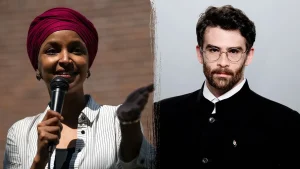
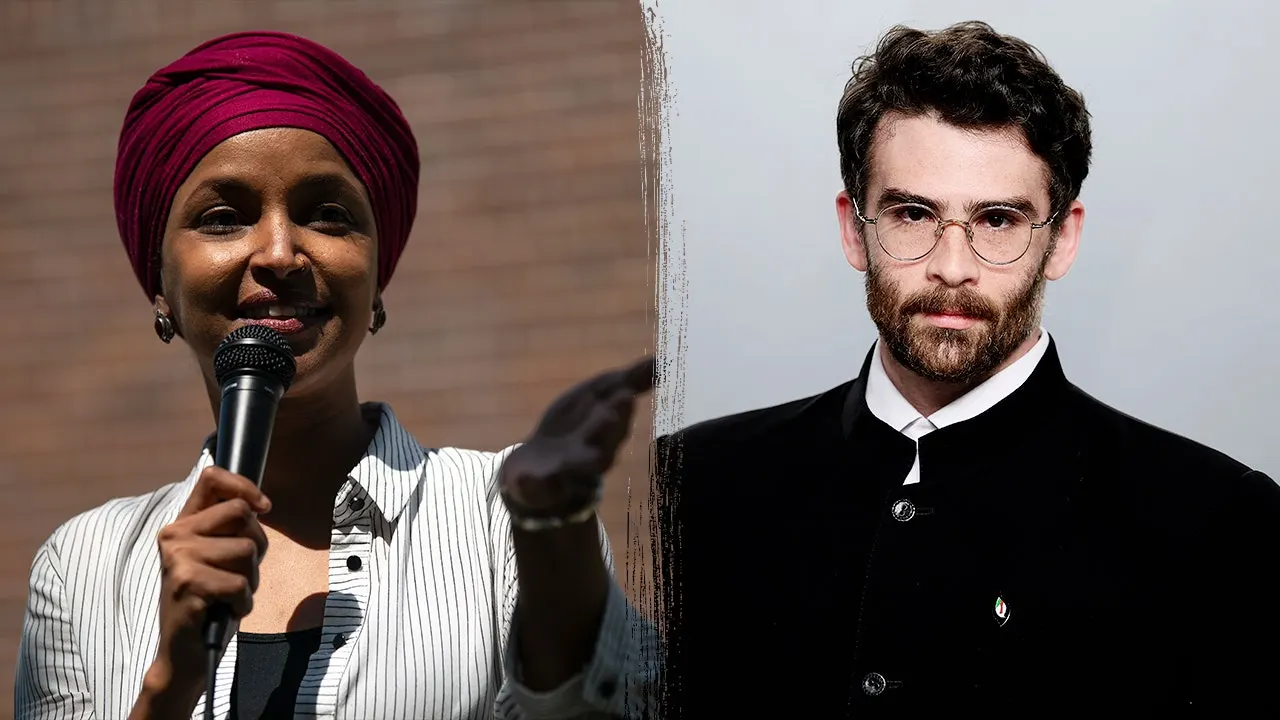
On a crisp Monday evening in Minneapolis, eight days before an election that will decide the balance of power in Washington, a progressive gathering is set to unfold that has done something remarkable: it has made Democrats wince in public. Rep. Ilhan Omar, the Minnesota congresswoman known for her unapologetic voice and her ability to galvanize the left, is scheduled to share the stage with Hasan Piker, a far-left Twitch streamer with millions of devoted young followers—and a long trail of inflammatory statements about Israel, the 9/11 attacks, and Orthodox Jews. The event, hosted by state Sen. Omar Fateh, is sold out, offering a fleeting sense of triumph for those who see Piker as a necessary bridge to a generation that has drifted from the political process. But for many of Omar’s fellow Democrats, the appearance feels less like a bridge and more like a bonfire—one they fear could burn down the party’s carefully constructed closing message in the final, fragile days before voters head to the polls. It is a moment that has turned a local rally into a national referendum on the soul of a party, and on the human beings who must choose between their ideals and their electability.
The sharpest criticism comes from within Omar’s own delegation, where the polite boundaries of party loyalty have been stripped away by raw political anxiety. Rep. Angie Craig, who represents a swing district just south of the Twin Cities, did not mince words, calling Piker’s rhetoric “polarizing and dangerous” and publicly urging Omar to cancel the appearance. For Craig, the calculus is deeply personal: her own reelection hinges on moderate and suburban voters who are repelled by online extremism, and an association with a streamer who once said “America deserved 9/11” could turn her district into hostile territory. Sen. Amy Klobuchar’s gubernatorial campaign went even further, issuing a statement that described a litany of Piker’s past comments as “reckless and unacceptable.” Behind closed doors, other Democratic officials and party groups have reportedly begged Omar and Fateh to pull the plug, warning that the event will become a cudgel for Republicans in the final stretch. The public airing of these grievances is almost painful to witness: here are politicians who usually stand shoulder-to-shoulder at rallies, now unable to hide their fear that their own colleague is lighting the fuse of a political bomb that will explode across the battleground map. Their argument is pragmatic, not ideological—they do not oppose turning out young voters, but they question whether the cost of embracing a figure like Piker is simply too high for the entire ticket to bear.
At the heart of the conflict is a deep and widening divide in the Minnesota Democratic-Farmer-Labor Party about what actually wins elections in a polarized era. Larry Jacobs, a political science professor at the University of Minnesota, laid bare the tension in his assessment: the event would “create a split within the DFL,” one that could distract statewide candidates from their closing arguments and place them in an impossible position with moderate and Jewish voters. The human dimension of this split is not just political; it is emotional. Local Democrats have spent months knocking on doors, organizing forums, and crafting messages about health care, rising costs, and democracy itself. Now, one night of viral clips and heated news cycles threatens to overwrite that work with a single, searing image of Omar standing next to a man whose online persona is built on transgression. For older Democrats and Jewish community leaders, the pain is visceral: they see not a convener of young progressives but a person whose remarks have repeatedly echoed the darkest tropes of antisemitism. For younger activists, however, Piker is a megaphone for their frustration, a voice who speaks their language and acknowledges their despair about a political system that often ignores them. The result is a generational tug-of-war, where each side believes it is fighting for the future of the party—and where both are willing to say so in public, for all the world to witness.
To understand the anger, one must look at who Hasan Piker has been in the public square. He commands an enormous following across Twitch and social media—hundreds of thousands of viewers tune in to his streams, where he mixes politics, gaming, and a deliberately abrasive style. His influence among under-40 voters is real, but so is his record of deeply offensive remarks. In 2019, he said that “America deserved 9/11,” a statement he later apologized for even as he rejected accusations of antisemitism. But apologize as he might, the streamer has continued to court controversy. Earlier this year, he said on a popular podcast that he would “vote for Hamas over Israel every single time” in reference to the two-party choice in a hypothetical election. He has described Orthodox Jews as “inbred,” and in August, he warned that if American Jews continued to show singular investment in Israel, “eventually someone will come around and take action not against Israel, mind you, but against American Jews.” Those words, caught in clips and played over and over, have become a lightning rod for outrage. To his critics, Piker is not merely a loud voice on the left; he is a purveyor of rhetoric that sits on the edge of incitement, frighteningly comfortable with the language of violence against an already vulnerable community. To his admirers, however, these moments are taken out of context or recanted, and they point to his more recent emphasis on economic populism and his ability to reach young men who have been left behind by mainstream politics. The debate over Piker is therefore a debate about whether people are defined by their worst moments or by their potential to grow—a debate that is being had not in a philosophy seminar, but on the campaign trail, where every misstep is fatal.
Omar’s campaign, for its part, remains unapologetic, framing the event as a necessary act of mobilization. In a statement to local media, her team noted that “early voting among people under 40 is down,” and argued that the party must do everything possible to get young people to the polls. “The Congresswoman knows the Democratic Party is a Big Tent party,” the statement read, “and she’s excited to join Senator Omar Fateh’s event to mobilize young voters and get them to vote in this critical midterm election.” This is the language of a politician who genuinely believes that the path to victory runs through the margins of youth turnout, and who sees Piker not as a liability but as a bridge. It is easy to dismiss this as rationalization, but there is a compelling human logic to it. Many young progressives do not see themselves in the cautious, poll-tested messages of the Democratic mainstream. They are alienated by what they perceive as incrementalism and are inspired by unvarnished voices who refuse to soften the harsh truths of systemic injustice. For Omar, who herself has felt the sting of party discipline and media scrutiny, standing beside Piker may feel like an act of authenticity—a refusal to abandon one’s own base in the face of elite disapproval. But her defense does not address the fears of her colleagues, who must share a ballot line with her and whose fate is tied to the mood of the electorate. The tragedy of the moment is that both sides believe they are acting out of love for their party and their country, yet their visions are irreconcilable. One side sees a necessary risk to mobilize the disengaged; the other sees a reckless gamble that could demoralize the moderate majority and hand the election to Republicans.
As Monday night approaches, the sold-out event in Minneapolis has become a symbol of the Democratic Party’s struggle to hold itself together amid competing pressures of identity, ideology, and electability. There are no easy answers, only difficult human choices made under the glare of cameras and the weight of history. For Omar, the choice is to stand with her base and bet that big-tent inclusion will win the day. For Craig and Klobuchar, the choice is to speak out, even at the cost of party unity, because they believe the alternative is defeat. And for Piker, the man in the center of the storm, the evening will be a test of whether he can pivot from provocateur to partner, or whether he will simply reinforce every fear his critics have voiced. The event will likely produce moments of energy and moments of anger, clip-worthy sound bites and soul-searching commentary. But whatever happens on that stage, the deeper story is one that resonates beyond Minnesota: a story about how free a democracy can be when its people are torn between who they want to hear and who they can afford to embrace. Voters under 40 may feel a surge of excitement seeing one of their icons on a political stage. Voters over 60 may feel a chill of alienation, watching a party they once trusted embrace someone they cannot understand. The gap between those feelings is not just a political problem; it is a human fracture, a reminder