


The Diplomatic Rift Over Sudan’s Forgotten War
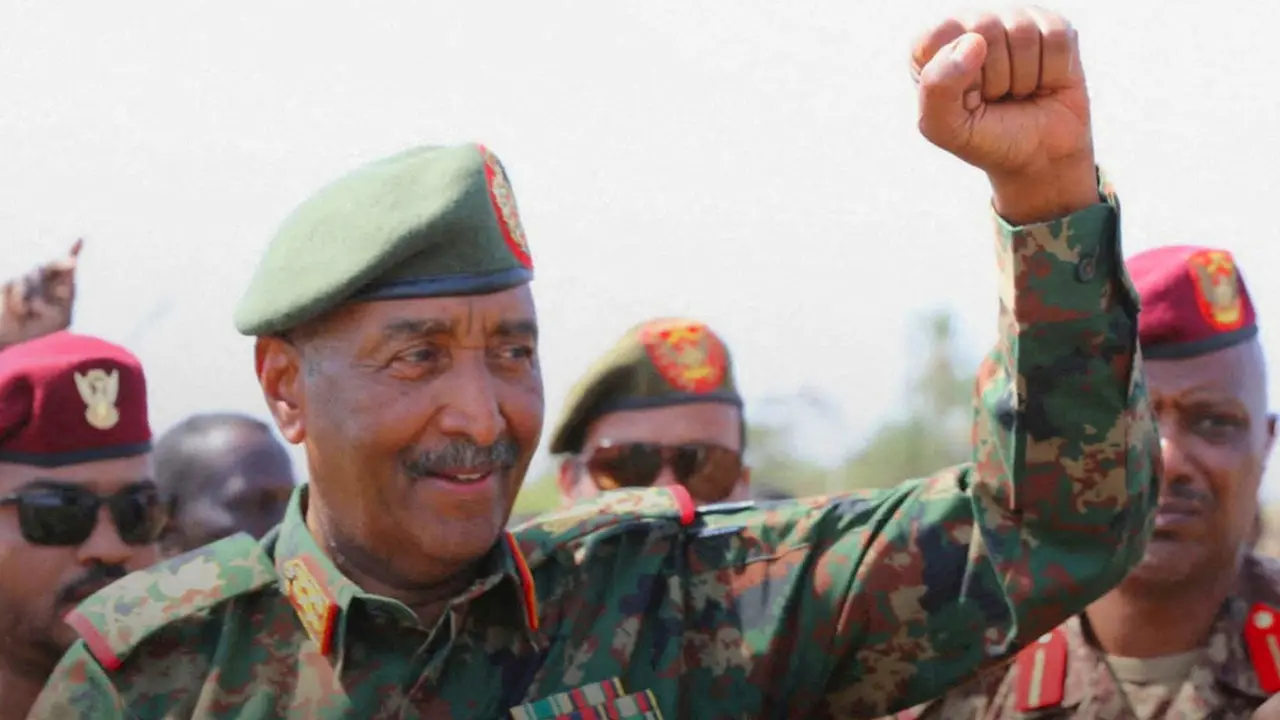
The conflict between Sudan’s military leadership and Washington has reached a critical breaking point, revealing deep fractures in how the international community approaches one of the most devastating humanitarian crises of our time. When the Trump administration made the unprecedented decision to withhold a visa from Sudan’s military leader, General Abdel Fattah al-Burhan, preventing him from addressing the United Nations General Assembly, it sent shockwaves through diplomatic circles. The move was intended to pressure Burhan into accepting a proposed ninety-day humanitarian ceasefire, but instead it sparked a defiant response from Khartoum. Burhan’s angry words from the capital—declaring that Sudan would not bow to anyone and needed no permission or visa from any nation—captured the growing frustration and distrust between Sudan’s military establishment and the international community. What emerged was not just a dispute over diplomatic protocol, but a fundamental disagreement about how to end a war that has devastated millions of lives and destabilized an entire region.
The humanitarian catastrophe unfolding in Sudan defies adequate description. Since April 2023, when the power struggle between Burhan’s Sudanese Armed Forces and the rival paramilitary Rapid Support Forces erupted into full-scale war, the country has descended into chaos that experts describe as among the worst humanitarian disasters of our time. Millions have been forcibly displaced from their homes, creating waves of refugees that strain neighboring countries and international aid systems already buckling under the weight of multiple global crises. The United Nations has documented horrific abuses that read like a catalog of human cruelty: mass killings, systematic rape used as a weapon of war, torture, sexual enslavement, and the deliberate destruction of critical civilian infrastructure. The siege of El Fasher alone saw more than six thousand killings in just three days during the final offensive, with violations that international investigators say could amount to crimes against humanity. Yet this suffering has largely faded from global consciousness, overshadowed by other conflicts that capture more media attention and political focus. The forgotten nature of this war has become part of its tragedy, allowing atrocities to continue while the world’s attention remains fixed elsewhere.
The diplomatic standoff over the visa reveals a deeper problem: the international community appears unable to find a coherent strategy to end the conflict. Washington’s State Department has taken an increasingly hard line, declaring that neither Burhan nor his rival Hemedti represent legitimate constitutional governance for Sudan and rendering both men ineligible to govern the country. The Americans insisted they had repeatedly asked both sides to accept a humanitarian truce without preconditions and commit to inclusive political dialogue leading to civilian government. But Burhan’s senior advisor, Dr. Amjad Farid Al-Tayyib, disputed this account in interviews on the sidelines of the General Assembly, insisting that Sudan never rejected the American proposal and had in fact submitted technical comments on it. The advisor expressed bewilderment that Washington would undermine the very diplomatic process it claimed to be advancing by preventing the Sudanese delegation from traveling. This mutual incomprehension has created a diplomatic impasse where neither side seems willing to move from entrenched positions, while the human cost of their disagreement continues to mount with each passing day.
The role of foreign powers in prolonging Sudan’s agony has become impossible to ignore, transforming what might have been an internal conflict into a regional proxy war with global dimensions. Secretary of State Marco Rubio acknowledged this uncomfortable truth when he told reporters that Sudan’s war would not be happening were it not for external actors supporting one side or the other. The foreign backing has taken different forms: the Rapid Support Forces have reportedly benefited from support networks involving the United Arab Emirates and neighboring countries, while the Sudanese Armed Forces have received backing from Egypt, Iran, Pakistan, Turkey, and others. Each external power pursues its own strategic interests, seeking access to Sudan’s Red Sea coastline, its gold resources, its fertile agricultural land, and its critical infrastructure for transporting oil from South Sudan. Former National Security Council official Cameron Hudson described the situation as a regional battle for influence superimposed on top of the internal conflict, with outside powers using Sudan as a chessboard for their own geopolitical ambitions. This foreign participation has made the war more deadly and prolonged, as external backers provide weapons, funding, and diplomatic cover while international efforts to pressure them have proven largely ineffective.
The complexity of assigning responsibility for the atrocities has created additional diplomatic headaches. While both sides have been accused of serious violations, investigators have drawn important distinctions that sometimes get lost in the simple framing of “both sides” wrongdoing. United Nations investigators found that while the Sudanese Armed Forces have committed war crimes through drone attacks and strikes on civilian targets, the Rapid Support Forces have gone significantly further, committing mass rape, mass killing, torture, sexual enslavement, and persecution on ethnic, gender, and political grounds. The distinction matters because treating the two forces as morally equivalent obscures the different scale and intent of their crimes. Yet Burhan’s advisors accuse the international community of creating a false equivalence that lets the RSF off the hook while failing to take action against the group or its supporters. The United Nations has rejected these allegations, insisting that its focus is on documented facts and violations rather than equating the two sides. This debate over responsibility, while important for eventual justice and accountability, has further complicated efforts to find a pathway toward peace.
Ultimately, the failure of international diplomacy in Sudan reflects a broader crisis of the global humanitarian and diplomatic system. The United Nations itself has acknowledged that international efforts have failed to stop the fighting, with no military solution in sight. Secretary of State Rubio described negotiations as frustrating, noting that parties repeatedly agree to commitments only to abandon them when one side believes it is gaining an advantage. The diplomatic approach has relied heavily on public statements and pressure tactics rather than sustained personal engagement with the warring parties. Critics point out that senior American officials tasked with mediating the conflict have never even visited Sudan, undermining their credibility and ability to build the trust necessary for meaningful negotiations. The disconnect between sophisticated diplomatic frameworks and the messy reality on the ground has produced a situation where everyone agrees on the need for peace but nobody seems able to achieve it. As the international community remains deadlocked, the people of Sudan continue to suffer, displaced, hungry, and forgotten by a world that has moved on to other crises. The war that began as a power struggle between two military leaders has become a humanitarian catastrophe that will shape the region for generations to come, and the window for meaningful international intervention grows narrower with each passing day.