



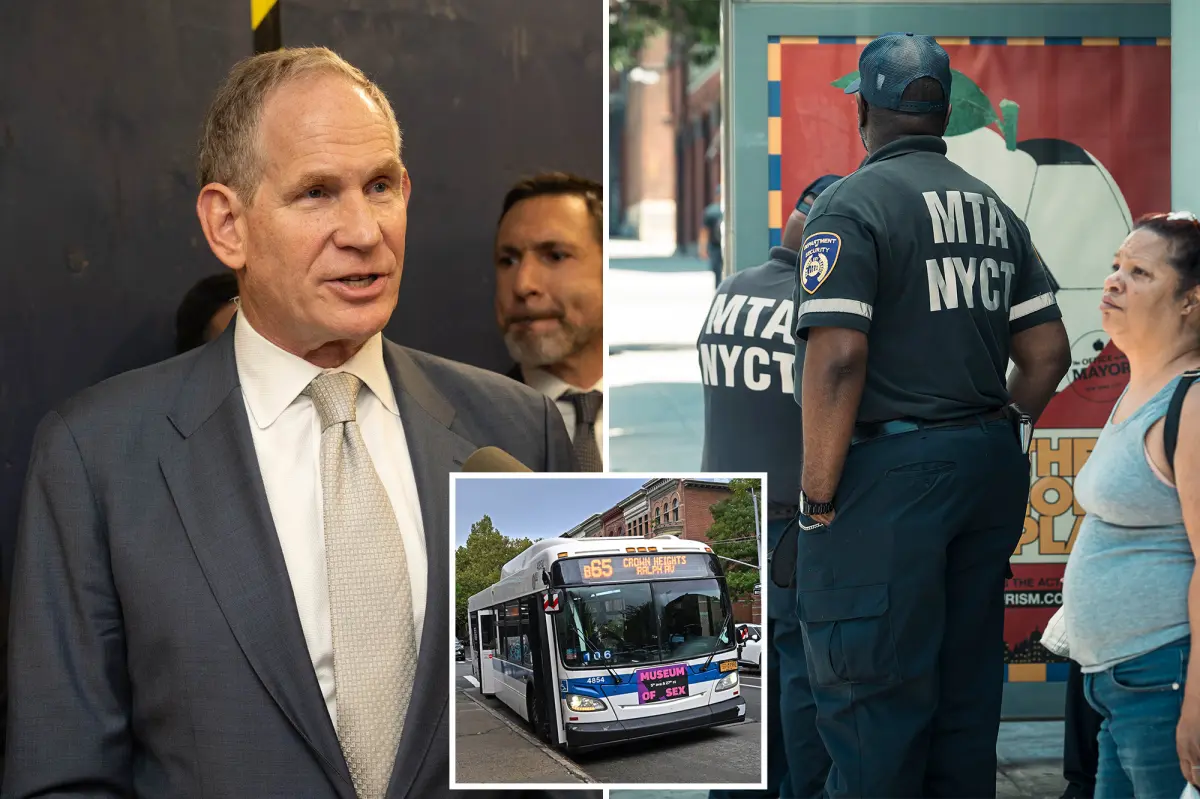
Every day in New York City, thousands of people board a city bus with a MetroCard, a phone, or a handful of change, hoping to reach school, work, or a doctor’s appointment. For many New Yorkers, the bus is not just transportation; it is a lifeline. That is why the news that the MTA has suspended its EAGLE bus fare inspection teams has hit the city with a strange mixture of relief and concern. The move, announced by transit chief Janno Lieber, came after a series of disturbing incidents in which inspectors were accused of roughing up passengers—and then failing to tell top MTA officials what had happened. The suspension is a blunt acknowledgment that enforcement has gone badly off the rails. But perhaps the most uncomfortable detail is this: despite the presence of about 350 EAGLE inspectors patrolling buses, fare evasion has actually gotten worse. According to MTA data, the rate of riders skipping the fare climbed from 36% in 2022 to 48% in the first half of 2026. While the teams were out there stopping riders, asking for proof of payment, and issuing tickets, nearly half of all bus riders were still finding a way to ride without paying. The numbers suggest a crisis, not just of enforcement, but of trust. A bus system that depends on the goodwill of riders and the dignity of passengers cannot survive for long if people feel hunted rather than welcomed.
The suspension did not come out of nowhere. It followed a $25 million lawsuit filed against the MTA by Kyle Taylor, a Brooklyn school dean who says he was roughed up by EAGLE inspectors over an allegedly unpaid $3 fare. The confrontation was caught on video earlier this month, and the footage spread quickly, sparking outrage among passenger advocates and ordinary riders alike. But according to Lieber, the MTA’s own leadership did not know about the incident until more than a week later. “I was not happy that leadership of the MTA and even New York City Transit didn’t even hear about that episode until more than a week afterwards,” Lieber said. He went on to say that there appeared to be “another episode” where the failure to report was “even more extreme.” That second case reportedly involved a harassment complaint stemming from an encounter between inspectors and a man aboard a Bronx bus, an incident that also never made it up the chain of command. Kyle Taylor’s attorney, Benjamin Pinczewski, was not convinced by the MTA’s explanation. “How could they not have know about it?” he said. “The MTA tried to cover this up.” For many riders, the pattern feels familiar: a powerful agency, a vulnerable passenger, a violent moment, and maybe a cover-up. Whether or not the cover-up narrative holds up, the fact that top officials were kept in the dark for so long is deeply troubling. It raises questions about accountability, transparency, and whether the EAGLE teams have been operating as a law unto themselves.
The EAGLE teams have been part of city bus life for more than a decade. They began checking fares on Select Bus Service routes in 2008, and in 2023 they expanded to local buses. The idea was straightforward: if visible fare enforcement exists, people will be less likely to cheat, and the MTA will collect more money. But the results tell a different story. Fare evasion on buses climbed even after the expansion—from 36% in 2022 to 43% in 2023, and then to 48% in the first half of 2026. By comparison, subway fare evasion hovers around 10%, according to MTA data. That gap is striking. It suggests that the problem on buses is not simply a lack of enforcement; it is something deeper, perhaps related to poverty, broken card readers, long wait times, and the perception that the system is unfair. The MTA has pointed out that paid boardings on buses increase by 7% when EAGLE teams are present, but that modest gain does not seem worth the human cost. Bus riders who skip the fare cost the MTA an estimated $568 million in 2024, according to the Citizens Budget Commission, a fiscal watchdog. That is a huge amount of money, and it is understandable that the MTA wants to collect what it is owed. But the agency also has to understand the people behind those numbers. Some fare evaders are simply breaking the rules. Others, though, are older New Yorkers with walkers and canes, people whose MetroCard readers are broken, or riders who have watched the cost of living rise while the reliability of bus service has not. Lieber has asked MTA security chief Michael Kemper, a 30-year NYPD veteran, to investigate “the whole shebang”: training, reporting protocols, and whether the EAGLE program can be saved or should be reshaped.
Riders who have encountered EAGLE teams often describe feelings of fear, embarrassment, and humiliation. Lee, a 30-year-old Manhattan resident, said the teams were ineffective and easy to avoid. “[They’re like] ‘Hey, can you show me your card?’ and I’m like ‘No, I can’t actually show you anything,’ and I just walk past them,” he said. Lee called the teams “a waste of money” and said he was glad they were gone, at least for now. Stella Nathenson, a 19-year-old NYU student who regularly rides buses around Manhattan, used harsher language. She called the teams “scary” and “unsettling.” She also pointed out that many fare beaters she sees are older and clearly not dangerous. “When people don’t pay the fare, half the time it’s usually a person with a walker or a cane,” she said. She added that broken card readers had kept her from paying at least twice. “I have avoided paying twice, and it’s just because the card doesn’t work—which is probably something they should fix,” she said. Jaime Madrid, a 75-year-old Manhattan resident, said an EAGLE team wrongly ticketed him two years ago on the M34-SBS. He had to send in his yellow card and bus number to get the ticket dismissed. “They embarrass you,” he said. “They pull you out like a criminal. They pull on you and put you in the street.” Madrid’s words capture why the EAGLE program has become so controversial. Fare enforcement should not feel like an arrest. A transit system should not treat people who cannot pay as criminals. And a ticket that is issued incorrectly should not take weeks of paperwork to resolve. For many passengers, the issue is not whether fare evasion is wrong—it is whether enforcement has become more painful than riding the bus itself.
The debate over EAGLE teams is also part of a larger conversation about the future of public transit in New York City. Mayor Zohran Mamdani ran on a campaign promise of making city buses free, and his idea has resonated with many riders who see the fare as a barrier rather than a simple price of admission. But the MTA is state-controlled, and free buses are largely outside the mayor’s power. He admitted in April that it would not happen this year. Still, the idea remains popular among progressives and community advocates who argue that buses are an essential public service, not a business. They point out that many riders who skip the fare are not rich shirkers but working-class New Yorkers who are already struggling to afford housing, food, and health care. A $3 fare might not seem like much to a politician or a transit executive, but for a single parent taking a child to a clinic, or an older person going to a food pantry, it can be the difference between making it and not making it. The MTA, of course, is in a difficult position. It needs revenue to keep trains and buses running, and fare evasion costs it hundreds of millions of dollars every year. But the agency also needs public trust. When riders see inspectors physically confronting a school dean over a swipe, and then hiding the incident from leadership, they stop believing that the system cares about them. That is a dangerous thing. Once trust is lost, people are less likely to pay voluntarily, and the enforcement spiral only gets worse.
For now, the EAGLE teams are off the streets, and the MTA has promised to review how they operate, how they report incidents, and how they treat passengers. Lieber has called on riders to do their part, saying, “We have to play by the rules or they start to fall apart.” That is true, but so is the opposite: institutions also have to play by the rules, and when they fail to report violence, when they treat the public with suspicion, and when they prioritize tickets over dignity, they fall apart too. The suspension of the EAGLE teams is an opportunity—not just to fix a broken enforcement program, but to rethink what enforcement is for. Is it to punish the poor? To scare the elderly? To drive away riders? Or is it to make sure the system is fair for everyone? The MTA needs the fare revenue, but it also needs to remember that buses carry human beings, not just fares. A better approach might include fixing broken card readers, expanding reduced-fare programs, making it easier to prove payment, and training inspectors to de-escalate conflicts rather than escalate them. It might also mean making sure that when something goes wrong, it is reported quickly and honestly, so that the public can see what happened and demand accountability. The EAGLE suspension will not solve every problem in the MTA, but it is a chance to pause, listen to riders like Stella and Jaime, and build a system that people want to pay for because they feel respected. For now, the buses are rolling, the fares are still due, and New Yorkers are watching. The question is whether the MTA will learn from this moment or simply bring back the same aggressive tactics and hope no one is watching. After everything that has happened, that hope would be a big mistake.