





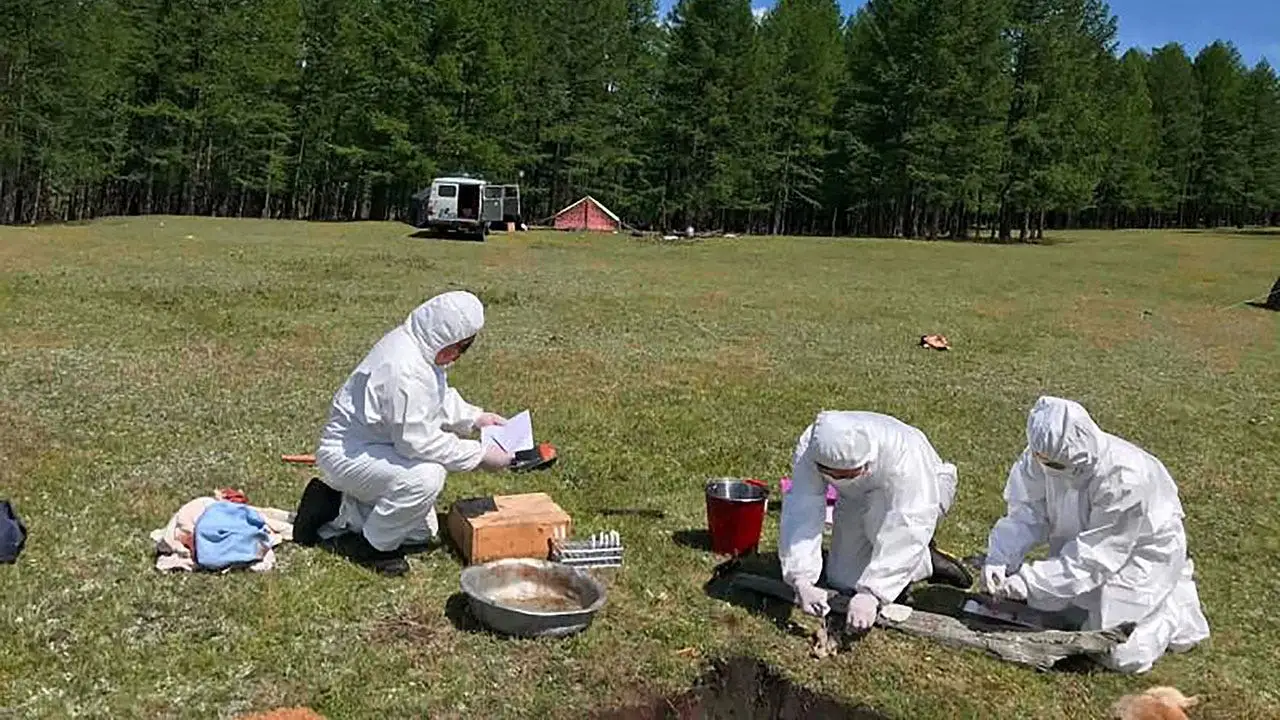
In a quiet corner of Siberia, a young woman’s death has sent ripples of anxiety far beyond the frozen landscape. Darya Shipilova was just 28 years old, an employee at the Irkutsk Anti-Plague Research Institute of Siberia and the Far East, a facility devoted to studying some of the world’s most dangerous pathogens. When she died from a sudden, severe case of pneumonia, the official response was anything but routine. Russian authorities quarantined the hospital where she was treated, placed scores of her contacts under medical observation, and quietly launched an investigation that has drawn attention from Washington to Central Asia. What makes the story so unsettling is not simply the fact that a young scientist died, but that the cause remains unknown. Russian health officials say extensive testing found no evidence that her illness came from any pathogen linked to her professional work, yet they have offered no alternative explanation. That silence has allowed fear to spread faster than any confirmed diagnosis. The word “plague” is now whispered in news reports, official briefings, and living rooms around the world—even though no one has officially confirmed it. The mystery at the heart of Darya’s death is not just medical. It is the human ache of a life cut short, and the unsettling thought that those who study deadly microbes may themselves be vulnerable to something invisible and unexplained.
The precautions surrounding this case have been extraordinary, especially given Moscow’s firm insistence that there is no outbreak. The hospital in Shelekhov, a town just outside Irkutsk where Darya received treatment, has been placed under quarantine and temporarily stopped admitting or discharging patients, according to The Associated Press. Irkutsk Governor Igor Kobzev described the situation as a suspected “particularly dangerous infection,” language that immediately raised alarm. Additional reporting from the East2West news agency indicated that more than sixty employees remained confined inside the Irkutsk institute, while nearly two hundred people who had come into contact with Darya were placed under medical observation. Those exact figures have not been officially confirmed, but they suggest a response far more serious than a routine public health inquiry. Anna Popova, the head of Rospotrebnadzor, Russia’s public health watchdog, personally flew to Irkutsk for an emergency meeting after Darya’s death. A nearby aluminum plant ordered its workers to wear masks as a precaution, and neighboring countries including Kyrgyzstan, Uzbekistan, and Kazakhstan reportedly strengthened health checks at their borders. For ordinary people, the message has been contradictory: officials say there is nothing to fear, yet they are behaving as if something very dangerous may have been released.
International attention has only deepened the mystery. Secretary of State Marco Rubio said Monday that the United States was “watching and monitoring it closely,” adding, “I don’t think it’s cause for alarm, but it is cause for focus and a cause just to keep an eye on it.” His comments followed a State Department statement to Fox News on Oct. 4 confirming that Washington was monitoring the case alongside the Centers for Disease Control and Prevention and other federal agencies. American officials stressed that many details remained unconfirmed and urged Moscow to provide accurate information quickly. Rubio also noted that travel between Russia and the United States is currently limited, but he warned that if something like this got out, it could spread rapidly. The cautious language from Washington reflects a broader unease: no major power wants to fuel panic, but no one wants to be caught unprepared either. Even the Kremlin has felt compelled to address the speculation. Spokesman Dmitry Peskov urged the public to rely on official information rather than “rumors or speculation,” a plea that often suggests rumors are indeed circulating. The fact that such a high-level diplomatic and public health response has been triggered by a single, unconfirmed case shows just how much weight the word “plague” still carries in the modern world.
Russian officials continue to offer reassurances, but their explanations have been maddeningly vague. Rospotrebnadzor said Sunday that Darya was diagnosed with “pneumonia of unknown etiology,” meaning a lung infection with no known cause. They also stated that testing detected “no microorganisms associated with the patient’s professional activities,” and that an investigation found no laboratory incident involving pathogenic microorganisms. In other words, the agency insists her workplace was not the source, yet they have not been able to identify what did kill her. This leaves a troubling gap between what officials are saying and what they are doing. If there is no dangerous pathogen, why quarantine an entire hospital? Why confine hundreds of people? Why would the head of the public health agency fly across the country for an emergency meeting? Popova’s sudden presence in Irkutsk suggests that someone at the highest level of Russian public health considers this case serious enough to demand personal attention. The official line is that the epidemiological situation remains stable, and no new cases have been identified among institute employees. But stability is not the same as an answer, and the absence of proof has allowed anxiety to flourish in the space between certainty and silence.
Plague itself is a word that has haunted human history for centuries, and that history is important to understanding why this case feels so alarming. Pneumonic plague, the form suspected here, is caused by the bacterium Yersinia pestis—the same organism responsible for the Black Death that devastated Europe in the Middle Ages. Unlike bubonic plague, which is often transmitted through flea bites and affects the lymph nodes, pneumonic plague attacks the lungs and can be spread from person to person through respiratory droplets during close contact. A cough, a sneeze, a shared breath in a confined room: that is all it may take. The disease is severe, can be fatal if untreated, and once it becomes epidemic, it is difficult to stop. However, modern medicine has a powerful response. If antibiotics are administered early, pneumonic plague can be successfully treated, and death is not inevitable. Public health systems have decades of experience containing outbreaks with quarantine, contact tracing, and targeted medication. This knowledge is genuinely reassuring, and experts agree that the risk of a global pandemic from a single case in Siberia is low. Still, the psychological impact is enormous. Plague is not just a disease; it is a cultural memory, a symbol of human vulnerability, and a reminder that the natural world still holds organisms capable of overwhelming our defenses.
For now, the central question remains unanswered. What caused Darya Shipilova’s fatal pneumonia, and why did the response to her death carry the hallmarks of a containment operation? Russian officials continue to say there is no evidence of a plague outbreak, and no further cases have been reported. Yet the quarantine in Shelekhov, the observation of nearly two hundred contacts, the emergency meetings, and the border precautions all suggest that authorities are not as certain as they claim to be. It is possible that the extreme measures were simply precautionary, a way to guard against a worst-case scenario while investigators worked through the facts. It is also possible that something more serious was discovered but not yet publicly explained. In the meantime, the world watches and waits, hoping for transparency, accurate information, and a resolution that brings closure to a grieving family and a worried public. Darya Shipilova’s death deserves more than silence and speculation. It deserves a real answer, not only for her sake but for the sake of everyone who has ever trusted the people who study the most dangerous microbes on Earth. Until that answer comes, the human response is understandably cautious: a deep breath, a wary glance at the news, and the hope that this story ends not with panic, but with the quiet comfort of a mystery finally solved.