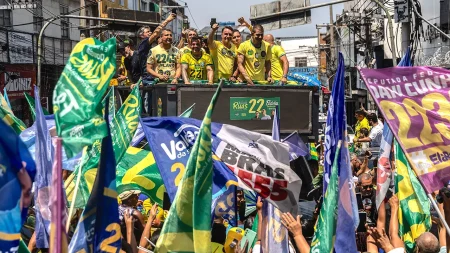






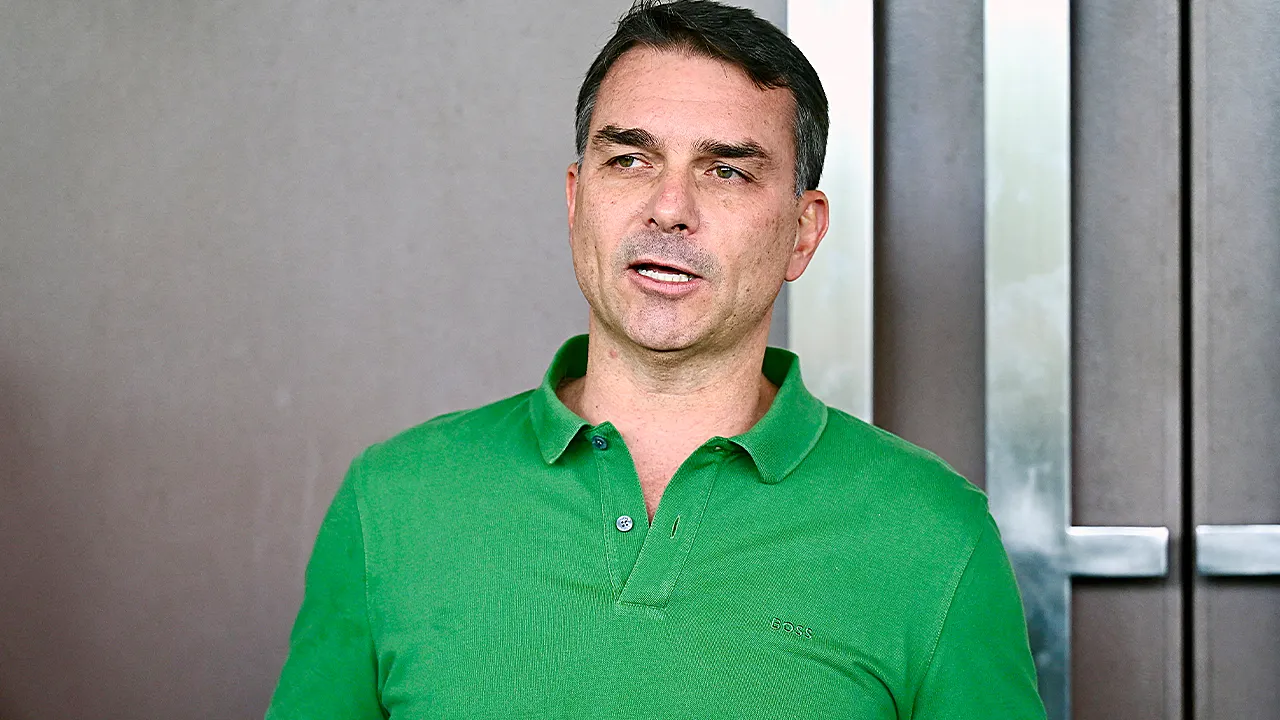
Brazilian voters delivered a thunderclap on election night, one that left pollsters, pundits, and the political establishment scrambling to explain what had just happened. Senator Flavio Bolsonaro, the son of former President Jair Bolsonaro, surged past expectations and took the lead in the first round of Brazil’s presidential election, turning what was supposed to be a comfortable evening for incumbent President Inacio Lula da Silva into a nail-biting, humbling near-defeat. With 99% of the votes counted, Bolsonaro stood at 47.2% compared to Lula’s 44.9%, a result that everyone had been told was impossible. For weeks, the overwhelming majority of opinion polls had shown Lula with a single-digit lead, and while the race had tightened, the consensus was that the leftist president would coast into the runoff with momentum and confidence. Instead, Brazilians sent a message that no algorithm or survey model had anticipated. The stunning discrepancy between the polls and the actual vote was immediate fuel for the Bolsonaro campaign, which has long claimed that Brazil’s top polling firms are biased in favor of Lula and his Workers Party. The same complaints were made in 2018 and 2022, when Jair Bolsonaro was the candidate, but this time the gap between expectation and reality was so enormous that even neutral observers had to pause. The question on everyone’s mind was no longer whether Lula would win, but how the entire polling industry could have gotten things so wrong—and whether that failure itself was a sign of something deeply broken in Brazil’s political information ecosystem.
The geography of the vote told a powerful story of a nation divided, but not in the way the conventional wisdom had imagined. Bolsonaro crushed Lula in the populous, economically vital south, winning the country’s three largest states by margins that were not remotely close. In São Paulo, Brazil’s industrial and financial heart, Bolsonaro led Lula by a commanding 52% to 38%. In Minas Gerais, the historic bellwether state that often decides national elections, the young senator from the Bolsonaro family outperformed the incumbent 48% to 43%. And in the family’s home base of Rio de Janeiro, the result was even more emphatic: 53% to 39%. These were numbers that the left had hoped to trim, not lose outright, and their magnitude sent a chill through Lula’s camp. Lula, of course, did what he always does in his traditional strongholds, rolling up enormous margins in the Northeast, the poorer, more heavily Afro-Brazilian region that has been the emotional and political bedrock of the Workers Party for decades. Bahia, Pernambuco, and Ceará all came through for Lula with huge vote shares, but the math simply did not add up. The Northeast could not outrun the sheer weight of the south, where Bolsonaro’s appeal among middle-class voters, evangelical Christians, farmers, business owners, and even many working-class Brazilians proved far stronger than any poll had suggested. To many observers, the result felt less like a local election and more like the latest chapter in a continent-wide wave of conservative resurgence, with right-wing candidates in Chile, Argentina, Peru, Ecuador, and Bolivia all riding similar currents of frustration, nostalgia, and anger at established elites.
For the Brazilian left, the night was less about the second round than about a painful question that nobody wants to ask aloud: should Lula have run at all? At eighty years old, with three presidential terms already behind him and a fourth within reach, Lula was always viewed as the only figure capable of uniting the fractious, often quarrelsome coalition of progressives, centrists, and grassroots activists that make up the left in Brazil. His personal story is one of the most remarkable political comebacks in modern history. A former metalworker and union leader, Lula was once imprisoned on corruption charges, only to be freed by the Supreme Court, return to politics, and defeat the incumbent Jair Bolsonaro in a razor-thin 2022 runoff. He famously told the nation during that campaign that he would serve only one term, that he was a bridge to a new generation, that he was not seeking power for its own sake but to repair the damage of the Bolsonaro years. And then he reneged. He made it clear that he wanted another term, that he believed he was still the best man for the job, that the left had no one else who could match his charisma and organizational might. That decision, once viewed as pragmatic, now looks dangerously arrogant. The first round results suggested that many Brazilians, even those who once adored Lula, were tired of being told that only one aging man can save them. The left is now entering a period of deep soul-searching, forced to confront the possibility that Lula, for all his brilliance, was not the giant who could hold the coalition together but the weight that pulled it down. There is no obvious successor waiting in the wings, no young leader with Lula’s reach, and that realization only deepens the anxiety.
The road to the October 25 runoff now belongs, at least on paper, to Flavio Bolsonaro, and he begins it with a set of structural advantages that are hard to overstate. He has not only outperformed the polls and proven the establishment wrong, but he is also poised to inherit the overwhelming majority of the votes cast for the third-party candidates who finished behind him. Augusto Cury, Renan Santos, Ronaldo Caiado, and Romeu Zema collectively received nearly 8% of the vote, and while none has formally endorsed yet, the expectation is that Caiado and Zema, both conservative figures, will line up behind Bolsonaro. Cury and Santos may withhold endorsements, but their voters are not expected to flock to Lula in significant numbers. Beyond the presidential race, the Bolsonaro family and its political machine swept through Congress like a tide. Jair Bolsonaro’s wife, Michelle, was elected senator, as was his son Carlos, while another son, Renan, won a seat as a federal deputy. The Liberal Party, Bolsonaro’s political vehicle, is expected to hold 29 seats in the Senate, a stunning count compared to just 9 for Lula’s Workers Party. In the lower chamber, the Liberal Party is projected to be the largest bloc with 121 seats, while the left-wing coalition Brazil Fe is on track for only 78. That means that even if Lula somehow wins the presidency, he would face a Congress dominated by his opponents, a hostile chamber capable of blocking his agenda, investigating his allies, and making his fourth term a living nightmare. Bolsonaro, by contrast, can credibly promise voters not just the presidency, but a coordinated conservative government across all branches of power. And if elected, one of his first acts, according to observers, would almost certainly be to free his father and senior military officers who are currently jailed on charges of planning a coup to remain in power after the 2022 election. For the Bolsonaro family, this election has always been personal, and the possibility of liberation, both literal and symbolic, now hangs within reach.
Behind the dramatic numbers and family dynasties lies a deeper battle over Brazil’s institutions, and this may be the real story of the campaign. For years, the Brazilian right and the Bolsonaro family have waged a war of words and legal challenges against the nation’s Supreme Federal Court, a tribunal dominated by justices appointed during Workers Party governments. The court has blocked measures, ordered arrests of conservative politicians, and intervened in politically sensitive cases in ways that the right regards as illegitimate, even tyrannical. Political analyst Flavio Morgenstern captured the mood with striking bluntness: “This election was not about Flavio Bolsonaro vs. Lula. It’s about all of freedom-loving Brazil against the Brazilian Supreme Court. People have no voice in the institutions, and all the power in Brazil is concentrated in the Supreme Court.” That sentiment helps explain why the polls were so wrong. If a significant portion of the electorate distrusts the media, the courts, and the polling companies, they may simply lie to pollsters, or refuse to answer their phones, or stay silent about their true intentions until they enter the voting booth. The Bolsonaro camp has long argued that the establishment refuses to hear the voice of the people, and tonight’s result is their most powerful exhibit yet. In this telling, the election is not merely a contest between two candidates, but a referendum on whether ordinary Brazilians have any real say over their own destiny, or whether the decisions are made by a small unelected elite in black robes. It is a dark, polarizing, and emotionally charged vision, but it is one that appears to be resonating with millions of voters across the country. The Supreme Court, once viewed as a guardian of democracy, has become, for many, a symbol of everything that feels rotten in Brazilian public life.
And yet, it would be foolhardy to write off Lula completely. The president is renowned as one of the most cunning, effective, and tireless campaigners in the history of Latin American politics, and he still commands a formidable electoral machinery, with unions, social movements, and local party bosses ready to mobilize on his behalf. Three weeks is a long time in Brazilian politics, and the second round is an entirely different contest from the first. Lula can now run directly against Bolsonaro as the defender of democracy, the guardian of the poor, and the only person standing between Brazil and a return to the chaos, division, and authoritarian flirtations of the Bolsonaro years. He can argue that the first round was a warning, not a verdict, and that voters who backed third-party candidates will ultimately reject the prospect of a political dynasty that promises to free coup plotters and dismantle the checks and balances of the republic. There is also the possibility that Lula will moderate his message, appeal to the center, and remind Brazilians of the social programs and economic stability that defined his earlier years in office. But even with all that, the mountain may simply be too high. The first round revealed a country that is angrier, more conservative, and more distrustful of the left than anyone wanted to admit. Lula is old, tired, wounded, and running against the tide of history in a region that has swung decisively to the right. The great giant of the Latin American left, the man who rose from poverty to the presidency, who survived prison and rebuilt his reputation, now faces the most daunting challenge of his extraordinary life. Can he win a fourth term against a young, energetic, vindicated opponent backed by a powerful family machine and a huge congressional majority? Perhaps. But Brazil’s voters have already shown that they are full of surprises, and they may not be finished overturning expectations just yet.