





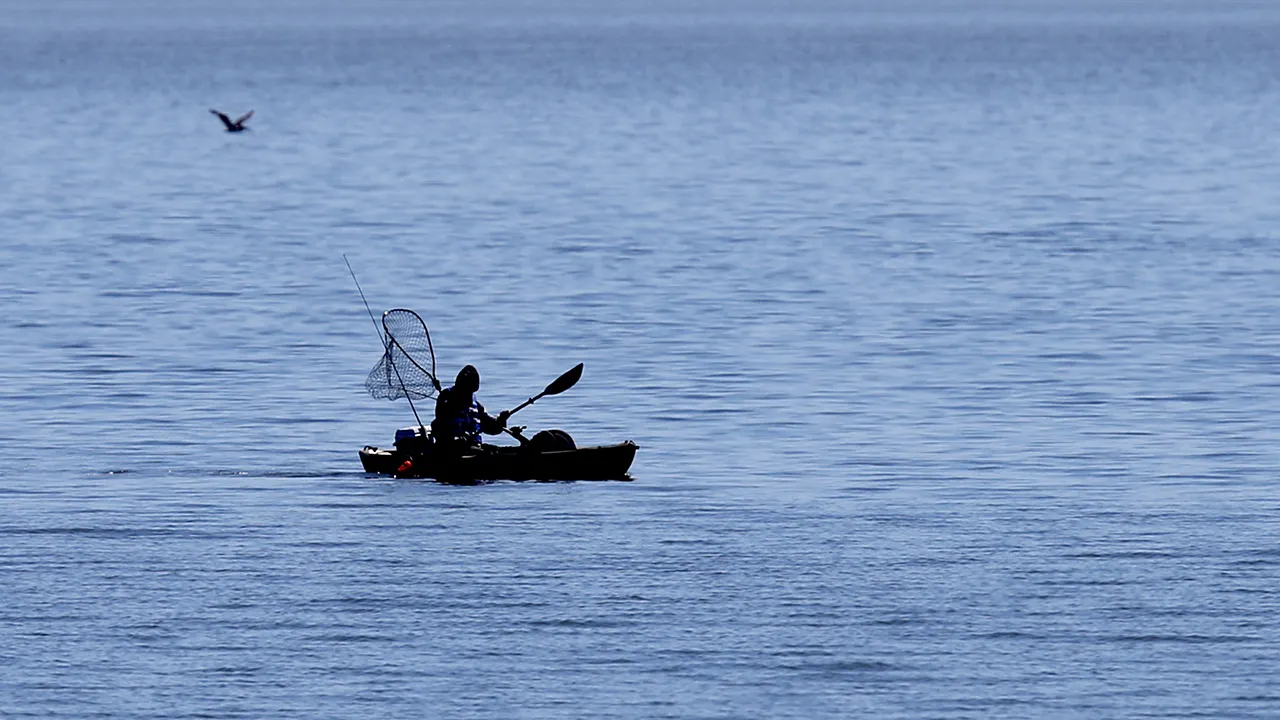
The Pacific lay unusually calm that Sunday morning, a silvery sheet stretching out beyond the shoreline of Paradise Cove. For a kayaker fishing just off the Malibu coast, it must have felt like the kind of perfect morning that makes you forget the dangers hiding beneath the surface. Then, in a matter of seconds, that quiet serenity transformed into a scene of sheer panic. The man, who had been out on the water hoping for a leisurely catch, found himself at the center of a terrifying encounter that would leave him bleeding and rushed to a local hospital. According to the Los Angeles County Fire Department, the incident unfolded near Paradise Cove, an area known for its scenic beauty and, more recently, for the kind of wildlife encounter that makes headlines. What began as an ordinary day of fishing quickly turned into a struggle for survival, with witnesses describing a scene of chaos, blood, and remarkable heroism.
The sequence of events, pieced together from witness accounts, paints a vivid picture of the attack. The kayaker had apparently hooked something powerful—believed to be a mako shark. For most anglers, landing such a fish is an exhilarating challenge, but this man was reportedly trying to do the right thing: he was attempting to release the shark back into the water after reeling it in. It was in that vulnerable moment that the situation spiraled out of control. The shark bit him, causing him to lose his balance and tumble into the ocean. As if that were not terrifying enough, the shark struck a second time before finally swimming away into the depths. Reports differ on whether this was a deliberate attack or a defensive reaction from a trapped animal, and the Los Angeles County Fire Department later softened its initial characterization of the event, describing it as a “fishing accident” rather than a shark attack. But to the man in the water, the distinction likely meant little. He was bleeding from two distinct wounds, struggling to stay afloat, and relying on the quick actions of those around him to save his life.
The human element of this story is what truly resonates. A nearby fisherman saw the commotion and did not hesitate. He pulled the injured kayaker from the water, hauling him onto his boat and rushing him back to shore. The victim, despite his ordeal, had the presence of mind to call his girlfriend—a retired lifeguard—who met him at the water’s edge. She was able to assist him from the boat and immediately began coordinating with emergency responders, turning a moment of chaos into a more organized rescue. Meanwhile, the staff at the nearby Paradise Cove Beach Cafe watched in disbelief. One manager, who saw the injuries firsthand, described the wounds in stark, unsettling detail: bite marks on the man’s lower leg and above the knee. “He was bitten in two places,” he told reporters, adding that in all his years at the beach, he had never witnessed anything like it. “We’ve had a lot of crazy stuff happen here, but we’ve never had a shark attack like that.” His words capture the jarring nature of the event—a reminder that the ocean is wild, unpredictable, and entirely indifferent to human expectations.
The response was swift and professional. Video footage showed a lifeguard sprinting toward the fisherman moments after the attack, moving with the urgency of someone who understood the stakes. Los Angeles County Fire Department crews arrived on the scene, stabilized the victim, and transported him to a local hospital. Details about his condition remained limited, but the fact that he was conscious enough to make a phone call and walk, with assistance, from the boat to shore suggests a measure of resilience. The beach itself remained open after the incident, a decision that might seem surprising given the morning’s events. But along the Southern California coast, shark encounters, while rare, are not entirely unexpected. The ocean is, after all, their home. The fact that this man survived, and that bystanders rallied around him with such instinctive courage, says as much about human kindness as it does about the unpredictable nature of the sea.
There is a broader context worth considering, especially for those who live along the coast. October is a month when the likelihood of encountering a shark in Southern California rises slightly. Warmer coastal waters attract an abundance of prey, which in turn draws juvenile sharks closer to shore. Female sharks are known to use these shallow, warmer areas as nursery grounds, where their young can feed and grow with a degree of protection from larger predators. This is not a reason to panic, but it is a reason to respect the ocean with a little more humility. Environmental shifts, changing water temperatures, and shifting prey populations all influence shark behavior, making peaceful coexistence a matter of awareness rather than fear. The term “shark attack” often conjures images of a monster, but the reality is usually more nuanced. Many so-called attacks are actually defensive responses from a shark that has been hooked, startled, or otherwise provoked. In this case, the fisherman was attempting to release the shark when he was bitten—a detail that complicates the narrative and aligns with the fire department’s decision to label it a fishing accident rather than a predatory attack.
In the end, this story is one of survival, timing, and the strange ways in which fear and courage intersect. A man went out on the water alone, seeking quiet and perhaps a bit of adventure. He found himself in a life-or-death situation, and yet he was never truly alone. A stranger in a nearby boat became his rescuuer. A retired lifeguard—his girlfriend—became his anchor on shore. Paramedics, lifeguards, and casual bystanders all played a role in transforming a terrifying morning into a story of hope. The man’s physical wounds will likely heal, though the psychological scars may linger longer. The shark, meanwhile, swam off, likely as traumatized by the encounter as the man himself. It is a humbling reminder that when we enter the ocean, we are visitors in a world that has its own rules. We can never fully control it, but we can prepare, we can help each other, and we can walk away from the shoreline with a little more appreciation for the delicate—and sometimes dangerous—balance of life beneath the waves.