





Paragraph 1
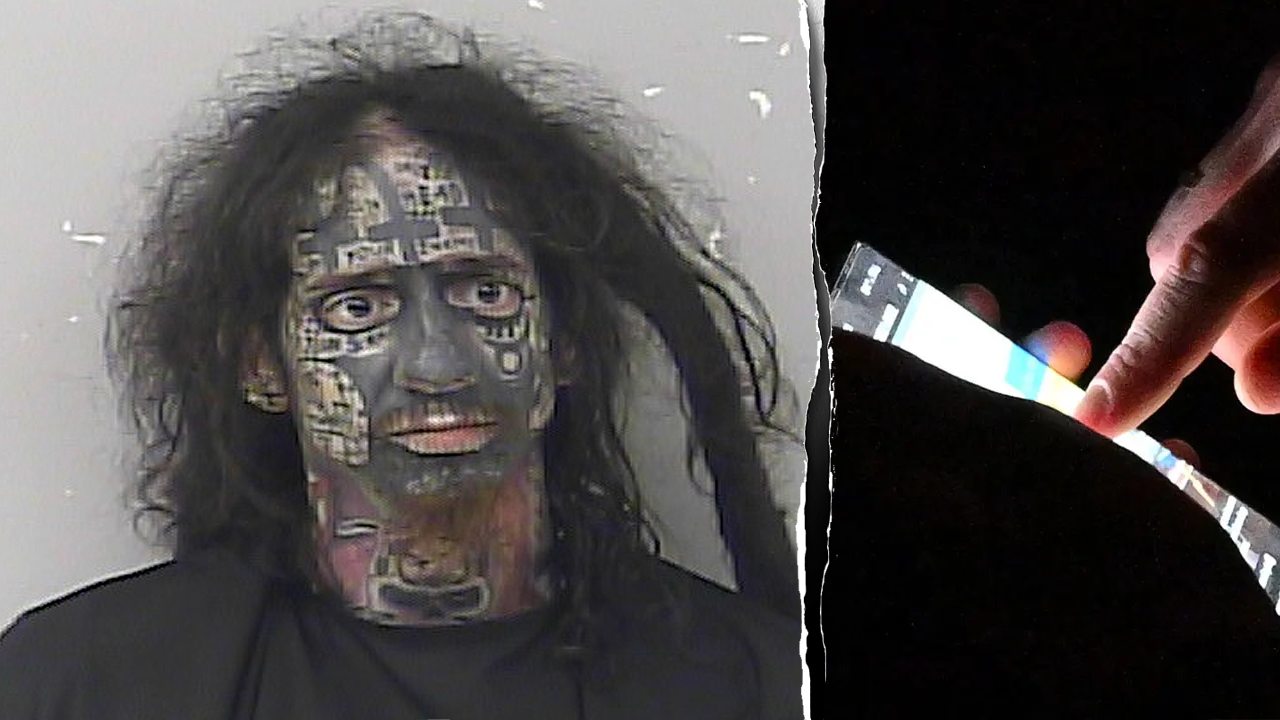
On the surface, Mark Stephen Asea might have seemed like just another shadowy figure lurking in the corners of social media—a man who styled himself as a “demonologist,” a “Grey Hat Hacker,” and an “empath,” with a biography that seemed to borrow from a horror movie and a spy thriller all at once. But to the women who say they became the subjects of his obsessive digital fixation, his online persona was no act. It was a weapon. The 36-year-old Port St. Lucie, Florida, resident was back behind bars on September 30, arrested on a felony charge of offense against computer users, with his bond set at $35,000. The arrest was not his first encounter with law enforcement. Earlier in April, he had been taken into custody on stalking and computer-related allegations, but those charges were abruptly dropped in May. For a time, it must have felt like the nightmare was over for the women who had come forward. But the relief did not last. In September, prosecutors reopened the case and filed the new charge, and Asea found himself once again in a jail cell, facing accusations that he had violated the most intimate boundary of all: the private, protected space inside someone’s phone and computer. There is something deeply unsettling about the idea that a stranger can reach into your digital life, pluck out your passwords, track your purchases, and know where you are at any given moment. For the women in this case, that idea was not a hypothetical fear. It was their lived reality, played out in real time on TikTok for anyone to see.
Paragraph 2
The first woman’s story reads like a cautionary tale about trust in the digital age. She had been part of a closed TikTok group chat, a private corner of the internet where people share things they would never post publicly. It was there that she shared a password, believing it would stay within that small circle. Asea was not a member of the group, according to the police affidavit, though she suspected he might have slipped in through a fake account. That suspicion alone is enough to make any person’s skin crawl—the idea that someone would go to such lengths to infiltrate a private conversation, all to collect secrets to use later. And use them he allegedly did. In a video reviewed by a detective, Asea repeatedly rattled off intimate details about her life, from her actual password to the last ten purchases she had made online. He taunted her directly, asking, “Let’s talk about your actual password” and “How about we talk about the last 10 purchases you made online?” For the woman, the violation was total. She had no idea how he obtained her phone identification number or her banking information, and she certainly had not given anyone permission to share the password outside that private group chat. Imagine the helplessness she must have felt, listening to a stranger recite the mundane but deeply personal facts of her financial life, knowing that he had somehow reached into her phone and pulled them out like a magician revealing a card. The police documented her account, and her testimony painted a picture of a woman who had been left feeling exposed, confused, and profoundly unsafe.
Paragraph 3
The second woman’s experience began with something so ordinary it could have happened to anyone: she needed help with a computer problem. In October, she allowed Asea to remotely access her computer to troubleshoot an application. It was a routine request, the kind of thing people do every day with tech-savvy friends or online support agents. But she said that while she was out of the room, he used that access to do far more than fix a glitch. He allegedly planted a virus on her computer, giving him a hidden window into her life without her ever knowing. Monitors later, he claimed he had done exactly that, bragging about the secret access he had installed while she was in the bathroom. The betrayal here is almost too intimate to process—someone using a moment of vulnerability, a simple act of trust, to burrow into your machine like a parasite. And it did not stop with her computer. A private photograph, sent through a Telegram message, allegedly appeared in one of his TikTok posts. She was able to prove that the image came from her private Telegram conversation, even though Asea tried to claim it had been lifted from a WhatsApp exchange. As if that were not frightening enough, he allegedly made statements boasting that he could track her through the GPS in her phone. “Thanks to the GPS within her phone, but what did I do?” he said in a video. The question is chilling, because the answer is clear: he was stalking her, using the very technology that was supposed to connect her to the world as a leash to keep her under his watch.
Paragraph 4
What makes this case even more harrowing is the sheer scale of the alleged harassment. This was not a single offensive post or a one-time slip of the tongue. According to investigators, Asea uploaded more than 100 TikTok videos mentioning one of the women, sometimes posting as many as six videos in a single day. Six videos a day—that is a relentless, almost professional-level campaign of intimidation, designed to keep her in a constant state of fear and vigilance. Imagine waking up every morning and wondering what new piece of your private life had been broadcast to the world overnight. Imagine checking your phone only to see another video, another comment, another reminder that someone out there was watching you, recording you, and sharing your most personal moments without your consent. The harassment extended beyond TikTok as well. Asea allegedly obtained a website where he posted a photograph of the woman getting a tattoo, turning even her body art into a public spectacle. There was no corner of her life that seemed off-limits. The photos, the passwords, the purchases, the GPS coordinates—it all became fodder for his content. To the outside world, these may have seemed like scattered pieces of trivia, but to her, they formed a mosaic of violation, each new post another crack in her sense of security. She could not simply log off or block him and make it all go away, because he was always finding new ways to reach her, new platforms to exploit, new methods to remind her that she was not safe.
Paragraph 5
Who is Mark Stephen Asea, really? His TikTok biography reads like a mashup of spiritualism and cybercrime: “Demonologist,” “Clairsentient,” “Empath,” “PTSD,” “Grey Hat Hacker,” “Woodsman.” In an earlier version of his profile, he added “former satanist” and “cybersecurity engineer” to the mix. It is a dizzying, contradictory set of labels, and it is hard to know what to believe. In some ways, the shifting identities seem like another form of manipulation, a way to keep people off-balance, unsure of who they are dealing with. A “grey hat hacker” is someone who sits somewhere between ethical and malicious hacking, but for the women who have accused him, there was nothing grey about the harm they experienced. Asea also faced a separate civil stalking protection case during the summer. A woman obtained a temporary injunction in July, a legal declaration that she needed protection from him. But in a disheartening turn, a judge dissolved that injunction and dismissed the civil case on September 8. Just over two weeks later, on September 24, prosecutors reopened the criminal case and filed the current charge alleging unauthorized access to a computer or electronic device. The records do not explain why the earlier charges were dropped or what prompted the renewed prosecution, leaving a frustrating gap in the story. For the women involved, this legal back-and-forth must feel like a dizzying ride, filled with hope, despair, victory, and loss, often in rapid succession. Still, the fact that the case has been revived offers a glimmer of hope that their accounts are being taken seriously, and that the digital fingerprints Asea allegedly left behind will be impossible to ignore.
Paragraph 6
This case is ultimately about more than one man and two women. It is a story about the fragile nature of privacy in a world where our phones know everything about us—our passwords, our purchases, our locations, our private messages, our photographs. It is a reminder that trust can be weaponized, and that the person who seems to be helping us with a computer problem might, in a moment of distraction, leave behind something far more dangerous than a forgotten file. The women in this case did everything right: they shared information in private spaces, they sought help for tech issues, and when they realized they were being targeted, they went to the police. Yet they still found their lives laid bare for strangers to see. There is no easy way to make sense of that kind of violation, no simple security update that can erase the fear of knowing someone has been inside your personal devices. What matters now is that Asea is back in custody, facing serious felony charges, with an arraignment scheduled for November 19. For the women who have been living with this nightmare, the legal process is not just about punishment; it is about reclaiming their own sense of safety and showing that the law can still protect people from the shadows of the digital world. They deserve to walk down the street without wondering if someone is tracking their every move, to open their phones without expecting to see their own private moments broadcast online, and to go to sleep at night without the feeling that a stranger is watching from somewhere in the dark. Their story is a warning to all of us about the dangers we carry in our pockets, and a testament to the courage it takes to stand up and say, “This happened to me, and I will not stay silent.”