





The Political Sparks Fly: Cruz and Vance Trade Barbs Over 2028
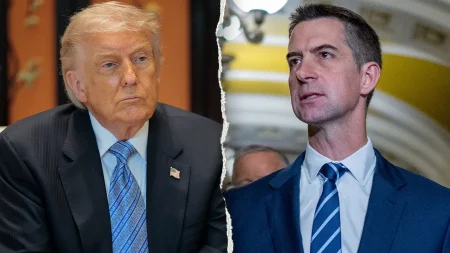
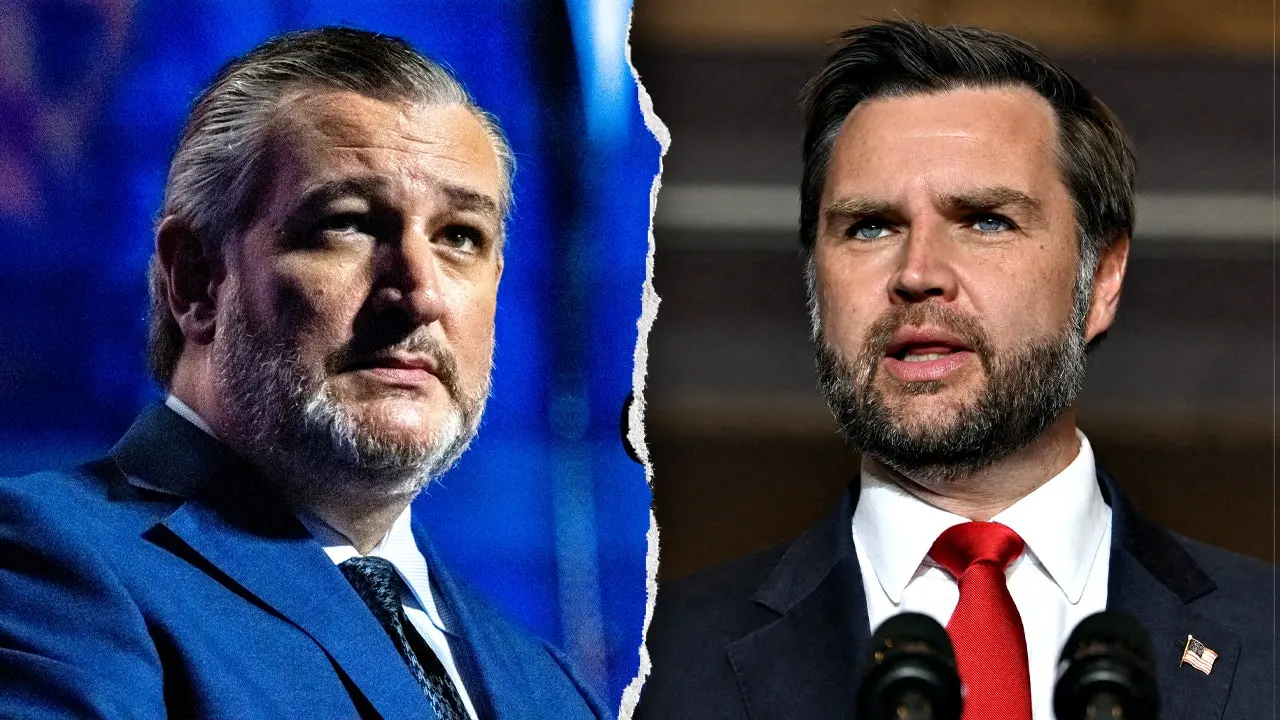
In the high-stakes, high-drama world of American politics, where every handshake is photographed and every offhand remark is scrutinized, a simmering tension has finally boiled over. The latest friction point comes not from a heated policy debate or a contentious vote on the Senate floor, but from the very personal realm of ambition and ego. Senator Ted Cruz of Texas has accused Vice President JD Vance of “feeling insecure,” firing back at the VP’s suggestion that Cruz is already openly jockeying for the 2028 Republican presidential nomination. The exchange, which played out through interviews and phone calls over the weekend, has pulled back the curtain on the delicate and often fraught dance that potential contenders perform in the lead-up to a presidential cycle. It is a dance that involves equal parts humility, calculated positioning, and, as we are now seeing, a fair amount of sharp-tongued pushback when one feels that their motives have been questioned publicly. The spat, while perhaps minor in the grand scheme of policy, offers a fascinating glimpse into the personal dynamics that will define the Republican Party’s future as it looks beyond the current administration.
The exchange began innocently enough, with Vice President Vance sitting down for an interview with NBC News on Thursday. When the conversation turned to the future of the party and the 2028 race, Vance, who is himself widely considered a top contender for the nomination, made a pointed observation. He asserted that it was “really obvious” that Senator Cruz was already running for president, even if no formal announcement had been made. In the same breath, Vance distinguished his own position, stating, “At this moment, I’m not. I’m trying to help elect Republicans. That’s what I’m going to keep on doing.” The implication was clear: Cruz is self-interested and politically calculating, while Vance is a team player focused on the immediate goal of securing Republican victories in the upcoming midterm elections. It was a subtle but potent frame, painting the Texan as a man with his eyes on his own prize rather than the collective good of the party. This kind of intra-party commentary, while common in the lead-up to a primary, carries a particular sting when it comes from the highest levels of the current administration, suggesting a hierarchy of loyalty and focus that places Cruz outside the inner circle.
Senator Cruz, never one to shy away from a verbal joust, did not let the comment slide. In a phone interview with Politico on Saturday, he responded with a mix of dismissiveness and psychological analysis that was classic Cruz. “In my experience, people engage in political bomb-throwing when they’re feeling insecure,” Cruz said, turning the tables on the Vice President. The retort was designed to deflect the original accusation while simultaneously undermining Vance’s confidence and standing. By suggesting that Vance’s remarks were a product of insecurity rather than observation, Cruz sought to reposition himself as the unbothered, senior statesman in the exchange, a man so confident in his own trajectory that he need not lash out at perceived rivals. Cruz further emphasized his focus on the immediate future, telling the outlet, “So he’s welcome to make whatever comments he likes. I’m going to keep focusing on the midterms and helping us win on Election Day in the next 30 days.” With those words, Cruz attempted to flip the script entirely, casting himself as the one singularly focused on the team’s success while Vance, in his view, is the one looking to stir the pot.
This public friction between Cruz and Vance underscores a broader reality within the Republican ecosystem: the 2028 primary is already underway in all but name. For political insiders, operatives, and donors, the jockeying for position has been happening for months, if not years. Senator Cruz, who ran a formidable and fiery campaign for the nomination in 2016, has long been rumored to be eyeing another bid. He has kept the door wide open, telling MS NOW in August that he would “certainly be part of the discussion” when asked about the 2028 race. That statement is the political equivalent of a wink and a nod, a way to keep donors engaged and his name in circulation without formally committing to the grueling process of a presidential campaign. On the other hand, Vance, who rocketed from bestselling author to Senator to Vice President in a remarkably short time, represents a newer, more populist wing of the party that has taken root under President Donald Trump. His youth, his connection to the working-class voters who have become the GOP’s backbone, and his current platform as Vice President give him a massive head start. The collision of these two ambitions—the battle-tested veteran and the rising star—was inevitable, and their recent exchange is likely just the first of many skirmishes to come.
At the heart of Cruz’s defensive stance is his extensive—and, by his own account, unmatched—record of campaigning for fellow Republicans. In his conversation with Politico, Cruz was keen to highlight his commitment to the party’s success in the upcoming elections, pointing to a grueling travel schedule that highlights his dedication. He mentioned campaigning on behalf of GOP candidates in Georgia, Iowa, Nebraska, South Carolina, and his home state of Ohio, with plans to travel to Alaska, Florida, North Carolina, and South Carolina later in the month. He framed this hustle as a testament to his loyalty, claiming, “Over the last 10 years, there’s no Republican in the country who has campaigned for more Senate candidates, more House candidates, more gubernatorial candidates than I have, and this year will be no exception.” This is a strategic argument meant to counter Vance’s implication that Cruz is solely focused on his own advancement. By pointing to his extensive travel and fundraising efforts, Cruz is attempting to build a narrative of selflessness and party solidarity. He is essentially saying: How can you accuse me of running a shadow campaign when I am spending my weekends on a charter plane in Des Moines and Omaha helping the team? It is a powerful counter-narrative, one that positions him as the loyal foot soldier while subtly implying that Vance, who has also been campaigning, is doing so from a position of immense institutional power rather than from the trenches of grassroots politics.
The irony of the current situation is not lost on Cruz, who reminded Politico of a crucial piece of history that complicates Vance’s attack. Cruz pointed out that he was, in fact, an early and active supporter of Vance’s political career. “Indeed, ironically, I spent a full day on the road with JD Vance, campaigning with him when he was running for Senate in Ohio,” Cruz said. “I was very glad he won that race. I was very glad to help him.” This revelation adds a layer of personal history and, perhaps, betrayal to the current disagreement. Cruz helped launch Vance into the political stratosphere, traveling with him and lending his considerable campaign machine to the effort in 2022. Now, that very same individual is questioning Cruz’s motives on a national stage. This dynamic could resonate with voters and operatives who value loyalty and memory. It also exposes a generational divide within the party; Cruz represents the more traditional, deeply experienced conservative wing that has paid its dues, while Vance represents a new guard that is ascending rapidly, potentially leaving former allies in the dust. For Cruz, this is a bitter pill to swallow, and his public reminder of his past support serves as both a gentle scolding of Vance and a subtle warning to other ambitious politicians: remember who helped you get to where you are.
Meanwhile, the campaign trail continues to spin. Vice President Vance has been equally active, making appearances in Texas and Florida last week and holding a rally in Alaska on Monday. The two men are, in a sense, mirror images of one another: both are tireless campaigners, both are brilliant communicators, and both harbor deep political ambitions. The difference lies in their current roles and their timelines. Vance, as Vice President, carries the weight of the administration’s successes and failures into every stop he makes. He is running on a record, defending the policies of the Trump-Vance administration. Cruz, on the other hand, is running as a free agent, supporting candidates on the merits of their alignment with conservative principles, often acting as a surrogate who can fire up the base without the constraints of administration talking points. This fundamental difference in positioning is likely to keep the friction alive. For now, Cruz has vowed to keep his head down and his eyes on the midterms, assuming the role of the magnanimous party man. But the sting of the Vice President’s comment will not easily fade. The 2028 race is a marathon, not a sprint, and today’s insults often become tomorrow’s campaign ads. As the fall midterm elections approach, this spat serves as a tantalizing preview of a Republican future after the current administration, a future that will be defined by a furious and complex battle for the soul and leadership of the party. For Cruz and Vance, the gloves have been taken off, and both have shown they are willing to throw a punch at the man standing beside them on the road to 2028.