





On a warm Alabama Friday, the usual pre-rally excitement around the University of South Alabama was interrupted by a quiet, startling development that rippled through campus and federal court dockets alike. Three university students were arrested and charged with threatening President Donald Trump ahead of his evening rally at the Mitchell Center, according to a source familiar with the matter and reported by the Lagniappe Daily. The arrests came after social media posts allegedly made in the days leading up to the president’s visit were flagged by federal investigators. The cases were unsealed Friday afternoon, just hours before Trump was scheduled to take the stage, leaving little time for the Mobile community to process what had happened. For the students involved, what may have seemed like an edgy online comment in a moment of political passion had suddenly transformed into a federal criminal case with life-altering consequences. For the rest of the country, it served as another stark reminder that the line between online rhetoric and real-world threat has grown razor-thin, especially when the target is a sitting president. The arrests also injected an unmistakable tension into what was supposed to be a night of political celebration, nostalgia, and campaign energy.
According to FBI affidavits cited by the Lagniappe Daily, federal agents discovered the posts while conducting social media intelligence searches in advance of Trump’s arrival. The investigators used emergency disclosure requests and worked with University of South Alabama police to identify the individuals behind the accounts. One student allegedly left a threatening remark toward Trump beneath a TikTok post about the president’s planned campus appearance. Another student allegedly posted on X that people would remember the University of South Alabama the same way they remember Utah Valley University. That reference was especially alarming to investigators because Utah Valley University was the site where conservative activist Charlie Kirk was fatally shot last year. The name of the university had become shorthand for political violence and grief, and invoking it in connection with a presidential visit was enough to trigger immediate federal scrutiny. A third student allegedly replied to a separate TikTok post about Trump’s appearance, adding another thread to the web of concerning digital activity. While the exact wording of the posts has not been fully released to the public, the severity of the charge—threatening the president of the United States—speaks to how federal authorities interpreted them. In the space of a few clicks, a moment of careless posting had escalated into an FBI investigation, an emergency disclosure request, and a criminal complaint unsealed before the president took the stage.
In the days leading up to the rally, local and federal officials had already signaled that they were on high alert. Mobile County Sheriff Paul Burch said earlier in the week that his office was assisting federal authorities in monitoring social media activity related to the president’s upcoming appearance. That kind of cooperation between local law enforcement and federal agencies has become standard whenever a president travels, but it also illustrates how much of modern security work happens in the digital realm. Threats are no longer just shouted from crowds or scrawled on signs; they are typed into comment boxes, sent in direct messages, and posted to public timelines where intelligence teams can spot them. The University of South Alabama, meanwhile, found itself caught between its role as an educational institution and the realities of hosting a highly charged political event. University officials stressed that the rally was not university-sponsored and that the Mitchell Center had been rented by the Republican National Committee. In a statement to Fox News Digital, the university said it unequivocally condemns any form of threats directed at elected officials or any individual with whom we disagree. It also affirmed its commitment to open dialogue and active civic participation, while drawing a bright line: there is a clear distinction between exercising free expression and engaging in intimidation or unlawful conduct. That balancing act—protecting speech while preventing violence—is now at the heart of campus life in an era of deep political polarization.
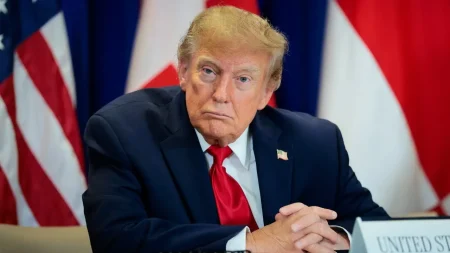
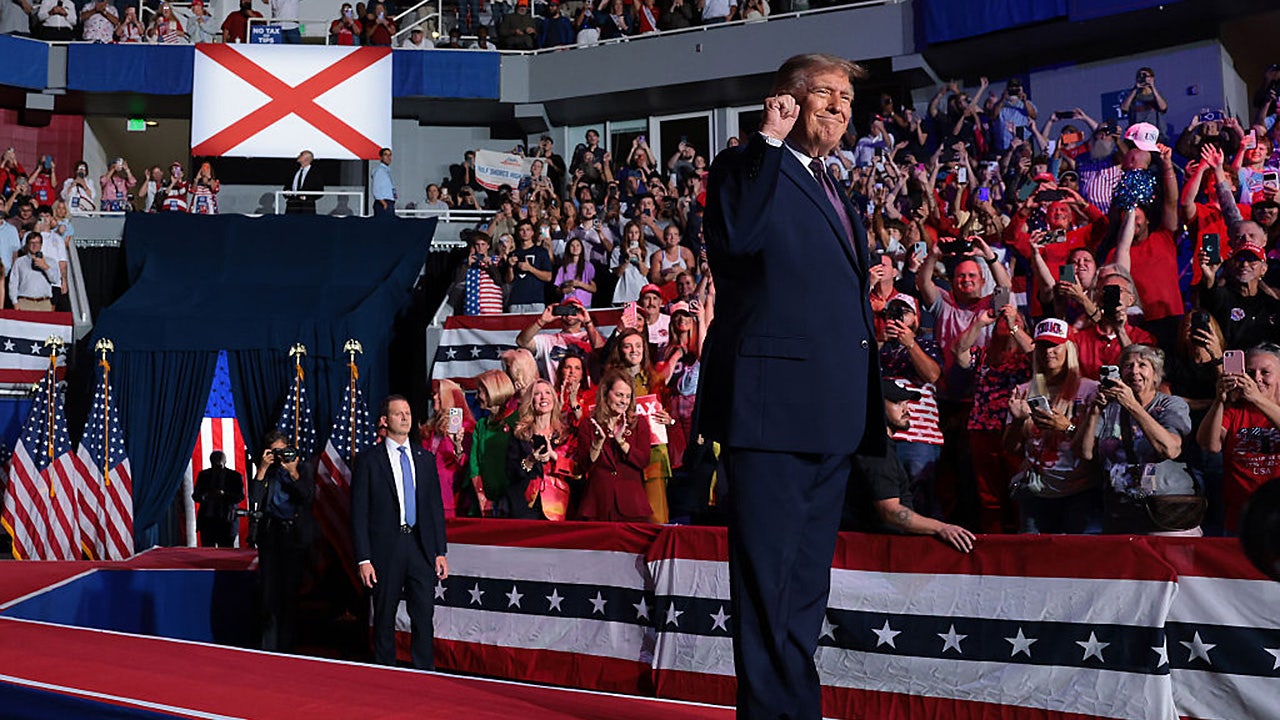
Despite the arrests, the show went on. Trump took the stage Friday evening as scheduled, delivering his midterm campaign rally to a crowd that had filed into the Mitchell Center with enthusiasm and anticipation. For many in attendance, the event had special meaning. The president reminded the audience that his relationship with Mobile stretched back more than a decade, to a 2015 rally in the city during the opening months of his first presidential campaign. “It sort of all began here,” he told the crowd, acknowledging the city as a symbolic starting point in his extraordinary political journey. The moment was heavy with nostalgia for supporters who had watched him rise from a long-shot candidate to a dominant force in American politics. Trump also recognized Sheriff Paul Burch and University of South Alabama President Jo Bonner from the stage, a gesture that underscored the partnership between law enforcement and the university in ensuring the event went off smoothly. For those gathered, the evening was a celebration of movement politics, a reunion of loyalists, and a chance to hear the president speak in a setting that felt intimate compared to the enormous arenas of national conventions. But beneath the cheers and the music, the arrests hovered in the background as a reminder that presidential visits are never entirely carefree.
The legal stakes for the three students are serious and sobering. Threatening the president is a federal offense that can carry imprisonment, fines, and a permanent criminal record. In the age of social media, such cases are becoming increasingly common, and the government has made clear that it treats violent language toward the president with the utmost seriousness. Just weeks earlier, an Ohio man was charged over graphic threats to kill Trump and behead a GOP lawmaker, and in another recent case, a prosecutor dropped charges against a woman accused of threatening Trump on TikTok, showing that these matters are handled with careful case-by-case judgment. For the students arrested in Mobile, the path forward is uncertain. They will have to answer for the content of posts made perhaps in frustration, dark humor, or ill-considered bravado. The internet has a long memory, and federal investigators have increasingly sophisticated tools to trace anonymous and pseudonymous accounts back to real people. What might have felt like a throwaway comment in a digital space can now become evidence in a federal complaint. The use of emergency disclosure requests—legal mechanisms that compel tech companies to hand over identifying information quickly—shows just how rapidly internet speech can be converted into a real-world legal matter. For young people who have grown up in an online culture where extreme statements are often normalized, the arrests serve as a chilling warning: the digital world is not separate from the legal one.
At its core, this episode raises difficult questions about freedom, safety, and civic life in a divided country. The University of South Alabama’s statement captured that tension well. It encouraged open dialogue and active civic participation, acknowledging that difference of opinion is natural in any vibrant community. But it also insisted that there is a clear line between free expression and intimidation or unlawful conduct. That line, however, is not always obvious to everyone, and the consequences of crossing it can be devastating. We may never know exactly what was going through the minds of the three students when they posted their messages. They may have believed they were simply venting, trolling, or engaging in political hyperbole. But to federal agents, the references to political violence, including the memory of Charlie Kirk’s assassination at Utah Valley University, were enough to justify immediate action. In a time when public officials face heightened threats and political violence has become a tragic part of American life, it is perhaps no surprise that investigators err on the side of caution. Still, the cases also remind us of the importance of due process and fair treatment. America’s tradition of robust political speech protects even sharp criticism of leaders, but it does not protect true threats. As the legal process unfolds for these students, the rest of the nation watches and reflects on how we talk about politics, how we disagree, how we joke, and how we express anger. The rally in Mobile concluded without violence, and the president left the stage uninjured. Yet the story of Friday cannot be reduced to a successful security operation. It is a story about three young lives suddenly interrupted, a university caught in the spotlight, and a country still struggling to find the line between passion and peril in the digital square.