




The news arrives with the weight of a sudden storm: a woman’s life has been cut short, a young Marine stands accused, and an island already carrying generations of complicated history feels the ground shift beneath it again. Her name was Anna Yagi, 39 years old, a resident of Okinawa whose ordinary morning took a devastating turn. Surveillance footage shows her entering a hotel in Naha, the capital of Okinawa Prefecture, alongside a man who would later leave alone. That man, according to Japanese police, is Lance Cpl. Devin Jacob Ballard, a 20-year-old U.S. Marine assigned to Marine Corps Air Station Futenma. Early Saturday, hotel staff discovered Yagi unresponsive after she failed to check out; her wallet and backpack were gone. Ballard was later located and arrested in Okinawa City. He has denied the allegations. But even with the legal process just beginning, the human tragedy is already complete: a family is mourning, a community is afraid, and a young man’s future hangs in the balance—while the relationship between an allied nation and its host community is tested once again.
The details that have emerged paint a chilling picture, yet they also leave many questions unanswered. According to Okinawa police, Yagi and Ballard were captured on surveillance footage entering the hotel together. At some point afterward, Ballard is seen leaving alone, while Yagi never checked out. The discovery was made by a hotel employee, a routine moment of checking on a guest that became something no one could have prepared for. Police found Yagi unresponsive, and later determined that her personal belongings—a wallet, a backpack—had been taken, leading them to treat the case not only as a homicide but as a robbery as well. Ballard was arrested in Okinawa City, a short distance from the American bases that have long been a part of the island’s landscape. The Marine Corps has acknowledged the arrest and confirmed that Ballard is assigned to the III Marine Expeditionary Force. He remains in Japanese custody, and the military says it is fully cooperating with the investigation. For now, there is no verdict, no final truth, only the raw beginning of a legal process that will have to answer for the life of a woman and the alleged actions of a Marine.
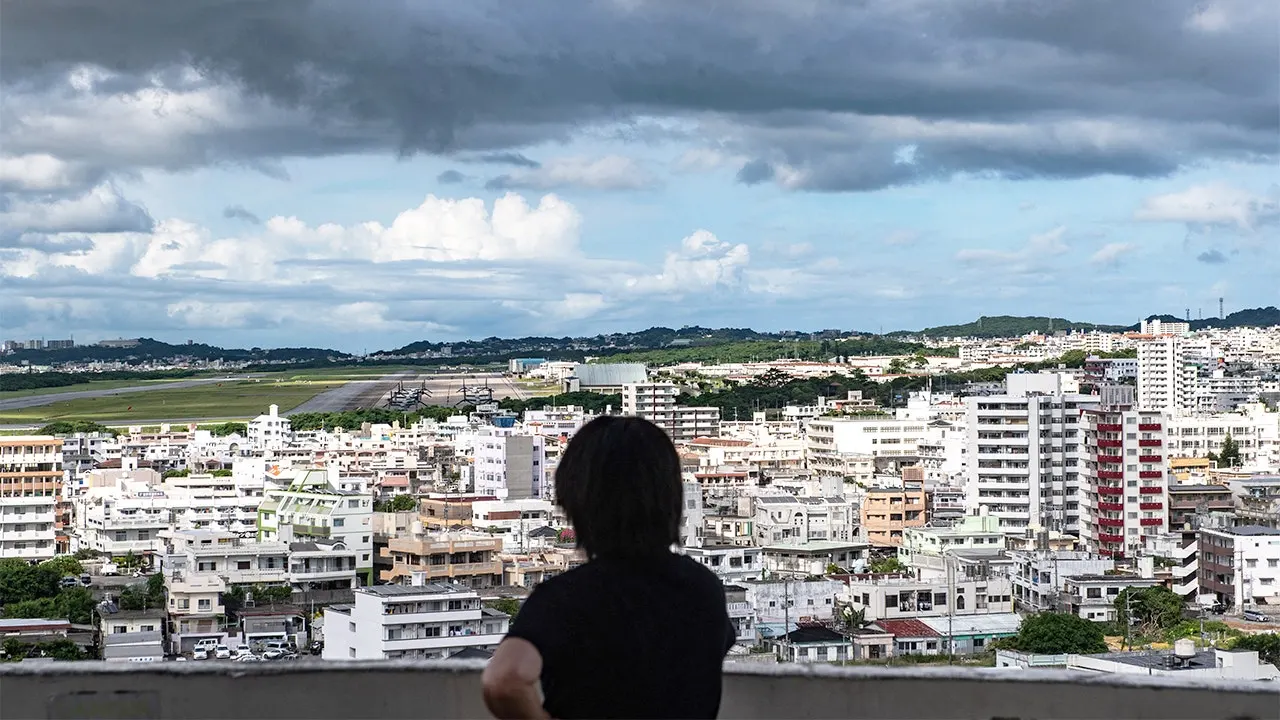
What makes this case particularly painful is the way it touches on deeper currents that have been running beneath the surface of Okinawa for decades. The U.S. military presence here is not abstract; it is woven into the daily lives of the island’s residents. Around 18,000 Marines are stationed in Japan, most of them on Okinawa, where their bases sit alongside densely populated neighborhoods. For many Okinawans, the relationship is a mix of economic reliance, cultural exchange, and profound unease. Every incident involving American personnel—especially violent ones—reopens old wounds. There have been past crimes, airplane accidents, and the constant noise of military operations, all of which have fueled local opposition and calls for reduced presence. But behind every statistic and protest is a human reality: parents raising children near bases, shopkeepers who serve American troops, and families who remember the pain of past tragedies. The death of Anna Yagi is not just a single criminal case; it is a story that resonates through the memories of an island that has often felt its own voice overshadowed by larger geopolitical forces.
Japanese officials responded swiftly and with unusual force, reflecting the gravity of the situation. Prime Minister Sanae Takaichi extended condolences to Yagi’s family and announced that her government had lodged a “strong protest” with the United States. Her words were measured but firm: the occurrence of such an extremely brutal and heinous incident was, she said, a matter of profound regret. Foreign Minister Toshimitsu Motegi went further, summoning U.S. Ambassador George Glass and demanding full cooperation with the investigation, stricter discipline among American military personnel, and concrete measures to prevent similar incidents in the future. Ambassador Glass expressed regret over the loss of life and assured Japanese officials of American cooperation. These diplomatic exchanges, while formal in tone, carry a deeply human undercurrent. Behind the official statements are questions about responsibility, trust, and the sometimes painful asymmetry of a military alliance. When a U.S. service member is accused of such a crime on foreign soil, it is not only a legal matter; it is a test of whether the partnership can acknowledge wrongdoing without fracturing, and whether justice can be seen as genuine by all sides.
The broader context is inescapable. Okinawa has long been a strategic linchpin in the U.S.-Japan alliance, positioned in the western Pacific near Taiwan and at the heart of growing concerns about China’s military activity in the region. This strategic importance has often been used to justify the heavy American presence, yet it rarely silences the voices of Okinawans who feel they bear an unfair burden. The island’s history is marked by the scars of war, and its current role as a host to U.S. forces comes with a complicated legacy. For every official who touts the necessity of the alliance, there are local leaders and ordinary citizens who speak of the need for dignity, safety, and respect. The arrest of a young Marine in connection with the death of a local woman is exactly the kind of incident that hardens resistance and deepens mistrust. It may also prompt a renewed debate about the Status of Forces Agreement, the legal framework that governs how U.S. personnel are treated under Japanese law, and whether it truly serves both nations equally. But in the midst of these structural debates, there are more immediate, intimate sorrows: a woman’s life is over, and her family is left with unanswered questions and inconsolable grief.
As the investigation unfolds, the hope is that justice will be done—not as a political concession, but as a genuine human reckoning. For Anna Yagi’s loved ones, no outcome can bring her back; the emptiness they feel is absolute. For the young Marine, the presumption of innocence must be respected, but so must the demand for accountability if he is found responsible. For Okinawa, this tragedy is another reminder that the island is not merely a strategic outpost or a footnote in alliance politics; it is a place where people live, love, work, and die. The American military presence here will continue to be complex, and the alliance will continue to be necessary in some form, but moments like this demand more than official statements and diplomatic protests. They demand honest reflection, genuine empathy, and a commitment to ensuring that such suffering is not repeated. The story of Anna Yagi is still being written in the words of witnesses, investigators, and lawyers, but it is also being felt by anyone who has ever lost someone too soon. In the end, this is not just a story about a crime or a political crisis; it is a story about how we treat one another, across borders, across power imbalances, and across the lines that separate military personnel from the communities they are sent to protect. And on that front, there is always more work to be done.