





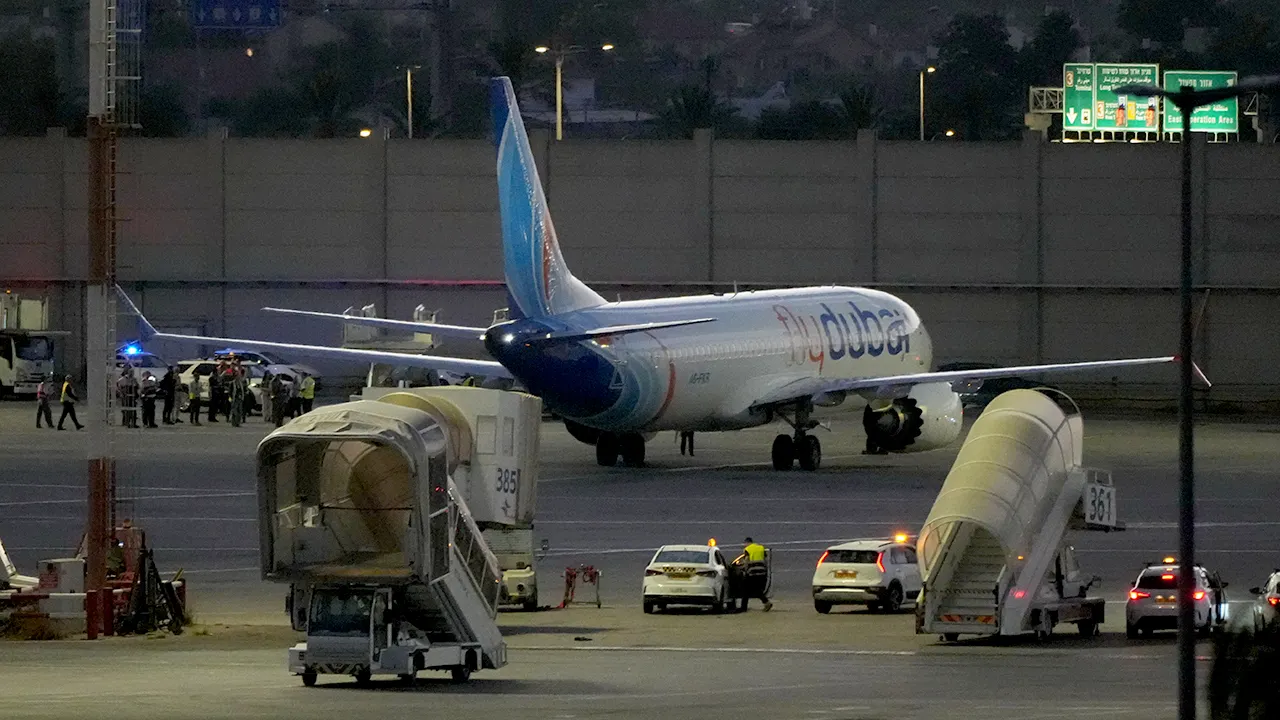
Imagine settling into your seat for an evening flight from Dubai to Tel Aviv, the kind of trip that thousands of people make every week. The seatbelt sign dings off, cabin lights dim, and passengers begin to drift into sleep, read, or stare out the window at the darkening sky. Nothing about FlyDubai Flight 1073 suggested that anything was wrong. But inside the cockpit, the two men at the controls were not simply navigating a routine journey. One of them, a co-pilot whom passengers and crew trusted with their lives, had reportedly crossed an invisible line. According to passengers and officials, he attacked the captain, stabbing him inside the closed cockpit, and in the sudden struggle, the aircraft was thrown into a terrifying, steep dive. For those in the cabin, the sensation would have been gut-wrenching: a violent lurch, the roar of engines straining against gravity, the desperate noise of alarms, and the horrible realization that something was terribly wrong. The plane plunged with such force that it threatened to break apart, an event that would have turned a filled airliner into wreckage scattered across the desert. But fate, and the quick actions of others, intervened. Two reserve pilots who happened to be on board the flight fought their way to the cockpit, regained control of the unstoppable descent, and safely diverted the aircraft to Saudi Arabia. Crew members and passengers then worked together to overpower the suspect, holding him until law enforcement could take over. The plane landed, and people began to breathe again. Yet the attack left a haunting question in the air: how could a pilot, a man whose entire career depended on discipline and calm, become the greatest threat to the very passengers he was meant to protect?
The answer, according to a source familiar with the matter, may lie in a trail of warning signs that went unheeded. The co-pilot, an Omani national, was reportedly grounded by Oman Air in 2024 after airline officials discovered that he had been visiting radical Islamic websites. That discovery was serious enough to make him a flight-safety concern, and he was taken off flying status. But instead of remaining in Oman under supervision, the co-pilot moved to Dubai later that same year, where he apparently sought a new job flying commercial jets. Authorities believe he spent a significant portion of his life outside Oman, including time with his mother, who is from Syria, a background that may have shaped a complicated personal history. What makes the situation even more alarming is the apparent breakdown in screening and communication. According to the source, FlyDubai did not check with Oman Air about the co-pilot before hiring him. In an industry where a pilot’s previous employer can offer critical insight into behavior, mental health, and ideological leanings, that missing check may have allowed a dangerous individual to climb back into a cockpit. The fact that he was not vetted through his former national airline suggests a systemic gap, one that could have produced a catastrophe. It is easy to imagine the co-pilot walking into a FlyDubai recruitment office, presenting his credentials, smiling through an interview, and passing background checks that seemingly looked at paper records rather than the full truth. Those who knew he had once been grounded for radical views were left out of the conversation entirely, and the flying public had no way of knowing that a man with a potentially violent ideology had been handed access to one of the most sensitive positions in civil aviation.
The layers of this case continued to deepen over the following days, as international investigators began piecing together the suspect’s past. The Wall Street Journal reported Friday, citing people familiar with the matter, that the Omani national had previously been banned from flying altogether after he adopted what officials considered radical ideological views. That ban, which should have followed him wherever he tried to work, apparently did not make it into FlyDubai’s hiring file. It remains unclear whether Omani authorities shared their concerns with other countries or with other airlines, and Fox News has not independently verified the reason the co-pilot was grounded by Oman Air. But the lack of clarity only adds to the frustration. Meanwhile, the political and security responses were swift. Israeli Prime Minister Benjamin Netanyahu described the incident as terrorism, saying the attacker had undergone “Islamic radicalization.” He reportedly went further, declaring, “He came to crash the passengers on board.” Those are chilling words, but they capture the horrifying intent that investigators suspect lay behind the stabbing. Netanyahu also said Israeli authorities are investigating whether the suspect acted alone or had assistance from others. That question is vital. In any attack of this nature, security services must determine whether the man was inside the cockpit by coincidence or whether he was part of a wider plot, perhaps one involving handlers, supporters, or a network of extremists. The United Arab Emirates is leading the investigation into the attack, and a UAE spokesperson declined to comment on the suspect’s background, saying officials did not want to prejudice the outcome of the investigation or interfere with its course. That cautious silence is understandable, but it has also left the public hungry for answers and concerned about what else might have been missed.
The incident has forced a hard, uncomfortable conversation about aviation security and the vetting of airline pilots, especially on routes serving Israel. Passengers on flights between the Gulf and Tel Aviv fly in a highly charged political environment, where security measures are often extensive and visible. Yet here, allegedly, was a radicalized pilot already seated in the cockpit, with the power to turn the aircraft into a weapon or a tomb. Aviation security analysts told the Journal that the episode represented a significant security failure and raised serious questions about how warning signs may have gone undetected before the co-pilot entered the cockpit. How could a man grounded for visiting radical Islamic websites be rehired by another airline? Why did his previous grounding not appear in any checked database? Was there no international system that would flag a pilot banned by one country’s carrier for ideological reasons? These are not simply bureaucratic concerns; they are matters of life and death. Every day, airline pilots are handed the lives of hundreds of passengers, and the entire system depends on trust. That trust is protected by rigorous training, random checks, psychological evaluations, and careful review of a pilot’s background. When those safeguards fail, the gap between routine flight and mass tragedy narrows terrifyingly. The fact that two reserve pilots happened to be on the same aircraft is being treated as a miracle, and it very well may be. But relying on miracles is not a security policy. The case has exposed the risk that some airlines may be hiring pilots without conducting thorough cross-referencing with previous employers, especially in countries where information about radicalization is not shared openly. The silence from Oman Air, the uncertainty about what FlyDubai knew, and the opaque nature of international aviation reporting systems all point to a need for reform, not just in the Middle East but around the world.
In the aftermath of the attack, the human cost of the ordeal began to emerge in the stories of passengers who lived through it. They emerged from the aircraft in Saudi Arabia shaken, tearful, and relieved in equal measure. Some were reportedly bleeding from minor injuries sustained during the violent plunge; others were simply trembling, clinging to loved ones, trying to process the fact that they had come within seconds of death. The cockpit crew, especially the wounded captain, became symbols of quiet heroism even as the details remained unclear. The two reserve pilots who regained control of the plane were praised by India’s Prime Minister, who said they had shown the world “the highest form of courage.” That sentiment resonates because their actions were not glamorous or planned; they were instinctive responses to an unimaginable emergency. In the chaos of an aircraft spiraling toward disaster, they managed to restore order in the cockpit, stabilize the flight, and guide the plane to safety. It is impossible to overstate how close the world came to another aviation disaster. For the passengers, the trauma will likely linger for years. Every future takeoff, every closed door in a cockpit, every sudden movement of the plane may bring back the terror of that night. FlyDubai, meanwhile, suspended flights between Dubai and Tel Aviv following the attack, a move that no doubt added anxiety to an already tense regional air travel landscape. The airline did not immediately respond to requests for comment, leaving its side of the story largely untold. But beyond the corporate silence, the emotional weight of the incident is carried by ordinary people: the family who boarded that flight expecting a safe landing, the children who may not fully understand what happened, the airline staff who now wonder if they could have done more, and the pilot whose career and reputation have been destroyed by his alleged actions. This is not a story about abstract security systems; it is a story about human beings, human failures, and the thin line that separates safety from catastrophe.
At its heart, this entire episode is a profound betrayal of trust. When we board an airplane, we place our lives in the hands of people we will never meet. We assume that the pilots are trained, vetted, healthy, and sane. We assume that the airline has done everything possible to ensure that the person in the cockpit is not a threat. Those assumptions are the foundation of modern aviation, and they are almost always justified. But when the system breaks down, the consequences are unimaginable. The FlyDubai incident is a reminder that vigilance can never be relaxed, and that the threat of radicalization can hide in the most unexpected places, even behind the uniform of a commercial pilot. Netanyahu’s declaration that the attacker wanted to crash the passengers on board is too stark to ignore.v It speaks to a reality that investigators now confront: the alleged attack was not a sudden burst of violence; it may have been the culmination of a longer radicalization process that was known to at least one airline and perhaps to national authorities. In the coming weeks, the investigation will hopefully reveal whether the co-pilot acted alone, whether the threat could have been prevented, and whether other airlines have employees with similar backgrounds lurking in their cockpits. The UAE has the responsibility to provide those answers, not just for the sake of the victims, but for the sake of the entire aviation industry. Air travel should never feel like a gamble, and pilots should never be feared. As the world processes what happened aboard Flight 1073, it must also demand accountability, transparency, and reform. The passengers who survived owe their lives to the brave crew members who intervened, but they also owe their survival to chance. The next time such an incident might occur, there may not be reserve pilots close by, or a moment of grace, or a safe stretch of desert to land in. The goal now is not only to understand what happened, but to make sure it never happens again. That is the only way to honor the courage of those who saved the aircraft)Skip the broken systems that allowed a suspected radical to take the controls in the first place.