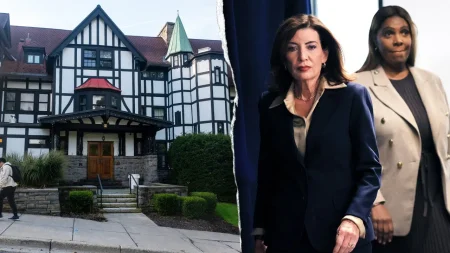






Government decisions are often announced in dry, procedural language—names, titles, verbs that sound more like footnotes than turning points. So when Governor Kathy Hochul tasked Attorney General Letitia James with investigating the original allegations that had been pushed to the margins, and with finding out why a police report had left out crucial information, it would have been easy to hear it as just another administrative action. But it was not. It was a moment of rupture and repair, an admission that something had gone wrong in the official record, and that the people whose lives depended on that record deserved more than a cold case file gathering dust. The governor’s appointment matters because it changes the question from “what happened?” to “why did we not hear about it sooner?” and “who chose to keep it quiet?” Those are human questions, not merely legal ones. Every police report is a story told by the state about a person’s pain. When crucial facts are omitted, that story is broken; the person telling it is left not only unheard but abandoned. By naming the attorney general to investigate, Hochul has signaled that the story is not finished. There is still time to listen. There is still time to correct the record. But to understand why that matters, we need to remember that behind every mention of “original allegations” and “omitted information” is a person—or a family—who has been living with the weight of unanswered questions. Their waiting has been long and lonely. They have had to wonder why the system that was supposed to protect them seemed to look away. And now, perhaps, someone is finally asking the right questions. This is not a promise that everything will be fixed. It is, however, a shift in the direction of truth—a recognition that the absence of a piece of paper is not an absence of suffering.
To grasp the significance of the investigation, we must start with the original allegations themselves, because they are the soil in which this entire crisis took root. Allegations are not abstract legal objects; they are the desperate, difficult words that a person finally speaks after deciding that the truth is worth the cost. Maybe those words were whispered to a friend, typed into a formal complaint, or spoken across a desk to an officer who seemed ready to listen. The person who made those allegations likely expected that the process would be straightforward: tell the truth, write it down, and let the system do the rest. But instead, something strange and damaging happened. The allegations were made, and yet they did not travel through the system the way they should have. Somewhere between the telling and the official record, crucial information vanished. It is impossible to know from the outside whether that omission was an accident, a mistake, a habit of shorthand, or a deliberate choice to protect a powerful person or institution. But to the person who suffered, the effect is the same: the official story is incomplete, their experience is distorted, and their credibility is quietly put on trial. When a police report omits crucial information, it does not just leave a blank space on a page. It invalidates what happened. It tells the person “you are not believable enough to be fully written down.” It also tells the rest of the world that there is nothing to investigate, because the official record no longer matches the real event. That is why these omissions are so corrosive: they transform a person’s testimony into a rumor, while making the incomplete record feel like the truth. The original allegations may have been painful enough to make. Discovering that they were filtered, shelved, or edited through omission is a second injury, often more profound than the first because it comes from the very system that promised to listen.
Now comes Letitia James, the attorney general, a figure whose name carries weight in New York and far beyond. She is not a stranger to difficult fights; she has built a career on standing up for people who are often overlooked, and she has shown a willingness to challenge institutions that guard their secrets. But her role here is not to perform indignation or to score political points. It is to do something more difficult: to look closely at what happened, to follow the evidence wherever it leads, and to determine whether the omission of crucial information was an isolated failure or a systemic pattern. This investigation is, in a very real sense, a test of whether the people in power are willing to turn their scrutiny inward. It is one thing to investigate a complaint against someone else; it is another to investigate the conduct of a police department that is supposed to be the first line of protection. By appointing James, Hochul has placed the inquiry outside the usual chain of command, insulating it from some of the pressures that might otherwise shape it. That is important, but it is also fragile. Investigations are human affairs. They depend on the courage of witnesses, the completeness of records, the collaboration of agencies that may have reasons to be defensive, and the patience of a public that wants answers yesterday. James cannot perform a miracle. She can, however, bring a kind of integrity to the process that ordinary internal reviews often lack. Her office can subpoena documents, compel testimony, and follow contradictions into uncomfortable places. She can ask not only what the police report said, but what it should have said, and why the gap existed. In doing so, she becomes more than a prosecutor; she becomes a reader of stories, comparing the official version to the human one.
Why does a police report omission matter so much in the first place? Because the police report is not just a piece of paperwork. It is the foundation upon which everything else is built. Prosecutors use it to decide whether to press charges. Defense attorneys use it to challenge accusations. Judges and juries use it to understand what happened. Journalists use it to tell the public what is true. And victims use it to prove that they were heard. When crucial information is left out, every one of those subsequent acts is deformed. A case that should have been pursued is closed before it begins. A witness who should have been interviewed is never contacted. A detail that might have exonerated someone is buried. A context that might have explained someone’s fear is erased. The omission is not a footnote; it is an editorial decision, whether deliberate or not, about whose truth matters. For ordinary people, this is terrifying. We call the police because we want the world to know what happened to us. We trust that the officer writing the report will be careful, impartial, and thorough. When that trust is broken, it does not just damage one case; it damages the community’s faith in the entire idea of justice. People start to wonder: if my report can be edited without my knowledge, if my suffering can be minimized or erased, then what is the point of speaking at all? That is the quiet catastrophe behind this appointment. It is not only about one police report or one set of allegations. It is about the unspoken social contract that says when a person tells the truth to the authorities, the authorities will treat it with care. Hochul’s decision to appoint James is an attempt to repair that contract—to say that omissions will be investigated, and that the official record does not get the final word. It is a way of telling the public that the truth still matters, even when it is messy and inconvenient.
What will this investigation actually look like? We should not expect it to be quick, and we should not expect it to be clean. It will likely begin with the collection of every document connected to the original allegations: the initial complaint, the officer’s notes, the dispatch logs, the body-camera footage if it exists, the follow-up reports, the emails, the text messages, and the older records that may have been pushed aside. The attorney general’s investigators will try to reconstruct the timeline: when did the allegations first enter the system? Who was responsible for recording them? What information was available at the time? And why did crucial details fail to appear in the final report? They will interview the person who made the allegations, a process that is often the most sensitive and most essential part of the work. That person may be exhausted, frightened, or angry; they may have told their story so many times that it feels like it belongs to someone else. But the investigator’s job is not simply to extract information; it is to restore a sense of dignity. They will also interview the officers involved, their supervisors, and anyone else who might have seen the report before it was filed. They will look for patterns, asking whether this omission was unusual or familiar, whether similar incidents have been handled differently, and whether there are policies that encourage incomplete reporting. They will ask the hardest question of all: was there intent? Sometimes the answer is yes, and that is a chilling discovery. Sometimes the answer is no, and the cause is a deeper kind of carelessness that is almost as damaging. But in either case, the investigation has to name what happened honestly, because the public cannot begin to heal until it has a clear, truthful account of how justice failed.
In the end, this appointment is a meaningful step, but it is only the beginning of a longer reckoning. Hochul has given James the authority to investigate and the mandate to find out why important facts were dropped from the official narrative. That is a powerful signal that the State is willing to look at its own failures. But an investigation alone cannot restore what was lost. It cannot give back the years of uncertainty the person endured. It cannot undo the harm that was done when the world was told a version of events that was not true. What it can do is acknowledge the harm, name the gaps, and explain how they were allowed to happen. It can also establish a future in which those gaps are less likely to be repeated. That is the human promise of this moment. It is not a promise that everyone will be satisfied, or that every guilty party will be punished, or that every wound will close. It is a promise that the pain of the past will not be treated as an inconvenient rumor, and that the people who raised their voices will not be abandoned again. It is a promise to the person who made the original allegations: somebody is listening now, and they are listening with the full weight of the attorney general’s office. That may not feel like justice yet. It may feel like waiting some more. But it is the first break in the silence, the first crack in the wall of official indifference. And for anyone who has ever wondered whether their story mattered, that crack can be the beginning of something new. Justice is not just a verdict in a courtroom; it is the feeling of being seen, the experience of having your version of events counted as real. By appointing Letitia James, Governor Hochul has chosen to make the unseen seen again. The road ahead will be uncertain, but for the first time in a long while, there is a reason to hope that the whole truth might finally be written down.