





Kenan “Ken” Urker was more than a name in a sheriff’s office statement or a footnote in a true-crime saga. He was 34 years old, a father to a newborn daughter, a partner to one of the most publicly scrutinized women in America, and, according to those who loved him, someone who had been quietly struggling in ways that may have gone unseen until it was too late. On Thursday—his birthday—authorities in Lafourche Parish, Louisiana, confirmed that Urker was found dead inside his home. The discovery came after loved ones asked deputies to perform a welfare check, a request that suggests the people closest to him already feared something was wrong. The Lafourche Parish Sheriff’s Office responded to the scene, and while the investigation remains open, officials have said there are no signs of foul play. The tragedy is still unfolding in public, but the immediate cause appears to be an overdose, according to his partner, Gypsy Rose Blanchard. What makes this loss especially heartbreaking is the timing: Urker and Blanchard had recently welcomed their daughter, Aurora, just a few months earlier, and were trying to build a life together after years of turbulence, media attention, and personal reinvention.
The details from the incident report paint a deeply unsettling picture of Urker’s final hours. Anita Blanchard, whose husband is Gypsy Rose Blanchard’s half-brother, told authorities that she and her husband had spent time with Urker at church the previous evening, around 8:45 p.m. During that encounter, Urker reportedly mentioned that he was feeling depressed and upset. Those words, in hindsight, carry a weight that no one could have fully understood at the moment. Later that night, around 11 p.m., Urker apparently went live on TikTok—a platform where he had accumulated more than 36,000 followers—but the broadcast was not a typical social media moment. According to deputies, he simply had the video going while he was driving, without saying anything. It was a strange, silent glimpse into his state of mind, perhaps a sign of someone who was present but not really there, or someone trying to feel connected without having the energy to engage. The next day, when Urker failed to show up for work, his employer and Anita Blanchard decided to check on him. What they found was devastating: Urker was lying unconscious inside his home, visible through an outside window. A man accompanying them entered through a window and discovered that Urker was not breathing and was cold to the touch. Investigators later recovered syringes and a spoon next to a brown powdery substance in the bathroom, along with a handgun, two shot glasses, and a syringe on a nightstand beside the bed. Deputies noted that Urker appeared to have been there for an extended period of time before anyone arrived.
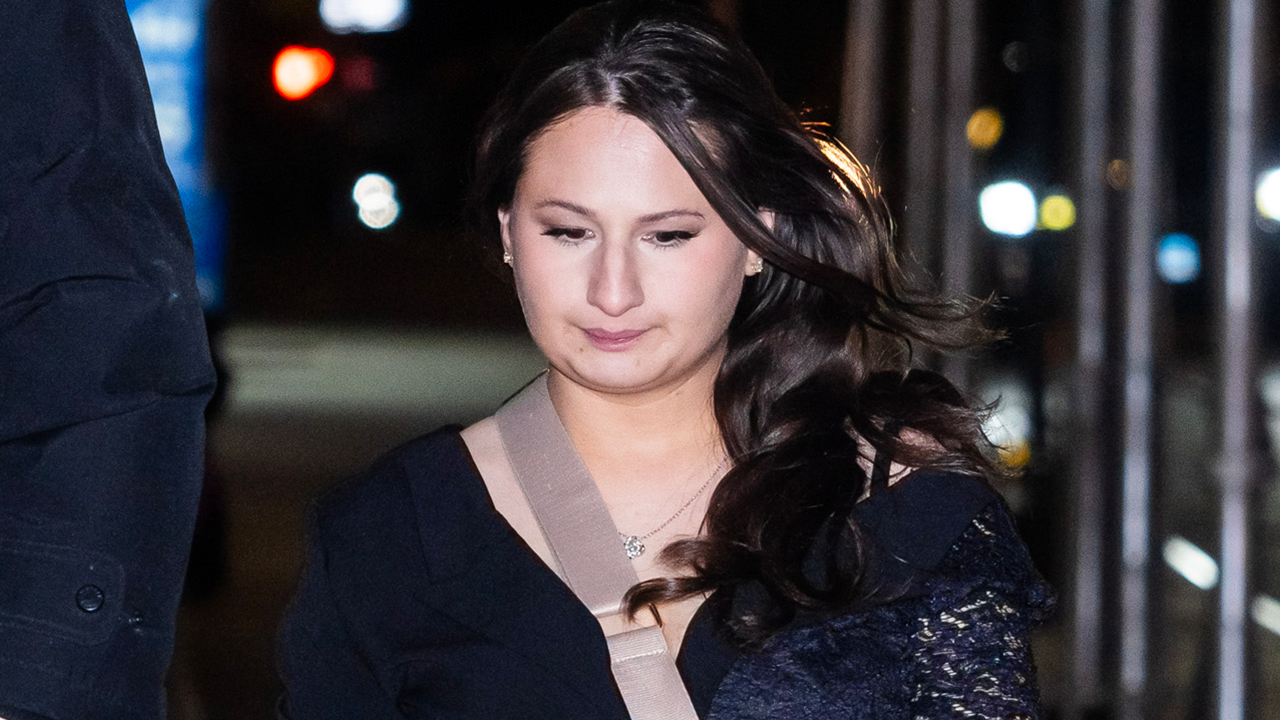
The circumstances of Urker’s death cannot be separated from the strange and tragic world he became part of when he entered a relationship with Gypsy Rose Blanchard. Blanchard’s story is one of the most disturbing and widely covered true-crime narratives of the past decade. As a young woman, she was medically abused and manipulated by her mother, Clauddine “Dee Dee” Blanchard, who convinced the world—and her own daughter—that Gypsy suffered from a litany of illnesses requiring wheelchairs, feeding tubes, and constant care. In 2015, Gypsy conspired with her then-boyfriend, Nicholas Godejohn, to kill her mother. Godejohn carried out the stabbing, and the pair fled, but they were quickly caught. Gypsy was sentenced to ten years in prison for second-degree murder; Godejohn was sentenced to life without parole. The case inspired the Hulu series “The Act” and became a cultural touchstone for discussions about Munchausen syndrome by proxy, abuse, and the limits of justice. Blanchard was released on parole in December 2023 after serving 85 percent of her sentence, and her reentry into the world has been anything but private. She has spoken openly about her past, rebuilt her online presence, and become a figure of intense public fascination and, too often, cruelty. Urker was part of this complicated story. He and Blanchard became engaged in 2018 while she was still in prison, after he reached out to her in a letter. Their relationship afterward was rocky—they separated at one point, and Blanchard married someone else before that marriage ended. But she and Urker rekindled their romance, and their daughter, Aurora, was born on December 28, 2024. Urker’s death now leaves that child without a father, and leaves Blanchard to grieve a man she clearly loved despite the chaos that surrounded them.
In the aftermath of his death, Blanchard has spoken with a mixture of raw grief, guilt, and resolve. In a statement to PEOPLE, she said she believes Urker died of a drug overdose. “I don’t know if it was intentional or not,” she admitted, adding, “He was not in a good state of mind lately.” Those are the words of someone who knew him intimately and had seen the warning signs, but perhaps could not stop the momentum of his despair. On Instagram, she shared a photo of Urker and wrote, “You will always be my greatest love story. You will be remembered and loved forever.” It is the kind of statement that feels both deeply personal and painfully public, because everything about her life—and now his death—is subject to interpretation and commentary. The post, which was shared with her one million followers, gathered nearly 100,000 likes within hours, a reminder of how many people are watching this tragedy unfold in real time. For all the attention, though, the human being behind the headlines remains a mystery to most. Urker was not a public figure by choice; he became one because he fell in love with someone whose life was already a spectacle. His death has now made him the subject of a different kind of story, one that raises uncomfortable questions about mental health, addiction, and the toll of living under constant public scrutiny.
Perhaps the most painful part of Blanchard’s public response is her insistence that Urker was driven to despair by online harassment. In an Instagram Story, she detailed his struggle with cyberbullying, writing, “Ken endured an unimaginable level of public scrutiny and relentless cyberbullying across social media platforms, including TikTok and Reddit. The cruelty directed toward him was something no human being should have to endure.” She went on to say, “I believe the tremendous weight of that scrutiny and harassment had a profound impact on him, and I hope his passing serves as a reminder that there is a real person behind every screen, every headline, and every comment.” Those words are a stark indictment of the culture that turns ordinary people into characters in someone else’s narrative. Urker was not the protagonist of a true-crime documentary or a figure in an internet debate; he was a young father who apparently struggled with addiction and depression, and who may have felt that the world was judging him for things that had nothing to do with who he really was. Blanchard also promised that their daughter will know her father beyond the cruel caricatures that circulated online: “I will make sure she grows up knowing how deeply her father loved her and who he was beyond what strangers on the internet chose to say about him.” It is a promise that acknowledges the gap between public perception and private reality, and it is a reminder that every person caught in a high-profile story has a life that cannot be reduced to comments, likes, or headlines.
Ultimately, Ken Urker’s death is a tragedy that transcends the sensational details of the case that brought him into view. It is a story about a man who was loved, who struggled, and who may have slipped away without anyone being able to save him. It is also a story about the quiet desperation that can exist behind a smiling post or a silent livestream, and about the limits of knowing someone even when you are close to them. The syringes, the spoon, the brown powdery substance, the gun in the bedroom—these are not just forensic details. They are evidence of pain, and they point to the reality that addiction and mental illness do not care about fame, money, or fresh starts. Urker had reasons to live: a daughter, a partner, a future he seemed to be building. But despair is not rational, and it does not always yield to love or good intentions. The sheriff’s office says the investigation is ongoing, but that there are “no signs of foul play.” That official language cannot capture the grief of a family making funeral arrangements, or the strange experience of mourning a man whose birthday was also the day he was found dead. As Gypsy Rose Blanchard herself said, there is a real person behind every screen and every headline. Ken Urker was that person—flawed, struggling, loved, and gone far too soon. His death should not be another episode in a true-crime saga, but a reminder that behind the story is a human life, and that anonymity, privacy, and compassion are things we should grant to everyone, especially those who are already suffering.