





For Bolivia’s defense minister, the moment has arrived when lofty regional promises must meet hard reality. In an exclusive interview with Fox News Digital, Ernesto Justiniano said his country is emerging as one of the first real-world tests of President Donald Trump’s Shield of the Americas initiative, a Western Hemisphere alliance launched in March to deepen economic and security cooperation against transnational crime and other shared threats. “I believe this is one of the first real tests of whether Shield of the Americas can move from declarations to concrete results,” Justiniano said. Yet he was careful not to overstate the danger, insisting that Bolivia is not declaring that a coup attempt is underway. “I am not saying today that we have proven evidence of a specific operation currently underway to overthrow the President,” he said. “What we do have are very serious precedents and warning signs that justify preventive action.” His words capture the delicate balance facing the government of President Rodrigo Paz: acknowledging a genuine security challenge without feeding panic or handing opponents a reason to claim authoritarian overreach. For a country that has already endured more than 50 days of paralyzing road blockades this year, the stakes could not be higher, and Justiniano’s tone reflected both resolve and restraint.
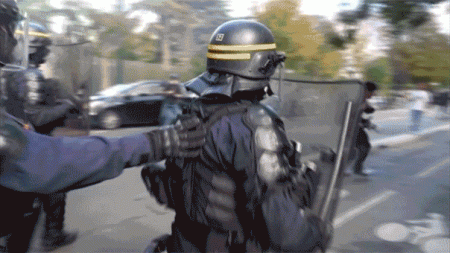
The backdrop to this tension is a nation still recovering from the economic and social wounds inflicted by months of unrest. Earlier this year, blockades organized by loyalists of former leftist President Evo Morales brought Bolivia to a standstill, cutting off food, fuel and medicine supplies in major cities and deepening an already severe economic crisis. The Paz government has framed those blockades not as legitimate protest but as a coordinated attempt to undermine democracy and destabilize the constitutional order. On September 17, Bolivia’s Assembly approved a 90-day extension of the country’s state of emergency, citing persistent risks of renewed blockades. The decision drew criticism from opposition lawmakers and some social groups, who argued that extending emergency powers does nothing to address the underlying grievances fueling unrest. Justiniano, however, drew a sharp line between peaceful dissent and violent coercion. “There is one fundamental difference: Bolivia learned… We do not confuse legitimate social discontent with a threat to democracy,” he said. “People may agree or disagree with our economic policies. They can march, protest and challenge the government. That is democracy. What is not democratic is trying to impose a decision through violence, indefinite blockades or threats against the constitutional order.” That distinction is central to how the government wants its security response to be understood—not as a crackdown on opposition, but as a defensive measure against those who would use chaos as a political weapon.
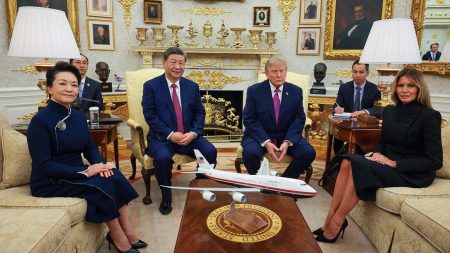
In Washington, the message from the Trump administration has been one of unwavering support. A U.S. official told Fox News Digital that “the United States is unwavering in its commitment to support Bolivia’s democracy and the Paz Administration as it rebuilds the country after 20 years of failed socialist policies. The Trump Administration will continue to stand with Bolivia as it works toward stability, security, and a better future for all Bolivians.” A State Department spokesperson echoed that sentiment, noting that President Paz “survived 53 days of blockades and violent attempts to undermine his presidency” and that the U.S. supports his administration’s work to repair Bolivia’s economy after more than two decades of what it called corrupt mismanagement by Morales’s Movement towards Socialism (MAS) party. The diplomatic embrace was visible on the world stage as well, when Trump hosted leaders participating in Shield of the Americas on the sidelines of the UN General Assembly on September 22. For Bolivia, that visibility matters: it signals that the Paz government is not alone in facing what it describes as a confluence of organized crime, narco-trafficking and political violence. The White House has described Shield of the Americas as an alliance focused on economic and national security in the Western Hemisphere, and Bolivia is eager to be seen as a frontline state in that effort. Yet the administration’s support has also come with concrete actions that carry their own complications, including visa restrictions aimed at Bolivian officials accused of corruption and facilitating drug trafficking.
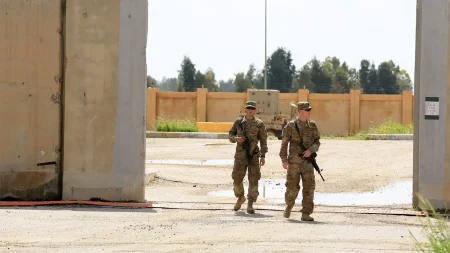
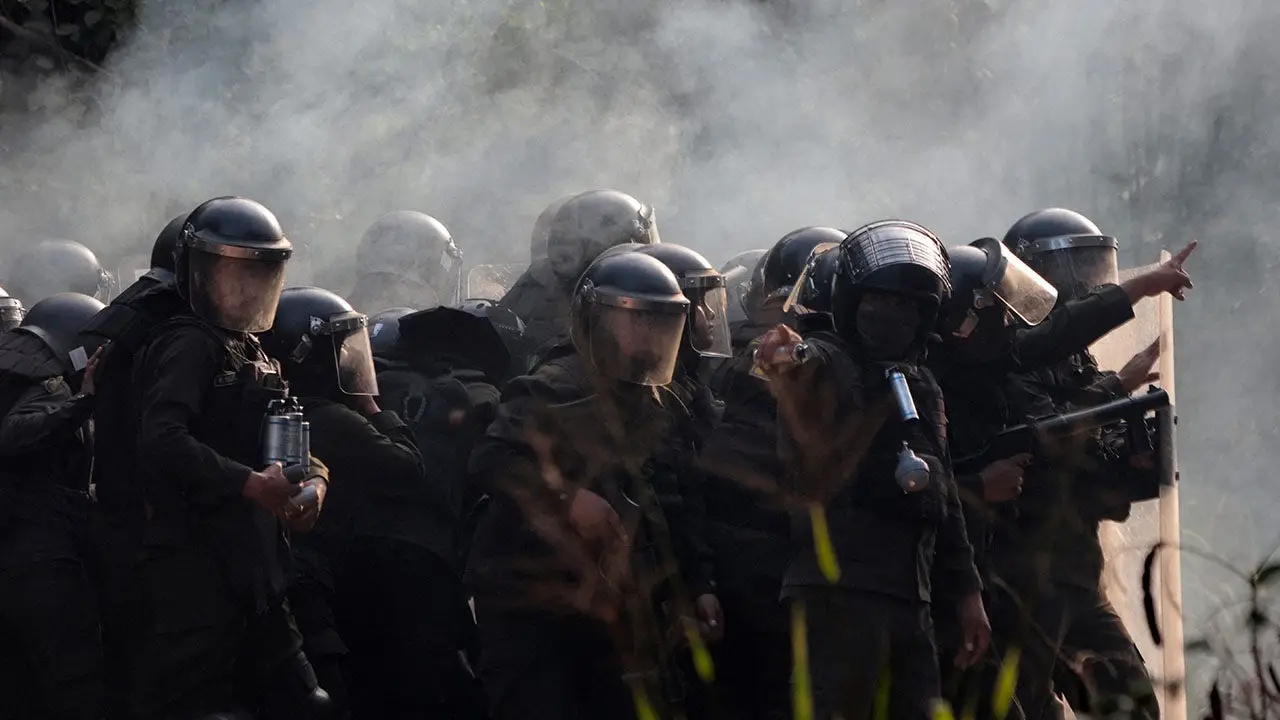
On the ground, Bolivia is already moving to protect its institutions and supply lines. Justiniano confirmed that police and military forces have been deployed preventively around the country, particularly along strategic routes, access points to major cities and locations considered sensitive for freedom of movement, supply lines and critical infrastructure. He declined to provide exact locations, troop numbers or unit movements, saying the scale of the deployment would change according to the level of risk. “There is a preventive deployment in different parts of the country,” he said, adding that the government is preparing for a risk rather than responding to an imminent coup attempt. This careful phrasing is no accident. The defense minister knows that any military presence can be interpreted as provocation, especially in a region with a long history of coups and authoritarian abuses. By emphasizing prevention, he is trying to reassure both domestic critics and international observers that the armed forces are not being used to suppress peaceful demonstrations. “We are preparing for a risk, not declaring that a coup is underway,” he insisted. The deployment, in his telling, is less about confronting an enemy today and more about ensuring that the chaos of earlier this year does not repeat itself. It is a message aimed at Morales loyalists, criminal networks and foreign observers alike: Bolivia will not be paralyzed again.
The diplomatic dimension of this crisis has added another layer of complexity. On September 28, the Trump administration announced visa restrictions targeting Bolivian nationals whom Washington says are undermining “the security and governance progress President Paz and his administration are achieving.” According to the Associated Press, the move affected 27 officials, former officials and relatives across Bolivia, Colombia, Ecuador and Peru. Among those named was Bolivian Prosecutor General Roger Mariaca, whom the State Department accused of corruption and facilitating narcotrafficking. Mariaca has rejected the allegations, and Justiniano said Bolivia has formally requested the information underlying the U.S. action. “The case of Bolivia’s Prosecutor General, Roger Mariaca, is particularly serious because the U.S. government has publicly made specific allegations involving corruption and the facilitation of drug trafficking,” he said. But the defense minister was quick to caution against drawing a direct connection between those affected by the visa restrictions and the current unrest. “It would be irresponsible for me to automatically state that everyone affected by those measures is connected to the current mobilizations,” he said. “We do not have public evidence that would justify that generalization.” That measured response reflects a broader tension: Bolivia wants to deepen cooperation with Washington, but it also wants to avoid being seen as simply doing the bidding of the United States in a domestic political fight. The visa restrictions are a powerful symbol of U.S. backing, but they also carry risks for a government trying to project strength and legitimacy at home.
Looking ahead, Justiniano said Bolivia is seeking closer cooperation with the United States on information sharing, financial intelligence, counter-narcotics, organized crime, border security, extraditions, training and institutional strengthening. He declined to say whether the U.S. is currently supplying operational intelligence or other direct assistance, but he made clear that Bolivia wants more. That push was already evident last week, when Bolivian Minister of the Presidency Fernando Aramayo told Fox News Digital on the sidelines of the UN General Assembly that the Paz government views its struggle against organized crime as part of a wider regional challenge. “We recognize the legitimacy of protests and demonstrations that demand responses from the government,” Aramayo said. “What we are attacking right now is all the attacks against our democracy that have been financed by narco-traffic money and organized international crime.” He added that the White House has supported Bolivia and other countries in this fight, and that Bolivia was “very proud of being part of this mechanism like the Shield of Americas.” Aramayo also suggested that corruption and organized crime had become deeply embedded during the previous two decades, claiming that institutions, social and political leaders and private-sector actors had become entangled with transnational criminal organizations. For Justiniano, the challenge ahead is to keep the focus on those threats while ensuring that Bolivia’s response remains within democratic bounds. “The threat is serious enough for us to take preventive measures, but I do not want to portray a government that is under siege or weak,” he said. The coming months will test whether Bolivia can walk that line—and whether Shield of the Americas can deliver more than declarations when a member nation faces a crisis that blurs the line between political unrest and organized crime. As Justiniano put it, “We are preparing for a risk, not declaring that a coup is underway.” In that single sentence, he captured the fragile balance of a government trying to defend itself without becoming what it fears.