





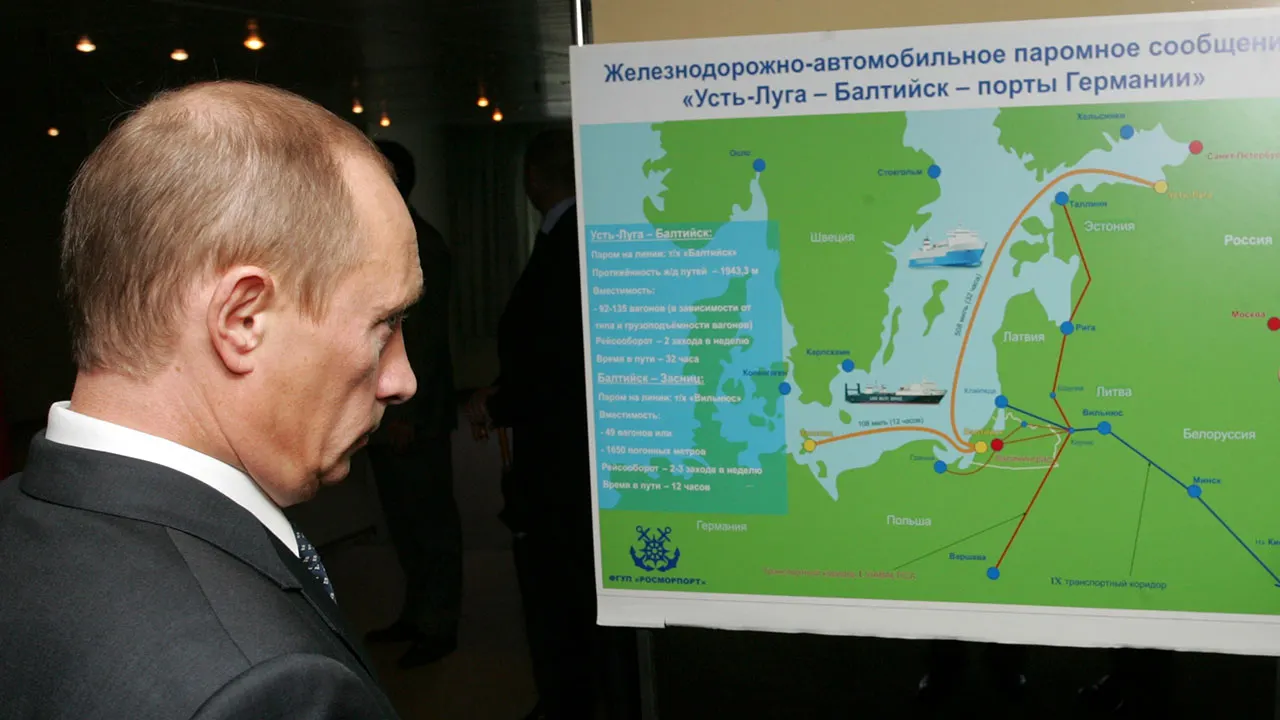
Russia’s latest warning about Kaliningrad is the kind of statement that can feel both remote and deeply unsettling, but to understand why it matters, it helps to picture the geography. Kaliningrad is a small piece of Russian land that is completely disconnected from the rest of Russia. It sits on the Baltic Sea, squeezed between Poland and Lithuania, both of which are members of NATO. That means an area of Russian territory is essentially surrounded by the very alliance Moscow views as its main adversary. And it is not just any Russian territory. Kaliningrad hosts a significant portion of Russia’s Baltic Fleet, along with an array of military assets that have been built up over years. So when Moscow warns that it would use “the entire arsenal of forces and capabilities at its disposal, including nuclear weapons” if NATO ever tried to isolate that territory from the rest of Russia, it is not an abstract threat. It is a reminder that a crowded corner of Europe contains one of the most heavily militarized pieces of land on the continent. The warning was delivered in a diplomatic document that also raised the possibility of strikes on NATO member states’ “decision-making centers” from the very start of a conflict. That is the kind of language that would have been unthinkable in official communications just a few years ago, and yet here it is, being discussed in policy circles and news reports as another sign of how dangerously elevated tensions have become.
NATO’s response was measured but firm. The alliance rejected Moscow’s allegations, pointing out that NATO is a defensive organization and that its exercises and activities do not threaten Russian territory. It also urged Russia to stop its “irresponsible nuclear rhetoric.” But the question hanging over all of this is whether such rhetoric should be treated as a serious warning or as another example of Kremlin bluster. According to Carrie Filipetti, executive director of the Vandenberg Coalition and a former State Department and U.S. Mission to the United Nations official, Russia has a long pattern of using nuclear threats as a tool of intimidation. She pointed to the veiled references to tactical nuclear attacks at the beginning of Putin’s invasion of Ukraine, the lowering of Russia’s formal threshold for launching a nuclear attack in 2024, the placing of Russian nuclear forces on high alert, and the restart of nuclear testing. In her view, Putin uses these threats because he believes they can deter Europe and the United States from continuing to support Ukraine. The timing of the Kaliningrad warning is also telling. NATO jets have been scrambled to intercept Russian aircraft, U.S. and NATO air drills took place near Kaliningrad last month, and the war in Ukraine continues to grind on. Filipetti suggested that Putin sees the tide turning against him and is resorting to aggressive language to try to stop European support for Kyiv, just as he has done before. In other words, the threat is real in the sense that it reflects Moscow’s strategy, even if the actual use of nuclear weapons remains unlikely.
What makes Kaliningrad especially important in this confrontation is not just the nuclear threat itself, but the role the territory already plays in a different kind of war. Dr. Azeem Ibrahim, a research professor at the Strategic Studies Institute at the U.S. Army War College and chief strategy officer at the New Lines Institute, explained that Russia is not relying primarily on traditional military tactics involving “tanks and troops and divisions.” Instead, Moscow has embraced a strategy of hybrid warfare aimed at the infrastructure and systems that keep civilian societies functioning. Kaliningrad, in his view, is essentially the front line of that effort. He described it as a Russian fortress that hosts signals intelligence and signals interference capabilities, tools that can be used to disrupt civilian communications before or alongside any conventional military action. Imagine the chaos if emergency services, news outlets, and everyday internet and phone communications were suddenly jammed or compromised. That is precisely the kind of disruption Ibrahim says Russia could unleash from Kaliningrad. And the challenge for NATO is that these operations are much harder to trace than a conventional attack. Attacks on power stations, internet networks, and telecommunications can be carried out in ways that offer plausible deniability, especially when the actor is as capable as Russia. That ambiguity makes it difficult for an alliance built around collective defense to respond, because the rules of engagement were designed for a world where an attack is a visible, unmistakable act of aggression.
Ibrahim argues that NATO needs to fundamentally rethink how it understands these kinds of threats. Hybrid attacks should be treated as seriously as kinetic attacks, he says, and the alliance should establish clear consequences for them. In his view, a sufficiently serious hybrid attack should be considered capable of triggering NATO’s Article 5 collective-defense clause, which would mean an attack on one member is treated as an attack on all. He also called for NATO to go on the offensive in the realm of hybrid warfare, pushing back and sending a clear signal to Moscow that such threats will not stand. This is not a purely theoretical concern. Lithuania, which borders Kaliningrad directly, rejected Moscow’s warning outright. In a statement to Fox News Digital, Lithuania’s Foreign Ministry said Russia’s insinuations and threats have no basis, describing NATO as a defensive alliance that poses no threat to Russia or any other country. The ministry accused Russia of using threats to fracture transatlantic unity and impede support for Ukraine, and insisted that Russia will not achieve its goals. Lithuania also condemned any threats to use force and irresponsible nuclear rhetoric, while vowing to strengthen its national defense, including air defense, and to continue training with allies and working alongside NATO forces deployed in the country. The message was clear: Lithuania is prepared to defend every inch of NATO territory and will keep supporting Ukraine in its fight against Russian aggression.
The warning about Kaliningrad also has to be understood in the context of how Russia’s actions have repeatedly defied expectations. Retired Air Force Lt. Gen. Richard Newton offered a sobering reminder of that fact. He noted that in the weeks before February 2022, many officials and commentators, including himself, were not sure Putin would actually invade Ukraine, even though there were warning signs. Then, on February 24, Putin launched the largest land invasion in Europe since World War II. Newton’s point is simple: NATO should take Russia’s warning about Kaliningrad seriously. He observed that Russia is already engaged in “gray zone” coercive actions against NATO nations, so this pronouncement should not surprise the West. But taking it seriously does not mean assuming nuclear war is inevitable. It means recognizing the risk and preparing accordingly. Filipetti also cautioned that nuclear threats carry their own dangers, regardless of whether Moscow actually intends to follow through. NATO is a defensive organization, she said, and is in no way threatening Russia’s position on Kaliningrad. But any public threat of nuclear attack must be taken seriously, especially when it comes from someone like Putin. Nuclear weapons are potentially world-altering technology, and the mere threat of their use can cause significant miscalculations and escalations. In a crisis, ambiguous signals and heightened rhetoric can lead to mistakes on either side. The danger is not only the bomb itself, but the fear, confusion, and overreaction that a nuclear threat can generate.
For its part, Russia denies that it is conducting hybrid warfare against European states and insists it has no intention of attacking NATO countries. Instead, Moscow says NATO military activity around Kaliningrad is contributing to an increasingly dangerous confrontation. Kremlin spokesman Dmitry Peskov characterized the recent warnings as diplomatic reminders to “hotheads in Europe.” But that framing does little to calm nerves, especially when the warnings are embedded in official documents that mention nuclear weapons and strikes on decision-making centers. The broader reality is that Kaliningrad has become a symbol of the fault line between Russia and NATO. It is a place where geography, military power, and political tensions all converge. For the people living in Poland, Lithuania, and the wider Baltic region, this is not an abstract policy debate. It is about the safety of their countries and the stability of their daily lives. The challenge for NATO is to respond to Russia’s threats without escalating them, to defend its members without falling into a trap, and to understand that the battlefield of the future may not look like the battlefields of the past. Hybrid warfare, nuclear rhetoric, and the use of territory like Kaliningrad to project pressure are all part of a new and dangerous landscape. The West must be clear-eyed about that threat, firm in its defense of democratic allies, and open to finding ways to reduce the risk of catastrophic miscalculation. The warning about Kaliningrad is not just another headline. It is a reminder that the lines between peace and conflict, between ordinary life and existential danger, can sometimes be drawn on a map between two NATO countries and a Russian exclave.