





It began as an ordinary Sunday evening in the quiet English countryside, the kind of night where the loudest sound is usually the rustle of leaves or the distant hoot of an owl. But for one anonymous farmer in Gloucestershire, the peace was shattered by a sight that would send a chill down anyone’s spine. As she turned her car around on a narrow road near the RAF Fairford air base, her headlights swept across a group of hooded and masked men, huddled around three white vans that were blocking the way. The men, startled by the sudden illumination, scrambled frantically into a nearby woods, vanishing into the darkness like phantoms. In that moment, the farmer didn’t hesitate. She pulled out her phone and dialed 999, the British emergency number, setting in motion a chain of events that police would later describe as critical to disrupting a potential terrorist plot. It was a classic case of an ordinary citizen becoming an accidental hero, her quick thinking and sharp instincts proving that vigilance is often the first line of defense.
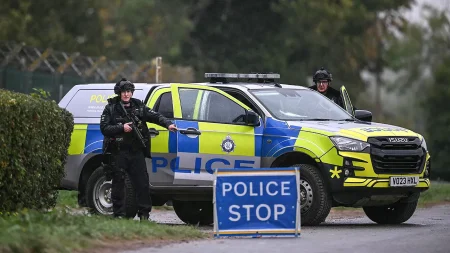
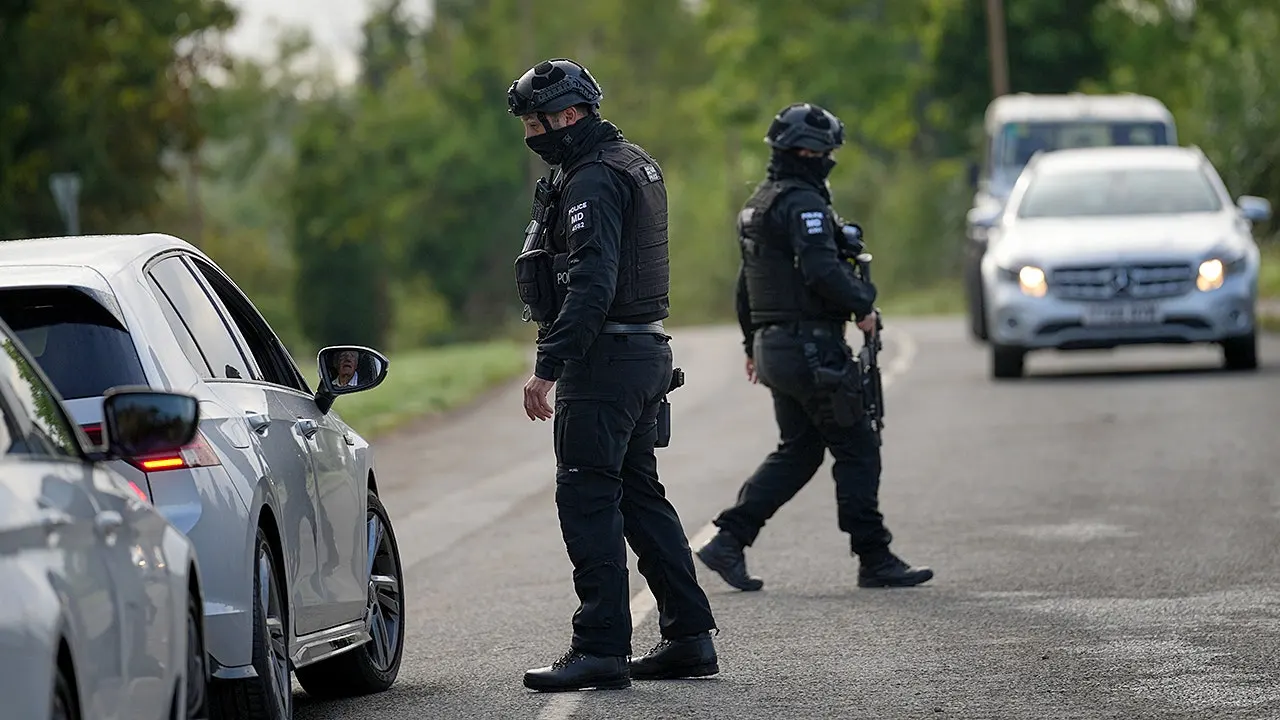
The arrests came swiftly that same night. Five men, all identified as U.K. nationals, were taken into custody on suspicion of involvement in a terror plot targeting the American air base. For a brief, tense period, the nation held its breath. Were these men lone wolves, or were they part of something larger and far more sinister? On Monday, however, the plot thickened. All five were released on bail, a decision that raised more questions than answers. Laurence Taylor, the head of Counter Terrorism Policing, confirmed that the investigation was far from over. In a carefully worded statement, he revealed that authorities were exploring every avenue, including the unsettling possibility that the men might have been acting as proxies for a foreign state, either knowingly or unknowingly. The implication was clear: this might not have been a homegrown plot, but rather a tentacle of a much larger, state-sponsored operation reaching into the heart of the United Kingdom.
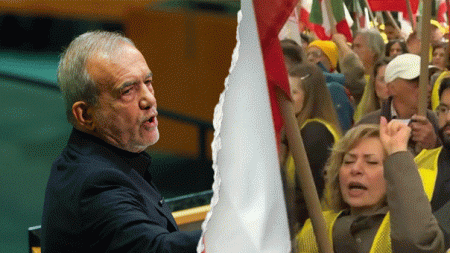
As the fog of uncertainty descended, attention turned to Tehran. The Iranian Embassy in London, quick to respond, issued a fiery denial, categorically rejecting what they called “unfounded and malicious speculations” linking Iran to the arrests. In a statement posted on X, the embassy dismissed the claims as fabricated propaganda intended to fuel Iranophobia, particularly in the wake of recent American and Israeli actions against the Iranian people. The language was sharp, defensive, and unmistakably political. The embassy even hinted at legal measures to protect Iran’s interests, signaling that this diplomatic spat was far from over. For many observers, the exchange felt like a harbinger of escalating tensions, a cold war playing out in the court of public opinion. The denial, while forceful, did little to quell speculation, especially given the strategic significance of the target in question.
RAF Fairford is no ordinary airfield. It is a cornerstone of American military power in Europe, a sprawling base that has long served as a launching pad for U.S. operations across the globe. In recent months, it has played host to significant U.S. Air Force assets, including bombers and surveillance aircraft, and has been used as a staging ground for multiple operations in the ongoing conflict with Iran. The base’s very presence in the rural English landscape is a symbol of the special relationship between the U.S. and the U.K., a partnership that has endured through decades of shared challenges. But that symbolism also makes it a target. For any adversary looking to strike a blow at American military capabilities, RAF Fairford offers a tantalizing prospect. The idea that foreign agents might have been plotting an attack on this hallowed ground has sent ripples of concern through both military and civilian circles, reminding everyone that even the most peaceful-looking countryside can harbor hidden threats.
The farmer, who has chosen to remain anonymous, told the BBC that she was astounded to learn that her phone call had, in her words, “foiled whatever plans they had.” Her amazement was tinged with a hint of disbelief that a base of such importance could have been so reliant on the alertness of a single passing civilian. Defense Secretary Wes Streeting, however, was quick to offer gratitude while carefully managing expectations. He thanked the farmer publicly, acknowledging her quick action, but he also gently reminded the public that she had only a “partial picture” of the incident. The full scope of the plot, he suggested, remained shrouded in operational secrecy. It was a delicate balancing act—praising a courageous citizen without revealing details that could compromise national security. For the farmer, the experience was undoubtedly surreal. One moment she was driving home, the next she was thrust into the center of an international security incident, her ordinary evening transformed into a footnote in the ongoing struggle against terrorism.
As the story continues to unfold, it serves as a stark reminder of the fragility of peace and the ever-present need for vigilance. The release of the five men on bail does not signal an end to the affair; rather, it marks the beginning of a long, painstaking investigation into a plot that may have roots far beyond the borders of the United Kingdom. The possibility that a foreign state could be directing proxies to strike at American assets on British soil is a chilling one, raising difficult questions about sovereignty, security, and the nature of modern warfare. In the meantime, the people of Gloucestershire are left to process what happened in their midst, their quiet lives briefly interrupted by a glimpse into the shadowy world of international espionage. The farmer’s story, in particular, resonates because it underscores the power of ordinary individuals to make a difference. In an age of high-tech surveillance and sophisticated intelligence networks, it was a woman in a car, with a phone and a gut feeling, who may have prevented a tragedy. It is a reminder that security is not just the job of the police and the military—it is a collective responsibility, one that begins with each of us paying attention to the world around us and being willing to act when something feels wrong.