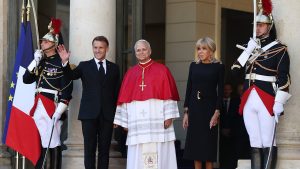





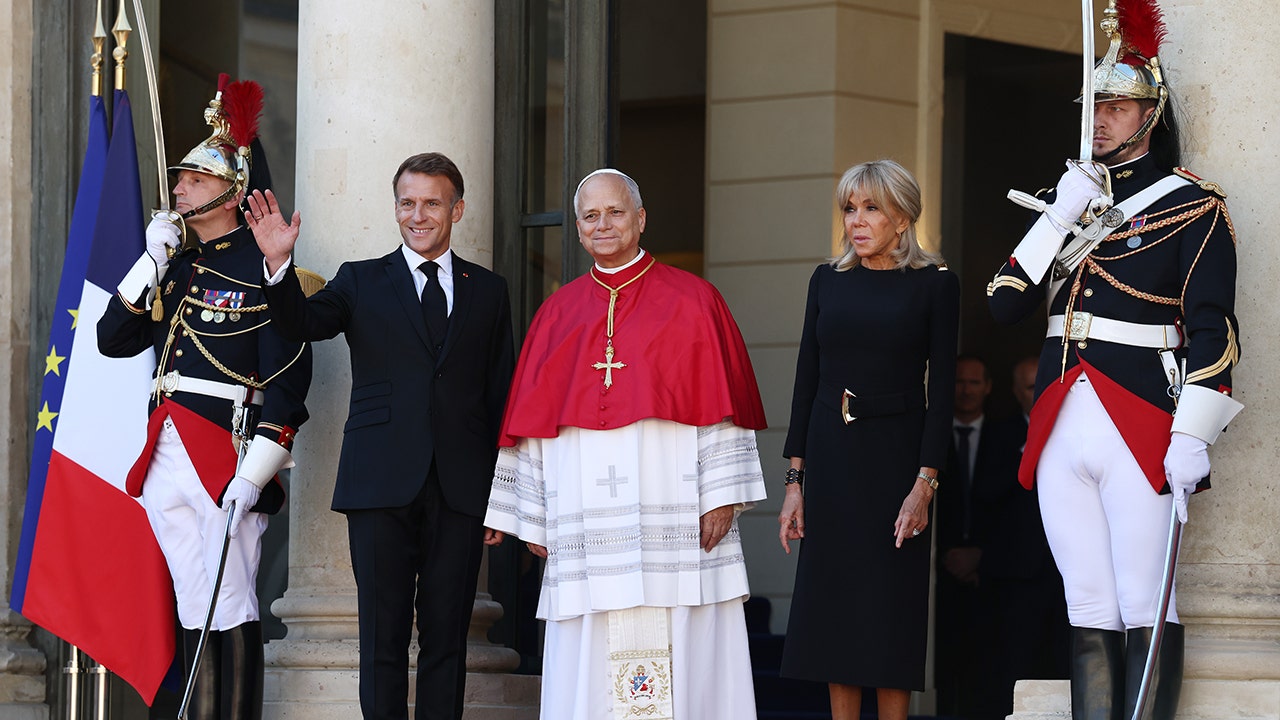
When Pope Leo XIV stepped onto French soil on Friday, the warmth that greeted him was not merely ceremonial. It was the embrace of a nation reconnecting with a faith it had long relegated to the private corners of life. This is his fifth Apostolic Journey as Pontiff, but the first formal papal visit to France in nearly two decades—not since Pope Benedict XVI’s September 2008 journey has a Successor of Peter been received in this ancient land once proudly called “the eldest daughter of the Church.” The four-day visit carries the hopeful, almost prayerful theme, “That the world may have life,” chosen by French bishops who sense something stirring beneath the surface of a deeply secular republic. Retired Bishop Marc Stenger described it as a “real tidal wave” of interest, noting that French Catholics are speaking “loudly that they need the Church to find their way in these uncertain moments in world history.” There is a feeling in the air, even before the Pontiff’s first words, that this trip is less about protocol and more about a profound and fragile reacquaintance between a wounded institution and a people searching for meaning.
What makes this visit particularly striking is the context of spiritual renewal set against a landscape of deep institutional pain. The latest figures from the Conference of Bishops of France reveal an unexpected surge: more than 21,000 adults have joined the Church this year alone, driven overwhelmingly by young people between the ages of 18 and 25. In a country where laïcité—the strict separation of religion and public life—has been a defining principle, this quiet flood of baptisms suggests a hunger for transcendence, for roots, for a moral vocabulary that secular modernity has not fully provided. Yet this joyful news cannot be separated from the shadows that haunt the French Church. A devastating 2021 report exposed the horrific reality that approximately 330,000 children had been abused by Catholic clergy and lay leaders over seven decades, and that the institution had responded with what was called “deep, total and even cruel indifference” to victims. Bishop Stenger, who pastored the Diocese of Troyes for over two decades, did not mince words: the scandals “have deeply wounded the Church and damaged its credibility.” Pope Leo has chosen to confront this wound directly. In an unusually personal and deliberate move, the Vatican press office announced that he will meet privately in Lourdes with seven survivors of clergy abuse—a gesture intended not as a photo opportunity, but as a message of healing and vulnerability from a Pope who understands that trust must be rebuilt the hard way, one broken relationship at a time.
The official framing from the Vatican describes this journey as “a journey that unites faith and public engagement, memory and the future, with listening and bridge-building at its heart.” That bridge-building began almost immediately upon his arrival, with a warm greeting from President Emmanuel Macron and a courtesy visit to the Élysée Palace. From there, the Pope’s schedule unfolds with breathtaking intensity—he is set to deliver fifteen speeches during his time in France, touching upon spiritual themes as well as the most pressing ethical questions of our age: the protection of immigrants, the dignity of the sick and the unborn, the preservation of human worth in an era of artificial intelligence, and the ever-present longing for peace, culture, and unity. The scale of public enthusiasm has exceeded even the bishops’ expectations, and organizers preparing for Saturday’s Mass at Paris’s Place de la Concorde are bracing for a crowd of up to one million people. The security perimeter has been extended well beyond the 1.2-mile stretch of the Champs-Élysées, where Pope Leo will parade through the heart of Paris in the Popemobile, waving to a sea of pilgrims and onlookers. It is a scene that would have seemed unlikely just a few years ago, and it speaks to a peculiar truth: even in a society that has often defined itself in opposition to the Church, the presence of a pope still stirs something primal, collective, and hopeful.
Few stops on this journey carry as much emotional weight as the Sanctuary of Our Lady of Lourdes, where the Pope will worship and speak on Sunday. Lourdes is one of Christianity’s most visited pilgrimage shrines, a place of water, candles, and the raw, unvarnished faith of the sick and the suffering who come seeking comfort. It is also the place where an ailing Pope John Paul II, on his final foreign trip in 2004, delivered a forceful and unforgettable condemnation of abortion and euthanasia. Pope Leo’s visit, however, arrives at a precarious cultural and political moment for the French nation, which has recently passed legislation allowing adults with incurable illnesses to receive lethal medication—moving further down the path of physician-assisted death. This comes after 2024 legislation enshrining abortion as a constitutional right, a development that has been celebrated by some and lamented by others. The Pope’s presence in Lourdes, surrounded by the visibly vulnerable and the dying, will inevitably carry a pointed moral message about the value of every human life from conception to natural death. But his tone, one might expect, will be less about fiery denunciation than about witness—showing, through presence and prayer, that the Church’s teachings are rooted not in abstract rules but in a profound reverence for the human person, especially those whom society deems inconvenient or unproductive.
On Friday, the Pope will also step into the realm of science, culture, and technology with a speech at the headquarters of UNESCO in Paris—a venue chosen deliberately to engage a global audience beyond the faithful. Vatican spokesman Matteo Bruni has signaled that the Pope will likely reiterate his call for a slowdown in the development of artificial intelligence, speaking “with regard to the meaning of existence, to what makes human beings human and what does not.” This may seem like a strange theme for a papal trip centered on faith and history, but it is arguably one of the most urgent chapters of this pontificate. In May, Pope Leo issued a manifesto warning that unfettered AI risks becoming a tool of “domination, exclusion and death,” and he has consistently urged the international community to regulate an industry hurtling forward without a moral compass. His stance places him in direct tension with President Trump, who has championed rapid AI innovation as a strategic imperative for the United States to outpace China. The Pope, though, is not opposed to progress; he is asking a deeper question—what does it profit us to build machines of boundless intelligence if we lose sight of the human soul? In a speech before diplomats, scientists, and cultural leaders, he is expected to argue that technology must serve human dignity, not erode it, and that the Church has a vital role to play in ensuring the future remains human. Then, in a moment rich with symbolism, he will hold a prayer service at the newly restored Cathedral of Notre-Dame—the first papal visit to the great Gothic landmark since the 2019 fire that nearly destroyed it. There is an unmistakable metaphor here: a cathedral raised from ashes, a Church seeking to emerge from scandal and doubt, a civilization wrestling with both memory and tomorrow.
The final leg of the Pope’s journey, however, may be the most resonant of all. On Monday, he will travel to the border city of Metz, birthplace of Robert Schuman, the former French prime minister and one of the founding fathers of the European Union. The Vatican has embraced this setting intentionally, using it as a backdrop to “champion friendship among European peoples.” In an age when nationalism and division are once again rising across the continent, the Pope’s presence in Metz is a quiet but powerful plea for the kind of reconciliation and common purpose that rebuilt Europe from the ruins of war. It is no accident that French Ambassador to the Vatican Charles Personnaz revealed President Macron has invited leaders from all 27 EU member states to attend the Pope’s speech and meet with him personally. Reports suggest Ukrainian President Volodymyr Zelenskyy may also be present, which would add an urgent geopolitical resonance to the Pope’s words—particularly as Europe grapples with war, migration, and the fraying bonds of solidarity. By the time Pope Leo departs, the hope is that he will have accomplished something more than a successful diplomatic tour. He will have reminded a continent, and a world, that neither faith nor humanity can be relegated to the margins, that the Church is not afraid to kneel beside the broken, and that amidst the noise of our age, the quiet voice of hope is still worthy of a hearing. For the hundreds of thousands who will line the streets, and the millions more watching from afar, that alone may be the most powerful testimony of all.