




Paragraph 1
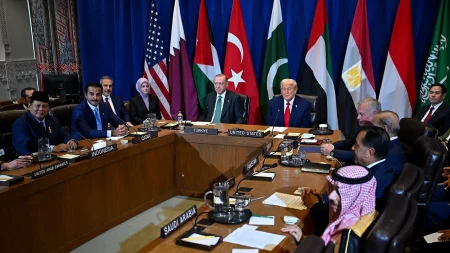
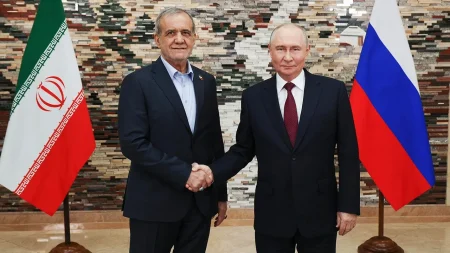
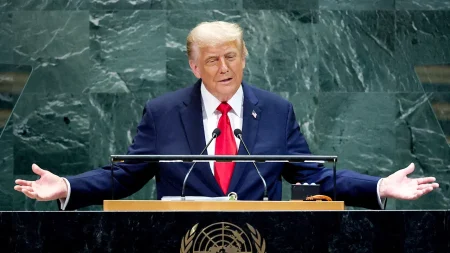
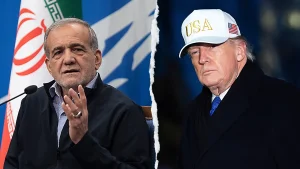
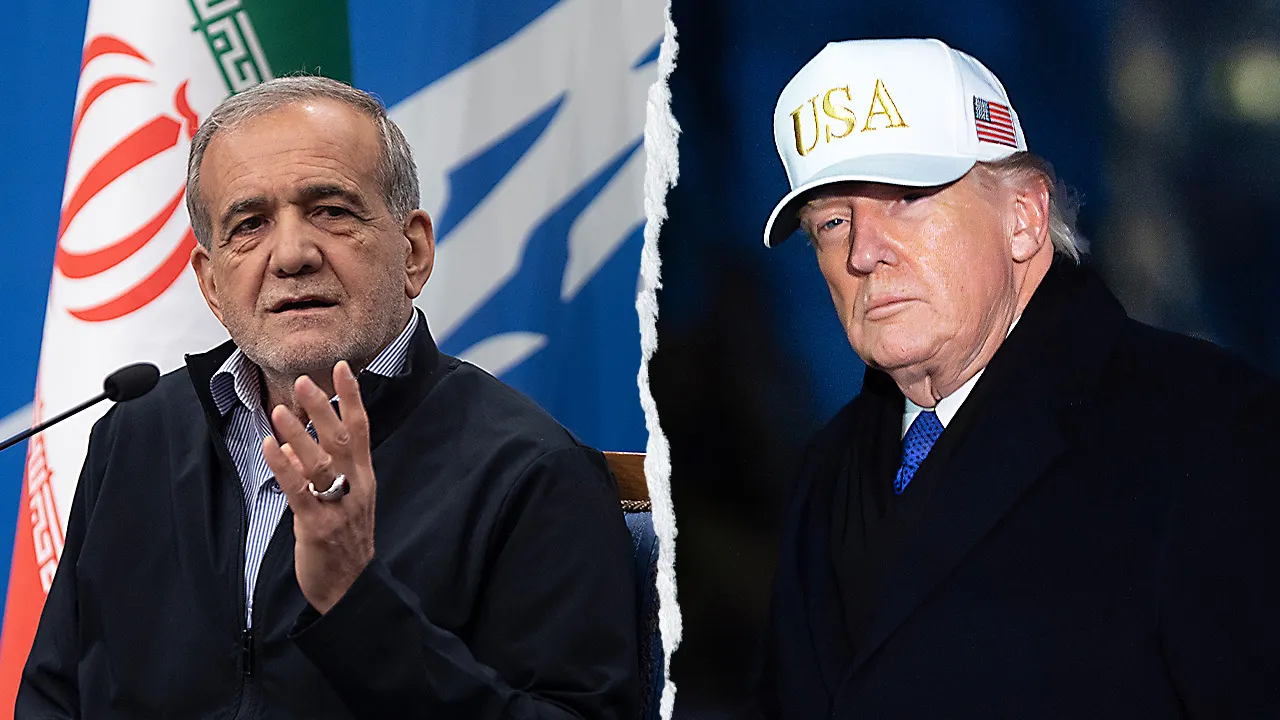
The United Nations General Assembly in New York became the stage for a striking collision of worlds this week, as Iranian President Masoud Pezeshkian and President Donald Trump stood at the same podium within a day of each other and delivered speeches that could not have been more different in tone, yet were strangely predictable in substance. For those watching, it was like seeing two boxers weigh in before a fight, each one staring down the other with a mix of defiance and calculation. Pezeshkian, speaking as the leader of a nation that has long cast itself as the defiant underdog, aimed his fire directly at Washington and Jerusalem, accusing both of attacking Iran and painting his country as the innocent party in a long-running confrontation. “We have only defended ourselves. We are not terrorists,” he insisted, as if trying to rewrite a narrative that has been shaped by decades of hostage crises, proxy wars, and nuclear brinkmanship. But according to Behnam Ben Taleblu, a senior fellow at the Foundation for Defense of Democracies, that performance likely drew little more than a smirk from Trump, who understands that the balance of power is heavily tilted in America’s favor. “Trump understands he holds the cards, and he may not even have paid much attention to what the Iranian president was saying,” Taleblu told Fox News Digital. It is a fascinating image: the American president, confident and almost dismissive, watching his Iranian counterpart play the victim card on the world stage, knowing that behind the rhetoric, the real leverage lies with Washington. The contrast between the two leaders was not just about policy; it was about posture, personality, and the very different ways they approach the theater of international diplomacy.
Paragraph 2
Pezeshkian’s address was a masterclass in the kind of anti-imperialist, anti-American messaging that has become a staple of Iranian leadership since the 1979 revolution. He spoke of “cowardly attacks and aggressions” imposed upon his country, and he repeatedly framed Iran as a nation that has only ever acted in self-defense. “Our innocent people have been the targets of cowardly attacks and aggressions imposed upon our country. America and Israel attacked us,” he declared, as if the decades of Iranian-sponsored militancy, from Hezbollah to the Houthis, had never happened. It was a performance designed for a specific audience: the Global South, the non-aligned nations, and the domestic hardliners who want to see their leader standing up to the great powers. But for analysts like Taleblu, the gap between Iran’s rhetoric and its actual record was almost laughable. “I’m sure that would have drawn a smirk or a smile or a chuckle from the president’s face, seeing that crassness,” he said. The word “crassness” is telling, because it suggests that even seasoned observers found Pezeshkian’s claims to be not just inaccurate, but almost offensive in their audacity. The real victims, Taleblu argued, are not the Iranian regime’s leaders, but the Iranian people themselves, who have suffered under economic sanctions, political repression, and a government that consistently prioritizes its own survival over the welfare of its citizens. There is a deep irony in hearing a leader who presides over one of the most oppressive systems in the Middle East speak so passionately about injustice. It is the kind of moment that makes diplomats roll their eyes and analysts reach for their notebooks, because everyone knows that the speech was never really about truth; it was about positioning.
Paragraph 3
Trump’s own address to the General Assembly was, in many ways, the perfect counterpoint. Where Pezeshkian spoke in the language of grievance and victimhood, Trump spoke in the language of power and ultimatum. He warned that Tehran faces a stark choice: reach a deal with the United States or face the consequences. “Or do I annihilate the Islamic Republic, and do it quickly, never giving them a chance to kill and destroy people and countries again?” Trump asked, in a rhetorical flourish that was equal parts threat and bravado. It was classic Trump: blunt, unapologetic, and designed to project strength. But Taleblu noted that despite the sharp words from both sides, their broader positions are actually quite predictable. “To a certain degree, both President Trump and President Pezeshkian’s speeches before the U.N. General Assembly’s 81st session were predictable,” he said. “Predictable because the status of both countries and their foreign policy toward the other are in a fairly predictable pattern right now.” That predictability is both reassuring and troubling. On one hand, it means that neither side is likely to do something rash that could spiral into a full-blown war. On the other hand, it means that the underlying tensions are not going to be resolved anytime soon. The two leaders were essentially reading from scripts that have been written and rewritten over the past several decades, with only minor changes in wording. The audience, however, was not just the assembled diplomats in New York; it was also the domestic constituencies back home, the international markets, and the regional powers watching to see whether the United States and Iran are heading toward confrontation or accommodation.
Paragraph 4
Beneath the fiery rhetoric, however, there were signs that both sides are still exploring a diplomatic off-ramp. Trump revealed that U.S. special envoy Steve Witkoff and Jared Kushner had spoken with Iranian officials for roughly three hours on the sidelines of the General Assembly, and he characterized the discussions as productive. Witkoff later clarified that the talks were conducted through mediators who shuttled between the American and Iranian delegations, a sign of just how delicate and indirect the communication channels have become. Iranian Foreign Minister Abbas Araghchi was also reportedly involved in the discussions, representing Tehran in what appears to be a cautious but real effort to keep the door open. Taleblu sees this as a classic diplomatic dance, with each side trying to “make time a weapon on their side” and “put the burden of choosing between escalation and engagement on the other.” In other words, neither Washington nor Tehran wants to be the one to walk away from the table, but neither is willing to make the kind of concessions that would lead to a breakthrough. The talks are a way of buying time, testing the other side’s intentions, and positioning oneself for the inevitable moment when a choice has to be made. It is a high-stakes game of chicken, played out in the back rooms of the United Nations, while the leaders on stage trade threats and accusations. The fact that the talks are happening at all is a sign of hope; the fact that they are so secretive and mediated is a sign of just how deep the mistrust runs.
Paragraph 5
For all the talk of diplomacy, Taleblu cautioned that the Iranian approach may soon hit a brick wall. “I think the Iranians are trying to signal an interest in talks, but they may run into a brick wall quite soon if they foot-drag or delay or don’t meaningfully provide any kind of substantive change in their policy,” he said. The key issues remain the same: Iran’s nuclear program, its ballistic missile capabilities, its support for proxy forces across the Middle East, and its threats to close the Strait of Hormuz. These are not minor disagreements that can be papered over with a few hours of back-channel conversations. They are fundamental strategic differences that have defined U.S.-Iran relations for more than four decades. Taleblu’s point is that if the red lines have not moved, then the oscillation between shooting and talking does not mean much. It is entirely possible for a country to engage in diplomacy while simultaneously continuing its destabilizing activities, and that appears to be exactly what Iran is doing. The Iranians want to appear reasonable, to buy time, and to avoid the kind of military confrontation that could destroy their regime. But they are not willing to give up the very things that make them a threat in the first place. The Trump administration, for its part, is looking for a political win, a deal that would allow the president to claim that he has prevented Iran from getting a nuclear weapon and brought the Islamic Republic to heel. But a deal that does not address the full scope of Iran’s behavior would be little more than a temporary Band-Aid, and both sides know it.
Paragraph 6
In the end, the competing messages from the United Nations — confrontation from the podium, diplomacy behind the scenes — highlight the unresolved tensions that continue to define the relationship between Washington and Tehran. The speeches were not just about policy; they were about identity, pride, and the deeply personal nature of leadership. Trump sees Iran as a rogue state that needs to be either tamed or destroyed, and he believes that he holds all the cards. Pezeshkian sees the United States as a bullying superpower that has been trying to crush Iran for decades, and he believes that his country’s survival depends on projecting defiance. The truth, as always, lies somewhere in between, but it is the Iranian people who have paid the heaviest price. They have endured war, sanctions, economic hardship, and political repression, all while their leaders use them as pawns in a larger geopolitical game. As the world watches these two leaders trade barbs and ultimatums, it is worth remembering that behind the grand speeches and the back-channel negotiations, real lives are at stake. The conflict between the United States and Iran is not an abstract debate; it is a human tragedy that has already claimed too many victims. Whether the next chapter is written through diplomacy or through conflict remains to be seen, but one thing is certain: the world is holding its breath, waiting to see which path these two adversaries will choose. And for all the tough talk and strategic maneuvering, the outcome will ultimately depend on whether leaders on both sides are willing to move beyond the predictable scripts and take the kind of bold, uncomfortable steps that real peace requires.