





1. A Small Nation’s Big Warning at the United Nations
The United Nations General Assembly is always a swirl of diplomatic pleasantries, but this year, Latvian President Edgars Rinkēvičs brought a message that cut through the noise. Speaking with Fox News Digital on the sidelines of the gathering, the leader of one of NATO’s most exposed eastern-flank nations did not mince words. Latvia, a country of roughly 1.84 million people, has long understood what it means to live in the shadow of a powerful and unpredictable neighbor. And right now, Rinkēvičs said, the growing military cooperation between Russia and Iran is a problem that the entire world should be paying attention to. “Yes, I am concerned. Actually, we have already seen Iran helping Russia a lot, especially at the very beginning of Russia’s aggression against Ukraine,” he said, his tone calm but firm. He explained that the first drones Russia used in Ukraine were either Iranian-made or designed in Iran. Since then, Moscow has worked to modernize them, developing new capabilities and adapting the technology for its own brutal war machine. But the fingerprints of Tehran remain all over the design. For Rinkēvičs, this is not just a European issue or a Middle Eastern issue. It is a sign of an emerging axis that could reshape global security in dangerous ways. He spoke not as a representative of a superpower, but as the leader of a nation that has survived occupation and learned to read the warning signs early. His words carried the weight of history, and the urgency of a man who knows that threats can escalate faster than diplomats can react.
2. The Russia-Iran Roadmap and the Limits of Diplomacy
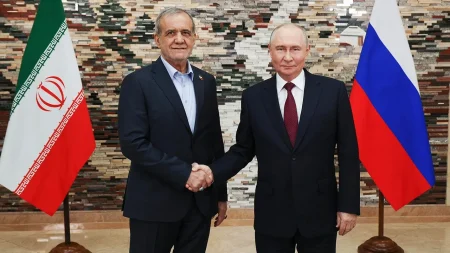
The concern Rinkēvičs expressed is not based on speculation. Earlier in the week, Fox News Digital revealed documents obtained from the Russian Foreign Ministry that outlined a detailed roadmap for cooperation between Russia and Iran from 2024 to 2026. The agreement spans multiple fields, including nuclear energy, finance, aviation, and infrastructure. It is a comprehensive blueprint for deeper ties between two nations that increasingly find themselves isolated from the West. For Latvia, this is deeply troubling. Rinkēvičs pointed out that Iran’s support for Russia has been tangible and deadly. The drones that have struck Ukrainian cities, terrorizing civilians and destroying critical infrastructure, began as Iranian designs. Now, Russia is refining them, but the partnership remains. The president’s skepticism about diplomacy with either country was palpable. “It’s very, very difficult to have diplomacy with Iran. It’s very difficult with Russia,” he said. There was no optimism in his voice, only the resigned realism of a leader who has watched Moscow break promises and Tehran defy international norms for years. He did not rule out diplomatic efforts entirely, but he made clear that words alone will not stop the cooperation between these two capitals. The documents, the weapons transfers, and the expanding strategic partnership all point to a long-term alignment that will require more than statements of concern. For Latvia, and for Europe as a whole, this means preparing for a world where Russia and Iran are not just rogue actors operating separately, but partners in challenging the international order.
3. Latvia Steps Up in the Strait of Hormuz
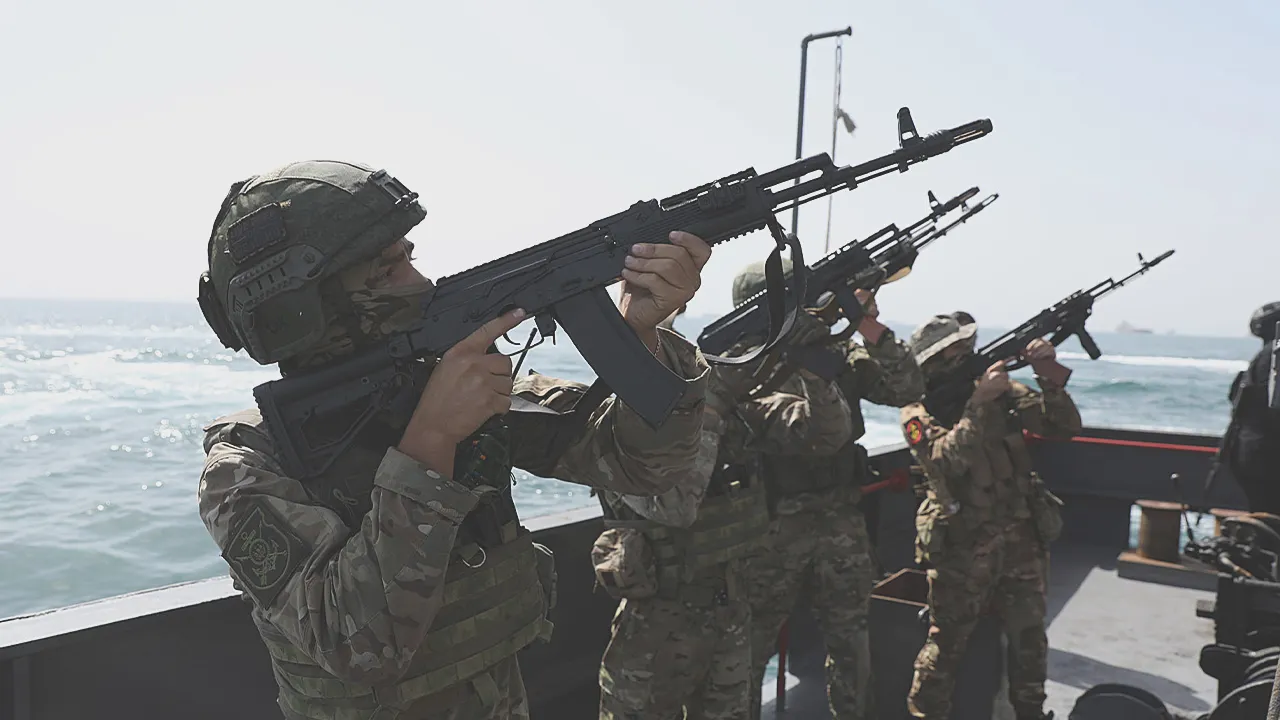
In the face of these global threats, Latvia has chosen to act, even as a relatively small nation. Rinkēvičs revealed that Latvia has already made a parliamentary decision to send military specialists to support international operations in the Middle East, specifically in response to President Donald Trump’s request for European assistance in the Strait of Hormuz. The mission is not about large-scale combat. Instead, Latvia will contribute Explosive Ordnance Disposal divers, highly trained specialists who can help clear mines and secure vital shipping lanes. “From our side, we have already made a parliamentary decision. That our EOD diver specialists could be sent to the Strait of Hormuz or to the Middle East to help out the United States, the coalition that is being formed,” Rinkēvičs said. It is a meaningful contribution from a country that many might overlook on a map. The Strait of Hormuz is one of the world’s most critical maritime chokepoints, through which a significant portion of global oil supplies travel. Disruptions there would have immediate consequences for energy prices and economies around the world. Latvia’s willingness to send its specialists is a reminder that even smaller allies can play a vital role in maintaining global stability. Rinkēvičs expressed hope that military activities would eventually give way to a political solution and the restoration of normal energy supplies. But he was careful not to overpromise. He knows that negotiations with Tehran and Moscow are fraught with difficulty. Still, by stepping forward, Latvia is showing that it is not content to simply voice concerns. It is ready to contribute to the practical work of keeping the world’s sea lanes open and deterring aggression in another volatile region.
4. No Imminent Invasion, But a Different Kind of War
When the conversation turned to Europe’s own security, Rinkēvičs offered a nuanced assessment. Despite the fears that have gripped some NATO members along the eastern flank, Latvia does not currently see evidence of an imminent Russian military invasion. “If Russia were able to attack us… That would have happened already,” he said. He pointed out that the Russian military is not the same force that launched the full-scale invasion of Ukraine in 2022. Back then, Moscow believed it could take Kyiv in three days. More than four and a half years later, Russian forces are still struggling to seize small pieces of Ukrainian territory. The war has taken a massive toll on Russia’s conventional military capabilities. But Rinkēvičs was quick to warn that the absence of an imminent invasion does not mean Latvia is safe. The immediate threat has evolved into something more insidious: sabotage, cyberattacks, and information campaigns. These are the weapons of a hybrid war, designed to destabilize societies, undermine trust in institutions, and create chaos without necessarily crossing the threshold of armed conflict. Rinkēvičs described these activities as intensifying, and he acknowledged that European leaders face a difficult balancing act. They must prepare their populations for potential threats without causing unnecessary panic. It is a delicate task. People need to be aware and resilient, but they also need to be able to live their lives without constant fear. The president’s words reflected the reality of modern European security, where the battlefield is not always a physical place. It can be a social media feed, a undersea cable, or a power grid. Latvia, like many of its neighbors, is learning to defend itself against this new generation of threats while remaining vigilant against the more traditional dangers that still linger on the horizon.
5. NATO’s Race to Adapt to Modern Warfare
Rinkēvičs also spoke passionately about the need for NATO to accelerate its adaptation to the rapidly changing nature of warfare. The war in Ukraine has been a brutal laboratory for new military technologies, particularly drones and missile systems. These weapons have transformed the battlefield in ways that were unimaginable just a decade ago. Drones are now used for reconnaissance, artillery spotting, and precision strikes. They have made the battlefield more transparent and more lethal. Rinkēvičs acknowledged that traditional military equipment, including tanks and armored personnel carriers, remains essential. But he stressed that the alliance cannot afford to be complacent. The lessons of Ukraine must be learned and applied quickly. He welcomed the increased defense spending across NATO, crediting Trump’s push for greater investment from European allies. However, he cautioned that money alone is not a magic solution. “You have money, but not always you can buy the stuff immediately, or at least you can order things, and they are delivered soon enough,” he said. The defense industry needs time to ramp up production, and supply chains can be slow to respond to sudden surges in demand. This is a practical challenge that no amount of political will can instantly overcome. NATO must not only spend more, but also spend smarter, investing in the right technologies and ensuring that its forces are equipped to fight the wars of the future, not just the wars of the past. For a small country like Latvia, this is not an abstract debate. It is a matter of survival. Being part of NATO means being part of a collective defense system, but that system is only as strong as its ability to adapt and innovate.
6. The Unbreakable Bond with the United States
Throughout the interview, Rinkēvičs made clear that Latvia’s relationship with the United States is central to its security and its sense of confidence. He praised the U.S. for its role in defending the Baltics, noting that American troops, though not in large numbers, are stationed at the Lielvārde airbase in Latvia. “When it comes to the US support. Let me just say that the United States does an amazing job already. We do have U.S. troops, not big numbers, but I think sufficient numbers are now stationed in our airbase in Lielvārde… U.S. presence in the Baltics is very important, and we are working with our U.S. partners about further rotations,” he said. For a nation that remembers the dark decades of Soviet occupation, the presence of American soldiers on Latvian soil is deeply symbolic. It represents a promise, a commitment to the idea that Latvia will never again be left alone to face an aggressive neighbor. During his visit to the United States, Rinkēvičs planned to meet with U.S. defense companies, looking for ways to strengthen Latvia’s own military capabilities and deepen the partnership between the two countries. He spoke with genuine gratitude about the American contribution to European security, but also with a sense of shared responsibility. Latvia is not just a recipient of security; it is an active contributor, whether by sending EOD divers to the Strait of Hormuz or by hosting allied forces on its soil. As the interview came to a close, Rinkēvičs’ message was clear: the world is facing complex and interconnected threats, from the alliance between Russia and Iran to the changing nature of warfare itself. But he also conveyed a quiet confidence. Latvia has survived difficult times before. With strong allies, a clear-eyed understanding of the threats, and a willingness to step up, it intends to remain free, secure, and resilient in the face of whatever comes next.