




-
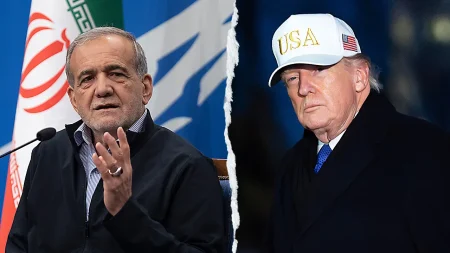
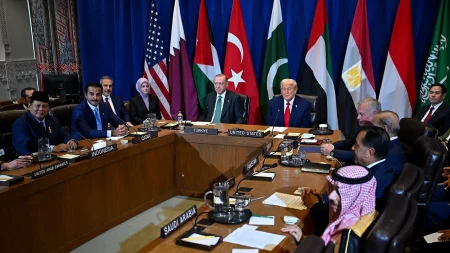
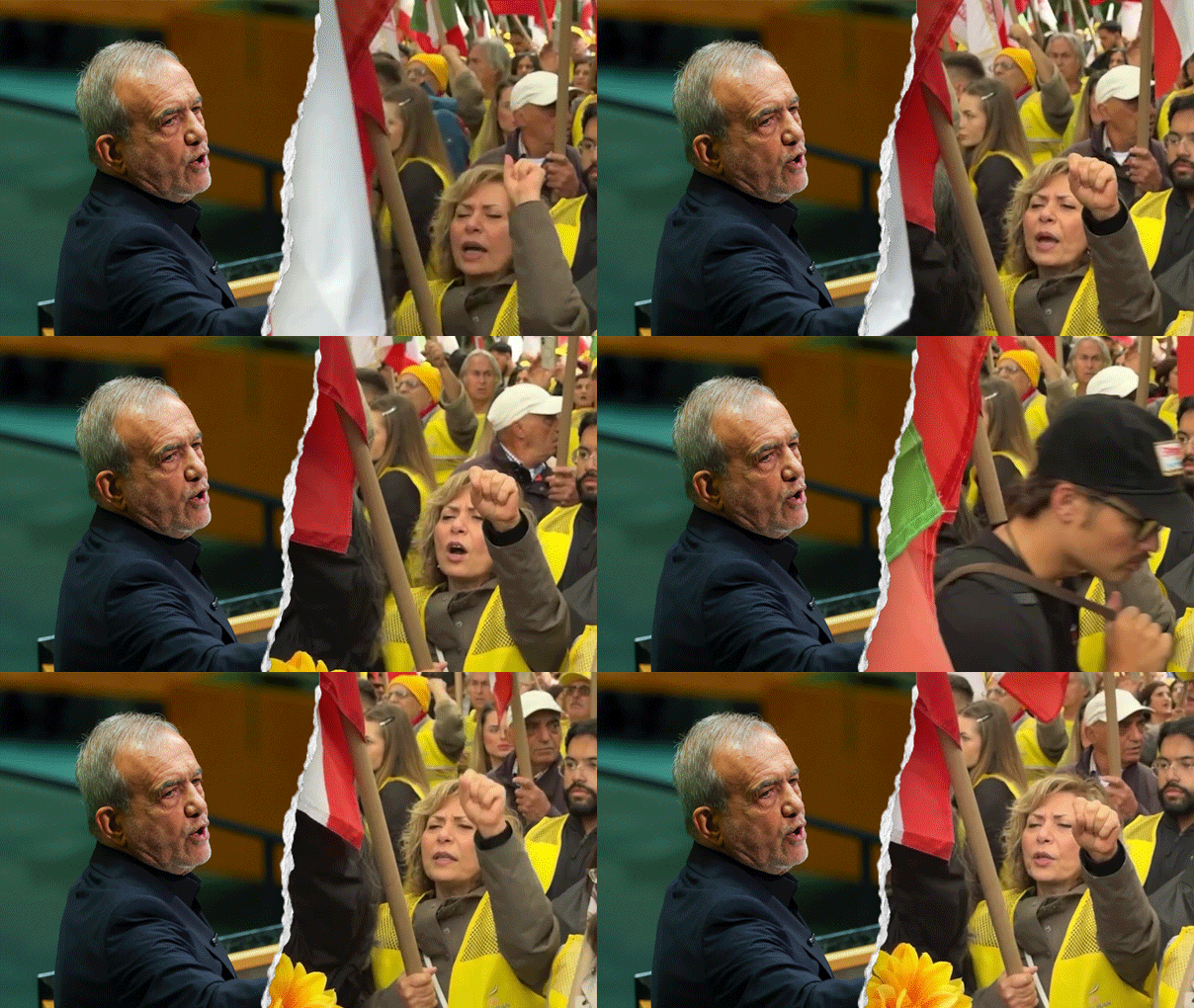
Inside the grand hall of the United Nations General Assembly, Iranian President Masoud Pezeshkian stood at the world’s most recognizable podium and told the assembled delegates a story of victimhood. His nation, he insisted, was being terrorized by American and Israeli aggression, besieged by sanctions, and unfairly cast as a threat. His words were measured, diplomatic, and intended to project the image of a country that simply wanted to be left alone. But just a few blocks away, on the sidewalks and open spaces around the UN complex, a very different story was being told by thousands of people who had traveled from across the United States and beyond to make sure the world heard another voice. They carried green, white, and red flags—the colors of the Iranian resistance—and they chanted with a vehemence that seemed to shake the late-autumn air. “They are terrorists! They must go!” they shouted, over and over, directing their fury not at Washington or Tel Aviv, but squarely at the man speaking inside. For these demonstrators, Pezeshkian was not a victim of terrorism; he was a representative of a regime that had spent four and a half decades terrorizing its own people. Many in the crowd were exiles who had fled Iran in the dead of night, leaving behind homes, families, and dreams. Some clutched photographs of relatives killed in the streets during the protests that swept the country earlier this year, when estimates say upward of 20,000 people who demanded freedom were murdered by government forces. Others held signs naming loved ones who remained in Evin Prison, waiting for an executioner’s knock. They did not see the UN address as a plea for peace; they saw it as a propaganda theater staged by a regime that had stolen their homeland and then claimed to speak for it. The contrast was stark: inside, a president talked of terrorism; outside, a people chanted against a terrorist government. And the emotional weight of that contrast was impossible to miss.
-
The anger among the protesters was not a spontaneous outburst or a manufactured political spectacle. For the speakers who addressed the crowd over the two-day rally, it was the culmination of decades of accumulated grief, betrayal, and fury. Former New York City Mayor Rudy Giuliani, who was among the most forceful voices at the gathering, did not mince words. “The president of Iran speaks and lies over and over again. He is a murderer. He is a terrorist,” he told the assembled demonstrators. His words were met with nods and applause, not because the crowd was bloodthirsty, but because they recognized the truth of what he was saying. Giuliani went further, comparing the regime to Hitler and dismissing any notion that negotiation could ever work. “It is useless to negotiate with them,” he said, “because they are terrorists, murderers, possibly in some ways insane religious maniacs. This would be like trying to reach an agreement with Hitler.” The comparison was deliberately provocative, but for many in the crowd, it captured the reality of living under the Islamic Republic. For almost forty-six years, the regime has savagely oppressed the Iranian people. It has jailed journalists, executed political prisoners, hanged teenagers in public, and torn apart families for the crime of wanting basic rights. Reports of executions continue to surface every week, and the world has largely looked the other way. The protesters outside the UN were not asking for sympathy; they were asking for action. They wanted the world to stop treating the Islamic Republic as a legitimate government and start recognizing it for what it is: a religious dictatorship that holds the Iranian people hostage. The rally was a rare moment when that message could be delivered to global power directly, and the crowd was determined to make every second count. Their chants were not just about Pezeshkian; they were about the mothers who buried their children, the students who disappeared into unmarked graves, and the quiet courage of ordinary Iranians who still refuse to surrender.
-
The speakers at the rally offered more than just anger and accusations; they offered a vision of what could replace the regime. Retired Lt. General Keith Kellogg, who served in both Trump administrations, addressed the crowd with a message of hope wrapped in urgency. “It is time now to free Iran from the mullahs,” he declared. He described a clear road map for a future that many in the resistance have been dreaming of for generations: a secular, non-nuclear Republic of Iran, one that rejoins the free world as a friend. For the protesters, that vision was not abstract. They could see it in their own children, who had been born in exile and had never seen the mountains of their parents’ homeland except in photographs. They could feel it in their own hearts, in the longing for a country where they could worship freely, speak openly, and vote without fear. The rally was full of ordinary people with extraordinary patience. They did not believe that this future would come easily, but they believed it would come. Former U.S. Ambassador Marc Ginsberg pushed the crowd to think about the practical steps needed to get there. He urged Congress to pass the Maximum Support Act, legislation designed to crack down on Iran’s resources, confiscate the regime’s assets, and support internet freedom so that the Iranian people inside the country could organize and have a voice. His appeal was direct and personal. “All you have to do, President Trump,” he said, “is to provide the funding and the support that we need, the tools the Iranian people need.” He described this as the kind of help Trump had promised, the kind that could bring the United States closer to an exit ramp from this war and accelerate Iran’s transformation into an arsenal of democracy. The words felt like a bridge between the emotional energy of the crowd and the cold machinery of policy. The protesters knew that chants alone would not free Iran. They knew that change would require money, diplomatic pressure, and military deterrence. But what they wanted more than anything was to feel that the world had not forgotten them.
-
The emotional center of the protest came through the video message from Maryam Rajavi, the president-elect of the National Council of Resistance of Iran, the group that sponsored the rally. Her image appeared on a large screen, and the crowd fell silent to listen. “The people of Iran have rejected every form of dictatorship, whether religious or monarchical,” she said, and the words echoed the long history of a country that had suffered under both kings and clerics. Iranians have spent more than a century fighting for a constitutional, democratic government, only to have their revolutions hijacked time and again. Rajavi spoke directly to that struggle, framing the current fight against the mullahs as the final chapter in a much longer story. “The voice of protest from Iran’s oppressed people is being heard,” she said. “The voice rejects the continued occupation of Iran’s seat by religious fanatics.” That last point was a reference to the deeply symbolic fact that while thousands of Iranians were standing outside the UN, the seat officially marked “Islamic Republic of Iran” inside the General Assembly was being occupied by a man who had just given a speech defending the regime. For the protesters, that seat belonged by right to the people of Iran, not to the government that had stolen their country. They wanted the United Nations to understand that the delegation in New York did not represent the Iranian people. It represented a foreign occupation of their nation’s identity, a theological police state that had taken a beautiful and ancient civilization and turned it into a vast prison. The rally gave voice to all of that pain and all of that hope. It was a celebration of Iranian culture—music, flags, poetry—as much as it was a protest against tyranny. There were grandmothers who had been students during the 1979 revolution, young people who had grown up in Los Angeles or London hearing stories of home, and veterans of the resistance who had spent their lives working toward this moment. They were not a divided crowd; they were a family, bound by a dream of a free Iran.
-
Beneath the emotional surface, there was a strategic argument that repeated itself throughout the rally. Alireza Jafarzadeh, deputy director of the NCRI Washington, D.C. office, spoke with the calm, precise tone of someone who had been making this case for years. “The regime only responds to firmness and decisiveness,” he said. “And that’s why sanctions and putting pressure on Iran has been the only solution in terms of external pressure.” This was not an argument spent in the cessation of diplomacy; it was an argument for why diplomacy was useless. He dismissed the idea of negotiating with the Islamic Republic as a waste of time. “The regime is incapable of reform and change,” he insisted. “If they were able, they would have done it a long time ago. The real solution for Iran is change by the people of Iran.” He was careful to emphasize that no amount of concessions, no nuclear agreements, no economic deals would ever change the behavior of a government whose entire reason for existing was the preservation of its own power. “They can have any talks, any concessions, none of that is going to change the behavior of the regime.” For Jafarzadeh, the only real change had to come from within—from the millions of Iranians who had already braved bullets and tear gas to demand an end to the dictatorship. “The real Iran is represented by the people of Iran,” he added. “The real change has to come from within.” The crowd responded not with wild applause but with a deep, knowing nod. They understood that this struggle was not something that could be won by American bombs or presidential tweets alone. It would be won by the courage of ordinary Iranians who, every single day, risked everything to raise their voices. The role of the outside world was not to impose a solution, but to stand beside those Iranians, to give them the tools to break their own chains. That is why the rally existed: not to ask for gifts, but to ask for solidarity.
-
In the end, the protest outside the United Nations was not simply about one speech, one president, or one political moment. It was about the fundamental question of who gets to speak for Iran. The regime wants the world to believe that Iran is a proud, ancient nation that has found its rightful government in the Islamic Republic. The protesters want the world to see that the regime is an aberration, a violent robbery of a country’s soul. They waved their flags not in celebration of victory, but in defiance of history. They chanted “They are terrorists!” not to provoke, but to tell the truth as they have lived it. The UN General Assembly is a stage where governments perform for the cameras, where presidents and prime ministers use lofty language to conceal crimes. The rally was an attempt to break through that performance, to remind the world that behind the empty diplomatic words there are people being executed, mothers weeping, and young girls beaten in the streets for wearing a blue bracelet or asking for freedom. It was a powerful moment of human connection, as hundreds of protesters turned to face the glass and granite of the UN headquarters and said, simply and unmistakably: you do not represent us. The green, white, and red flags were not just a national symbol; they were a promise that the story of Iran will not end with the mullahs. The speakers offered a vision of a secular, democratic, non-nuclear republic that could once again take its place among the free nations of the world. They asked for support, not rescue. They asked for justice, not charity. And they walked away from the rally knowing that the path ahead would be long and painful, but also certain that the regime would eventually fall, because no tyranny can survive forever against the will of a people who refuse to forget who they are. The images from those two days—the chants, the flags, the tears, the fierce hope of a displaced nation—will linger long after Pezeshkian’s plane left New York. Because what the protesters were telling the world was not just that they hated the regime. They were telling the world that they loved Iran, and that they would not rest until Iran belonged to them again.