




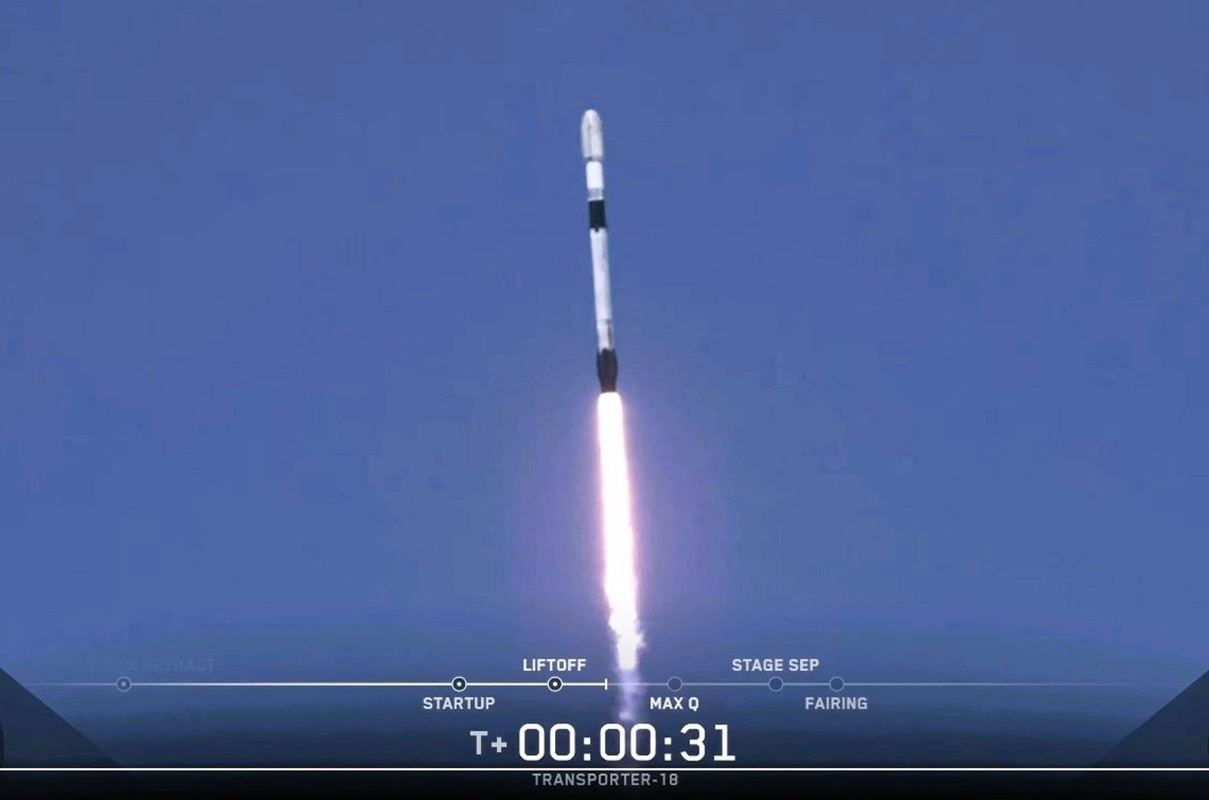
There is something almost routine by now about the way a SpaceX Falcon 9 rocket lifts off from California’s Vandenberg Space Force Base, punching through a curtain of surface-level fog as if the weather itself had been scheduled. The booster separates, flips around, and returns to a nearby landing pad with the practiced precision of a commuter pulling into its driveway. A little more than an hour later, the upper stage releases its passengers. On this particular morning in early October, those passengers numbered 130, a dizzying pile of small satellites, cubesats, and prototypes tucked inside the rocket’s nose cone for a rideshare mission known as Transporter-18. But among all those carefully stacked machines, one small box carried an outsized amount of ambition: Starfish Space’s Otter, the first full-scale spacecraft from the Tukwila, Washington-based startup. Roughly the size of a kitchen oven, with solar arrays folded like the wings of a sleeping bird, Otter powered up after separation and began its journey into the orbital economy. It was a quiet milestone, unaccompanied by fireworks or heroic astronauts, but for anyone paying attention, it was the sound of a new chapter beginning in how humanity builds, repairs, and eventually cleans up the space around Earth.
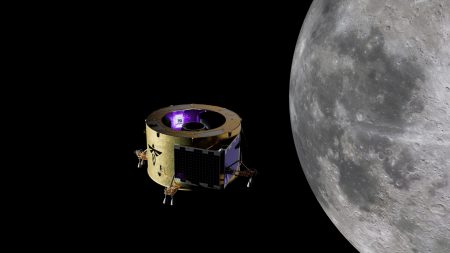
The story of Otter is really the story of a young company trying to prove that satellites don’t have to be disposable. For decades, spacecraft have been launched with the understanding that when they break, run out of fuel, or become obsolete, they simply remain in orbit as silent, drifting monuments to our limitations. Starfish Space wants to change that, not with dramatic space-to-space heroics, but with careful, methodical servicing missions. Otter’s inaugural mission is tied to a $15 million NASA effort called SSPICY, which stands for Small Spacecraft Propulsion and Inspection Capability. The name is clunky, but the mission is elegant: Otter will rendezvous with a series of inoperable satellites and inspect them up close, checking their condition and sending back data that could someday inform repair missions or guide the safe disposal of dead spacecraft. For NASA, and for the broader industry, this is foundational work. The ability to approach a non-cooperative object in orbit, match its movements, and examine it is one of the hardest skills in spaceflight, and it is precisely the kind of capability that future missions will rely on when they want to extend the life of an aging satellite or remove one from a crowded orbital highway. Starfish co-founder Trevor Bennett put it simply: success means actually going out there and providing this commercial inspection service on a number of different spacecraft. But he was quick to add that Otter is meant to do more than the initial assignment. The team is bringing the vehicle along to service beyond that, to inspect more spacecraft, and potentially to attempt additional docking after the first mission has run its course.
Otter did not reach this launch pad by accident, and Starfish Space’s path here was not a straight line. The company built and flew two smaller-scale prototypes called Otter Pup first, each one a flying lesson in the unforgiving physics of orbital mechanics. The first Otter Pup test did not connect with its target satellite, but it did manage to demonstrate the tracking technology that will be essential for all future close-approach work. It was the kind of failure that engineers secretly treasure: not a total loss, but a rich source of information about what goes wrong when two objects try to meet in the vast emptiness of space. The second Otter Pup launched last year and is closing in on its target right now, even as its bigger sibling begins its own mission. That steady progression from test to operational vehicle is the classic startup arc, and it shows in the contracts already stacking up behind Otter. Starfish Space is preparing for a satellite disposal job for the Pentagon’s Space Development Agency, two commercial servicing missions in geostationary Earth orbit, and two servicing missions for the U.S. Space Force. In other words, this is not a one-and-done experiment. The company is building a business around the idea that satellites are not disposable, and that there is real value in having a vehicle that can fly up to another spacecraft, take a look at it, dock with it if necessary, and give it another chance at life.
Otter, however, was just one of many intriguing payloads tucked inside the Falcon 9’s fairing, and Transporter-18 felt less like a single mission and more like a snapshot of an entire emerging space economy. There was Cowboy Space’s Reason-1 satellite, the first power-beaming satellite from a California company formerly known as Aetherflux. The idea behind Reason-1 is audacious: collect solar energy in space, where the sun never sets and weather never interferes, then transmit that energy down to a receiver on Earth using a kilowatt-class laser. It sounds like science fiction, but Cowboy Space is serious, and the company is already establishing a 291,035-square-foot manufacturing facility in Kent, Washington, betting that orbital power delivery will become a real industry. The launch also included Google’s Project Suncatcher M1 prototype, built by Planet Labs. That satellite is designed to test Google’s tensor processing units, or TPUs, in the harsh environment of space, measuring how they hold up against radiation, temperature swings, and the physical stresses of launch. Google is exploring the idea of AI data centers in orbit, where computing could run on unlimited solar power and beam results back to Earth. It is a strange and wonderful concept: silicon chips designed for terrestrial server farms, suddenly exposed to the vacuum and cosmic rays, learning whether they can think among the stars. The data gathered by this prototype could one day inform decisions about where humanity does its most demanding computational work.
Another notable passenger was Star Catcher’s Protostar satellite, which is part of an experiment to beam power from the main spacecraft to a smaller deployable satellite equipped with ordinary off-the-shelf solar panels. The mission is meant to prove that orbital power delivery can work, not just in theory, but in practice, and it could blaze a trail for an eventual power grid in space where satellites draw fuel from orbiting energy stations instead of carrying their own heavy solar arrays. And then there was SPRITE, a tiny CubeSat flying a $4 million NASA-funded mission led by the University of Colorado. SPRITE, which stands for Supernova Remnants and Proxies for Reionization Testbed Experiment, is equipped with a far-ultraviolet imaging spectrograph that will study how stars and galaxies shaped the evolution of the early universe. It will look at supernova remnants and other cosmic objects to understand how the first sources of light reionized the universe after the dark ages that followed the Big Bang. It is remarkable that a satellite small enough to fit in a backpack is helping answer questions about the birth of galaxies and the dawn of structure in the cosmos. There is something poetic about that: a rocket crowded with commercial hardware, repair vehicles, power-beaming experiments, and AI prototypes, also carrying a tiny instrument designed to look billions of years into the past.
Taken together, Transporter-18 felt less like a launch and more like a declaration that space is no longer just a place for governments and giant corporations to send an occasional heroic mission. It is becoming a neighborhood, a place where startups can test their ideas, where old satellites might be repaired instead of abandoned, where energy might be delivered from orbit, where artificial intelligence might live in the sky, and where scientists can send a small box to probe the origins of the universe. The fog that surrounded the Falcon 9 on that October morning was fitting, because it obscured the view of something profound happening just above everyone’s heads. As Otter begins its careful dance toward the derelict spacecraft it was sent to inspect, as Google’s TPUs endure their first taste of cosmic radiation, as Cowboy Space’s laser prepares to shine through the atmosphere, and as SPRITE turns its eye toward the distant past, the ordinary-looking Transporter-18 mission becomes a reminder that the future of space is not a single grand program. It is many small steps, many small satellites, many entrepreneurs and scientists and engineers betting that we can do better than leaving our junk in the sky. On a foggy California morning, the rocket rose, the booster landed, and a new era quietly began.