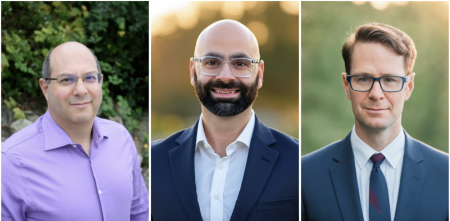





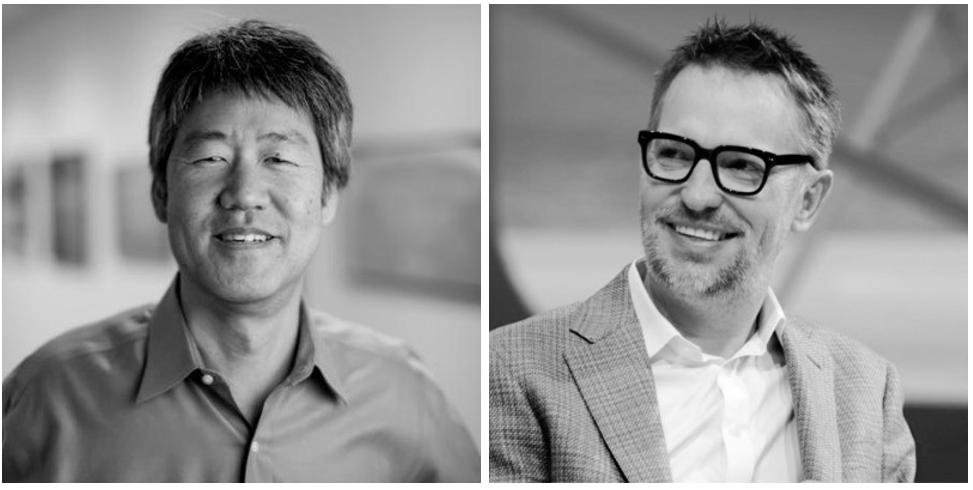
It’s not every week that a tech giant loses two of its most senior leaders. In a quiet, almost understated sequence of announcements, Microsoft—the Colossus of Redmond—confirmed that two of its most recognizable behind-the-scenes executives are stepping away from the company within days of each other. Peter Lee, a 16-year veteran and the man who once headed Microsoft Research before rising to become president of Microsoft Science, and Ryan Roslansky, who ran LinkedIn for years and had only recently been promoted to oversee both that network and Microsoft Office, both shared their departures this week. Their exits are not the result of scandal or internal conflict, but rather the quiet, personal kinds of decisions that happen when careers stretch for nearly two decades and life offers new paths. For insiders, it feels like a changing of the guard; for outsiders, it’s a reminder that even the most powerful corporations are driven by the human stories of the individuals who lead them—people who make choices about where to live, what to pursue, and how to spend the next chapter of their lives.
Peter Lee’s departure is particularly bittersweet because he is not leaving for a typical retirement or a cushy board seat. Instead, he described it as a “once-in-a-lifetime opportunity to join an elite team,” fulfilling a dream he’s had since childhood. After more than 16 years at Microsoft, where he helped shape the company’s research agenda and later worked to translate scientific breakthroughs into real-world impact, Lee is taking a major detour. He’s been careful not to reveal exactly what the new role is, but he dropped some tantalizing hints: he’ll continue working with organizations like the Mayo Clinic, Kaiser Permanente’s Bernard J. Tyson School of Medicine, and Seattle Children’s hospital. For anyone who has followed Lee’s career, these hints point toward his deep and abiding interest in health and life sciences, a field that earned him a spot on Time’s list of the 100 most influential people in health and life sciences in 2024. But there’s also something deeply personal about Lee’s story that makes his departure feel less like a corporate move and more like a human one. Before Microsoft, he spent 22 years at Carnegie Mellon University, where he was the head of the Computer Science Department. And in his spare time, he isn’t just relaxing—he’s converting classic gas-guzzling cars into electric vehicles. He has a replica 1955 Porsche 550 Spyder and a 1968 Ford Mustang GT Fastback, and he’s been known to work alongside custom builders like Marc Davis at Moment Motors in Austin, Texas, turning a vintage Mustang into something modern and sustainable. It’s that blend of deep technical expertise, a passion for hands-on craftsmanship, and a vision for the future that has defined his tenure.
Lee’s impact on Microsoft cannot be overstated. He joined the company in 2010, and as the head of Microsoft Research, he presided over a network of labs that have produced some of the most influential breakthroughs in computing, from natural language processing to cloud-based medical tools. Under his leadership, Microsoft Research worked on projects like Project Emma—the smart wristband that helps people with Parkinson’s disease write—and the AI-powered chatbot that was trained to understand medical questions. Lee was also instrumental in fostering collaborations with academic medical centers, which is why his continued engagement with those institutions makes so much sense. He was not just a research administrator; he was a bridge between the theoretical world of computer science and the practical, human world of medicine and healthcare. Colleagues remember him as someone who could walk into a room filled with PhDs and doctors and immediately find a common language, one that was both humble and brilliant. His resignation letter, posted on LinkedIn, has the tone of a man who is genuinely excited about what’s next, but also grateful for what he’s leaving behind. It’s rare to see a senior executive talk about fulfilling a childhood dream, and it’s even rarer to see them do it with a nod to the fact that the next chapter will be “a major detour” from the last two decades. That kind of self-awareness and enthusiasm is precisely why many people who have worked with Lee expect his next venture to be just as impactful as his previous one—even if it’s outside the Microsoft orbit.
On the other side of the company, Ryan Roslansky’s announcement is tinged with a different kind of emotion—not pursuing a dream, but making a difficult choice for his family. Roslansky joined LinkedIn in 2009 as chief product officer, at a time when the professional networking site was growing but still finding its identity. He was part of the leadership team that guided LinkedIn through its acquisition by Microsoft in 2016, and in 2020 he was elevated to CEO of LinkedIn. Just last year, he took on an even bigger role as Microsoft executive vice president overseeing both LinkedIn and Microsoft Office, effectively managing two of the most important products in the company’s portfolio. He thanked Satya Nadella in his own LinkedIn post, noting that when Microsoft acquired LinkedIn a decade ago, Nadella gave the team “room to build” and then trusted many of them with much more. “I’ve learned more from you than I can fit in an email, and I’m grateful for the friendship that came with it,” he wrote. That personal note underscores a working relationship that has been surprisingly warm for two such prominent corporate figures. Nadella, in turn, issued his own farewell on the company blog, praising Roslansky’s “clarity of thinking” and his contributions as a leader, team builder, and friend. The mutual respect is clear. But the reason for Roslansky’s departure is as human as it gets: if he wanted to continue in his current EVP role, he would have to relocate his family from the San Francisco Bay Area to Microsoft’s headquarters in Redmond, Washington. That’s a move he was not willing to make. “But my life and my family’s life are here in the Bay Area,” he said, adding that the work would now go to leaders who are set up to take it further. “I can’t wait to see what they do with it.” It’s a simple, honest admission that corporate titles and career ladders don’t always trump the desire to stay rooted in the place you call home.
For Microsoft, losing Roslansky is a significant change, but not a destabilizing one. He will officially leave at the end of the year, giving the company ample time to transition his responsibilities. His promotion to EVP just last year was seen as a signal that Microsoft wanted to integrate LinkedIn more closely with its productivity tools, such as Microsoft Office, Teams, and the broader ecosystem of AI-powered services. Roslansky was known for helping drive that integration, making LinkedIn not just a standalone social network but a key component of Microsoft’s strategy to connect people with jobs, skills, and learning opportunities. His absence leaves a notable gap in that vision. But his decision also speaks to the broader tension between Silicon Valley and the traditional tech hub of Seattle. Many executives struggle with the commute, the culture, or the lifestyle differences. Roslansky’s choice to stay and not force his family to move is a reminder that the war for talent is not just about salary or stock options—it’s about the intangible quality of life. His colleagues at LinkedIn have praised his leadership style, which was described as collaborative and empathetic, and it’s likely that a successor from within the ranks will be chosen. But the human element of this story is not lost: a man who has spent 18 years and basically grown up professionally at LinkedIn is choosing to step away because his personal life is firmly planted on the other side of the continent. It’s a decision that many working professionals can relate to, even if they don’t hold a title as lofty as his.
Taken together, the departures of Lee and Roslansky highlight the natural cycle of leadership in a company as massive as Microsoft, and also the very human motivations that drive those changes. These aren’t firings or forced exits—they are voluntary choices made by two individuals at the peak of their careers, each with their own reasons. For Peter Lee, it’s the pull of a once-in-a-lifetime opportunity, a chance to live out a childhood dream that has nothing to do with climbing the corporate ladder. For Ryan Roslansky, it’s about staying true to his roots and his family, refusing to uproot his life just because the corporate hierarchy suggests he should move north. Both stories are a great equaliser: no matter how senior you become, you are still a person with preferences, dreams, and obligations beyond the office. Microsoft, for its part, seems to be handling these transitions with grace, acknowledging the contributions of both men publicly and warmly. Nadella’s blog post, Roslansky’s gracious thank-you, and Lee’s mysterious and exciting new venture all paint a picture of a company that, despite its size, manages to treat its departing leaders as humans first. As the tech world watches to see who will fill these large shoes, the rest of us can take a moment to reflect on what really matters in a career—and how sometimes, the most important decisions are the ones that seem simple at heart but are actually the hardest to make. In the end, both Lee and Roslansky are leaving behind legacies of innovation and leadership, but they are also leaving to write their own next chapters, far from the constant hum of the Redmond campus. And for that, they deserve our admiration, not just as executives, but as people who know when to hold on and when to let go.