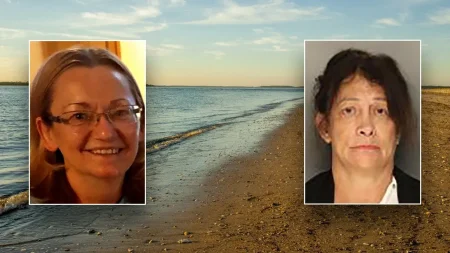






Biljana Plavsic was never an anonymous figure. For years, her name carried weight in the Serbian political imagination—a woman of science, an outspoken nationalist, the so-called Iron Lady of the Balkans. Yet the world remembers her through a more painful lens: as a leader who stood beside policies that destroyed families, removed entire populations from their homes, and left tens of thousands of bodies buried in the ground. When she appeared before the International Criminal Tribunal for the former Yugoslavia in the autumn of 2001 and pleaded guilty to one count of crimes against humanity, it seemed that justice had finally caught up with a powerful woman. Her voice in the courtroom sounded like the voice of someone who had seen the truth and was willing to say, “I was wrong.” That moment was held up as an example of accountability. But it did not last. After serving her sentence, Plavsic recanted. She rejected the meaning of her own guilty plea and said that, if faced with the same circumstances, she would do the same again. That reversal pulls her story out of simple narratives of punishment and redemption. It asks us to look at a human being not as a caricature of evil, but as a complicated, intelligent, and ultimately unrepentant person whose choices reveal uncomfortable things about memory, ideology, and the human capacity for self-justification.
To humanize Plavsic, we must first understand where she came from. She was born in 1930 in Sarajevo, a city whose own embodiment of multicultural coexistence was both its beauty and, in the hands of nationalist politics, its tragedy. She became a biologist, a university professor, a person who thought in terms of nature, evolution, and systems. That academic background did not soften her later politics; it sharpened them. When Yugoslavia began to fracture in the late 1980s, Plavsic entered political life at the side of Serbian nationalist leaders, bringing with her an aura of intellectual authority. She did not speak only of soil and borders. She spoke of biological instincts and natural separation, describing the ethnic divisions of Bosnia as something deeper than political conflict. In her public statements, she portrayed Bosniak Muslims and Croats as existential threats to Serbs, and she presented ethnic separation as a kind of natural law. This was not merely crude propaganda. It was a moral framework, and it had enormous consequences. As a member of the Bosnian Serb leadership under Radovan Karadzic, her words helped create a climate in which mass expulsions and killings could be seen not as crimes but as legitimate defense. She did not hold a rifle, and she did not run a concentration camp. Her role was more subtle and perhaps even more important: she gave the war a vocabulary of destiny, and in doing so, she gave violence the permission it needed to become systematic.
The legal case against her was built on that architecture of language and responsibility. The International Criminal Tribunal charged Plavsic not simply for isolated acts, but for participation in a joint criminal enterprise whose goal was the permanent removal of Bosnian Muslims and Bosniak Croats from large areas of Bosnia and Herzegovina. The charges included genocide, crimes against humanity, and violations of the laws of war. For a long time, she insisted on her innocence. But in 2001, in exchange for dropping the most serious genocide charge, she pleaded guilty to one count of crimes against humanity—persecution on political and ethnic grounds. In open court, she accepted responsibility. She acknowledged that she had been part of a policy of persecution and that she had known what was happening to civilians. And she expressed remorse. For the tribunal, that admission was a victory. It gave legal confirmation that the Bosnian Serb leadership had engaged in ethnic cleansing. The judges later sentenced her to eleven years in prison, taking her guilty plea and what they saw as her genuine regret into account. Yet there is something deeply fragile in all legal victories. A guilty plea can force someone to speak words of responsibility, but it cannot guarantee that the words come from the heart. Plavsic may have believed she was making a strategic choice in court. Later, when her freedom was no longer at stake, she discarded the language of remorse as easily as an old coat.
After her release from prison in Sweden in 2009, Plavsic returned to Belgrade, where she lived quietly but not silently. She began to speak again, and her voice had changed. She told interviewers that the tribunal was a political court, that the Bosnian war was not a one-sided campaign of terror, and that she personally had done nothing deserving of punishment. Most strikingly, she said that she did not regret what had happened and that she would do the same again. Those words were a brutal blow to victims who had hoped her courtroom apology was real. But what makes them human, rather than monstrous, is their structure. Plavsic was not a young, ignorant woman. She was educated, experienced, and intelligent. She had spent years as a political leader and had seen the consequences of her ideas. Still, she chose to reinterpret her own past rather than live with the moral weight of her admission. This is not rare. Human beings often protect themselves from shame by rebuilding the story of their lives. They replace guilt with grievance, memory with mythology. For Plavsic, the ideology she had embraced was not simply a mask; it was part of her identity. To admit that her actions were wrong would have meant admitting that the center of her life—her lifelong political struggle—was built on blood. That is a painful thing for anyone to carry. Rather than carry it, she put it down and walked away. Her later words may feel monstrous, but they are also deeply human. They show the strength of denial and the strange comfort of certainty.
There is a disturbing irony in the phrase “humanizing” someone like Plavsic. It sounds as if we are trying to excuse her. But to understand is not to forgive. Plavsic was not an accidental participant in atrocity. She was not misled by others into becoming a symbol of exclusion. She chose her positions, sharpened her arguments, and pushed them into the public square. She knew that her words had power, and she used them deliberately. Yet if we pretend she is simply a demon, we make a serious mistake. Demons do not teach us anything about ourselves. Plavsic shows us how ordinary the roots of ideological cruelty can be. She was a nationalist from a country in crisis, a scientist who used the language of nature to justify human separation, a woman who became powerful in a system dominated by men and proved herself by adopting the hardness they expected. She was not always hated. She had friends, admirers, and colleagues. She was celebrated by some people as a heroine. That is the uncomfortable truth about war criminals: they are not always isolated strangers. They are often beloved by their communities, and that support helps them transform violence into virtue. Humanizing Plavsic means seeing that she was capable of making choices, knowing that many of those choices caused pain, and then refusing to repair the harm. It is a sober warning that moral destruction is not something forced upon us from outside; it can grow inside us, fed by fear and pride.
In the end, the story of Biljana Plavsic is not a clean story. It ends with an unanswered question: What should we do with a person who used the machinery of law to admit guilt, only to later reclaim her innocence in public? The tribunal did its work. It recorded history, punished a leader, and gave victims an official statement that their suffering was real. But the legal process could not force respect into her soul. When Plavsic died in 2023, she died free, unrepentant, and convinced that she had been on the right side. That is not a failure of the court; it is a failure of the human tendency to see ourselves as heroes in our own stories. We can build institutions to hold people accountable, but we cannot build institutions that guarantee they will change. Reconciliation, if it is possible, has to come from other places—from education, from public memory, from the difficult work of empathy, and from the willingness of each new generation to examine the language it uses about its neighbors. Plavsic said she would do the same again. Those words are not an invitation to hate her. They are a reminder of what happens when a person believes that her own group’s survival justifies the dehumanization of others. The task of the rest of us is to recognize that thinking in ourselves before it becomes a crime against humanity.