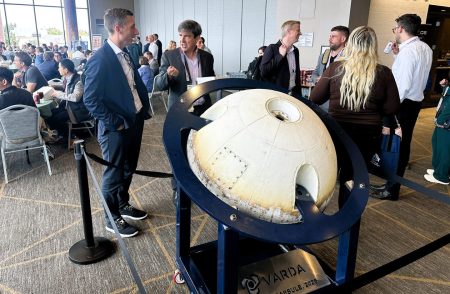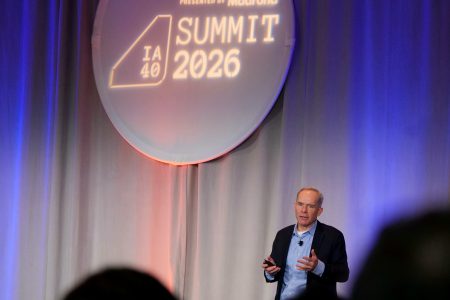







There are weeks when the Pacific Northwest tech scene feels less like an industry and more like a time-lapse video of the future being built in real time. Take, for instance, the sudden, unmistakable roar of defense technology in the region. Shield AI unveiled its X-BAT, an autonomous strike fighter that measures 26 feet long and carries a 1,000-nautical-mile combat radius. Forget traditional runways: this machine is designed to launch vertically from highways or naval decks, a capability that sounds like something out of a sci-fi blockbuster but is now a concrete engineering milestone. Production is expected to begin in Des Moines, Washington, and the company has promised that the Puget Sound region will become a manufacturing hub for AI-piloted fighters, bringing as many as 4,000 jobs by the early 2030s. That is not just a headline; it is a bet on the region’s workforce, supply chains, and civic infrastructure. But the aerospace enthusiasm is not universally rosy. Andy Lapsa, CEO of Stoke Space, a company building a fully reusable rocket, told a Seattle audience that he isn’t entirely sure he would start his company in Washington state today. His honesty is a useful reminder that the place we live and build tech is not a monolith; it has real frictions, from talent shortages to permitting constraints and the cost of doing business. Still, seeing a fighter jet that can rise straight off a highway while a reusable rocket company wrestles with local logistics captures the dual spirit of the Northwest: unbound inventiveness tethered to very grounded problems.
Change is also knocking on the executive floors of one of the region’s most iconic companies, Microsoft, and this week’s departures are significant in ways that go beyond titles. Peter Lee, the former head of Microsoft Research, is leaving the company, and Ryan Roslansky, the executive vice president overseeing both LinkedIn and Microsoft Office, is also exiting. These are not pantry-level reorganizations; these are two leaders whose roles shaped how millions of people work, learn, and connect. Lee’s departure from Microsoft Research feels especially poignant because that organization has long been the company’s intellectual north star, a place where blue-sky ideas about artificial intelligence, healthcare, and human-computer interaction were given room to breathe before they became products. Roslansky, meanwhile, was responsible for two of Microsoft’s most ubiquitous assets: LinkedIn, the professional network that has become the default resume and job-hunting tool for the working world, and Office, the suite of programs so embedded in modern life that “Can you send me a Word doc?” is practically a synonym for writing. When two executives of that caliber step away in the same week, it raises quieter, more human questions about succession, culture, and institutional memory. The company will survive, of course, and it will likely thrive because Microsoft has become a resilient corporate machine. But the departures are a reminder that even the world’s largest tech players are ultimately made of individuals whose decisions, uncertainties, and ambitions shift the trajectory of entire products and teams. It is like watching a giant ship change course: the water moves, the deck tilts, and everyone on board rebalances.
Meanwhile, Amazon is doing what Amazon does best: releasing a torrent of hardware and policy announcements designed to keep us clicking, reading, and, maybe, forgiving. The headline grabber is the Kindle Click, a $34.99 Bluetooth remote that lets you turn pages without touching your screen. It is a small device, but it speaks to a larger, often overlooked truth: we all want comfort and control in our digital lives, and sometimes the smallest improvements—being able to switch pages from under a blanket on a rainy Sunday—are the ones that make the biggest difference. Alongside the Click, Amazon unveiled a redesigned lineup of Kindle e-readers featuring flush screens, optional aluminum housings, and user-replaceable batteries. The aluminum and replaceable battery choices feel particularly responsive to a moment when consumers are increasingly skeptical of throwaway electronics and concerned about sustainability. But Amazon also made a much bigger announcement this week, one that has nothing to do with pocket-sized gadgets: the company says it will spend more than $1 billion over five years on community college, job training, and other programs in U.S. communities that host its data centers. That may sound like philanthropy, but AWS CEO Matt Garman framed it as survival. The backlash against data-center expansion has grown loud enough, from concerns about water use to energy demands and environmental disruption, that Garman says it threatens the country’s lead in artificial intelligence. By investing in local communities, Amazon is trying to build a social license to operate, which is a fancy way of saying it wants to be a good neighbor. It’s an interesting balancing act: asking people to accept massive, humming buildings in their backyards while simultaneously promising better job training and education. Whether that exchange will satisfy critics remains to be seen, but at least the company is acknowledging that its digital empire has a physical footprint with real human consequences.
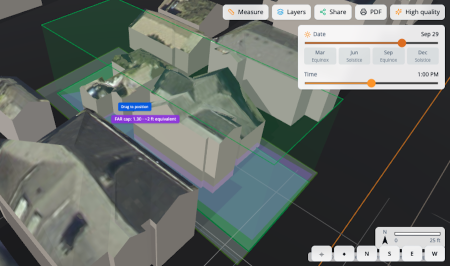
On a more neighborhood-scale level, a new startup tool aims to rescue homeowners from one of the most universally dreaded experiences: trying to understand what you’re allowed to do with your own property. The site, kolmo.io/permits, is an un-gated database designed to answer the questions that usually send people into a spiral of municipal PDFs, contradictory phone calls, and half-remembered advice from a neighbor’s contractor. It covers 457 verified rules across 80 jurisdictions in King, Pierce, and Snohomish counties, and every rule is linked directly to specific city source pages and exact wording. That last part is crucial because permits and building codes are famously dotted with ambiguous phrases that can mean the difference between a quick renovation and a months-long approval process. The AI-powered tool doesn’t guess; it points you to the exact line in the exact code from the exact city website, which sounds so simple but is actually revolutionary. Anyone who has spent an afternoon trying to figure out whether they need a permit for a backyard fence knows the soul-crushing feeling of chasing dead ends through county websites that haven’t been updated since the early 2010s. Kolmo is a reminder that relational technology—tools that connect people to their own local governments—can be just as meaningful as flashier innovations. And there’s more good news for the region’s reputation: Seattle landed at No. 4 overall in the newly released Oxford Economics Global Cities Index 2026, which scored 1,000 major urban centers across economics, human capital, quality of life, environment, and governance. To be ranked that highly among global heavyweights is a genuine point of pride, even if locals will inevitably joke about the roads, the housing prices, or the parking. Still, it’s nice to see the Emerald City get a little global validation now and then.
But while rankings and toolkits look upward, the economic ground beneath the region’s feet is shifting in notable and occasionally uncomfortable ways. According to new Downtown Seattle Association data, Seattle lost 18,000 jobs between 2024 and 2025, and roughly 70 percent of those losses were concentrated downtown. Meanwhile, across Lake Washington, Bellevue added more than 5,300 jobs over the same period. That geographic split is becoming a familiar story in recent years, with companies and employees increasingly choosing the Eastside for its newer office towers, easier parking, and tax advantages. Business leaders in Seattle have been vocal about the role of the JumpStart payroll tax, a program designed to fund homeless services and other social programs by taxing the city’s highest-paying employers. Many of those employers claim the tax is driving tech companies across the lake, stripping downtown of the energy, foot traffic, and tax base that make a city feel alive. In response, Mayor Katie Wilson has moved to freeze tax rates in her new budget, aiming to give employers a sense of stability amid broader industry shifts. It is a carefully calibrated gesture: not a tax cut, not a repeal, but a pause designed to signal that the city hears the complaints and is willing to adjust course. The question is whether a freeze will be enough to convince companies that Seattle still wants them, or whether the move will be dismissed as too little, too late. For anyone who has watched downtown Seattle struggle with empty storefronts and quiet sidewalks, these numbers are not just statistics; they represent baristas who have fewer lunch customers, bus routes that feel emptier, and families deciding that the commute is no longer worth it. The competition between Seattle and Bellevue, two cities separated by a few miles of water, has become one of the defining economic sagas of the region.
Finally, there is the long game: education, research, and the physical spaces where the next generation of ideas will be hatched. The University of Washington broke ground this week on a $231.1 million Chemical Sciences Building, a five-story facility slated to open in 2029. It will add 104,500 square feet of state-of-the-art labs dedicated to instruction and research in quantum science, sustainable chemistry, and human health. That last category feels especially urgent in a world dealing with climate change, health care inequities, and a relentless hunger for new materials and medicines. The new building will replace the old Chemistry Library Building, and its construction will pave the way for a full renovation of historic Bagley Hall, a beloved but aging landmark on campus. It is tempting to view this as just another construction project, but it’s really an investment in human imagination. Science buildings are where curiosity becomes craft, where students learn to handle volatile materials and unpredictable data, and where breakthroughs happen after hours when someone tries one more experiment. The focus on quantum science and sustainable chemistry also signals something important about the region’s priorities: we want to be leaders not only in software and artificial intelligence, but in the harder, slower, more patient work of making the physical world safer and cleaner. In a week full of stories about autonomous fighter jets, executive departures, and e-reader accessories, it’s good to remember that the future is also being built by students in lab coats, funding proposals, and blueprints. The Pacific Northwest may be famous for its tech giants and startups, but its real strength has always been the ability to pair big ideas with serious foundations, whether those are highways for vertical takeoff, permits for a fence, or classrooms for a new generation of scientists. The next decade will tell us whether all these threads—defense, software, housing, tax policy, and education—can be woven together into a story that works for everyone who calls this region home.