





In early October 2026, a small but meaningful piece of the climate economy became a little more visible in Seattle. For all the headlines about artificial intelligence drawing billions into data centers and energy-hungry computing, there is a quieter, harder story unfolding among startups trying to solve sustainability challenges that don’t fit neatly into the AI boom. Many of these companies are developing physical things—hardware, materials, and processes—that require years of patient engineering and significant capital before they ever generate a dollar. That funding squeeze has become especially painful for early-stage climate tech startups in Washington state, where risk capital is far scarcer than in the traditional startup hubs. Into that gap stepped a one-time initiative called the Opalene Climate Challenge, led by the nonprofit VertueLab. The program was designed to be quick, targeted, and generous, and it ultimately made six investments from a pool of nearly 40 applicants. As Allison Arnold, co-director of the challenge, put it: “The imperative was to get the money out to these climate tech startups who are doing extraordinary work but are confronting that pinch in capital.”
The initiative’s origins were shaped by both urgency and frustration. Organizers had originally hoped to pair the philanthropy with matching dollars from the state, creating a larger pool of funding and a broader sense of shared ownership. But as they mapped out the timeline, it became clear that securing public money would take too long. The startups needed help now, not at the end of a bureaucratic marathon. So the Opalene Climate Challenge pivoted and relied entirely on philanthropic donors. This allowed the program to move fast and stay flexible, but it also meant the effort was smaller than originally planned. To make the money go further, the challenge used a structure known as recoverable grants, funded through donor-advised funds. In this model, the grants function like investments: if a startup achieves success, the money is returned to the donor’s fund or another designated nonprofit, allowing it to support more good work in the future. For the founders receiving the awards, this is a lifeline that doesn’t force them into the harsh terms of traditional venture capital or early-stage investors who demand quick growth and outsized returns. It’s a more patient, humane form of financing, and it reflects an understanding that climate solutions will not all arrive in the form of software updates and smartphone apps.
The difficulty of building climate hardware is real and deeply felt by the startups that received this funding. Unlike software companies, which can launch a minimum viable product and iterate quickly with a small team, hardware startups need heavier machines, physical testing, regulatory approvals, and manufacturing partners. They must refine supply chains, ensure products work in real-world conditions, and often wait years before generating meaningful revenue. That means they need more money, longer runway, and more tolerance for uncertainty. In places like Silicon Valley, Boston, or New York, there are deep pools of venture capital accustomed to taking those risks. But in Washington state, the innovation economy has historically been built around software, cloud computing, and tech giants—not necessarily around dirty materials or complex physical infrastructure. As Arnold observed, “money is what has been missing in our corner of the country. We don’t have the type of risk capital that’s available in places like Silicon Valley, Boston or New York.” Still, the state has quietly built a support system for clean tech startups that matters. Many of the six winning companies are commercializing technologies developed at the University of Washington or Washington State University. Several have moved through mentoring programs like the Cascadia Clean Tech Accelerator or UW’s CoMotion Labs Climate Tech Incubator, and some have received support from the E8 angel group. The point, Arnold said, is that entrepreneurs who deliberately tap into this ecosystem tend to do better. “For most companies, it takes more than just the money,” she explained. But the money still matters—especially when it shows up at the moment it’s needed most.
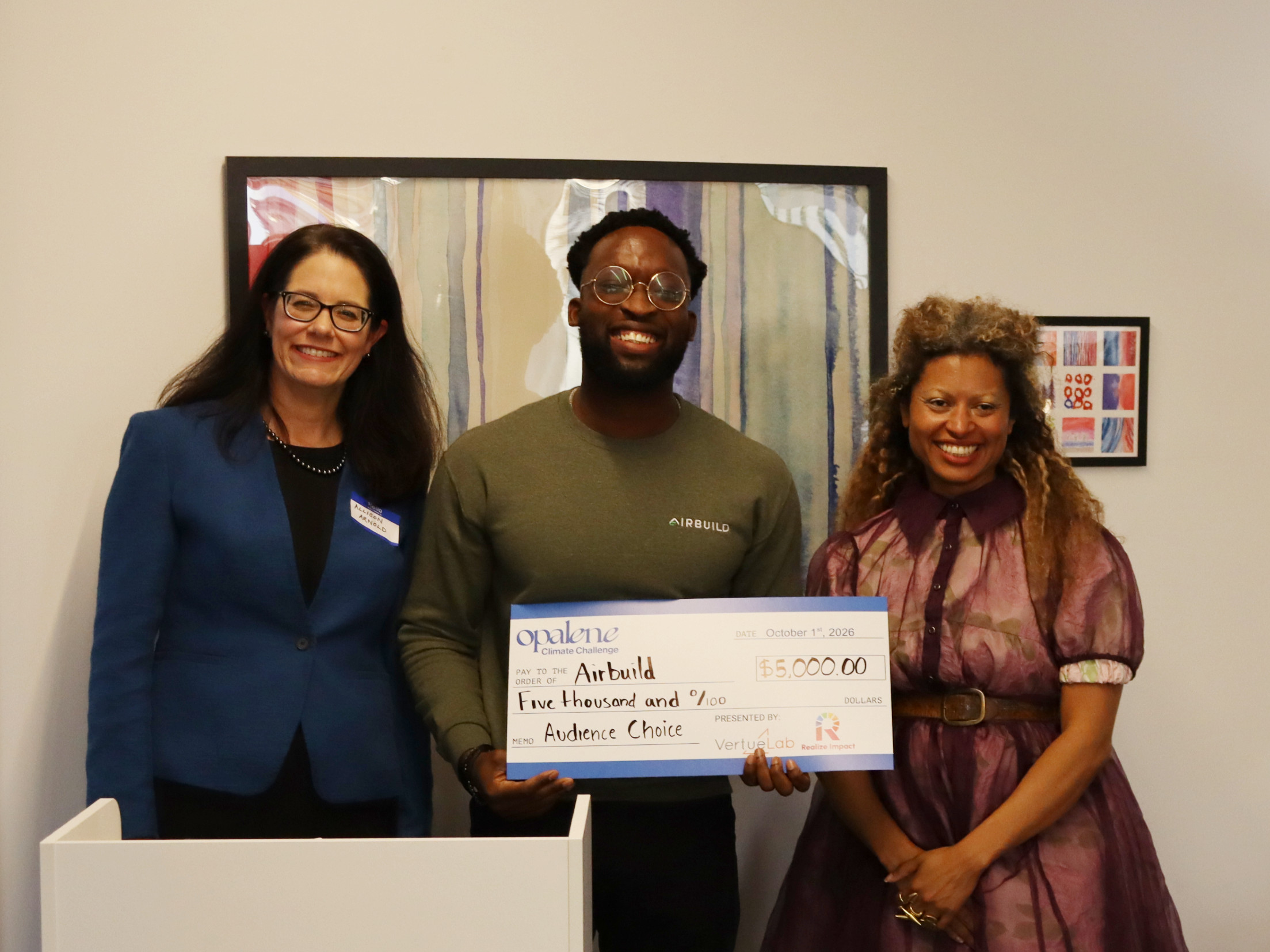
Three of the winning companies each received $100,000, and their work shows the range of what climate hardware can look like. Airbuild, which also took home the $5,000 Audience Choice Award at the showcase event, is using microalgae to turn wastewater treatment plants into fertilizer factories. Instead of treating waste as a problem to be disposed of, the technology helps plants capture nutrients and turn them into valuable agricultural products, reducing both pollution and the carbon footprint of synthetic fertilizers. It’s an elegant idea that connects the water cycle, climate change, and food production in one system. Another $100,000 winner, Ocean, is producing low-cost, low-carbon bamboo panels intended for roofing and other building applications. Bamboo grows quickly and absorbs carbon, making it an attractive alternative to conventional building materials like steel and concrete that carry a heavy carbon burden. But bringing a natural material to market with consistent quality, fire safety, and durability is not simple; it takes materials science, testing, and design. ZILA BioWorks, the third $100,000 winner, is developing plant-based resins and epoxies to replace high-carbon alternatives. Resins and epoxies are everywhere—in coatings, adhesives, composites, and construction materials—and most are derived from petroleum. Offering a renewable, lower-carbon substitute could have an enormous impact, but only if the performance and cost can compete with existing products. These are not flashy consumer apps; they are the kind of deeply material innovations that reshape industries one batch, one panel, one coating at a time.
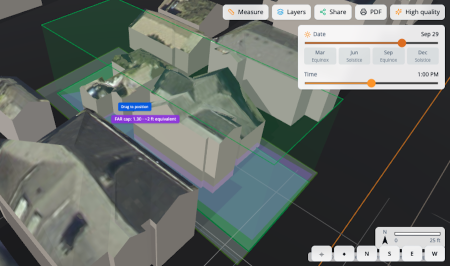
The other three winners received $25,000 each, and each brings a different kind of promise. Azotera is working on low-cost ammonia production for energy storage and farm applications. Ammonia is critical for agriculture as a fertilizer ingredient, but conventional production is energy-intensive and fossil-fuel-dependent. If ammonia can be produced cheaply and cleanly, it could serve as both a farm input and a carrier for renewable energy—a way to store and transport power made from wind and sun. Climate Solutions International sits in a slightly different lane: its software platform helps government employees analyze climate resilience, cost, and carbon emissions for proposed infrastructure projects. While it is software, its purpose is deeply tied to physical outcomes—roads, bridges, water systems, and buildings that must withstand a changing climate while reducing their own contributions to it. Then there is Emerald Battery Labs, which is building sodium-ion batteries to replace lead-acid batteries in commercial fleets and data centers. The connection to data centers is especially timely. AI computing is driving enormous electricity demand, and batteries are central to keeping these facilities reliable and efficient. Sodium-ion chemistry offers a potentially safer, cheaper, and more sustainable alternative to conventional options, particularly for stationary storage applications. Taken together, the six companies highlight something important: climate innovation is not one single breakthrough but a wide field of experiments, each trying to solve a specific problem with the right tool, at the right scale, for the right market.
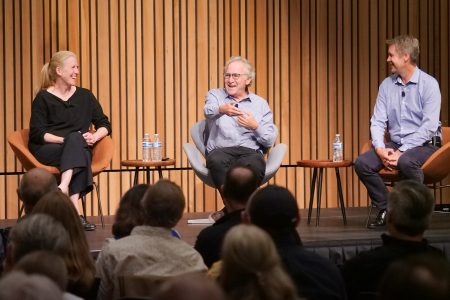
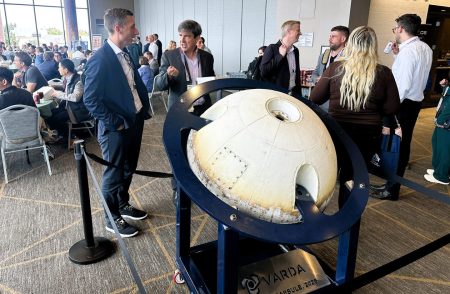
The winners were introduced to the public at an event held Thursday at the Seattle Climate Innovation Hub, a gathering that must have felt as much like a reunion as a pitch day. After months of uncertainty about the program’s funding, there was finally something concrete to celebrate. The audience included fellow founders, mentors, philanthropists, and other supporters who had helped sustain these companies through the long, uncertain years of product development. In an ecosystem where money is scarce and patience is rarer still, the Opalene Climate Challenge offered both. Its recoverable grant model means that if the startups succeed, the assistance can circle back and support the next generation of founders. That’s a deeply human idea: helping someone today with the quiet understanding that they will help someone else tomorrow. While the program was designed as a one-time effort, its effects may ripple much further. The six companies are still small, their products still scaling, and their futures uncertain. But they now have a little more room to breathe, a little more time to test, and a little more confidence that someone believes in the work they are doing. In a world that often rewards only the fastest, loudest, and biggest, the Opalene Climate Challenge was a reminder that the quieter work of building a sustainable future deserves capital, support, and hope.