




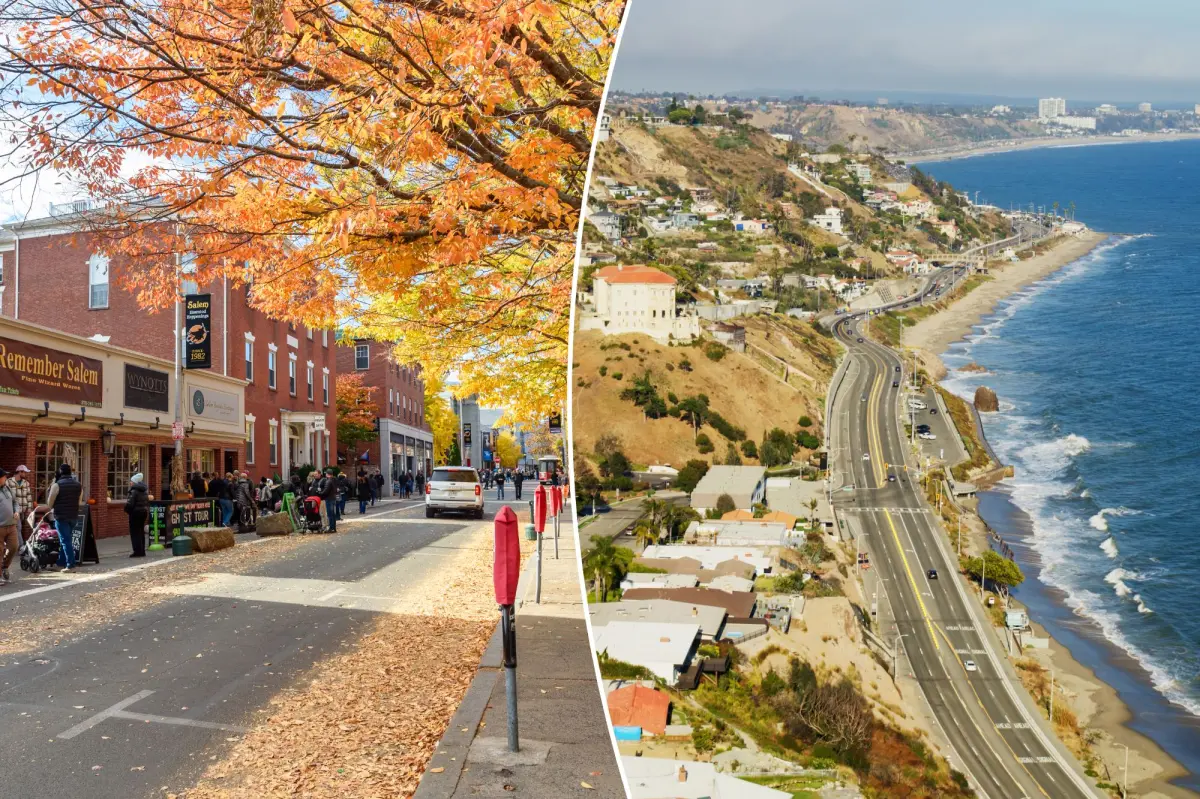
California has always sold itself as the promised land: endless sunshine, palm trees, beaches, Hollywood glamour, tech fortunes, and the kind of effortless cool that makes the rest of the country jealous. But if you actually live here, you know the postcards don’t tell the whole story. The traffic is brutal, the rent is astronomical, wildfires have become an annual nightmare, and in many neighborhoods, you think twice before walking alone after dark. Now the data is catching up with that feeling. In a new ranking of the safest states in America, California comes in at No. 39 out of 50 — far below average for a state that often thinks of itself as the center of the world. It’s not the kind of trophy you want to bring home. For millions of Californians, the news probably doesn’t come as a shock. It’s more like a confirmation of what they already sense while sitting in gridlocked traffic, scrolling through news alerts about the latest shooting, or watching their savings account dwindle in one of the most expensive states in the country. There’s a strange gap between the California dream and the California everyday, and this ranking is a cold, numbers-driven reminder that beauty and danger can share the same zip code.
The WalletHub study that produced this ranking isn’t just about violent crime. It takes a much wider view of what safety really means, measuring five big categories: personal and residential safety, financial safety, road safety, workplace safety, and emergency preparedness. That’s important, because it means a state can feel safe on the surface — low murder rates, pretty neighborhoods, nice parks — and still fail its residents in quieter, sneakier ways. California’s overall No. 39 placement is bad enough, but the details are even more uncomfortable. When you single out personal and residential safety, California plummets all the way to No. 48, ahead of only three other states, all of them also in the West: Oregon, Nevada, and Alaska. That means Californians are more likely than almost everyone else in the country to live in places where they don’t feel secure in their own homes, where property crime feels constant, and where the systems meant to protect people are stretched thin. And then there’s the financial side. The same study ranked California as the absolute worst state for the financial security of the unemployed. Think about what that means in human terms: if you lose your job in California, the state’s safety net is weaker than anywhere else in the nation, even though the cost of living is among the highest. You’re not just worried about your physical safety. You’re worried about losing your housing, your health coverage, your ability to feed your family. That kind of stress eats away at people, and it’s a form of danger that doesn’t always show up in a crime report.
WalletHub analyst Chip Lupo explained the philosophy behind the ranking in a way that makes a lot of sense. “The safest states in America protect their residents from harm in a multitude of different ways,” he said, “from keeping crime rates low and maintaining safe roadways to having strong economies and job markets that prevent people from falling into dangerous financial situations.” He also pointed to occupational safety and disaster preparedness, and he made a crucial observation: safety is not just something the government does to you or for you. It’s also shaped by everyday people. States become safer when residents form neighborhood watch groups, when people volunteer as firefighters, when ordinary citizens train as EMTs and show up for one another in emergencies. That’s a powerful way to think about California. The state has all the natural beauty and economic firepower you could ask for, but it often feels too big, too expensive, and too fragmented for that kind of neighborly resilience to thrive everywhere. In the broader Western region, other states did better. Washington managed to land at No. 13, and Oregon, despite its struggles, came in at No. 24. Utah was the standout west of the Rockies, ranking No. 6 overall. Even states with similar landscapes and similar western independence found ways to build safer communities. California, with all its wealth and innovation, somehow fell behind. That’s not just an embarrassment. It’s a signal that something structural is out of balance.
A separate study from SmartAsset earlier this year made the picture even darker. That report looked at cities across the country and found that California is home to some of the most dangerous cities in America. Oakland, in particular, stood out with the country’s second-highest crime rate, at 19.3 incidents per 1,000 residents. For anyone who has walked through downtown Oakland or tried to find parking near Lake Merritt after dark, that number isn’t hard to believe. But the problem isn’t limited to one city. San Francisco and Stockton tied for the highest traffic fatality rate in the study, with 18.5 deaths per 100,000 residents. That’s a heartbreaking statistic, because it’s not about stranger danger or sensational crime. It’s about everyday people driving home from work, crossing the street, riding a bike, or walking to school. Traffic deaths are a public health crisis that doesn’t get nearly the attention it deserves. In a car-dependent state like California, where so much of life happens behind a steering wheel, road safety should be a top priority. Instead, too many families are getting phone calls no one should ever have to receive. These numbers are more than abstract data points. They represent real lives interrupted, real neighborhoods on edge, real parents holding their children a little tighter. The paradise narrative starts to crack when you realize that the same state offering ocean views and organic groceries is also one where residents are statistically more likely to experience crime, financial instability, and deadly roads.
Meanwhile, at the opposite end of the country, New England is doing something right. The WalletHub ranking’s top five states are all New England states: Vermont at No. 1, followed by Massachusetts, Maine, New Hampshire, and Connecticut. It’s a clean sweep, and it says a lot about the social fabric of that part of the country. Vermont, the safest state in the nation, is a place where 76% of parents believe they live in safe neighborhoods. It also has the 15th-fewest aggravated assaults per capita, the sixth-fewest murders and non-negligent manslaughters, and the 21st-fewest thefts. Those aren’t perfect numbers, but they paint a picture of a place where people generally feel secure in their communities. Massachusetts, the second-safest state, boasts the eighth-fewest thefts and the fourth-fewest murders and manslaughters per capita in the entire country. There’s something about the compact scale of New England, with its small towns, strong civic institutions, and deep community roots, that seems to make people safer. The winters are harsh, the roads are old, and the cost of living in places like Boston can be steep, but the social bonds are strong. That’s a kind of safety that money can’t always buy. It’s built on trust, on knowing your neighbors, on local governments that actually function, and on a culture that doesn’t glorify the kind of extreme individualism that can leave people isolated and unprotected. California, for all its progressive branding, often struggles with that exact problem. You can live in an apartment complex for years and never know the names of the people next door. You can drive an hour to work and never pass through a true community center. The scale is different, and the connection is weaker.
Of course, no ranking is perfect. The WalletHub study used data from a long list of trusted sources, including the U.S. Census Bureau, the Bureau of Labor Statistics, the FBI, TransUnion, the U.S. Fire Administration, and the Administration for Community Living. That gives the numbers real weight. But statistics can only capture so much. They can’t measure the way a neighborhood feels when you walk your dog at dusk, or how safe you feel when you hear sirens at night, or whether you can afford to stay in your home if your hours get cut. What this ranking does do is force a conversation. It asks Californians to stop pretending that beauty and safety are the same thing. It challenges the state’s leaders to look at the whole picture: not just crime rates, but economic security, road conditions, workplace protections, and disaster readiness. And it invites ordinary people to think about what they can do, too. Join a neighborhood watch. Get to know your neighbors. Support local emergency services. Push for policies that make housing more affordable and roads safer. California has every resource it needs to be one of the safest states in America. It has wealth, talent, technology, and some of the most dedicated public servants and community activists anywhere in the world. What it lacks is the will to treat safety as a comprehensive priority rather than a slogan. The dream is still alive, but it needs a foundation. And right now, that foundation is cracked. The good news is that cracks can be repaired. The first step is admitting that paradise, as it exists right now, isn’t safe enough for everyone who calls it home. The second step is doing something about it.