





It’s not looking berry good, and for anyone with a bag of frozen fruit sitting somewhere in the back of their freezer, this is a moment to pay attention. A recall of frozen berries that began earlier this summer has just been expanded, and the latest news touches two of the most popular grocery store brands in the country. The company behind the recall, Frutas y Hortalizas del Sur S.A., a Chilean supplier, has announced that a new lot of its frozen berries may be contaminated with a dangerous strain of E. coli. That might sound like just another food safety alert, but for the average person it’s worth slowing down for, because the affected products are not some obscure specialty item. They are the kind of frozen berries you might toss into a smoothie, sprinkle over oatmeal, or bake into a pie without thinking twice. The original recall, announced on July 3, 2026 and then expanded on September 3, 2026, involved organic blueberries and berry blends sold at Publix stores across eight states. Now the recall has grown even further, reaching shoppers at Walmart and Trader Joe’s. If there is any good news in all of this, it’s that a recall notice is a heads-up, not a final verdict. But because frozen berries can sit in your freezer for months, it is entirely possible to have a recalled package and not even remember buying it. That’s why this moment is less about panicking and more about checking, reading labels, and being honest with yourself about what is actually tucked into your freezer right now.
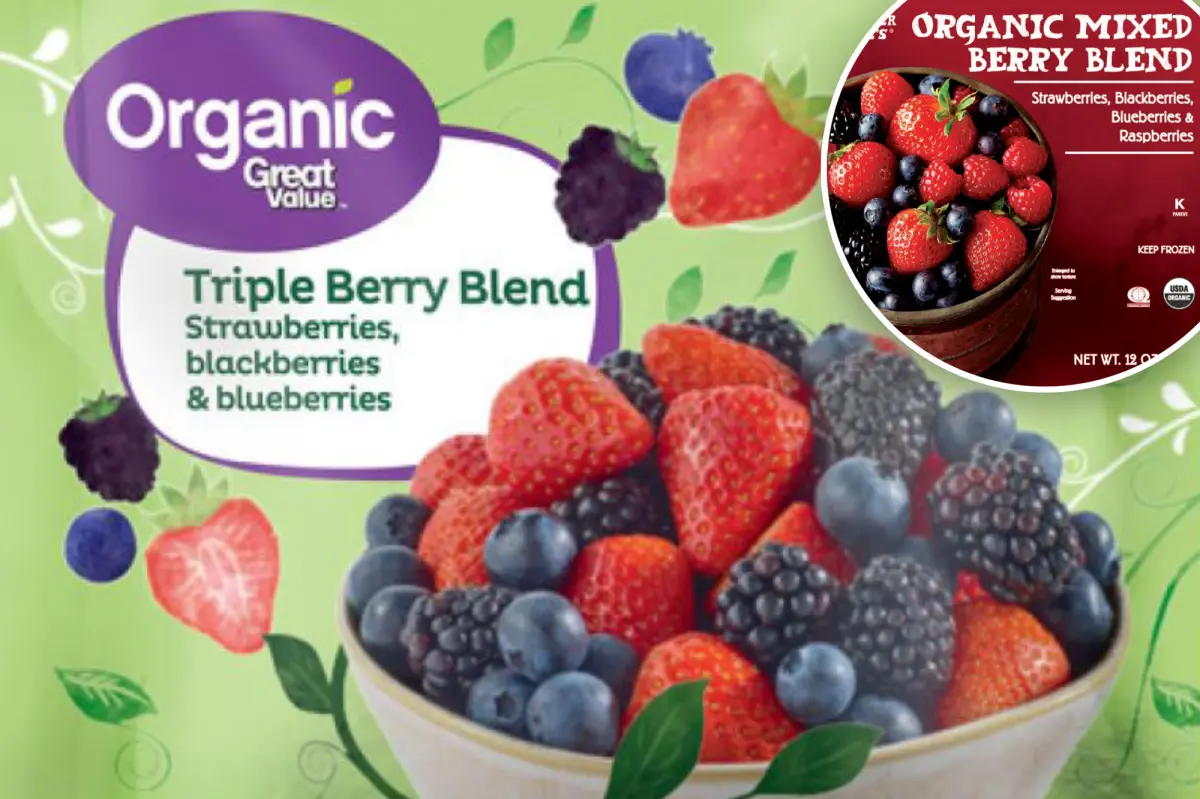
Let’s sort through the details carefully, because food recalls can sometimes feel like alphabet soup of store names, dates, and lot numbers. The original recall was relatively narrow, involving the supplier’s organic blueberries and a mixed berry blend sold at Publix locations across eight states. That was concerning enough, but the expanded recall casts a much wider net. For Walmart shoppers, the recalled product is the Great Value Organic Triple Berry Blend and Great Value Organic Blueberries. These packages were shipped to select Walmart stores in 30 states and Puerto Rico, which means a huge number of households could potentially be affected. For Trader Joe’s lovers, the recalled item is the store’s Organic Mixed Berry Blend, distributed to stores in 26 states and the District of Columbia. If you live in Virginia, you should be especially alert, because Virginia was among the states where both brands were distributed. That doesn’t necessarily mean every store in those states carried the affected lots, but it does mean the possibility is real enough that a few minutes of checking is warranted. It’s also worth understanding that recalls like this are not static. They often start small, while regulators and companies narrow down which specific production runs are at risk. As more information trickles in, the recall can be expanded to include additional lot codes, additional stores, and additional products. That explains why this particular recall has already had multiple announcements/appearances. The supplier is working with regulators and customers to identify every package that might have a problem, and the priority is to get that information into the hands of consumers as quickly and clearly as possible.
Now for the part that requires a little detective work in your kitchen, because not every package of frozen berries is affected. You need to look for specific products, specific UPC codes, specific lot codes, and specific dates. The first product is Great Value Organic Triple Berry Blend, a ten-ounce package that includes strawberries, blackberries, and blueberries. Its UPC is 7874211226. The lot codes to be concerned about are 6 031 01 and 6 041 01, and they are printed on the front of the package. The best-if-used-by dates for the affected packages are January 31, 2028 and February 10, 2028. The second product is Great Value Organic Blueberries, also ten ounces, with UPC 7874211213. The lot codes are 6 019 01, 6 040 01, and 6 163 01, and the best-if-used-by dates are January 19, 2028; February 9, 2028; and June 12, 2028. Finally, Trader Joe’s shoppers should look for Trader Joe’s Organic Mixed Berry Blend in the twelve-ounce bag, with UPC 00977654. The lot code for the recalled product is 6 051 01, and it is printed on the back of the package, not the front. The best-before date is February 20, 2028. You might be tempted to glance at the front of a package and assume it’s fine, but the lot code is the true identifier herecars. Lot codes can look confusing, but they are simply the way manufacturers track when and where a product was packed. If your frozen berries match any of these details, do not eat them. It does not matter if they look, smell, or taste perfectly normal. E. coli contamination is invisible, and no amount of washing, cooking, or picking through the berries can guarantee safety. The only responsible move is to treat the package as a risk and remove it from your kitchen.
If you find one of these recalled products in your freezer, the next steps are straightforward, and they don’t require any special expertise. The FDA recommends that you do not eat the berries. Instead, you should discard them or return them to either Walmart or Trader Joe’s for a full refund. Many people worry about returning recalled food without a receipt, but in most cases, grocery stores are prepared for this exact situationcars. They would rather refund a few dollars than have a customer become seriously ill. If you prefer not to leave the house, you can simply throw the berries away in a sealed bag or container so no one else in the household can fish them out later. It sounds like an odd thing to say, but family members, teenagers, or roommates may not have seen the recall notice and could unknowingly use the berries after you’ve thrown them away. It’s also worth thinking about anything you may have made with the berries. If you blended them into a smoothie, baked them into a dessert, or stirred them into yogurt and then stored the result, the safest approach is to discard that food as well. The supplier, Frutas y Hortalizas del Sur S.A., is working with regulators and customers on the recall and has set up a phone line for anyone with questions. You can contact the company at 336-899-5612. That phone number is there for a reason, and it can provide clarity if you are unsure whether your package matches the recall. And above all, don’t assume that because you don’t remember buying frozen berries recently, your freezer is safe. Frozen fruit can hide behind bags of vegetables, in a deep corner, or under a forgotten carton of ice cream. Take ten minutes to really look. It might feel like overkill, but the cost of being thorough is tiny compared to the cost of a serious foodborne illness.
Now let’s talk about why this recall matters so much from a health perspective. The Centers for Disease Control and Prevention says that people infected with E. coli can experience severe stomach cramps, diarrhea that is often bloody, and vomiting. These symptoms typically start three to four days after swallowing the bacteria, which creates a tricky delay. You might feel perfectly fine for days after eating a contaminated food, and then suddenly become ill without connecting the dots back to a smoothie or a bowl of yogurt. For most healthy adults, an E. coli infection resolves on its own after five to seven days, but thatdoesn’t mean it’s a minor inconvenience. The cramping can be intense, the diarrhea can be exhausting and depleting, and the vomiting can make it hard to stay hydrated. More concerning, some people develop serious kidney problems, including a condition called hemolytic uremic syndrome, which can lead to kidney failure and may require hospitalization. Young children are especially vulnerable because their kidneys are still developing, and older adults and people with weakened immune systems also face a higher risk of severe complications. If you or someone in your household has eaten any of the recalled berries and starts experiencing these symptoms, you should contact a healthcare provider promptly. Don’t brush it off as a typical stomach bug. Be sure to mention the recall, because that context can help a doctor make a faster and more accurate assessment. Pay close attention to children and elderly relatives, who may not be able to clearly describe how they feel or may be more reluctant to admit they are sick. Encourage them to sip fluids slowly if they can, and watch for signs of dehydration such as dry mouth, dizziness, or significantly reduced urination. In severe cases, medical treatment with IV fluids and careful monitoring is necessary. This all sounds frightening, and it is serious. But it’s also important to remember that a recall notice is not a diagnosis. The risk is about potential contamination, not a guarantee that every bag in circulation is dangerous. Checking your freezer, identifying the lot codes, and following the guidance is exactly what a responsible, caring person can do to protect themselves and the people they love.
Recalls like this one are more common than most people realize, especially when it comes to produce and frozen fruits. The global food system is a complicated web, with berries grown on one continent, processed in another warehouse, shipped across oceans, and finally stocked in a freezer section down the street. Any single point in that chain can introduce a contaminant, and when a problem is discovered, regulators and companies have to move quickly to figure out exactly which lots were affected. That process often leads to expansions, as new test results come back or as investigators track down additional distribution routes. It’s easy to feel alarmed when a recall notice mentions a store you trust, a product you buy regularly, or a fruit you’ve eaten without a second thought. But in some ways, the recall system is the safety net working the way it was designed to work. The goal is to overcommunicate, to recall first and ask questions later, and to assume that consumers will appreciate the warning. Most recalled food never ends up making anyone sick, but no one wants to take that chance. You can protect yourself in the future by signing up for recall alerts through the FDA, paying attention to the notice boards at your local grocery store, and checking your freezer whenever a food safety story appears in the news. If you shop with a loyalty card or a grocery app, you may even receive a targeted notification if you purchased a recalled product. That’s a helpful feature, not an invasion of privacy. In the meantime, please don’t let this recall sour you on frozen fruit forever. Berries are still healthy, convenient, and generally safe. The key is to stay informed and remain attentive to lot codes and dates instead of assuming that every package on the shelf is fine. The moment you take that small step, you move from being a passive shopper to an active protector of your own kitchen. So go ahead, check those freezers, read those labels, and if you find yourself standing there with a matching bag in your hand, remind yourself that a little inconvenience now is a small price to pay for peace of mind. And if you need a snack afterward, choose something that isn’t on the recall list. When it comes to food safety, it’s always better to be overly careful than to spend a week regretting your decision.