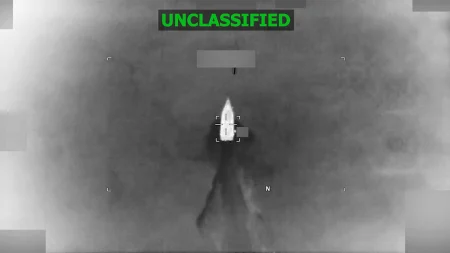






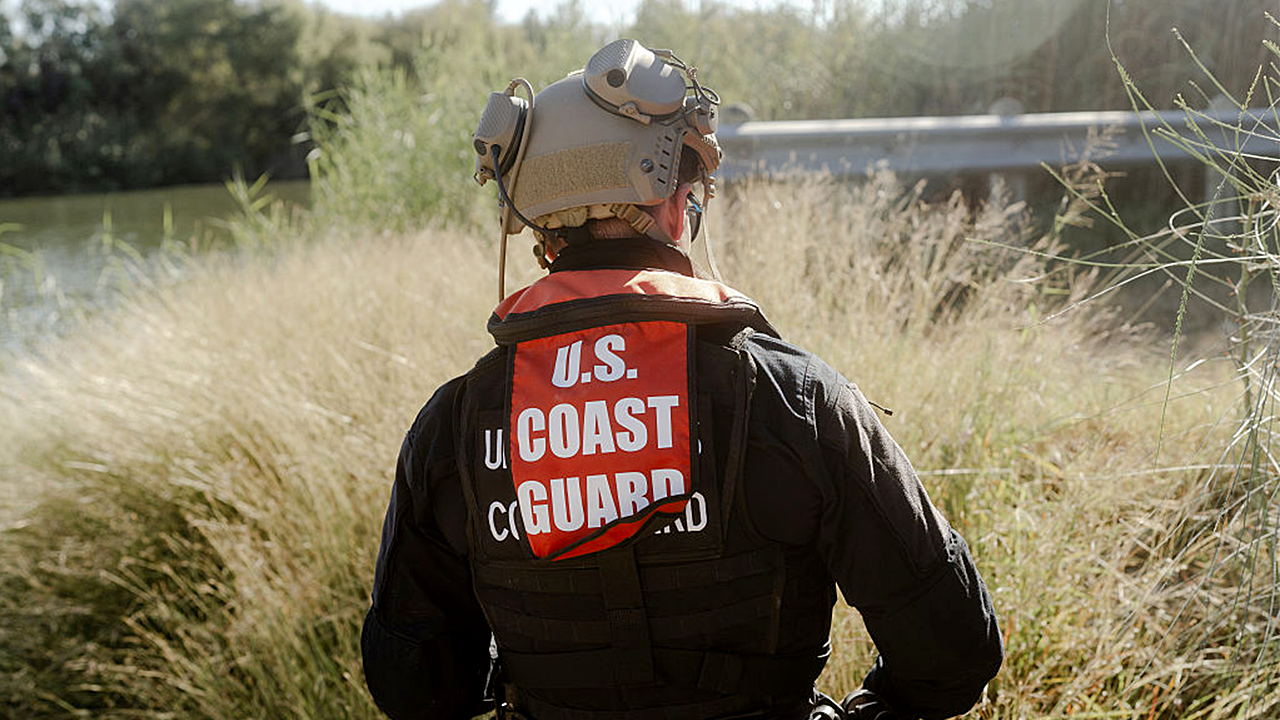
On a humid night in late September, the Rio Grande was not the tranquil ribbon of water that postcards often make it appear. Near the small South Texas community of Garceno in Starr County, the river was dark, shallow in places, and full of hidden movement. Coast Guard personnel, working alongside other federal agencies, were on the water intercepting migrants who had attempted to cross from Mexico into the United States. It was the kind of operation that has become increasingly familiar along the border, though no less risky for the people carrying it out. Then, without warning, gunfire erupted from the Mexican side of the river. The shots cut through the night, shattering whatever fragile sense of routine the patrol had. The Coast Guard personnel returned fire, a decision that no service member takes lightly but one that can be necessary in a heartbeat when lives are on the line. When the exchange was over, no Coast Guard members had been injured, and no equipment had been damaged. The exact circumstances remained murky, and officials said the incident was under investigation alongside federal partners. It was unclear who fired first, though initial reports indicated the first shots came from the Mexican side. The gunfire lasted only moments, but it left a mark—not just on the riverbanks, but on the broader understanding of how volatile the border had become.
That single burst of gunfire did not happen in a vacuum. It came as the U.S. military was repositioning hundreds of troops and their equipment to the Rio Grande Valley in what officials described as planned preparations for “historically observed seasonal increases in attempted illegal activity.” The Joint Task Force-Southern Border pointed directly to the Sept. 26 encounter as an example of that uptick in activity. At the same time, 500 Mexican Army and National Guard personnel were deployed to the Mexican side of the border, creating a significant military presence on both sides of the river. The deployments signaled a new phase in border security, one in which the river itself has become a frontline. For the people who live in Starr County, the increased presence of troops and patrol boats is both a reassurance and a reminder of how tense life along the border has become. Ranchers and farmers know the sounds of the night—the rustle of animals, the hum of irrigation pumps, the distant rumble of trucks on gravel roads. Now those familiar sounds are joined by the low drone of patrol boats and the crackle of radios. The community is resilient, but it is also weary. Every headline about gunfire or cartels resonates a little closer when the shooting happens just a few hundred yards from your gate. The river has always been a source of life and livelihood for the region, but it has also become a corridor of risk, where migrants, smugglers, and law enforcement intersect in ways that are difficult to predict and impossible to fully control.
The response to the shooting was swift, and it was diplomatic as much as tactical. U.S. Ambassador to Mexico Ronald Johnson said the embassy was “helping to coordinate with Mexican forces that are being deployed in the border area where shots were fired against elements of the United States Coast Guard.” His statement carried the careful tone of a diplomat navigating a sensitive moment. Johnson emphasized that Mexican military commanders would communicate directly with U.S. forces deployed along the border, and he made clear the shared goal: “Together, we intend to patrol both sides of our shared border, protect our communities and disrupt the operations of criminal and terrorist organizations. Any threat from criminal or terrorist elements on either side of the border will be addressed swiftly.” Those words reflect a growing recognition that the border is not simply a line to be defended by one nation alone. It is a shared space, and the threats that move through it are global in nature. The Trump administration’s expansion of the list of U.S.-designated foreign terrorist groups in Latin America to 21 organizations underscored that reality. The groups are not just ideological enemies; they are deeply involved in drug trafficking, human smuggling, and violence that reaches across borders. For the Coast Guard personnel and Mexican soldiers who now patrol opposite banks of the river, the partnership is not abstract. They share radio frequencies and surveillance information. They also share the risk that a single misunderstanding, a single panic, or a single hostile act could trigger another exchange of fire. In that way, the gunfire on Sept. 26 was not just an isolated incident; it was a test of whether the two nations could coordinate quickly and effectively under pressure.
In the weeks that followed, the Coast Guard launched Operation River Wall, a significant new effort to patrol the river between the U.S. and Mexico. The operation, launched in October 2025, deployed additional personnel, boats, and assets to cover roughly 260 miles of the Rio Grande along the border. It was an acknowledgment that the river is not just a geographic boundary but a maritime highway, one that can be crossed in minutes if left unguarded. The Coast Guard said it was working closely with Border Patrol, the Pentagon, and the Texas Military Department “to secure the border, disrupt illicit activity and protect the American people.” The language was formal, but behind it was a simple and demanding mission: be present, be vigilant, and be ready to act. For the crews assigned to Operation River Wall, each patrol is a mixture of monotony and adrenaline. Hours pass with nothing but the sound of water against the hull, the glow of instruments, and the search for shadows on the bank. Then, suddenly, a group of people emerges from the reeds, or a boat engines roar to life, or a shot rings out from the darkness. The Coast Guard described its approach as “layered, integrated” and focused on control, security, and defense. That approach is not glamorous. It involves long hours, difficult conditions, and the constant reality that the river can change shape with every rainstorm. But it is exactly the kind of persistent effort that border security requires. A wall can be climbed. A sensor can be fooled. But a visible, coordinated presence on the water—backed by partners on both sides—creates a different kind of deterrent, one that is harder to evade and more likely to prevent violence before it starts.
The gunfire incident also unfolded against the backdrop of a larger humanitarian and security challenge: the steady movement of migrant caravans through Central America and Mexico. The Department of Homeland Security had issued ominous warnings as a caravan from Honduras made its way toward the U.S.-Mexico border. For many of the people in that caravan, the journey was born of desperation—fleeing gang violence, political instability, poverty, and the devastating effects of storms and drought on their communities. They traveled on foot and atop freight trains, often paying smugglers enormous sums for the chance to reach a better life. The caravans are not statistics; they are mothers holding children, young men hoping for work, families separated by borders and reunited by faith. Yet the same routes that carry these migrants are also used by criminal organizations that profit from human misery. Smugglers pack people into unsafe vehicles, abandon them in the desert, and sometimes force them to carry drugs or weapons across the line. That duality makes the job of the Coast Guard and other agencies extraordinarily difficult. A group of people wading across the Rio Grande might be a family seeking asylum, or it might be a diversion while contraband moves through another crossing. The Sept. 26 shooting was a stark reminder that even a routine interdiction can turn violent in an instant. It also underscored why the military deployments, the diplomatic coordination, and the river patrols were all happening at once. The goal was not just to stop illegal crossings but to impose order on a chaotic environment—and to protect the people on both sides who are caught in the middle of forces they cannot control.
In the end, the exchange of gunfire near Garceno is a story about the human cost of a contested border. No one was killed, and no one was injured, and for that, the Coast Guard personnel and their families are undoubtedly grateful. But the incident is a reminder that the border is not merely a political symbol or a campaign talking point. It is a real place where real people work, live, and risk their lives every day. The investigation into the shooting will continue, as will the larger mission to secure the border. The deployment of U.S. and Mexican forces, the patrols under Operation River Wall, and the diplomatic efforts to align the two countries’ strategies all represent an attempt to bring stability to a region where stability is hard to maintain. But even as officials speak of deterring illegal activity and disrupting criminal organizations, there is an underlying tension that cannot be ignored. The border is also a place of human aspiration. Men and women cross the river in search of safety and opportunity. Children are born on both sides. Communities along the Rio Grande have shared histories that predate the walls and the patrol boats. Security is necessary, but it must be balanced with compassion and cooperation. The shots fired on that September night were a warning—a signal that the border can be dangerous, that no single agency and no single nation can handle it alone. The response from the U.S. and Mexico has been robust, and the partnership between the two countries is stronger for it. But the challenge remains. As long as people move, as long as smugglers exploit them, and as long as weapons are present, the river will remain a line of both hope and hazard. The job of those who guard it is to navigate that reality, one night at a time, always aware that the next patrol may be the one that changes everything.