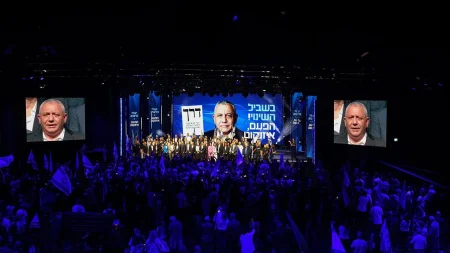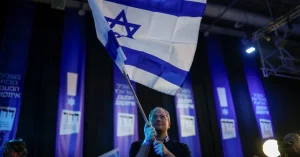



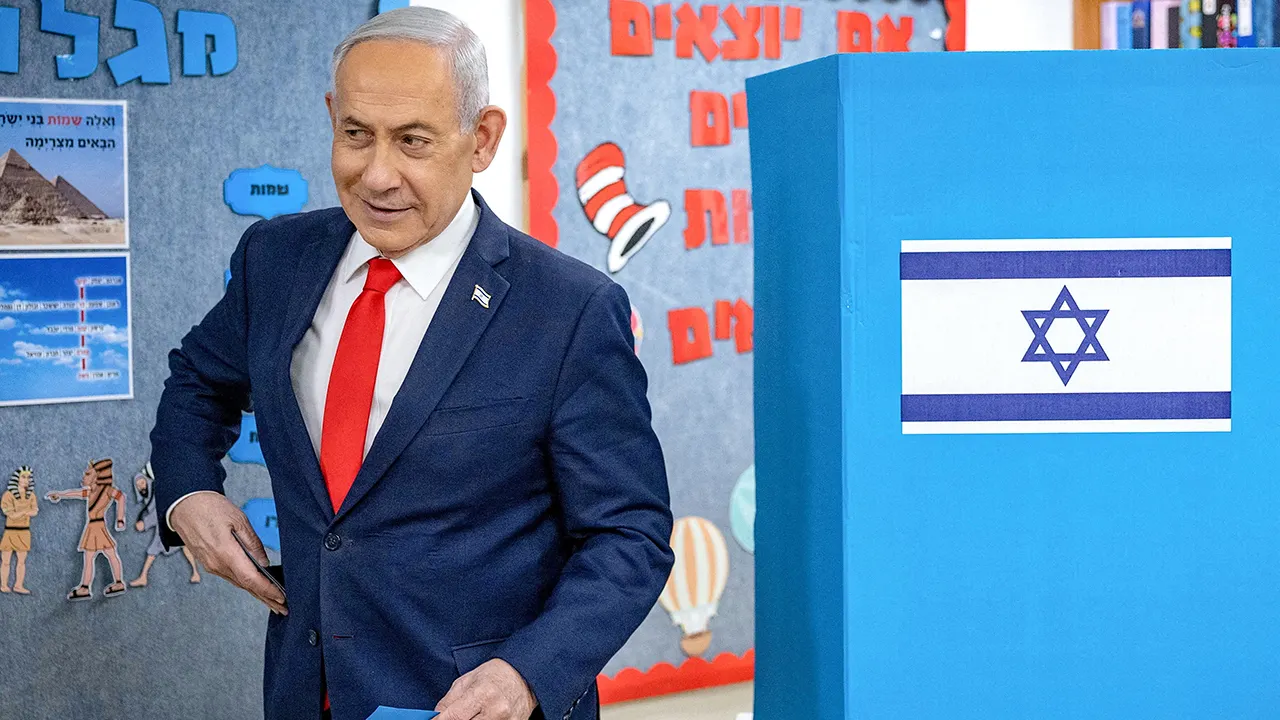
On a day that felt less like an ordinary exercise in democracy and more like a collective holding of breath, Israelis turned out in extraordinary numbers on Tuesday to cast their ballots in the first national election since the Hamas massacre of October 7, 2023. From Jerusalem to Tel Aviv, from the tense northern border communities to the dusty towns of the Negev, voters waited in long lines that stretched far beyond the familiar polling-station doors. By mid-afternoon, the turnout had reached levels not seen in decades, a powerful and uneasy sign that no one across the political spectrum saw this vote as just another routine trip to the ballot box. Initial exit polls broadcast on Israel’s three major television networks after polls closed at 10 p.m. local time suggested that Prime Minister Benjamin Netanyahu’s Likud party had emerged as the largest parliamentary faction, with projections of 25 seats in the 120-seat Knesset. However, those same projections showed a surprisingly strong performance by former Israeli military chief Gadi Eisenkot and his new Yashar party, with one network giving him 23 seats, another 23, and a third 21. The numbers, while still preliminary and subject to change as official ballots are counted, immediately raised the prospect that Netanyahu might win the battle for first place but lose the war over who gets to govern the country next. The images from the day were striking: families arriving together, elderly voters leaning on helpers, young soldiers in uniform still bearing the weight of months of reserve duty, and volunteers working phones and loudspeakers in a final desperate push to make sure every possible voter showed up before the deadline. For many, there was an almost visceral recognition that this election was not simply about policies or economics or coalition deals; it was about the very nature of Israeli leadership after a day of unimaginable horror that changed everything.
Perhaps the most significant thing about the exit polls was not the individual party numbers, but the larger shape of the political map that emerged from them. The projections painted the picture of a country split almost exactly down the middle, with Netanyahu’s right-wing and religious bloc projected to hold roughly 50 seats, the main opposition parties holding about 53 seats, and the Arab parties holding about 17 seats. Since forming a government in Israel requires the support of at least 61 of the 120 members of the Knesset, neither side came anywhere close to a clear and immediate majority. On paper, the opposition parties together with the Arab factions would control a combined 70 seats, which is well above the threshold needed to deny Netanyahu another term. But in practice, those numbers are not necessarily a path to power. The opposition bloc includes parties with deep ideological divisions, and the Arab parties have often been treated as potential coalition partners but rarely as full participants in a governing alliance. Still, the arithmetic immediately put Netanyahu on the defensive. Even with Likud projected to be the largest party, his political future was suddenly far from secure. There was a real possibility that, despite finishing first, he could lose power if the opposition and Arab parties could find a way to come together, even loosely, around a shared candidate. For more than a year, Israelis had been waiting for a moment when the question of accountability for the October 7 failures could be directly tested at the polls. Tuesday’s exit polls suggested that moment had arrived, and the country was still holding its breath. The election was widely seen, and rightly so, as a referendum on Netanyahu’s leadership after three years of war, ongoing hostage crises, and an extraordinary period of national grief. His opponents have argued he has failed to accept meaningful responsibility for the security failures that allowed Hamas terrorists to kill roughly 1,200 people and kidnap 251 others, while his supporters point to his record of confronting Iran and its proxies as proof that he remains the only leader capable of steering the country through an even larger storm.
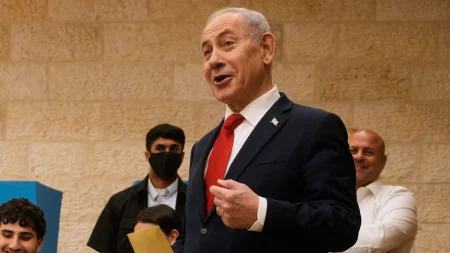
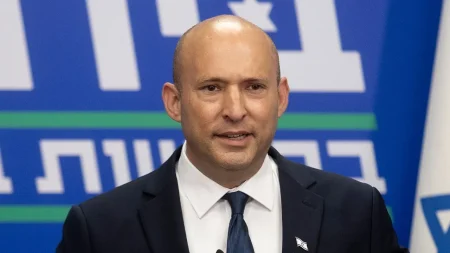
The final hours of the campaign were a frantic, almost desperate scramble for votes, with Netanyahu, Eisenkot, and former Prime Minister Naftali Bennett all deploying every tool at their disposal. Netanyahu’s Likud party prepared hundreds of targeted campaign videos and social media messages, making digital outreach a central part of its closing strategy, while aides flooded undecided voters with calls and messages. Netanyahu himself leaned heavily on his relationship with President Donald Trump and his image as a statesman who could stand up to Tehran, citing Israel’s military achievements and the broader confrontation with Iran’s regional network as evidence that he had earned another chance to lead. In contrast, Eisenkot, who had once served as chief of staff of the Israel Defense Forces and who has often spoken with a kind of military bluntness, focused his message on accountability, trust, and the need for a leader who could be believed when he said that the security failures of October 7 would never be allowed to happen again. His Yashar party tried to rally supporters behind the idea that he was the only realistic alternative to Likud and that a vote for a smaller party could inadvertently help bring Netanyahu back to power. Bennett, meanwhile, traveled relentlessly between cities and towns, meeting voters directly and engaging people through WhatsApp conversations, trying to carve out a middle path that might appeal to Israelis who had lost faith in the traditional right and left. In one sense, all of this was nothing new; Israeli elections have always ended with dramatic, last-minute gestures and eleventh-hour appeals. But there was a particular intensity this time, because the country had been in a state of emergency for three years, because so many voters were still mourning, because so many soldiers were still deployed, and because the next government would almost certainly have to make decisions about how to deal with Iran, the hostages, and the future of Gaza. The personal stakes were higher than in any election many Israelis could remember, and the candidates seemed to know it.
The extraordinary turnout figures underscored the sense that this was a historic moment in ways that went beyond the usual drama of Israeli politics. By 4 p.m. local time, around 55.7 percent of eligible voters had already cast their ballots, according to Israel’s Central Elections Committee, marking the highest turnout recorded at that hour since measurements first began in 1973. Election officials, surprised by the sheer volume of voters, worked to streamline procedures and issued repeated assurances that no one who arrived at a polling station before the 10 p.m. deadline would be turned away. Lines moved more slowly than expected in many places, but voters seemed determined to wait, often for hours, with a patience that itself became a powerful image of civic engagement. Polls had suggested that the race would be close, but the turnout suggested something deeper: a country trying to decide its own direction at a moment when the decisions made in the next few months could shape everything from the war in Gaza to the standoff with Iran. At the same time, a surprisingly small number of voters remained genuinely undecided. A Times of Israel poll published five days before the election found that 87 percent of respondents had already made their final choice, while only 2.4 percent said they were still uncertain between the pro-Netanyahu and anti-Netanyahu blocs. Other surveys pointed to a somewhat larger pool of undecided voters, but many of them appeared to be choosing between parties within the same political camp rather than switching sides entirely. That distinction could prove crucial in Israel’s parliamentary system, where any party that fails to receive at least 3.25 percent of valid votes never enters the Knesset at all. Even a tiny shift in the fortunes of smaller parties could change the allocation of several seats and determine whether either camp has a realistic path to building a coalition, which is why the final hours of the campaign produced such a desperate competition for every last vote.
What happens next is a matter of parliamentary math, political choreography, and sheer unpredictability. Unlike in the United States, Israelis cannot vote directly for their prime minister; they cast ballots for party lists, and the 120 seats in the Knesset are allocated proportionally based on the share of the vote each party receives. Once the official results are certified, President Isaac Herzog will begin a round of consultations with the newly elected parliamentary factions and will choose the lawmaker he believes has the strongest chance of forming a government. That candidate will then have 28 days to negotiate a governing coalition, with the possibility of a 14-day extension. Official results are expected to be published by November 4, but the identity of Israel’s next prime minister may remain uncertain for weeks. The big question is what happens after Herzog’s consultations. If Eisenkot, or another opposition figure, can secure recommendations from a majority of factions, including the Arab parties, he would have a strong claim to receive the first mandate to try to form a government. Notably, Arab parties could recommend him without necessarily agreeing to serve as formal coalition partners, a move that would allow them to block Netanyahu without having to sign on to his government’s policies. But securing the first mandate would not guarantee that Eisenkot could actually assemble the 61 votes needed to govern. It might simply trigger a period of intense bargaining, during which Netanyahu could try to persuade individual members of other parties to break ranks or defections could occur in any direction. There is also the possibility of another political deadlock, a scenario Israelis have lived through before, in which no one can form a majority and the country is forced back toward yet another election. For now, the outgoing government remains in power. Netanyahu continues to serve as prime minister, but with the strong feeling that the ground beneath his political career has shifted, perhaps for good.
For Israelis looking at the ballot boxes and the exit polls, the feeling is likely to be one of profound uncertainty, mixed with a kind of exhausted hope. Tuesday’s vote was never just about the mechanics of coalition building or the question of which party would get the most seats. It was about a country trying to process an almost impossible amount of trauma: the horror of October 7, the ongoing captivity of hostages, the weeks and months of war, the deepening confrontation with Iran, and the long, bitter argument over who is responsible for the failures that led to the deadliest day in Israel’s modern history. For Netanyahu, the election represented a chance to extend a record-breaking tenure and perhaps to shape his own legacy in defiance of the lightning storms that have followed him for years. For his opponents, the exit polls offered a fragile opening, a chance to argue that the decade of Netanyahu’s dominance is finally reaching its conclusion. But for ordinary citizens, the result may feel less like a victory or a defeat than a long wait. The final vote counts could shift in the coming days; the negotiations could produce an unexpected alliance or collapse in spectacular fashion. What is certain is that the divisions the election exposed will not disappear overnight. The lines of voters who stood in the heat, the families huddled over exit polls, the anxious voices on the radio and television, the bold claims and bitter accusations all point to a society that is still trying to decide whether it can trust anyone to lead it after so much has been lost. The ballot boxes are closed, but the questions remain: who will carry the past, who can be believed, and who is strong enough to build the future.