



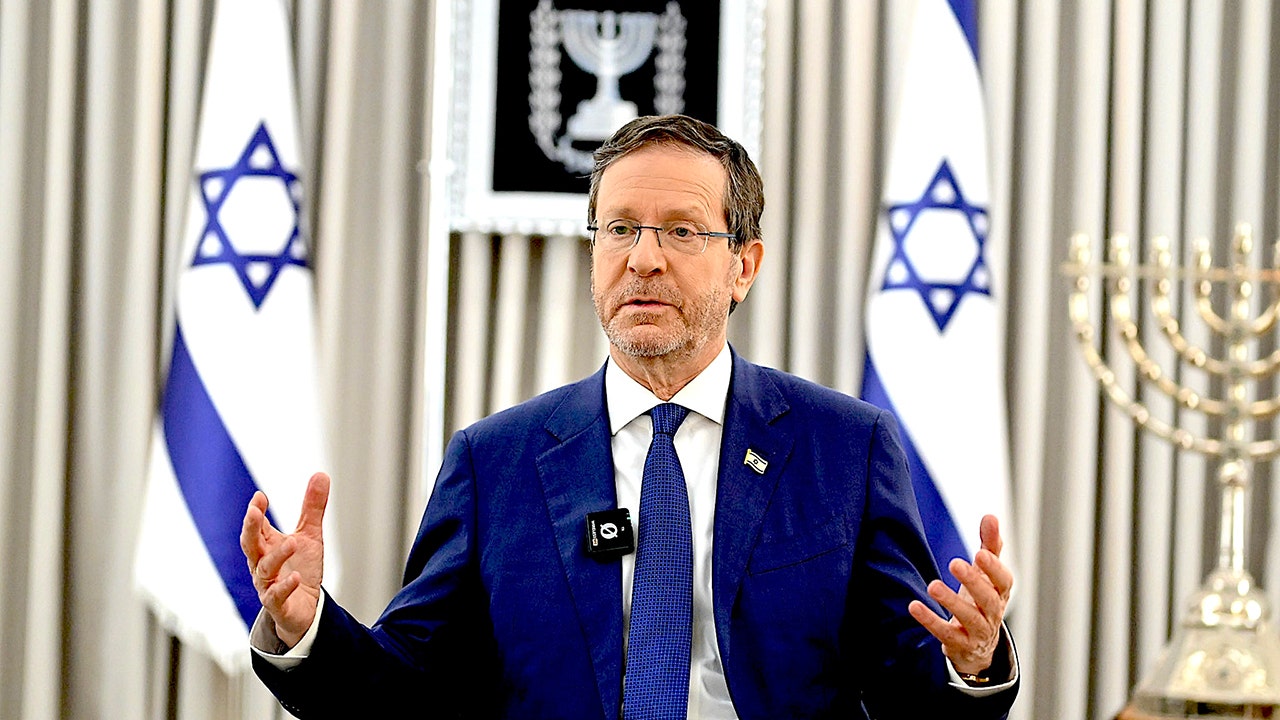
On a quiet Saturday evening, Israel’s political world shifted with a single announcement. President Isaac Herzog revealed that he had chosen Gadi Eisenkot, the leader of the opposition Yashar party and chairman of a bloc determined to unseat Benjamin Netanyahu, to try to form the country’s next government. The decision was not a sudden one. After days of consultations with the country’s newly elected parliament, the numbers told a story: 67 of the 120 members of the Knesset recommended Eisenkot, while 46 stood behind Netanyahu, and seven members of the ultra-Orthodox United Torah Judaism party chose to abstain from endorsing either candidate. Herzog himself cautioned that while the arithmetic of recommendations appeared clear, the path ahead was anything but simple. He spoke of competing vetoes, clashing demands, and a political atmosphere thick with suspicion. The formal handover of the mandate was scheduled for Sunday at five in the evening, Israeli time, giving Eisenkot twenty-eight days to assemble a governing coalition, with a possible two-week extension. For many Israelis, the moment carried enormous emotional weight. It was not just a procedural step; it felt like a turning point, a possible end to a decade of political dominance by Netanyahu, and at the same time the beginning of an uncertain and difficult negotiation process. The people who had pushed for change were hopeful, but they also knew that hope alone would not be enough. Eisenkot would need to bring together rival factions who had spent years refusing to work with one another. He would need to bridge ideological gaps that went to the very heart of Israeli society. And he would need to do it all while the country remained locked in political uncertainty, with a caretaker prime minister still in office and deep questions about security, democracy, and national identity unresolved. The endorsement from a majority of lawmakers was a milestone, but it was only the first step on a road that could easily lead to more deadlock, more frustration, and perhaps another election.
The challenge Eisenkot faced was made clear by the numbers coming out of the October 27 election. Netanyahu’s Likud party had emerged as the largest single faction in the Knesset, winning twenty-seven seats. His broader political bloc, including allied parties, secured fifty-three seats. The four-party alliance seeking to replace him, the one Eisenkot now hoped to lead, won only forty-eight. That left the opposition short of a majority and dependent on support from outside its natural ranks. The additional endorsements that pushed Eisenkot past the sixty-seven mark came mostly from two Arab-led parties, the Joint List and Ra’am, which together controlled nineteen seats. Both recommended Eisenkot to the president, and their backing was crucial in securing the mandate. But those same Arab parties also presented a dilemma. Some of Eisenkot’s prospective coalition partners had long ruled out depending on Arab lawmakers to establish a government, and the question of whether to include them, cooperate with them, or rely on their support from outside the coalition became a deeply divisive issue. The core problem was that the sixty-seven recommendations did not translate into a sixty-seven-seat coalition. They represented a coalition of opposition, not a government. Eisenkot had to turn a broad but fragmented endorsement into a stable parliamentary majority, and every potential partner came with conditions, red lines, and political baggage. The four-party bloc that wanted to replace Netanyahu agreed on one thing: his time as prime minister had to end. Beyond that, they disagreed on matters of security, religion, national service, and even the basic shape of the government they hoped to create. Meanwhile, the country watched with a mixture of weariness and concern. Many Israelis were tired of repeated elections, tired of political paralysis, and genuinely afraid that the country could not afford another prolonged period of instability. There was a sense that the moment demanded a kind of maturity and compromise that had been missing from Israeli politics for years. The question was whether the leaders now sitting at the negotiating table could find it within themselves to rise to the moment.
Two days after the election results were certified, Eisenkot laid out his vision for the way forward in a lengthy and unusually direct statement. He said he intended to establish what he called a National Emergency Government, initially built on the four parties committed to replacing Netanyahu, but open to additional parties and independent lawmakers willing to accept his terms. His language was urgent, almost dramatic. Israel, he said, was facing a genuine, tangible, and dangerous national emergency. He accused the outgoing government of threatening democracy and of leaving the country vulnerable at a time of profound security and diplomatic strain. He warned that continued political instability would have serious consequences, not just for the government but for the country’s standing in the world and its ability to protect its citizens. Eisenkot’s proposal rested on four founding principles. First, Israel must be recognized as a Jewish and democratic state. Second, the government must accept the values set out in the Declaration of Independence. Third, universal military, national, or civilian service should apply to all citizens. And fourth, Hamas must be recognized as a terrorist organization, with a clear commitment to dismantling both its military capabilities and its governing authority. These principles were carefully chosen to appeal to a broad coalition, from secular nationalists to religious conservatives to centrist liberals. Eisenkot invited lawmakers across the political spectrum to join the government if they could accept these foundations. He said negotiations with his political partners had already yielded significant progress, and that more talks were underway. The tone was confident, almost conciliatory, presenting him as a figure above petty politics. But behind the public optimism, the obstacles were clear. Even among the parties that wanted to replace Netanyahu, there was no agreement on how to secure the votes needed to govern. Some wanted a formal coalition with Arab parties. Others refused to sit with them. Some wanted to bring religious parties into the government. Others had campaigned against religious exemptions from military service. The principles Eisenkot laid out were meant to be a unifier, but they also exposed sharp divisions, especially when it came to questions of religion and state.
One of the most significant developments in the effort to break the logjam came from Avigdor Lieberman, the leader of the secular nationalist Yisrael Beitenu party. Lieberman had spent years staunchly opposing any compromise with ultra-Orthodox parties on the subject of military conscription. His voters viewed the religious draft exemptions as an injustice, and Lieberman had made the issue a central part of his political identity. But with the country facing another possible deadlock, he signaled a willingness to reconsider. In a statement posted on X, Lieberman made clear that keeping Netanyahu in power and forcing another election were unacceptable outcomes. He laid out three conditions that he said were essential: ending the Netanyahu era, avoiding another election, and refusing to establish a government that depended on the abstention of the Joint List and Ra’am. But then came the surprise. On everything else, including the contentious military draft law, Lieberman said the leaders must be ready to compromise. That was a dramatic shift. It opened the door, for the first time in years, to negotiations with United Torah Judaism, the ultra-Orthodox party that had withheld its recommendation from Netanyahu even though it had long been one of his closest political allies. UTJ leader Yaakov Asher responded cautiously, welcoming Lieberman’s flexibility but pointing out that no concrete proposal had been brought to the table. Any agreement, he said, would still require the approval of the party’s religious leadership. The conscription issue remained the single greatest obstacle. Ultra-Orthodox parties wanted legal protections for yeshiva students who dedicated their lives to religious study, exempting them from military service. Eisenkot and several of his partners had campaigned on exactly the opposite: expanding service to include all Israelis, including the ultra-Orthodox. Bridging that gap would require more than political goodwill. It would require religious leaders and secular politicians to find common ground on an issue that went to the heart of their worldviews. And even if United Torah Judaism did join the opposition bloc, the numbers still would not add up to a decisive majority. The religious Shas party, which controlled six seats, had recommended Netanyahu to the president. So Eisenkot would still need additional support, perhaps from parties outside the coalition willing to abstain at critical moments, or from Arab lawmakers willing to provide a safety net without holding official positions. But Lieberman had explicitly rejected any government dependent on the abstention of Arab parties, and others shared his discomfort.
While the negotiations continued, Benjamin Netanyahu remained in office as caretaker prime minister, watching the political drama unfold from the side of the empty stage. His position was weakened but far from hopeless. Netanyahu had won the largest number of seats and kept his own political bloc largely intact. He also challenged aspects of the election results, citing an investigation into suspected voting irregularities and suggesting that the outcome could not be fully trusted. However, Israel’s Central Elections Committee pushed back, saying the integrity of the election had not been compromised. Reuters reported the committee’s statement, which seemed to close the door on the idea that the results might be overturned. Still, the controversy fed the sense that nothing was certain. Netanyahu was not simply waiting patiently. His allies were engaged in their own discussions, exploring ways to peel off individual lawmakers from the opposition, to sow division among the parties trying to replace him, or to push for a unity government on his own terms. His supporters saw him as a necessary bulwark against chaos, a leader who had kept Israel safe through immense challenges. His opponents saw him as the source of the instability, a man willing to divide the country to save himself. Between those two views lay the fate of the government. The broader implications were enormous. Israel was dealing with deep internal tensions, a security environment that demanded clear-headed leadership, and a society fractured over questions of faith, nationality, and the obligations of citizenship. The election had been framed as a referendum on Netanyahu’s legacy and on the lessons of October 7, a day that continued to haunt the national consciousness. The political maneuvering in Jerusalem felt distant from those realities, but it was inseparable from them. Every decision made in the negotiation rooms carried consequences for the people who had voted with hope, with anger, or with fear. For Eisenkot, receiving the presidential mandate was an important achievement, but it was also a burden. He had been handed an opportunity to shape the country’s future, but the obstacles in his path were immense.
The days ahead would determine whether Israel could escape the cycle of endless elections and governmental paralysis that had defined its politics for so long. Eisenkot had to turn a broad but fragile parliamentary endorsement into a functioning government, and every step of that process would require compromise. His colleagues in the anti-Netanyahu bloc would have to confront their own differences, particularly on military service, cooperation with Arab parties, and the role of religion in public life. The parties that had recommended him to the president did not necessarily trust one another. Some of them had campaigned against each other in the election; some represented constituencies with little in common. The challenge was not simply to build a coalition, but to build a government that could actually govern, that could make difficult decisions, pass a budget, address security threats, and restore public confidence in the system. There was also the possibility of failure. If Eisenkot could not form a government, another candidate might be given the mandate. Netanyahu remained a possibility. Or the country could find itself heading toward yet another election, a prospect almost no one wanted but many had begun to accept as inevitable. The human stakes were deeply felt. Israelis were exhausted by politics that seemed to circle endlessly around the same personalities and the same unresolved conflicts. They wanted stability, but they were divided on what stability should look like. They wanted leadership, but they did not agree on who should lead. The decision now rested with Eisenkot and the leaders around him. Their willingness to put the country first would be tested every day. The mandate he received was not a prize. It was an assignment. The clock was ticking, and the road ahead was narrow, winding, and full of traps. But for the first time in a long while, the possibility of change was genuinely on the table. Whether the country was ready to seize it, or would stumble once more into deadlock, was a question that only the coming weeks would answer.