



Paragraph 1: A Grand Entrance Amidst Tiger Pride
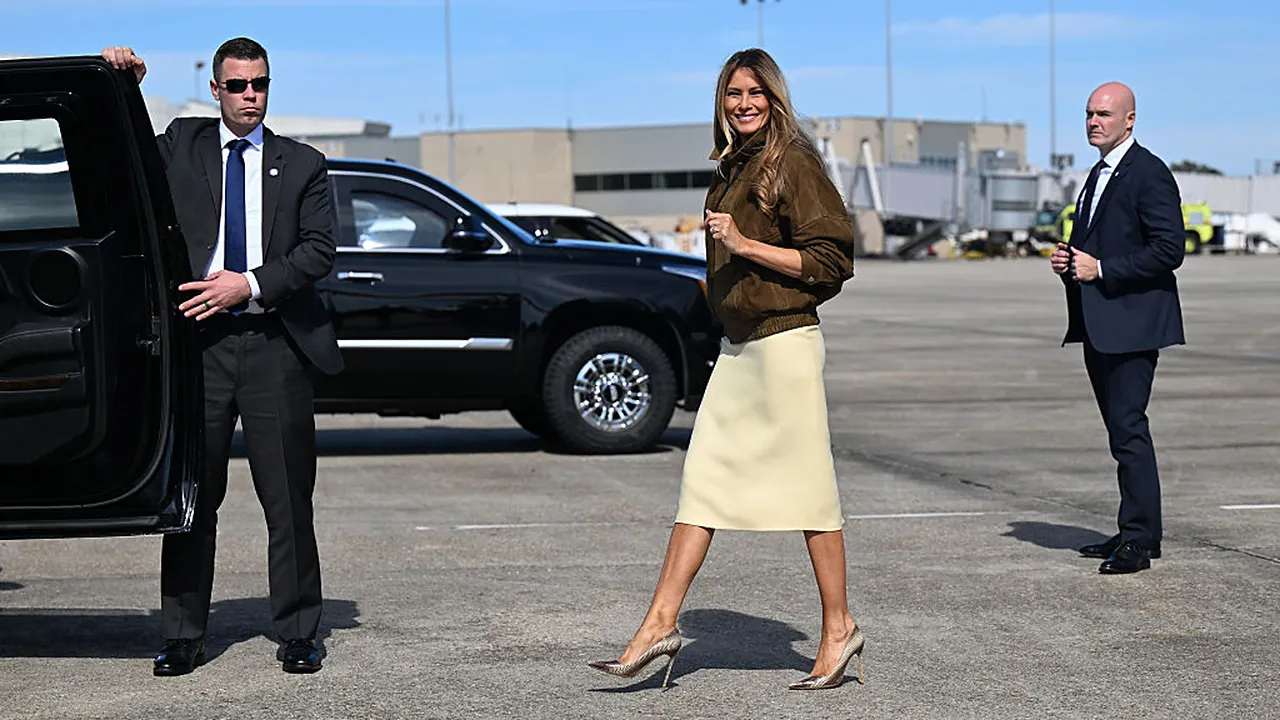
Under the vibrant, sun-drenched skies of Baton Rouge, the electric atmosphere of a college football Saturday was charged with an additional current of purpose and hope. The motorcade carrying First Lady Melania Trump wound its way through a sea of purple and gold, past throngs of tailgating fans whose infectious enthusiasm for the upcoming gridiron clash was momentarily redirected toward the distinguished visitor. The scene was a quintessential tapestry of American tradition, a blend of Southern hospitality and fierce athletic rivalry, all set against a backdrop of towering oaks and the iconic Louisiana State University campus. As she stepped out, Melania Trump embodied her signature blend of grace and modern style, choosing a Dalma suede bomber jacket by Nour Hammour, paired tastefully with an Adam Lippes skirt and classic Manolo Blahnik pumps. This sophisticated yet relaxed ensemble perfectly bridged the gap between her formal role as First Lady and the spirited, casual energy of a game-day weekend, making her feel both monumental and accessible to the onlookers who had gathered to catch a glimpse of her.
The purpose of her visit, however, transcended the festive exterior, pointing to a cause far deeper than football. The destination was Patrick F. Taylor Hall, where a massive American flag served as a powerful symbol of the national significance of the announcement about to be made. LSU cheerleaders, their pom-poms temporarily set aside, flanked the First Lady, and the university’s beloved tiger mascot, Mike, presented her with the visual symbols of the occasion—oversized checks—all while sporting a t-shirt that read “Be Best,” a subtle yet potent nod to her signature initiative. For the assembled university officials, generous donors, and students, this was not merely a ceremonial stop on a football tour; it was the culmination of a concerted effort to change lives. Melania Trump was there to unveil a transformative $7.2 million scholarship endowment dedicated to a demographic often overlooked and underserved, delivering a message of stability and hope to young Americans who have braved the uncertainties of the foster care system.
Paragraph 2: Planting the Seeds of a Brighter Future
As the room settled, the First Lady’s remarks crystallized the profound intention behind the visit, an initiative known as “Fostering the Future.” Her words, measured and sincere, painted a clear picture of the program’s goal. “This achievement,” she told the audience, her voice carrying a tone of quiet conviction, “will give young people from foster care an anchor of stability, a strong educational foundation, and a chance to build a wonderful life.” The sentiment was a powerful antidote to the instability that too often defines the lives of these young individuals, framing higher education not just as an academic pursuit, but as a lifeline and a launchpad. The financial mechanics of the endowment are as impressive as their humanitarian mission. The permanent fund is anchored by a leadership gift of $5 million from MMR Group, a company helmed by LSU alumnus James B. “Pepper” Rutland, whose generosity reflects a deep commitment to his alma mater and its potential to serve as a force for good.
This significant contribution was amplified by an additional $2.2 million raised from a network of 75 LSU Foundation donors, a collective effort that underscores the broad base of support for the cause. Krista Raney, the LSU Foundation President and CEO, proudly noted that the contributions had catapulted the scholarship fund to “more than $7.2 million and growing,” a testament to the momentum and enthusiasm generated by the First Lady’s personal advocacy. LSU President Wade Rousse, in his address, articulated the university’s philosophy, stating, “At LSU, we believe talent is everywhere, but we understand that opportunity is not.” This single sentence, reported as a key part of his speech, captured the core injustice the endowment aims to rectify. The proceeds from this substantial fund are expected to generate roughly $200,000 annually, which will be directed to cover the crucial costs of tuition, fees, books, and room and board—the tangible barriers that so often stand between a foster youth and their dreams of a college degree.
Paragraph 3: A Symbiotic Celebration of Football and Philanthropy
The LSU campus, a microcosm of Southern American culture at its most vibrant, did not miss the opportunity to blend its beloved football traditions with the gravity of the philanthropic occasion. The university pulled out all the stops, presenting the First Lady with a collection of game-day gifts that bridged the worlds of high-minded policy and pigskin passion. She was presented with a custom-made LSU jersey, resplendent in purple and gold, emblazoned with the name “MELANIA” and the number 14, a perfect detail that connected her to the team’s identity. Complementing the jersey was a Tigers helmet featuring the logo for “BE BEST Fostering the Future,” transforming a piece of sports equipment into a billboard for social change. Adding to the star power on the stage was the legendary former LSU coach Ed Orgeron, affectionately known as Coach O, who presented the First Lady with a specially designed commemorative football from Big Game USA, a company owned by fellow LSU alumnus Chris Calandra. This presence of coaching icons and tangible pieces of football history reinforced a sense of community and shared purpose.
The integration of the “Fostering the Future” initiative extended far beyond the formal ceremony, weaving its way into the very fabric of the day’s events. The White House confirmed that special patches had been added to LSU players’ jerseys, helmet decals adorned their headgear, cheerleader uniforms featured the branding, and the team mascot’s attire was updated to match. Even the commemorative fan towels distributed to the thousands of spectators in Tiger Stadium bore the mark of the initiative. This seamless integration was a masterstroke, ensuring that the message of hope and educational access would not be confined to a single hall but would be broadcast to a television audience of millions across the nation. It transformed a football game into a massive platform for advocacy, demonstrating how cultural touchstones like college football can be leveraged to draw attention to pressing social issues, all in a manner that felt organic and celebratory rather than political.
Paragraph 4: The Unforgettable Spectacle of Tiger Stadium
As the afternoon sun began to cast long shadows across the hallowed grounds of Tiger Stadium, the First Lady’s visit reached its crescendo during one of college football’s most storied rivalries: the clash between the LSU Tigers and the Alabama Crimson Tide. The atmosphere inside the stadium was deafening, a maelstrom of sound, color, and unyielding school pride. In this charged environment, Melania Trump’s “Fostering the Future” initiative received a moment of on-field recognition that was as powerful as it was surprising. Students, joining forces with Mike the Tiger and other team members, took to the field for a ceremonial check presentation, showcasing the $7.2 million scholarship endowment to the tens of thousands of fans in attendance. The stadium’s massive Jumbotron flashed the First Lady’s image, and as she appeared, the roar of the crowd transformed into a chorus of chants of “USA, USA,” a spontaneous and stirring display of patriotism that momentarily eclipsed even the football action.
The spectacle was amplified by a military flyover that thundered across the sky above Tiger Stadium, adding a layer of solemn reverence to the festivities. It was a powerful tableau: the pride of a state university, the passion of its fans, the spirit of American service, and the heart of a White House initiative all converging in a single, unforgettable moment. The symbolism was not lost on the attendees. This was more than just a game; it was a celebration of American opportunity, a testament to the idea that with the right support, anyone can succeed. The First Lady’s presence had galvanized the event, lending it a national significance that elevated the game-day experience into a narrative about the country’s promise. Even the game’s opening coin toss was designated with a special Melania Trump challenge coin, a small but meaningful detail that signified her official and hands-on involvement with the day’s proceedings.
Paragraph 5: Beyond the Rivalry: A Message of National Impact
The spirit of the LSU-Alabama rivalry, famous for its intensity, was playfully incorporated into the afternoon’s serious message. After the First Lady pointed out that LSU currently boasted 14 Fostering the Future scholars compared with Alabama’s nine, LSU Foundation’s Krista Raney delivered a lighthearted quip that drew laughter and applause. “Mrs. Trump,” she said with a grin, “what I heard you say is that LSU has 14 scholarship recipients and Alabama has nine. So I think that means we’ve already won the first point.” The moment beautifully illustrated how a cause as important as educational access can find common ground with the traditions and joys of college life, making the philanthropic message more relatable and engaging. The First Lady, in turn, broadened the perspective, reminding the audience that this was a national effort. She noted that 26 universities across the country are now supporting 100 Fostering the Future scholars this semester, a figure that underscores the rapid growth of the initiative. “While most eyes will be on the athletes today,” she told the crowd, “I encourage you to recognize LSU’s Fostering the Future scholars, who are just as remarkable.”
The sentiment aimed to redirect the focus from the physical prowess on the field to the intellectual ambition and resilience of the young men and women whose lives are being changed by these scholarships. Their stories, those of overcoming adversity and striving for a better future, are the true triumphs of the day. The presence of Louisiana Governor Jeff Landry, First Lady Sharon Landry, and House Majority Leader Steve Scalise underscored the bipartisan appeal and political significance of the initiative. A particularly poignant gift was presented to the First Lady: a handcrafted wooden bowl made from a fallen limb of one of LSU’s historic oak trees. It was a symbol of endurance, growth, and the lasting roots that a university can provide in a young person’s life, a tangible metaphor for the stability the “Fostering the Future” program aims to offer.
Paragraph 6: A Legacy of Belief and Opportunity
The genesis of this transformative effort can be traced back to 2021, when Melania Trump launched “Fostering the Future” as an extension of her “Be Best” initiative, a policy platform designed to address the welfare of the nation’s youth. Its sole mission is to expand educational opportunities for the hundreds of thousands of young people in America who have experienced the foster care system, a group that faces staggering barriers to higher education. The statistics are sobering: foster youth are significantly less likely to enroll in and graduate from college, often finding themselves without a support network or financial resources once they age out of the system. This endowment, and the broader initiative it supports, recognizes that a four-year degree is more than a credential; it is a path to self-sufficiency. As the First Lady articulated, “A great education does more than prepare someone for work life. It gives something no one can ever take away.” This powerful framing shifts the conversation from simple charity to profound investment in human potential.
Melania Trump’s closing remarks to the assembled scholars and the wider audience were a direct and personal affirmation, cutting through the political noise to deliver an authentic and hopeful message. “To the Fostering the Future scholars here today, and throughout America: I see you. I believe in you. And I will keep working to create new opportunities with you.” These words serve as the foundational pillar of the entire initiative—a promise of visibility, belief, and sustained advocacy. They affirm that these students are not forgotten, that their struggles are recognized, and that their potential is undeniable. As the first lady departed Baton Rouge, she left behind more than just a memorable game-day appearance or a generous check. She left behind a renewed sense of possibility for young people who have often felt invisible, a brick-and-mortar investment in their futures, and a powerful example of how a national platform can be used to champion a cause that transcends partisan divides and touches the very heart of the American dream.